The Unspoken Language of the River
There’s a certain arrogance, isn’t there, in thinking we can always dictate the terms of engagement? We stride into the natural world, armed with our knowledge, our gear, and our carefully crafted plans, expecting the fish to adhere to our schedule, to be drawn to our lures, to succumb to our strategies. But what if, just what if, the true key to success lies in surrendering that control, in becoming a student of the river, and allowing the fish to set the rhythm?
This isn’t just about fishing, of course. It’s a broader metaphor for life itself. How often do we cling stubbornly to our preconceived notions, our rigid expectations, only to be met with frustration and disappointment? How often do we fail to recognize the subtle cues, the unspoken signals, that the world around us is constantly sending? The angler who truly understands this principle—the one who can listen to the river, observe the fish, and adapt their approach accordingly—is the one who consistently finds success, not just in fishing, but in all aspects of their life.
It’s about embracing the unexpected, the unpredictable. It’s about recognizing that the most valuable lessons are often learned not from textbooks or online tutorials, but from the direct experience of being present in the moment, attuned to the nuances of the environment, and open to the wisdom of the fish. Are you truly listening to what the world is telling you, or are you just projecting your own assumptions onto it?
Beyond Technique: The Art of Observation
Technique is undoubtedly important. Mastering the cast, understanding knot tying, and selecting the right fly are all essential skills. But technique alone will only take you so far. The true art of fishing lies in observation. It’s about developing a keen eye for detail, a heightened sense of awareness, and an ability to interpret the subtle signs that indicate the presence and behavior of fish.
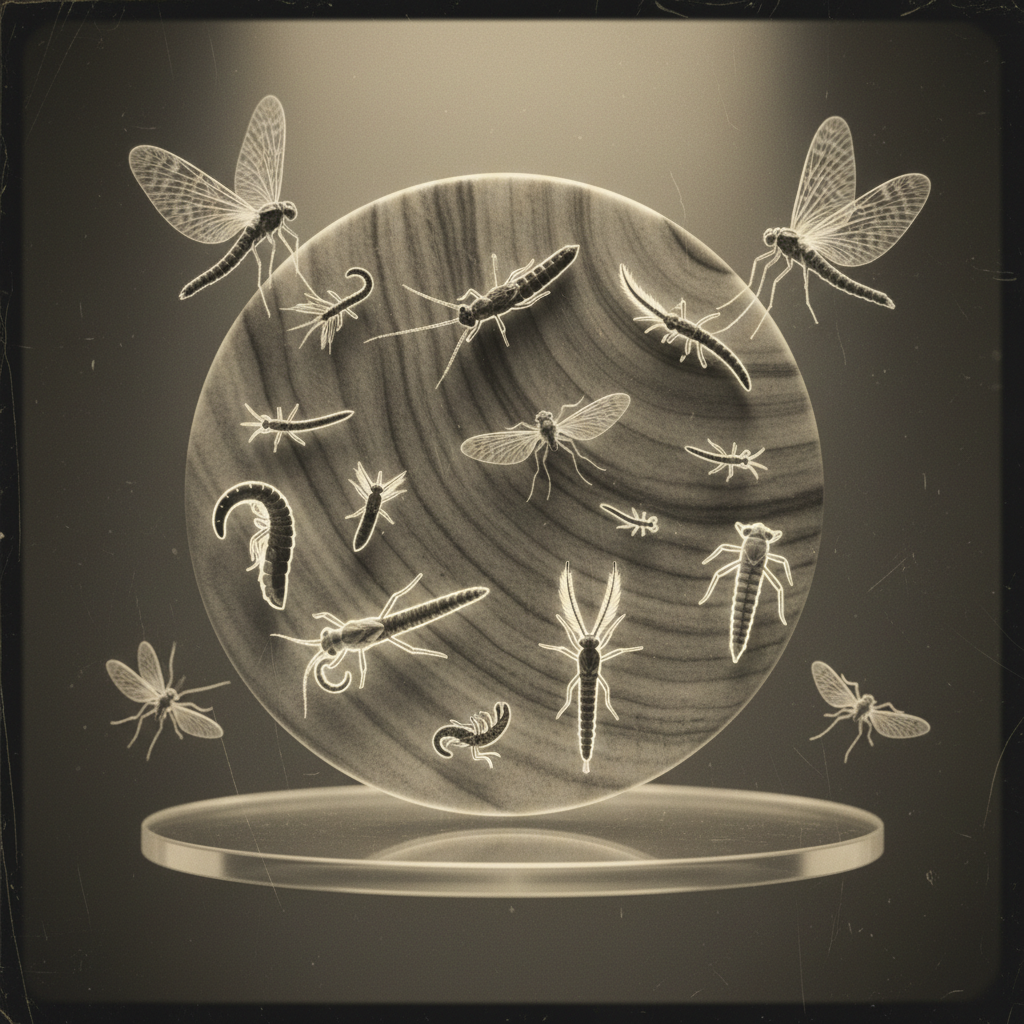
Consider the mayfly hatch, for example. Many anglers simply arrive at the river, see a flurry of insects, and immediately start casting their dry flies, hoping to entice a rising trout. But the truly observant angler will take a moment to assess the situation. What species of mayfly is hatching? What size and color are they? Are the fish actively feeding on the surface, or are they focusing on the nymphs drifting below? What is the current doing? What is the water temperature? What is the ambient air temperature? By answering these questions, the angler can make informed decisions about fly selection, presentation, and fishing strategy, significantly increasing their chances of success.
This extends beyond hatches. Observing the water clarity, the flow patterns, the structure of the riverbed, and the surrounding vegetation can all provide valuable clues about where fish are likely to be holding and how they are likely to be behaving. Are there any signs of predator activity, such as herons or kingfishers? Are there any changes in the weather that might affect fish behavior? The more information you gather, the better equipped you will be to make informed decisions and adapt your approach accordingly.
The Humility of the Empty Net
Let’s be honest: no one likes to get skunked. There’s a certain amount of ego involved in fishing. We want to prove our skills, to demonstrate our knowledge, to feel the satisfaction of landing a beautiful fish. But the reality is that there will be days when, despite our best efforts, the fish simply refuse to cooperate. And it’s in those moments of frustration and disappointment that we have the greatest opportunity to learn and grow.
The empty net can be a powerful teacher. It forces us to confront our limitations, to question our assumptions, and to re-evaluate our strategies. It reminds us that we are not in control, that the natural world operates according to its own rules, and that humility is an essential virtue. Instead of becoming discouraged by a day of fishing where you catch nothing, try to see it as an opportunity to learn. What could you have done differently? What mistakes did you make? What insights did you gain? By embracing the empty net as a learning experience, you can transform failure into a valuable stepping stone towards future success.
Moreover, an empty net challenges our motivation. Are we fishing purely for the ego boost of a successful catch, or do we genuinely appreciate the experience of being in nature, connecting with the environment, and testing our skills against the challenges of the river? If the latter is true, then even a day without fish can be a rewarding and fulfilling experience. The beauty of the surroundings, the challenge of the pursuit, and the camaraderie of fellow anglers can all contribute to a sense of satisfaction, regardless of the outcome. It’s about finding joy in the process, not just in the result.
Adapting to the Unpredictable: The Zen of Fishing
The river is a dynamic and ever-changing environment. The water level fluctuates, the temperature varies, the hatches come and go, and the fish respond accordingly. To be a successful angler, you must be able to adapt to these changes, to improvise, to think on your feet, and to adjust your strategy as needed. This requires a certain level of flexibility, a willingness to abandon preconceived notions, and an openness to experimentation.
Imagine, for example, that you arrive at the river expecting a prolific mayfly hatch, only to find that the hatch has already ended or that the fish are not actively feeding on the surface. Instead of stubbornly sticking to your original plan, you might try switching to a nymph rig and targeting fish holding in deeper water. Or you might experiment with different fly patterns, sizes, and colors until you find something that works. Or you might simply move to a different section of the river where conditions are more favorable.
This adaptability requires a certain level of “flow,” a state of being fully present in the moment, attuned to the environment, and responsive to its ever-changing demands. It’s a kind of “Zen of Fishing,” where you are not just casting a line, but actively engaging with the river, listening to its rhythms, and allowing it to guide your actions. It’s about surrendering control, embracing the unknown, and finding a sense of harmony with the natural world. You must become one with the river.
The Ethics of Letting Go
The concept of letting the fish set the rhythm extends beyond just the technical aspects of fishing. It also touches on the ethical considerations of catch and release. Are we truly respecting the fish, or are we simply using them as a means to an end? Are we minimizing the stress and harm we inflict on them, or are we prioritizing our own enjoyment at their expense?
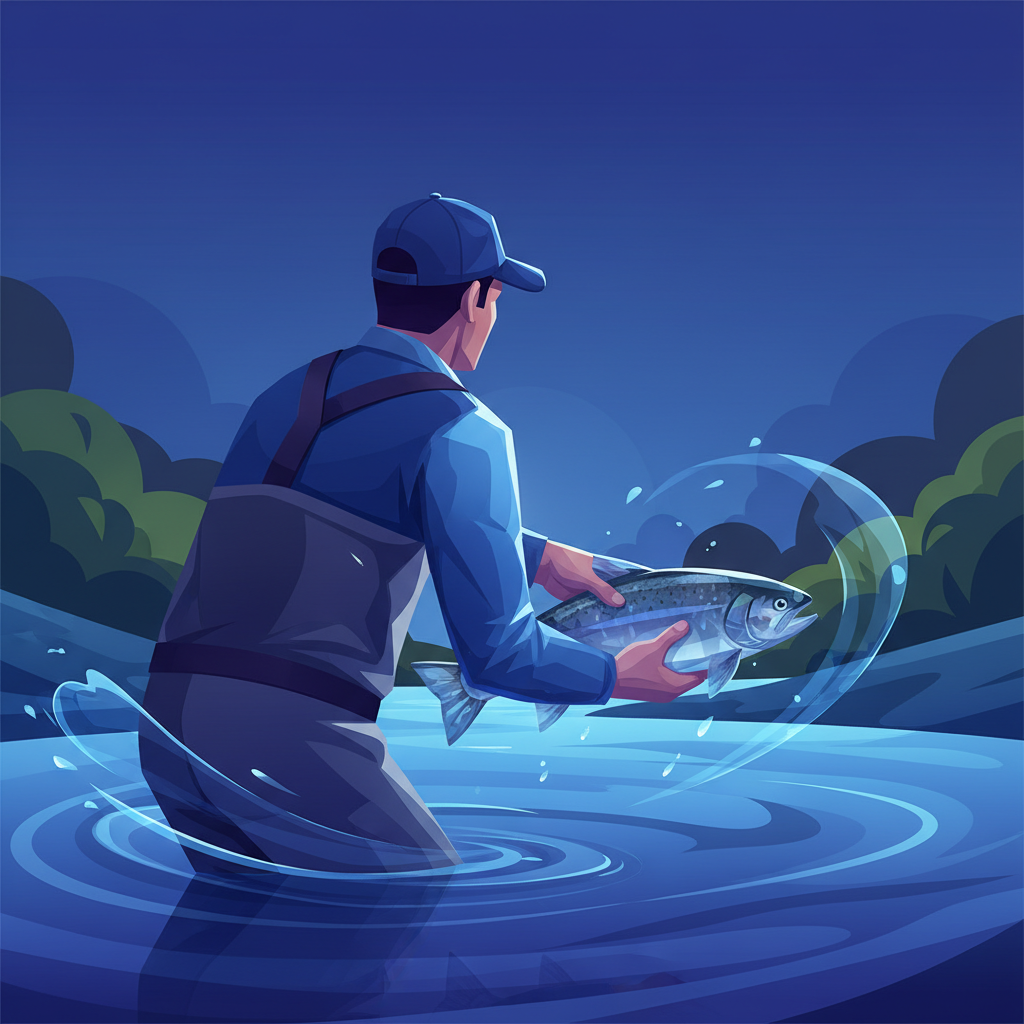
The truly ethical angler understands that catch and release is not just about throwing a fish back into the water. It’s about handling the fish with care, minimizing the time it spends out of the water, using barbless hooks to facilitate easy release, and avoiding fishing in areas where fish are particularly vulnerable, such as spawning grounds. It’s about recognizing that the fish is a living creature with its own inherent value, and that we have a responsibility to treat it with respect.
Sometimes, the most ethical thing to do is to simply walk away. If the fish are clearly stressed or if conditions are unfavorable, it may be better to pack up your gear and come back another day. Or if you are consistently catching the same fish, it may be wise to give that area a break and allow the fish to recover. It’s about putting the well-being of the fish first, even if it means sacrificing your own immediate gratification. The long-term health of the fishery depends on it.
Beyond the Catch: The Deeper Connection
Ultimately, the most profound rewards of fishing come not from the number of fish you catch, but from the deeper connection you forge with the natural world. It’s about immersing yourself in the beauty of the environment, observing the intricate details of the ecosystem, and appreciating the interconnectedness of all living things. It’s about finding a sense of peace and tranquility in the solitude of the river, and about escaping the stresses and distractions of modern life.
Fishing is a way to reconnect with our primal instincts, to tap into our ancient heritage as hunter-gatherers, and to rediscover our place in the natural order. It’s a way to learn about the rhythms of the seasons, the cycles of life and death, and the delicate balance of the ecosystem. It’s a way to appreciate the fragility of the environment and to become more conscious of our impact on the planet.
When you approach fishing with this mindset, the act of catching a fish becomes almost secondary. The true reward lies in the experience itself, in the journey of discovery, in the connection with nature, and in the sense of personal growth that comes from overcoming challenges and learning from mistakes. It’s about finding a deeper meaning in the pursuit, and about transforming a simple pastime into a profound and enriching experience.
The Fish as a Mirror
Consider this: the way we approach fishing often reflects the way we approach life. If we are impatient, aggressive, and focused solely on the outcome, we are likely to be frustrated and disappointed. But if we are patient, observant, and willing to adapt, we are more likely to find success and fulfillment.
The fish can be seen as a mirror, reflecting our own strengths and weaknesses, our own attitudes and beliefs. If we are arrogant and overconfident, the fish will humble us. If we are fearful and hesitant, the fish will elude us. But if we are humble, persistent, and open to learning, the fish will eventually reward us.
The river itself can be seen as a metaphor for the journey of life. It is a winding and unpredictable path, filled with both challenges and opportunities. There will be times when the water is smooth and clear, and times when it is turbulent and murky. There will be times when the fish are plentiful, and times when they are scarce. But through it all, the river flows on, carrying us along with it. And it is up to us to navigate its currents, to adapt to its changes, and to find our own way to the sea.
The Unending Education of the Angler
Fishing is a lifelong pursuit. There is always more to learn, more to discover, more to experience. The angler who believes they have mastered the art of fishing is the angler who has stopped growing. The true masters are those who remain humble, curious, and open to new ideas, constantly seeking to improve their skills and deepen their understanding of the natural world. They know that the fish will always have something to teach them.
This continuous learning process is what makes fishing so rewarding. It’s not just about catching fish; it’s about expanding your knowledge, honing your skills, and pushing yourself to become a better angler, and a better person. It’s about embracing the challenges, celebrating the successes, and learning from the failures. It’s about finding joy in the pursuit, and about sharing that joy with others. It’s about becoming a lifelong student of the river, and a steward of the environment.
So, the next time you find yourself standing on the bank of a river, remember to listen to what the fish are telling you. Surrender your control, embrace the unexpected, and allow the river to guide your actions. You may be surprised at what you discover. You may catch more fish. You may learn something about yourself. And you may find a deeper connection with the natural world.
The Subtle Art of “Not Catching”
There’s a strange paradox inherent in fishing. We go out intending to catch fish, yet often the most valuable lessons are learned in the moments when we don’t. It’s in those frustrating periods of inactivity, those long stretches of fruitless casting, that we truly begin to observe, to analyze, to adapt. It’s in the “not catching” that we refine our skills, deepen our understanding, and cultivate the patience necessary for success.
Think of it this way: if every cast resulted in a fish, we would quickly become complacent. We would rely on luck rather than skill, and we would fail to develop the critical thinking and problem-solving abilities that are essential for consistent success. It’s the challenges, the setbacks, and the periods of “not catching” that force us to become better anglers. They push us to experiment with different techniques, to explore new waters, and to question our assumptions. They teach us the importance of persistence, resilience, and adaptability.
Furthermore, the “not catching” allows us to fully appreciate the other aspects of the fishing experience. It gives us time to soak in the beauty of the surroundings, to listen to the sounds of nature, and to connect with the environment on a deeper level. It allows us to slow down, to relax, and to escape the stresses and distractions of modern life. It reminds us that fishing is about more than just catching fish; it’s about the journey, the experience, and the connection with nature.
So, embrace the “not catching.” See it as an opportunity to learn, to grow, and to deepen your connection with the natural world. Allow the fish to set the rhythm, and trust that in time, you will find your own rhythm with the river. It’s in that harmonious dance that true success lies, not just in fishing, but in life itself. The lessons learned beside the water are often the most valuable we can carry.