The Unfolding Enigma of a Shifting Landscape
There comes a point in every journey, be it literal or metaphorical, when the familiar landmarks begin to blur. The map, once a trusted guide, starts to betray you, leading you down paths that twist into unexpected and often unsettling terrain. What happens when the map stops making sense? When the very foundations of your understanding crumble, leaving you adrift in a sea of uncertainty? This isn’t just about getting lost on a fishing trip; it’s about the deeper disorientation that occurs when the world we thought we knew reveals its mutable, often chaotic, nature.
We, as humans, crave certainty. We build our lives upon structures – beliefs, routines, relationships – that provide a sense of stability and predictability. Maps, in their essence, are tools of certainty. They offer a simplified, comprehensible representation of a complex reality, allowing us to navigate with confidence and purpose. But what happens when that representation no longer aligns with the territory? What happens when the coastline shifts, the rivers change course, and the mountains crumble?
The answer, as any seasoned fisherman knows, is that you adapt. You learn to read the currents, to feel the wind on your face, to trust your instincts. You relinquish your reliance on the static, outdated information of the map and embrace the dynamic, ever-evolving reality that surrounds you. But this adaptation is not always easy. It requires a willingness to let go of preconceived notions, to confront the unknown, and to accept the inherent uncertainty of life.
The Illusion of Control and the Allure of the Map
The map, in many ways, is a symbol of our desire for control. We want to understand the world, to predict its patterns, and to exert our influence over its forces. A detailed map gives us the illusion that we can master our environment, that we can navigate through life with precision and efficiency. However, this illusion can be dangerous. It can blind us to the subtle cues and emergent phenomena that shape our reality.
Think about the fisherman who relies solely on his GPS to find the best fishing spots. He ignores the changing tides, the migration patterns of the fish, and the local knowledge of the seasoned anglers. He is so focused on the digital map that he misses the real-world signs that could lead him to a far richer and more rewarding experience. He becomes a prisoner of his own technology, disconnected from the natural world and unable to adapt to its unpredictable rhythms.
This reliance on the map extends far beyond the realm of fishing. In our personal lives, we often cling to rigid plans and expectations, refusing to deviate from the path we have carefully charted. We set goals, make commitments, and strive to achieve a predetermined outcome. But life, as we all know, rarely unfolds according to plan. Unexpected challenges arise, unforeseen opportunities emerge, and the carefully constructed map of our lives gets torn and tattered by the winds of change. It’s during these moments that we are forced to confront the limitations of our control and to embrace the messy, unpredictable beauty of life.
The Perils of Dogma and the Power of Observation
The map can also represent dogma – a set of beliefs or principles that are accepted without question. When we adhere rigidly to a particular ideology, we risk becoming blind to alternative perspectives and innovative solutions. We become trapped within the confines of our own mental map, unable to see the world from a different angle.
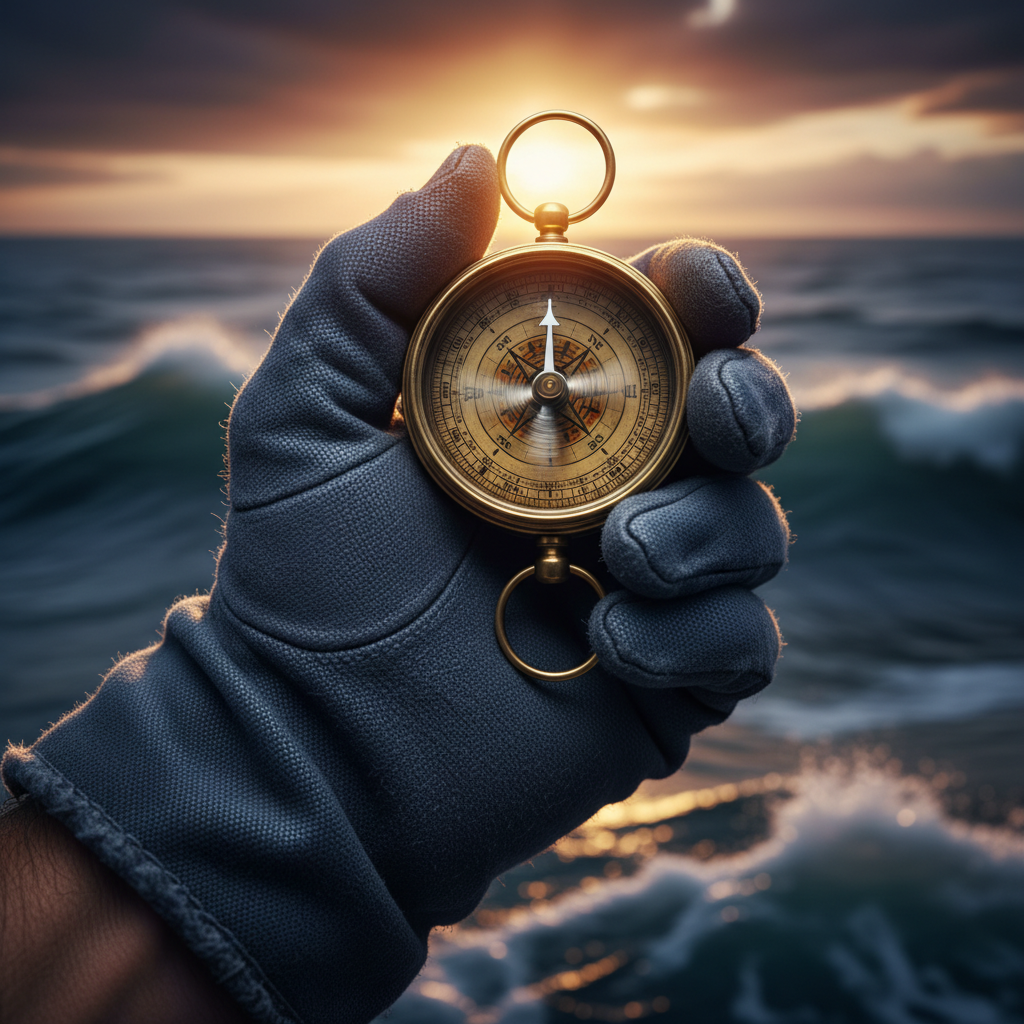
Consider the debate surrounding fishing regulations. Some argue for strict quotas and closures based on scientific models and statistical data. While these models can be helpful, they often fail to account for the complex ecological interactions and the localized knowledge of the fishing communities. Fishermen who have spent their lives observing the behavior of fish and the dynamics of the ocean ecosystem may possess insights that are not captured by the scientific map. A truly effective approach to fisheries management requires a willingness to listen to diverse perspectives and to integrate both scientific data and local knowledge.
The key is to cultivate a spirit of open-mindedness and a willingness to question our own assumptions. We must be willing to update our mental maps as new information becomes available and to adapt our strategies in response to changing circumstances. The power of observation, the ability to see the world with fresh eyes and to learn from our experiences, is far more valuable than any static map.
Navigating the Unknown: Embracing Uncertainty
So, what do we do when the map stops making sense? How do we navigate through the uncharted waters of life when the familiar landmarks disappear? The answer lies in embracing uncertainty, in accepting the inherent ambiguity of the human experience. This is not to say that we should abandon all plans and expectations, but rather that we should hold them loosely, recognizing that they are subject to change.
Think of the early explorers who ventured into uncharted territories. They didn’t have detailed maps or GPS devices to guide them. They relied on their intuition, their resourcefulness, and their ability to adapt to unforeseen challenges. They faced storms, navigated treacherous currents, and encountered hostile natives. Yet, they persevered, driven by a spirit of adventure and a thirst for discovery. Their success was not guaranteed, but they were willing to take risks and to embrace the unknown.
Similarly, in our own lives, we must be willing to step outside of our comfort zones and to explore new possibilities. We must be willing to experiment, to make mistakes, and to learn from our failures. We must be willing to let go of our attachment to control and to trust in the process of life. This requires courage, resilience, and a deep sense of self-belief. But the rewards are immeasurable. By embracing uncertainty, we open ourselves up to new experiences, new relationships, and new opportunities that we never could have imagined.
The Importance of Intuition and Emotional Intelligence
When the map fails, intuition becomes our most valuable compass. Intuition is not simply a gut feeling or a hunch; it is the culmination of years of experience, observation, and subconscious processing. It is the ability to recognize patterns and to make informed decisions without conscious reasoning. Fishermen often rely on their intuition to find fish, to predict weather patterns, and to navigate through treacherous waters. They have learned to trust their instincts, to listen to their inner voice, and to respond to the subtle cues of the natural world.

Emotional intelligence is also crucial for navigating the unknown. Emotional intelligence is the ability to understand and manage our own emotions and to empathize with the emotions of others. It allows us to build strong relationships, to communicate effectively, and to resolve conflicts peacefully. In a world that is increasingly complex and interconnected, emotional intelligence is becoming an essential skill for success.
When we are faced with uncertainty, our emotions can run high. We may feel anxious, fearful, or overwhelmed. It is important to acknowledge these emotions and to process them in a healthy way. By practicing mindfulness, we can learn to observe our thoughts and feelings without judgment and to respond to them with compassion and understanding. This allows us to make clear and rational decisions, even in the face of adversity.
The Art of Improvisation: Adapting to Change
Life, in many ways, is an improvisation. We are constantly responding to unexpected events and adapting to changing circumstances. The ability to improvise, to think on our feet and to come up with creative solutions, is essential for navigating the complexities of modern life.
Imagine a jazz musician who is performing live on stage. He doesn’t have a pre-written score to follow. He relies on his musical skills, his intuition, and his ability to collaborate with his fellow musicians. He listens to the rhythms, feels the energy of the audience, and responds in the moment, creating a unique and spontaneous performance. His success depends on his ability to improvise, to adapt to the unexpected, and to create something beautiful out of chaos.
Similarly, in our own lives, we must be willing to embrace the spirit of improvisation. We must be willing to let go of our rigid plans and expectations and to trust in our ability to adapt to changing circumstances. We must be willing to experiment, to take risks, and to learn from our mistakes. This requires a certain level of flexibility, creativity, and resilience. But the rewards are immeasurable. By embracing the art of improvisation, we can transform challenges into opportunities and create a life that is both meaningful and fulfilling.
The Value of Mentorship and Collaboration
No one can navigate the unknown alone. Mentorship and collaboration are essential for personal and professional growth. A mentor can provide guidance, support, and encouragement, helping us to navigate challenges and to achieve our goals. Collaboration allows us to leverage the skills and expertise of others, to learn from diverse perspectives, and to create solutions that are greater than the sum of their parts.
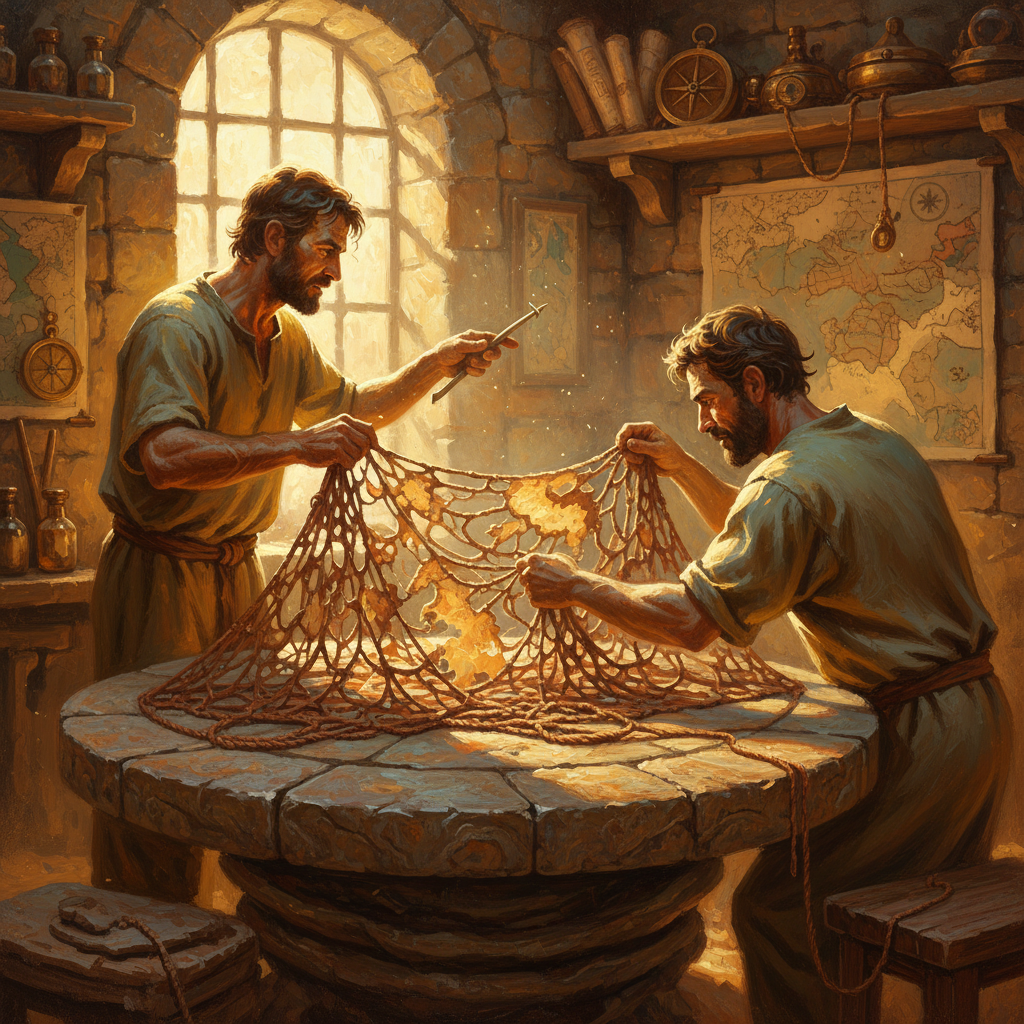
Think about the relationship between a master fisherman and his apprentice. The master fisherman shares his knowledge, skills, and experience with the apprentice, guiding him through the intricacies of the craft. The apprentice learns by observing, by listening, and by practicing. He gradually develops his own skills and expertise, eventually becoming a master fisherman himself. This process of mentorship and apprenticeship is essential for the transmission of knowledge and the preservation of traditions.
In our own lives, we should seek out mentors who can provide guidance and support. We should also be willing to mentor others, sharing our knowledge and expertise with those who are just starting out. By fostering a culture of mentorship and collaboration, we can create a more supportive and empowering environment for everyone.
Beyond the Map: Finding Meaning in the Journey
Ultimately, the journey is more important than the destination. The map, whether literal or metaphorical, is simply a tool to help us navigate through life. It is not the purpose of life itself. The purpose of life is to learn, to grow, to connect with others, and to find meaning in our experiences. When the map stops making sense, it is an opportunity to step outside of our comfort zones and to explore new possibilities. It is an opportunity to embrace uncertainty, to trust our intuition, and to create a life that is both meaningful and fulfilling.
Think about the fisherman who returns from a long and arduous voyage without having caught a single fish. He may feel disappointed, but he has also learned valuable lessons about the ocean, about himself, and about the importance of perseverance. He has faced challenges, overcome obstacles, and experienced the beauty and the power of nature. He has grown as a person, and he has enriched his life in ways that cannot be measured in dollars or cents.
So, the next time you find yourself lost and disoriented, remember that the map is not the territory. The world is far more complex and unpredictable than any map can capture. Embrace the unknown, trust your instincts, and enjoy the journey. For it is in the journey, not in the destination, that we find the true meaning of life.
The shifting landscape, the unreliable map, the unexpected storm – these are all metaphors for the challenges and uncertainties we face in life. But they are also opportunities for growth, for learning, and for discovering the depths of our own resilience. When the map stops making sense, we are forced to rely on our inner compass, to trust our intuition, and to navigate by the stars. And it is in this process of navigating the unknown that we truly discover who we are and what we are capable of achieving. The map may fail, but the spirit of adventure, the thirst for knowledge, and the human capacity for adaptation will always guide us forward.