The Illusion of the Perfect Bait
We’ve all been there. Standing at the edge of the water, tackle box open, a kaleidoscope of artificial lures staring back at us, each promising the fish of a lifetime. The marketing is relentless: “Irresistible action!” “Lifelike colors!” “Guaranteed to catch!” It’s a siren song luring us into believing that the perfect bait is just one purchase away. But what if the quest for the “perfect bait” is, in itself, a distraction from the real secrets of successful fishing? What if the uncomfortable truth is that no single bait reigns supreme, and the real magic lies in understanding something far more complex?
This isn’t to say that bait doesn’t matter. Of course, it does. But the obsession with finding the one, ultimate lure often overshadows the crucial elements that separate a skilled angler from someone who simply gets lucky. We’ll delve into those elements, exposing the uncomfortable truths that the fishing industry often prefers to keep hidden beneath layers of enticing advertising.
Beyond the Hype: Understanding Fish Behavior
The Environmental Context
Imagine serving a gourmet steak to someone who just finished a Thanksgiving feast. The quality of the steak is irrelevant; they’re simply not hungry. Similarly, presenting the most exquisitely crafted lure to a fish that isn’t actively feeding is a futile exercise. Fish behavior is inextricably linked to their environment. Water temperature, oxygen levels, time of day, weather patterns, and the presence of natural prey all play a significant role in dictating their feeding habits.
Consider a scenario: You’re fishing for bass on a sunny afternoon. The surface temperature is high, and the bass have retreated to deeper, cooler waters, seeking refuge from the heat. In this situation, a topwater lure, regardless of its “perfect” design, is unlikely to entice a strike. A better approach would be to use a jig or a deep-diving crankbait, presenting the bait where the fish are actually holding. Understanding these environmental cues is far more crucial than relying on a “miracle” lure.
The Predator-Prey Dynamic
Fish are opportunistic predators. They’re constantly assessing the cost-benefit ratio of pursuing a potential meal. Is the prey worth the energy expenditure? Is it easily accessible? Does it pose a threat? The “perfect bait,” therefore, isn’t just about mimicking the appearance of prey; it’s about mimicking its behavior in a way that triggers a predatory response. A lure that perfectly imitates a minnow in terms of appearance but is retrieved in a jerky, unnatural manner is less likely to be successful than a lure that moves erratically, suggesting vulnerability.
For example, when fishing for trout in a stream, observe the natural insects that are present. Are they mayflies, caddisflies, or stoneflies? What is their size and color? More importantly, how are they drifting in the current? Matching your fly to the natural insects and presenting it in a realistic manner is far more effective than simply using a brightly colored, generic fly that looks “fishy.”

The Learning Curve: Fish Aren’t Foolproof
Fish aren’t mindless automatons that blindly strike at anything that resembles food. They learn, adapt, and develop preferences. If a particular lure is heavily used in a specific area, the fish may become conditioned to avoid it. This is especially true in pressured waters where fish are frequently caught and released. In such environments, it’s often necessary to experiment with different lures, retrieves, and presentations to find something that the fish haven’t encountered before. The “perfect bait” becomes a moving target, constantly evolving as the fish adapt.
Think about fishing a heavily trafficked lake. Everyone is throwing the same crankbaits and spinnerbaits. The bass have seen it all. In this scenario, a subtle change in presentation, such as slowing down your retrieve or adding a pause, can make all the difference. Or, perhaps switching to a less common lure, like a swimbait or a jig, can trigger a response from fish that have become wary of the usual offerings.
The Angler’s Mindset: Patience, Observation, and Adaptation
The Power of Observation
The most crucial piece of equipment an angler possesses isn’t a state-of-the-art rod or a collection of expensive lures; it’s their ability to observe. Paying attention to the subtle cues in the environment – the wind direction, the water clarity, the presence of baitfish, the activity of other wildlife – can provide invaluable insights into the behavior of the fish. Are the birds actively feeding on the surface? Are there signs of fish chasing baitfish? Is the water cloudy or clear? These observations can help you choose the right bait, presentation, and location.
For instance, imagine you’re fishing a saltwater flat. You notice a flock of birds diving into the water, indicating a school of baitfish being pushed to the surface. This is a clear sign that predatory fish, such as snook or redfish, are likely nearby. In this situation, a lure that mimics the size and action of the baitfish would be a logical choice. But, even more importantly, your observation skills led you to the active feeding zone. No “perfect bait” can compensate for fishing in an area devoid of fish.
The Virtue of Patience
Fishing is often a game of patience. It requires the ability to endure long periods of inactivity, to resist the urge to constantly switch lures, and to trust your instincts. The “perfect bait” won’t magically produce results on every cast. Sometimes, it takes time for the fish to find your bait, to become curious, or to become hungry enough to strike. Rushing the process, or giving up too easily, can be detrimental to your success.
Consider a scenario where you’re fishing for musky, a notoriously difficult fish to catch. You might spend an entire day casting a large, expensive lure without a single bite. It would be easy to become discouraged and switch to a different species. But experienced musky anglers understand that patience is key. They know that it can take hundreds of casts to trigger a strike from these elusive predators. Their commitment, not the “perfect bait,” is what ultimately leads to success.
The Art of Adaptation
The hallmark of a successful angler is their ability to adapt to changing conditions. What worked yesterday may not work today. The fish may have moved to a different location, changed their feeding habits, or become wary of a particular lure. Being able to recognize these changes and adjust your strategy accordingly is essential. The “perfect bait” is not a static entity; it’s a dynamic concept that evolves with the environment and the behavior of the fish.
Imagine you’re fishing a lake for bass. In the morning, they were actively feeding on topwater lures. But as the sun rises higher, the surface temperature increases, and the bass retreat to deeper water. In this situation, you need to adapt your strategy. Switching to a deep-diving crankbait or a jig, and targeting structure in deeper water, would be a more effective approach. Your ability to adapt, not the initial “perfect bait,” determines your continued success.
Debunking the Myths: Common Bait-Related Fallacies
The “One-Size-Fits-All” Bait
The notion that there’s a single bait that works in all conditions, for all species, is a fallacy. Different fish have different preferences, and their preferences change depending on the environment. A lure that’s effective for bass in a murky lake might be completely useless for trout in a clear stream. Trying to force a “one-size-fits-all” bait on every fishing situation is a recipe for disappointment.
The “Expensive Bait = Better Results” Equation
Price is not always an indicator of effectiveness. While some expensive lures are undoubtedly well-made and feature innovative designs, they don’t necessarily guarantee better results. A simple, inexpensive lure that’s presented correctly can often outperform a high-end lure that’s used improperly. Focus on understanding the fundamentals of bait presentation rather than relying on the price tag.
The “Guaranteed to Catch” Guarantee
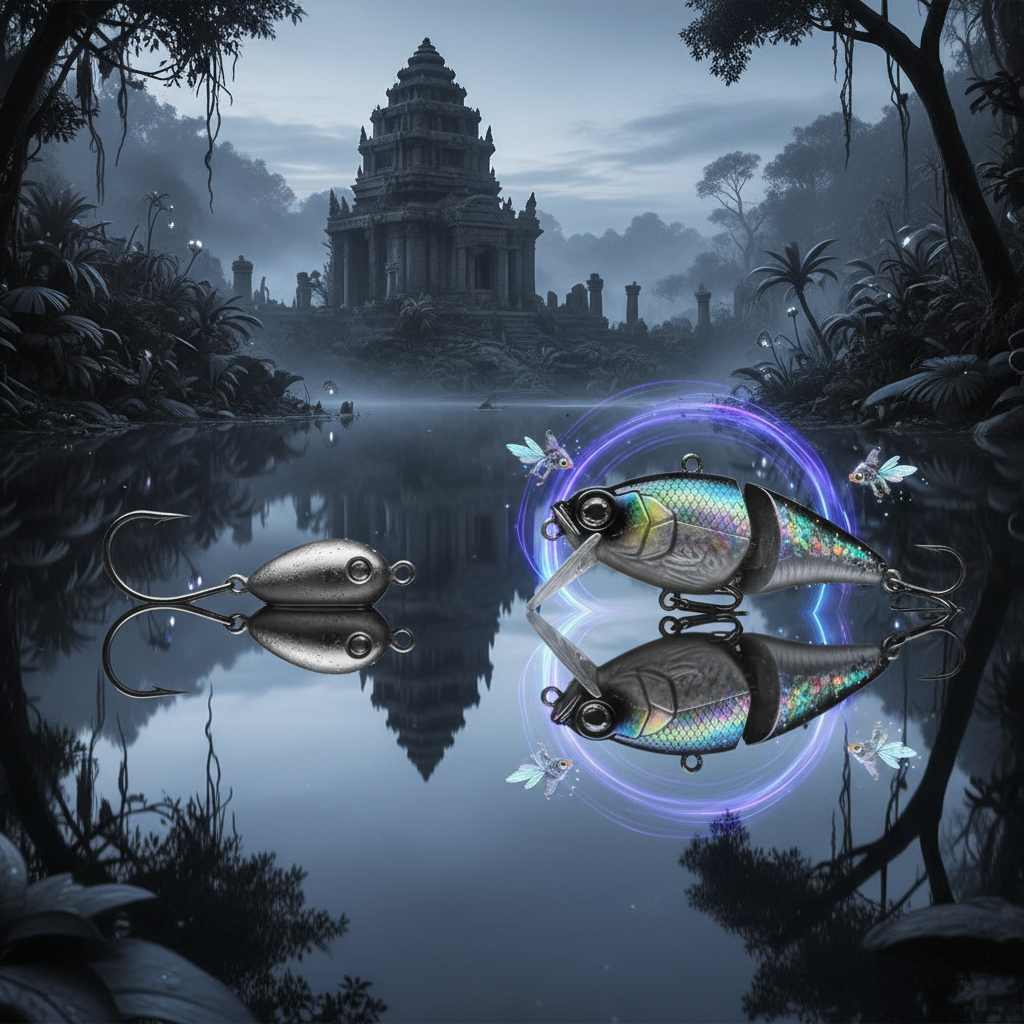
Any marketing claim that promises guaranteed catches should be viewed with skepticism. Fishing is inherently unpredictable. There are too many variables involved to guarantee success. The “perfect bait” doesn’t exist, and no lure can overcome factors such as weather, water conditions, or fish behavior. Be wary of exaggerated claims and focus on developing your own skills and knowledge.
The Real Secret Weapon: Mastering the Fundamentals
Knot Tying: The Unsung Hero
A strong knot is arguably more important than the bait itself. A poorly tied knot can fail at the most critical moment, costing you the fish of a lifetime. Mastering a few essential knots, such as the Palomar knot, the Improved Clinch knot, and the Uni knot, is a fundamental skill that every angler should prioritize. Practice tying these knots regularly, and always inspect them before each cast. The “perfect bait” is useless if it’s not securely attached to your line.
Line Management: Avoiding Tangled Frustration
Proper line management is crucial for smooth casting and effective hooksets. Overfilled spools, tangled line, and worn-out line can all negatively impact your fishing experience. Regularly inspect your line for abrasions and replace it when necessary. Learn how to properly spool your reel and avoid overfilling it. Use a line conditioner to reduce friction and improve casting distance. Smooth, trouble-free line is essential for presenting the “perfect bait” effectively.
Hook Sharpening: The Edge You Need
A sharp hook is essential for penetrating the fish’s mouth and securing a solid hookset. Many lures come with hooks that are less than razor-sharp. Investing in a hook sharpener and learning how to properly sharpen your hooks can significantly increase your hookup ratio. A slightly dull hook can mean the difference between landing a fish and losing it. The “perfect bait” needs a perfect hook to be truly effective.
Case Studies: When the “Perfect Bait” Failed
The Clear Water Conundrum
Imagine fishing a crystal-clear lake on a sunny day. You’re using the latest, most realistic swimbait on the market, convinced that it will fool even the most discerning bass. However, after hours of casting, you haven’t had a single bite. What went wrong? The problem likely isn’t the bait itself, but rather the environment. In clear water, fish are often more cautious and easily spooked. The realistic swimbait, while visually appealing, might be too aggressive for the conditions. A better approach would be to downsize your bait, use a lighter line, and present it in a more subtle manner. The “perfect bait” in this scenario is one that blends in, not one that stands out.
The Pressured Waters Paradox
Consider fishing a heavily pressured lake where the bass have seen every lure imaginable. You’re using a popular crankbait that’s known for catching fish, but you’re getting no results. The fish have become conditioned to avoid the typical offerings. They’ve learned that the familiar vibrations and movements of the crankbait signal danger. In this situation, you need to think outside the box. Try using a less common lure, such as a jig or a swimbait, or experiment with different retrieves and presentations. The “perfect bait” in pressured waters is often something unexpected.

The Weather-Dependent Dilemma
Imagine fishing during a sudden cold front. The water temperature has dropped, and the fish have become lethargic and inactive. You’re using your favorite topwater lure, expecting the bass to eagerly strike at it. However, the fish are simply not interested. Their metabolism has slowed down, and they’re conserving energy. In this situation, a slow-moving, bottom-dwelling bait, such as a jig or a Texas-rigged worm, would be a more effective choice. The “perfect bait” adapts to the weather conditions.
Beyond the Bait: The Holistic Approach to Fishing
Ultimately, successful fishing is about more than just finding the “perfect bait.” It’s about understanding the complex interplay between fish behavior, environmental conditions, and angler skill. It’s about developing a holistic approach that encompasses observation, patience, adaptation, and a deep respect for the natural world. Instead of chasing the elusive promise of a miracle lure, focus on mastering the fundamentals, honing your skills, and becoming a more observant and adaptable angler. The real “perfect bait” is the knowledge and experience you accumulate over time.
Embrace the Imperfection
So, the uncomfortable truth is this: there is no “perfect bait.” The sooner we accept this reality, the sooner we can focus on what truly matters – understanding the fish, the environment, and ourselves. Embrace the challenge of adapting to changing conditions, experimenting with different techniques, and learning from our mistakes. The journey of becoming a skilled angler is a lifelong pursuit, and the real reward lies not in finding the ultimate lure, but in the knowledge, experience, and appreciation for the natural world that we gain along the way. The fish are out there, waiting to be discovered. It’s up to us to learn how to find them, not through the magic of a single lure, but through the application of knowledge and skill.
Forget the hype, ignore the marketing, and embrace the messy, unpredictable, and ultimately rewarding process of learning to truly fish. The “perfect bait” is a myth, but the potential for an incredible fishing experience is very, very real.