The Subtle Art of Casting: Beyond the Basics
We’ve all been there. Standing on the bank, rod in hand, dreaming of that perfect presentation. But the lure lands short, or to the side, or with a splash that sends every fish within a mile scattering for cover. Casting, at its most fundamental, is about delivering your bait or lure to a specific location. But achieving true accuracy, the kind that consistently puts your offering in the strike zone, requires more than just brute force. It demands finesse, understanding, and a subtle trick that can transform your casting game.
Many anglers focus on power, believing that a stronger cast equates to a more accurate one. This is a fallacy. Overpowering a cast often leads to tailing loops, wind knots, and a general lack of control. True accuracy stems from a smooth, controlled motion, a deep understanding of rod loading, and, most importantly, a consistent release point. But even with perfect form, something can still be missing. That “something” is the mental connection between intention and execution.
Unlocking the Mental Game
Think of a basketball player shooting a free throw. They don’t just hurl the ball towards the hoop. They visualize the trajectory, feel the release, and maintain a laser-like focus on the target. The same principle applies to casting. Before you even begin your backcast, you need to mentally “see” the lure landing exactly where you want it to. This isn’t some new-age mumbo jumbo; it’s about priming your nervous system to execute the movements necessary to achieve your desired outcome.
The “trick” that elevates casting accuracy isn’t a physical adjustment, but a mental one: Target Fixation. Not just generally looking in the direction you want to cast, but intensely focusing on the EXACT spot where you want your lure to land, from the moment you start your backcast until the lure hits the water.

The Power of Target Fixation
Target fixation is a well-documented phenomenon in various fields, from motorcycle riding to aviation. In essence, it describes the tendency to move towards whatever you are focusing on. A motorcyclist who fixates on an obstacle in the road is more likely to steer directly into it. A pilot who focuses on a nearby aircraft is more likely to drift towards it. This same principle applies to casting.
When you intensely focus on your target, your subconscious mind takes over, subtly adjusting your movements to align with your intended destination. Your arm, wrist, and hand automatically make minute corrections to your casting stroke, optimizing the trajectory and power of the cast. It’s like your body becomes a finely tuned instrument, guided by the unwavering focus of your mind.
How to Implement Target Fixation
Implementing target fixation is simple in theory, but requires practice and discipline in execution. Here’s a step-by-step guide:
- Identify Your Target: Before you even pick up your rod, visually identify the exact spot where you want your lure to land. This could be a specific rock, a patch of submerged vegetation, or a small eddy behind a fallen log.
- Maintain Focus Throughout the Cast: From the moment you begin your backcast, keep your eyes glued to your target. Resist the urge to look at your rod, your line, or anything else. Your entire attention should be locked on that single point.
- Visualize the Trajectory: As you begin your forward cast, visualize the lure flying through the air, following the perfect trajectory to your target. See it landing softly and precisely where you intended.
- Follow Through: Even after you release the line, continue to focus on the target for a brief moment. This helps reinforce the mental connection and ensures a complete and deliberate cast.
It’s crucial to understand that target fixation isn’t about staring blankly in the general direction of your target. It’s about intensely focusing on a specific point, with unwavering concentration. The more detailed your mental image, the more effective the technique will be. See the lure landing, visualize the ripples it creates, and even imagine the fish rising to take the bait.
Troubleshooting Common Casting Problems with Target Fixation
Many common casting problems can be directly addressed by implementing and refining your target fixation technique.
Problem: Inconsistent Distance
If you’re struggling to consistently cast the same distance, it’s likely that your focus is wavering during the cast. You might be looking at your rod tip, or checking your line, or simply losing concentration as you execute the forward stroke. By maintaining unwavering focus on the target, you’ll naturally regulate the power and speed of your cast, leading to more consistent distances.
Problem: Inaccurate Direction
Casting to the left or right of your intended target is a classic symptom of poor target fixation. Your mind is likely wandering, or you’re subconsciously anticipating the outcome of the cast. By intensely focusing on the target, you’ll naturally align your body and your casting stroke to achieve the desired direction. Think of it like aiming a gun; you wouldn’t glance away from the target just as you pull the trigger.
Problem: Slapping the Water
A loud, disruptive entry into the water often indicates a lack of finesse and control. Overpowering the cast, or failing to properly feather the line, can cause the lure to crash down with unnecessary force. Target fixation can help mitigate this problem by promoting a smoother, more controlled casting stroke. By visualizing the lure landing softly and precisely, you’ll naturally adjust your technique to achieve a more delicate presentation.

Case Studies: Real-World Examples
The effectiveness of target fixation isn’t just theoretical. Many experienced anglers and casting instructors swear by the technique. Here are a few real-world examples:
Case Study 1: The Tournament Angler
A professional bass angler was struggling with his accuracy during tournaments. He was consistently casting short or wide of his intended targets, costing him valuable opportunities. After working with a casting coach who emphasized target fixation, he saw a dramatic improvement in his accuracy. By consciously focusing on the specific spots where he believed fish were holding, he was able to consistently deliver his lures with pinpoint precision. This led to a significant increase in his catch rate and ultimately helped him win several tournaments.
Case Study 2: The Fly Fishing Guide
A fly fishing guide who specialized in small stream trout fishing was having trouble teaching his clients to cast accurately in tight quarters. The dense vegetation and overhanging branches made it difficult for them to consistently place their flies in the strike zone. By introducing the concept of target fixation, he was able to help his clients improve their accuracy dramatically. He instructed them to focus on specific spots on the water, such as the edge of a foam line or a small pocket behind a rock, and to visualize their flies landing softly and precisely in those locations. This simple technique helped his clients overcome their casting anxieties and significantly improve their fishing success.
Case Study 3: The Weekend Warrior
An amateur angler who enjoyed fishing on weekends was frustrated by his inconsistent casting accuracy. He would often spend hours on the water without catching a single fish, simply because he couldn’t get his lure to the right spot. After reading about target fixation online, he decided to give it a try. He started practicing in his backyard, focusing on specific targets like trees and bushes. He quickly noticed a significant improvement in his accuracy. He was now able to consistently cast to the spots where he knew fish were likely to be holding, and his catch rate increased dramatically. He attributed his newfound success entirely to the power of target fixation.
Beyond Casting: The Broader Implications of Focused Intention
The principles of target fixation extend far beyond the realm of fishing. It’s a fundamental concept that applies to any skill that requires precision and control. Whether you’re playing golf, shooting darts, or even writing a novel, the ability to focus your attention on a specific target and maintain that focus throughout the execution of the task is crucial for success.
Think about a surgeon performing a delicate operation. Their entire focus is on the specific area they are working on, with unwavering concentration. They visualize the procedure, anticipate potential complications, and make minute adjustments to their movements to ensure a successful outcome. This level of focused intention is what separates a skilled surgeon from a novice.
The same principle applies to any creative endeavor. A writer who is struggling to craft a compelling story needs to focus on the specific message they want to convey, and to maintain that focus throughout the writing process. They need to visualize the characters, the setting, and the plot, and to allow their subconscious mind to guide their writing. This level of focused intention is what allows a writer to create truly memorable and impactful stories.

Refining Your Target Fixation: Practice and Patience
Like any skill, target fixation requires practice and patience. Don’t expect to become a casting master overnight. Start by practicing in a controlled environment, such as your backyard or a local park. Set up specific targets, like buckets or hula hoops, and focus on consistently casting to those targets. As you become more proficient, gradually increase the distance and complexity of the targets.
Pay attention to your body language and your mental state. Are you tense or relaxed? Are you focused or distracted? The more aware you are of your own internal state, the better you’ll be able to control your focus and improve your accuracy. Experiment with different techniques to help you maintain your focus, such as deep breathing exercises or visualization techniques.
Don’t get discouraged if you experience setbacks. Everyone has bad days, even the most experienced anglers. The key is to stay persistent and to keep practicing. The more you practice, the more natural target fixation will become, and the more consistently you’ll be able to cast with pinpoint accuracy.
The Ultimate Casting Secret: Belief
Ultimately, the most important ingredient for improving your casting accuracy isn’t just target fixation, but belief. You have to truly believe that you are capable of casting accurately. You have to trust in your abilities and to have faith in your potential. This belief will fuel your motivation, your persistence, and your willingness to practice. It will also help you overcome any doubts or anxieties that might be holding you back.
Many anglers sabotage their own success by harboring negative thoughts and beliefs. They tell themselves that they’re not good casters, or that they’ll never be able to master a particular technique. These negative beliefs become self-fulfilling prophecies, limiting their potential and hindering their progress. To break free from these limiting beliefs, you need to consciously challenge them and replace them with positive affirmations. Tell yourself that you are a skilled caster, that you are capable of achieving your goals, and that you are constantly improving. The power of positive thinking is a real and tangible force that can transform your fishing game.
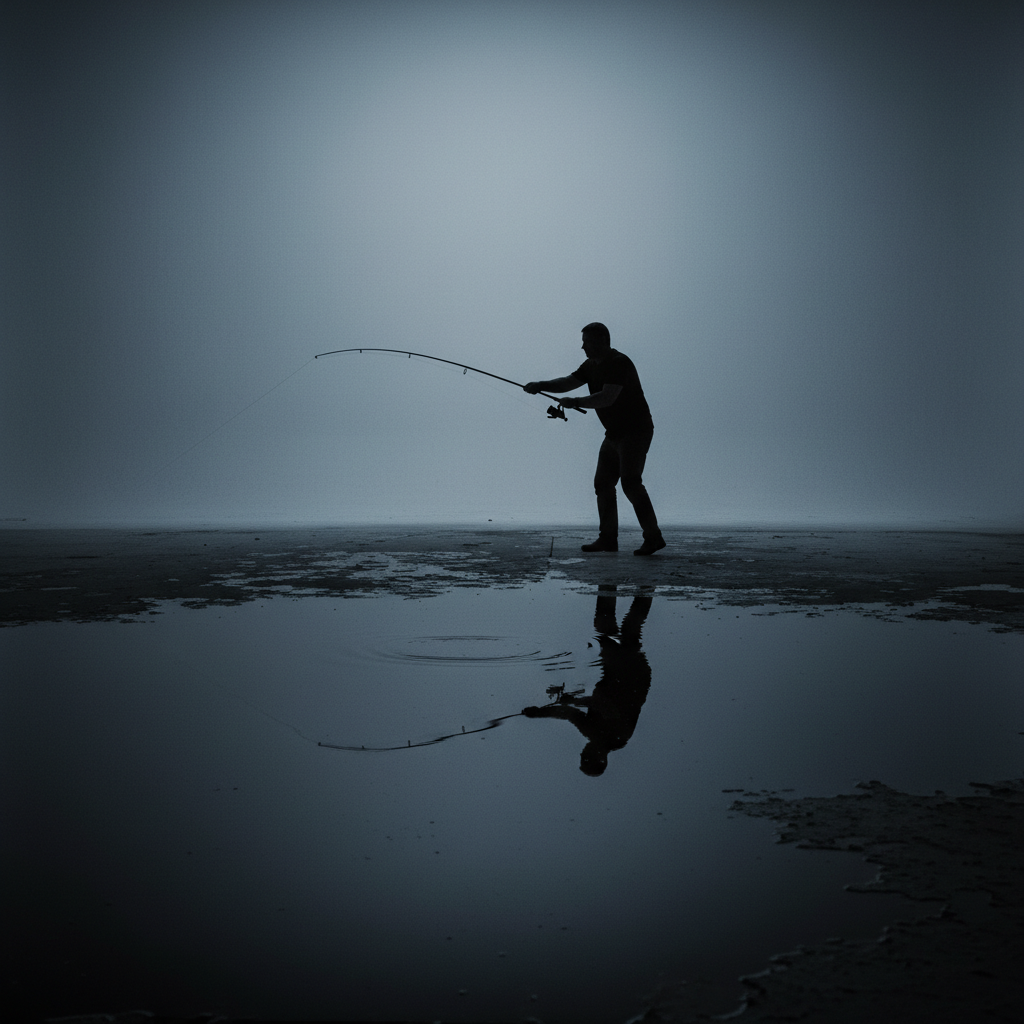
So, the next time you’re on the water, remember the power of target fixation. Focus your mind, visualize your target, and trust in your abilities. With practice, patience, and unwavering belief, you can unlock your casting potential and transform your fishing game.
The journey to casting mastery is a continuous process of learning, refining, and adapting. Embrace the challenges, celebrate the successes, and never stop striving to improve. The rewards are well worth the effort. The satisfaction of placing your lure with pinpoint accuracy, and watching a fish rise to take the bait, is a feeling that every angler cherishes.