Unlocking the Secrets of the Perfect Cast
The cast. It’s the foundation upon which every fishing adventure is built. A graceful arc, a smooth release, and the satisfying *zip* of the line as your lure or bait soars toward its intended target. But for many anglers, achieving that perfect cast feels more like a stroke of luck than a reliable skill. We’ve all been there – the frustrating bird’s nest of tangled line, the lure that plops down just a few feet in front of you, the endless adjustments and tweaks that never seem to quite get you where you need to be. But what if I told you there was a single, often overlooked technique that could instantly improve your cast? A technique so simple, yet so powerful, that it could transform your accuracy, distance, and overall fishing experience? It’s not about buying the most expensive gear or mastering complex trick casts. It’s about understanding and implementing a fundamental principle of motion and leverage. Are you ready to unlock the secrets?
The Power of the Pause: A Micro-Moment of Mastery
The secret lies in the pause. Not just any pause, but a deliberate, intentional pause at a specific point in your casting motion. This isn’t about slowing down your cast; it’s about creating a brief moment of stillness to allow the rod to fully load and unleash its power. Think of it like drawing back a bow and arrow. You wouldn’t just yank the string back and release it haphazardly, would you? You’d draw it back smoothly, feel the tension build in the bow, and then hold it momentarily before releasing, allowing the energy to transfer efficiently to the arrow. The pause in your cast achieves the same effect. It allows the rod to become fully loaded, maximizing the energy transfer to your line and lure. This translates to greater distance, improved accuracy, and a smoother, more controlled cast.
But where exactly should this pause occur? That’s the crucial part. The pause should happen at the apex of your backcast, just before you begin your forward cast. This is the point where the rod is bent to its maximum, storing the most potential energy. Holding this position for just a fraction of a second – a count of “one-thousand-one” – allows the rod to fully load and stabilize. This seemingly insignificant pause makes all the difference.
Why the Pause Works: Understanding Rod Loading
To truly appreciate the power of the pause, you need to understand the concept of rod loading. A fishing rod isn’t just a stick; it’s a spring. When you cast, you’re essentially bending the rod, storing energy within its fibers. This stored energy is then released, propelling your line and lure forward. The more fully the rod is loaded, the more energy it can store and the farther you can cast. Without the pause, the rod may not fully load, resulting in a weaker, less efficient cast. The pause gives the rod that extra fraction of a second to reach its maximum load, ensuring that you’re getting the most out of your equipment. Imagine trying to throw a ball without winding up your arm. You might be able to throw it a short distance, but you wouldn’t be able to generate much power. The backcast and the pause are like winding up your arm – they allow you to build momentum and transfer it to the ball (or in this case, your lure).
Consider different rod actions. A fast-action rod, which bends primarily at the tip, requires a quicker, more forceful casting stroke and a shorter pause. A slow-action rod, which bends more throughout its length, requires a slower, more deliberate casting stroke and a slightly longer pause. Experimenting with different rod actions and adjusting your pause accordingly will help you fine-tune your casting technique and maximize your distance and accuracy.

Practical Application: Mastering the Paused Cast
Now that you understand the theory behind the paused cast, let’s put it into practice. Here’s a step-by-step guide to incorporating this technique into your casting routine:
Step-by-Step Guide to the Paused Cast
- Start with a Smooth Backcast: Begin your cast with a smooth, controlled backcast. Avoid jerky or abrupt movements, as these can disrupt the rod loading and reduce your accuracy. Imagine you’re painting a smooth arc in the air with your rod tip.
- Pause at the Apex: As your rod reaches the apex of its backcast, pause for just a fraction of a second. A count of “one-thousand-one” is usually sufficient. Focus on feeling the rod load and stabilize. This is the critical moment where the magic happens.
- Forward Cast with Controlled Power: Initiate your forward cast with a smooth, controlled motion. Avoid overpowering the cast, as this can lead to tailing loops and reduced distance. Let the rod do the work.
- Release at the Optimal Angle: Release the line at the optimal angle for your desired trajectory. This usually occurs when the rod is pointing slightly above your target. Experiment with different release angles to find what works best for you.
- Follow Through: Follow through with your casting motion, keeping your rod tip pointed towards your target. This helps maintain a smooth, consistent cast and ensures that the line travels in the desired direction.
Troubleshooting Common Casting Issues
Even with the paused cast, you may still encounter some common casting issues. Here are a few troubleshooting tips:
- Tailing Loops: Tailing loops occur when the line crosses over itself during the cast, resulting in a tangled mess. This is often caused by overpowering the cast or using too much wrist. Try slowing down your casting stroke and using more of your forearm.
- Poor Distance: Poor distance can be caused by a variety of factors, including improper rod loading, incorrect line weight, or poor casting technique. Make sure you’re using the correct line weight for your rod and that you’re allowing the rod to fully load during your backcast.
- Inaccurate Casts: Inaccurate casts are often caused by inconsistent release angles or a lack of follow-through. Practice your casting motion and focus on releasing the line at the same point each time.
- Wind Issues: Casting into the wind can be challenging, but it’s not impossible. Try lowering your casting angle and using a faster casting stroke to cut through the wind. You can also use a heavier line or lure to help combat the wind’s resistance.
Remember, practice makes perfect. The more you practice the paused cast, the more natural it will become. Don’t be afraid to experiment with different casting styles and techniques to find what works best for you. Consider recording yourself casting to identify areas for improvement. Small adjustments can make a big difference.
Advanced Techniques: Taking Your Cast to the Next Level
Once you’ve mastered the basics of the paused cast, you can start exploring some advanced techniques to further enhance your casting abilities. These techniques require a deeper understanding of rod loading, line control, and casting mechanics. They can significantly improve your accuracy, distance, and presentation, especially in challenging fishing conditions.
The Double Haul: Power and Precision
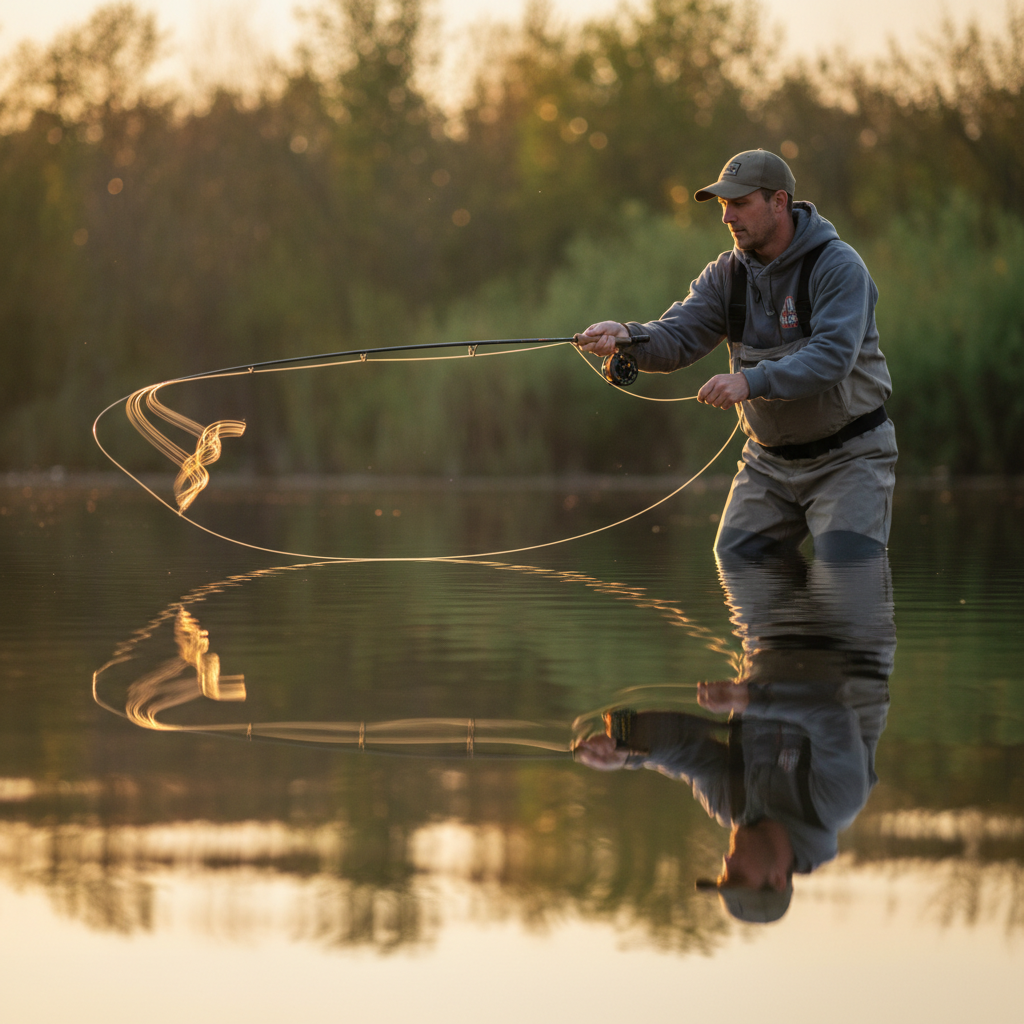
The double haul is an advanced casting technique that utilizes a series of line pulls to generate extra line speed and power. It’s commonly used in fly fishing to cast long distances or to cut through strong winds. The double haul involves pulling the line with your non-casting hand during both the backcast and the forward cast. This creates a surge of line speed that helps to load the rod more effectively and propel the line further. Mastering the double haul requires coordination and practice, but it can dramatically improve your casting performance.
The key to a successful double haul is timing. You need to synchronize your line pulls with the rod’s movements to maximize the energy transfer. The first haul typically occurs during the backcast, as the rod is loading. The second haul occurs during the forward cast, just before the line is released. The amount of line you pull during each haul will depend on the distance you’re trying to cast and the wind conditions. Start with small hauls and gradually increase the amount of line you pull as you become more comfortable with the technique. Practice in a large, open area to avoid tangling your line. Don’t be discouraged if it takes some time to get the hang of it. With patience and persistence, you’ll be casting like a pro in no time.
The Roll Cast: Overcoming Obstacles
The roll cast is a versatile casting technique that’s particularly useful when fishing in tight quarters or when there are obstacles behind you. It allows you to cast without a traditional backcast, making it ideal for situations where space is limited. The roll cast involves creating a loop of line on the water’s surface and then using the rod to roll the loop forward, propelling the line and lure towards your target. It’s a relatively simple technique to learn, but it requires precise timing and coordination.
To perform a roll cast, start by extending your rod forward and allowing the line to fall onto the water’s surface. Then, sweep the rod back in a smooth, controlled motion, creating a loop of line that rolls forward. As the loop reaches the end of its roll, flick your wrist to propel the line and lure towards your target. The key is to keep the loop moving forward and to avoid stopping the rod abruptly. Practice on a calm body of water to get a feel for the technique. Experiment with different rod angles and line lengths to find what works best for you. The roll cast is a valuable tool for any angler, especially when fishing in challenging environments.
The Sidearm Cast: Fighting the Wind
The sidearm cast is a technique used to cast under overhanging branches or into the wind. Instead of casting over your head, you cast parallel to the water, keeping the line low and out of the wind’s path. This technique requires a smooth, sweeping motion of the arm and wrist, and the release point is crucial for accuracy. The sidearm cast is particularly effective when fishing for bass in areas with heavy cover. By keeping the line low, you can avoid snagging on branches and increase your chances of landing a fish. Practice the sidearm cast in an open area to get a feel for the technique before using it in a real fishing situation.
The sidearm cast also helps to present the lure in a more subtle way, which can be beneficial when fishing for wary fish. By keeping the lure close to the water’s surface, you can avoid spooking the fish and increase your chances of getting a strike. The sidearm cast is a versatile technique that can be used in a variety of fishing situations. Whether you’re casting under overhanging branches, into the wind, or presenting a lure in a subtle way, the sidearm cast can help you catch more fish.
Gear Considerations: Matching Equipment to Technique
While technique is paramount, your gear also plays a crucial role in achieving the perfect cast. The right rod, reel, and line can significantly enhance your casting performance, while the wrong equipment can hinder your efforts. Understanding how your gear affects your cast is essential for maximizing your distance, accuracy, and overall fishing experience. It’s a symphony – technique and equipment working in harmony.
Rod Selection: Action and Power
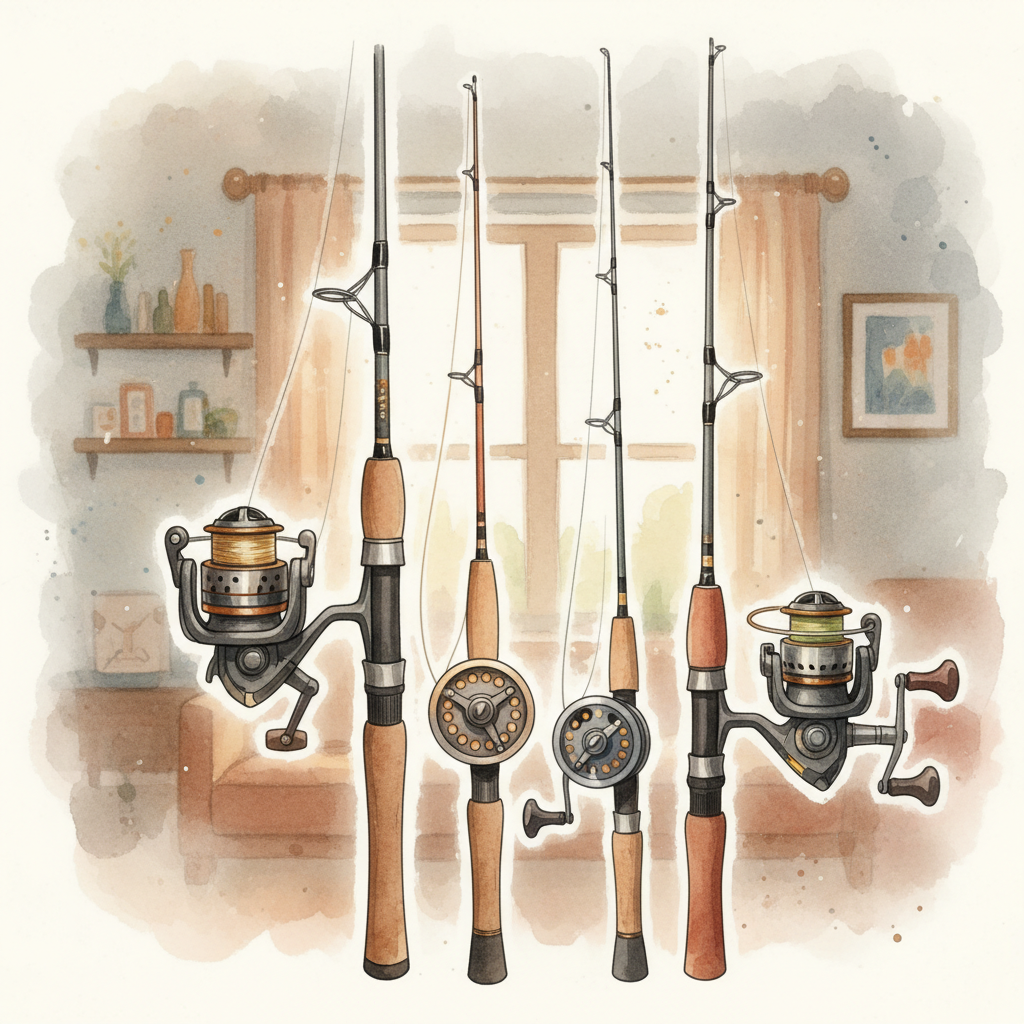
The action and power of your fishing rod are two of the most important factors to consider when selecting a rod for a particular casting technique. The action refers to where the rod bends when under pressure, while the power refers to the rod’s ability to handle different line weights and lure sizes. A fast-action rod bends primarily at the tip, making it ideal for casting lightweight lures and detecting subtle strikes. A slow-action rod bends more throughout its length, making it better for casting heavier lures and fighting larger fish. The power of the rod should be matched to the line weight and lure size you’ll be using. A rod that’s too powerful will be difficult to load, while a rod that’s not powerful enough will struggle to handle heavy lures and strong fish. Experiment with different rod actions and powers to find what works best for your casting style and fishing conditions.
Consider the length of the rod as well. Longer rods generally allow for longer casts, while shorter rods are easier to maneuver in tight spaces. The ideal rod length will depend on the type of fishing you’re doing and the size of the fish you’re targeting. For example, a long rod might be beneficial for surf fishing, where you need to cast long distances to reach the fish. A shorter rod might be more suitable for stream fishing, where you need to make precise casts in tight quarters.
Reel Choice: Smoothness and Line Capacity
The smoothness and line capacity of your fishing reel are also important considerations. A smooth reel will allow you to retrieve line effortlessly and will reduce the risk of line breakage. The line capacity of the reel should be sufficient for the type of fishing you’re doing. If you’re targeting large fish that are likely to run, you’ll need a reel with a high line capacity. If you’re fishing in a small stream, a reel with a lower line capacity might be sufficient. Choose a reel that’s well-balanced with your rod to ensure a comfortable and efficient casting experience. A reel that’s too heavy or too light will throw off your casting balance and make it more difficult to achieve accurate casts.
Consider the gear ratio of the reel as well. The gear ratio refers to the number of times the spool rotates for each turn of the handle. A higher gear ratio will allow you to retrieve line faster, which can be beneficial when fishing for fast-moving fish. A lower gear ratio will provide more power, which can be helpful when fighting large fish. The ideal gear ratio will depend on the type of fishing you’re doing and the species you’re targeting.
Line Selection: Type and Weight
The type and weight of your fishing line can significantly impact your casting distance, accuracy, and sensitivity. Monofilament line is a popular choice for its affordability and all-around performance. Braided line is stronger and more sensitive than monofilament, making it ideal for fishing in heavy cover or detecting subtle strikes. Fluorocarbon line is virtually invisible underwater, making it a good choice for fishing in clear water. The weight of the line should be matched to the rod’s recommended line weight range. Using a line that’s too heavy or too light can negatively affect your casting performance and increase the risk of line breakage. Experiment with different line types and weights to find what works best for your fishing style and conditions.
Consider the visibility of the line as well. In clear water, a low-visibility line is essential for avoiding spooking the fish. In murky water, a high-visibility line can help you track your line and detect strikes more easily. Choose a line color that blends in with the surrounding environment to minimize its visibility to the fish. Pay attention to the line’s stretch as well. Low-stretch lines offer greater sensitivity and hook-setting power, while high-stretch lines provide more shock absorption and can help prevent line breakage when fighting large fish.
Mental Game: Focus and Visualization
Beyond the physical technique and the right gear, the mental aspect of casting is often overlooked but equally important. A clear mind, focused attention, and positive visualization can significantly improve your casting performance. It’s about training your mind to work in harmony with your body, creating a seamless and efficient casting motion. Imagine your mind as the conductor of an orchestra, coordinating all the different elements to create a beautiful and harmonious sound. In the same way, your mind can orchestrate your casting motion, ensuring that all the different components work together seamlessly.
Cultivating Focus: Eliminating Distractions
Cultivating focus is essential for achieving accurate and consistent casts. In today’s fast-paced world, it’s easy to get distracted by external stimuli, such as noise, movement, or electronic devices. Learning to block out these distractions and focus your attention on the task at hand is crucial for improving your casting performance. Practice mindfulness techniques, such as deep breathing or meditation, to help calm your mind and enhance your focus. Before each cast, take a moment to clear your mind and visualize the perfect cast. Focus on the target, the feel of the rod loading, and the smooth release of the line. By eliminating distractions and focusing your attention, you can significantly improve your casting accuracy and consistency.
Consider creating a pre-casting routine to help you focus your mind. This routine might involve taking a few deep breaths, visualizing the cast, and checking your equipment. By following a consistent routine, you can train your mind to enter a state of focus and concentration, allowing you to perform at your best. Avoid multitasking or trying to do too many things at once. Focus on one cast at a time and give it your full attention.
The Power of Visualization: Seeing is Believing
Visualization is a powerful mental technique that can enhance your casting performance. By visualizing yourself making a perfect cast, you can program your subconscious mind to execute the motion flawlessly. Before each cast, close your eyes and imagine yourself going through the entire casting sequence, from the backcast to the release. Feel the rod loading, the line straightening, and the lure flying towards your target. The more vividly you can visualize the cast, the more likely you are to execute it successfully. Visualization is not just about seeing the cast in your mind’s eye; it’s about feeling it, experiencing it, and believing in it.
Use positive self-talk to reinforce your visualization. Tell yourself that you’re capable of making a perfect cast and that you’re confident in your abilities. Avoid negative thoughts or doubts, as these can undermine your confidence and hinder your performance. Practice visualization regularly, even when you’re not fishing. The more you practice, the more effective it will become. Combine visualization with physical practice to accelerate your learning and improve your casting skills.
The Journey to Mastery: Embracing the Process
Improving your cast is a journey, not a destination. It requires dedication, patience, and a willingness to learn and adapt. There will be times when you feel frustrated or discouraged, but it’s important to remember that every cast, even a bad one, is an opportunity to learn and improve. Embrace the process, celebrate your successes, and learn from your mistakes. The more you practice and experiment, the more confident and skilled you’ll become. Don’t be afraid to seek guidance from experienced anglers or fishing instructors. They can provide valuable insights and feedback that can help you accelerate your learning curve.
Remember that the perfect cast is not just about distance or accuracy; it’s about connecting with the water, the environment, and the fish. It’s about finding a rhythm and a flow that feels natural and effortless. It’s about experiencing the joy and satisfaction of a well-executed cast that puts you in the perfect position to catch a fish. So, take the time to practice, experiment, and refine your technique. Embrace the process, and enjoy the journey to mastery. The rewards will be well worth the effort. And who knows, maybe one day you’ll be the one sharing your knowledge and inspiring others to improve their cast.