The Unseen Enemy: Line Management for Beginner Anglers
The thrill of the first fishing trip is almost palpable. The crisp morning air, the promise of a tug on the line, the camaraderie (or solitary bliss) of being out on the water – it’s an experience that can hook you for life. You’ve researched the best spots, splurged on a shiny new rod and reel, and maybe even practiced your casting in the backyard. But amidst all the excitement, there’s a silent mistake that plagues countless first-timers, a seemingly insignificant detail that can turn a day of hopeful anticipation into a frustrating tangle of despair: poor line management.
It’s not about the brand of line you choose (though that matters eventually), or the specific knot you tie (though proficiency there is crucial too). It’s about understanding how the line behaves, how to prevent it from becoming a snarled mess, and how to react when the inevitable knot appears. It’s about mastering the subtle art of keeping your line in order, so you can focus on the real prize – the fish.
The Tangled Web of Frustration
Imagine this: you’ve finally found the perfect spot, cast your line with a graceful arc, and are patiently waiting for a bite. Suddenly, you feel a slight tug. Your heart leaps! You reel in, eager to land your first catch. But as you reel, the line becomes increasingly difficult to manage. You notice loops forming on the spool, and before you know it, you’re staring at a Gordian knot of fishing line that seems determined to resist all your efforts. Precious fishing time is wasted battling the tangle, and the fish, undoubtedly, has long since lost interest.
This scenario, unfortunately, is all too common for beginner anglers. It’s a frustrating experience that can easily lead to discouragement and a premature end to the fishing trip. But the good news is that with a little knowledge and preventative care, these line management nightmares can be avoided. So, let’s dive in and see how to keep that fishing line smooth, responsive, and ready for action.
Understanding Your Fishing Line
Before we get into the practical tips, it’s important to understand the basics of fishing line. There are several types of lines available, each with its own characteristics and properties. The three most common types are monofilament, fluorocarbon, and braided line.
The Big Three: Monofilament, Fluorocarbon, and Braid
Monofilament: This is the most common and affordable type of fishing line. It’s made from a single strand of nylon and is known for its elasticity, buoyancy, and ease of use. Monofilament is a good all-around choice for beginners, as it’s relatively forgiving and easy to handle. However, it has a tendency to stretch, which can reduce sensitivity when detecting bites. It also degrades over time from UV exposure.
Fluorocarbon: Fluorocarbon is virtually invisible underwater, making it a popular choice for wary fish. It’s also more abrasion-resistant than monofilament and has lower stretch. Fluorocarbon is denser than monofilament, so it sinks faster, which can be an advantage in certain fishing situations. However, it can be more expensive and a bit stiffer than monofilament, making it slightly more challenging to manage.
Braided Line: Braided line is made from multiple strands of synthetic fibers woven together. It’s incredibly strong, has virtually no stretch, and is very sensitive. Braided line is a good choice for situations where you need to feel every bite and have maximum pulling power. However, it’s also the most expensive type of line and can be more prone to tangling if not managed properly. It also floats, which isn’t always ideal. Its visibility can also be a concern in clear water.
Understanding the properties of each type of line will help you choose the right one for your fishing style and the type of fish you’re targeting. Your choice will influence the reel you select, how you cast, and the best ways to avoid tangles.
The Root Causes of Line Tangles
Now that we’ve covered the different types of lines, let’s delve into the common causes of line tangles. Understanding these causes is the first step in preventing them. It’s like understanding the enemy before you head to war. Knowledge of the enemy’s strategy, their most powerful weapons, and their most predictable tactics is key to taking them down. Tangles might not be enemy combatants, but they are definitely the enemy of a relaxing, productive fishing experience.
Overfilling the Spool
One of the most frequent causes of line tangles is overfilling the spool on your reel. When the spool is too full, the line can easily spill off, creating loops and knots. A good rule of thumb is to leave about 1/8 inch of space between the line and the edge of the spool. Check the reel manufacturer’s recommendations, too.
Think of it like pouring a drink. When you try to fill a glass to the very brim, you’re much more likely to spill the liquid all over the place. Leaving a little space at the top prevents that from happening. The same principle applies to your fishing reel. A slightly under-filled spool will give the line room to breathe and prevent it from jumping off unexpectedly.
Incorrect Spooling Technique
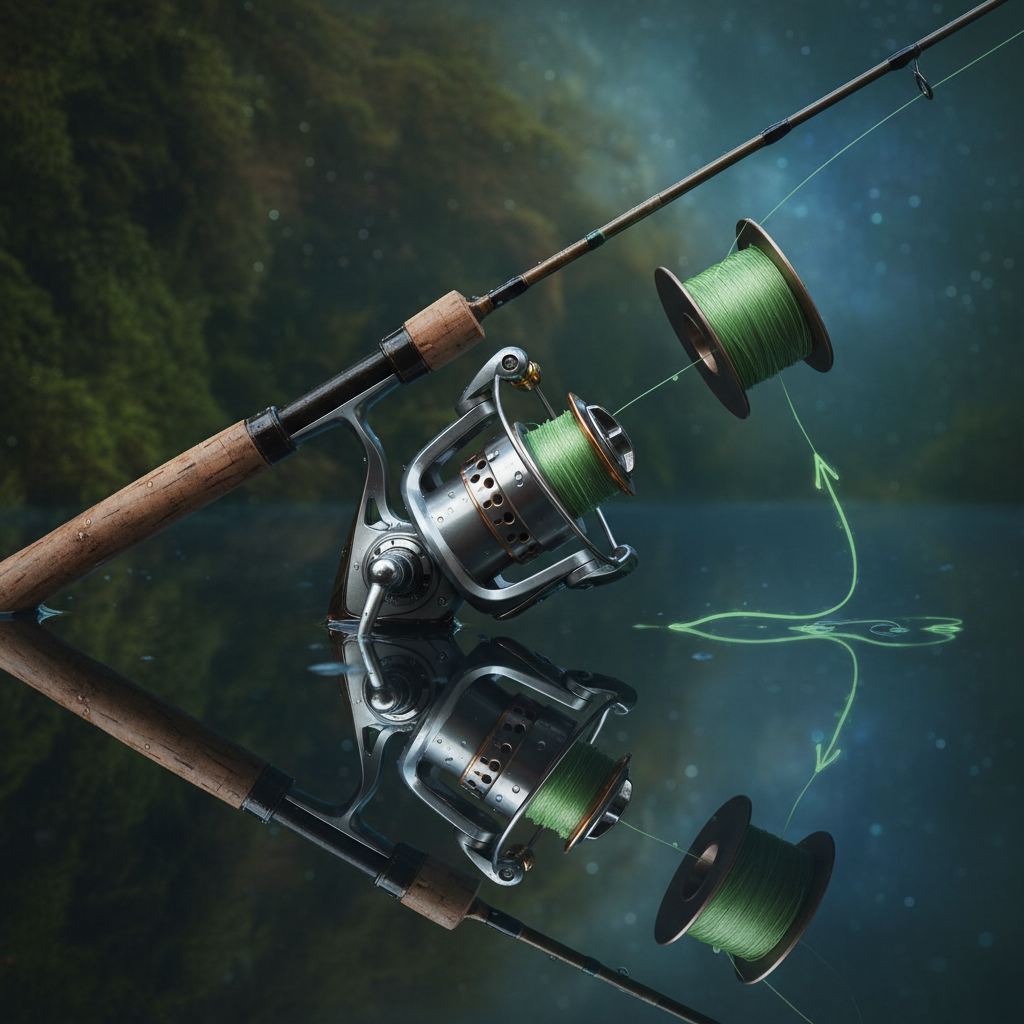
The way you spool the line onto your reel can also affect its performance. Make sure the line is spooled on tightly and evenly. Loose or uneven spooling can lead to line slippage and tangles. Many fishing shops offer line spooling services, or you can find tutorials online to learn how to do it yourself. It is also important to note whether your reel is a spinning reel or a baitcaster. The spooling process differs for each. With spinning reels, be sure that the line is coming off the filler spool in the same direction that it will be going onto the reel spool. This prevents excessive line twist.
Imagine trying to wind a garden hose neatly onto a reel. If you just haphazardly wrap it around, you’ll end up with a tangled mess. But if you take the time to wind it carefully and evenly, the hose will be easy to unwind and use later. Similarly, taking the time to spool your fishing line correctly will pay off in the long run with fewer tangles and smoother casts.

Wind Knots and Casting Errors
Wind knots are a common nuisance, especially when using lightweight lures or in windy conditions. These knots form when the line loops around itself during the cast. To minimize wind knots, try casting with a smooth, controlled motion and avoid jerky movements. Also, be sure to close the bail on your spinning reel manually after each cast, rather than relying on the automatic bail closure.
A jerky cast can cause the line to whip around erratically, increasing the chances of it tangling. A smooth, fluid casting motion allows the line to unspool evenly and reduces the likelihood of knots. Closing the bail manually ensures that the line is properly seated on the spool, preventing it from slipping off and forming loops.
Line Twist
Line twist is another major contributor to tangles. It occurs when the line becomes twisted upon itself, creating loops and kinks. This can happen from various factors, such as reeling in against the drag, using lures that spin excessively, or retrieving line when a fish is running away from you.
Think of it like wringing out a wet towel. As you twist the towel, the fibers become tighter and tighter, eventually forming knots and creases. Similarly, as your fishing line twists, it becomes more prone to tangling and losing its strength. Using swivels can help prevent line twist, especially when using lures that spin. Also, try to avoid reeling in against the drag, as this can exacerbate the problem.
Preventative Measures: A Proactive Approach
The best way to deal with line tangles is to prevent them from happening in the first place. By taking a proactive approach and implementing a few simple preventative measures, you can significantly reduce the risk of tangles and enjoy a more frustration-free fishing experience.
Choosing the Right Line for Your Reel
Matching the line to your reel is crucial. Using a line that is too heavy or too light for your reel can lead to performance issues and increased tangles. Consult your reel’s specifications to determine the recommended line weight and capacity. Most reels will have this information printed directly on the body or spool.
Imagine trying to fit a square peg into a round hole. It’s simply not going to work. Similarly, trying to use the wrong line on your reel will lead to problems. Using a line that is too heavy can overload the reel and cause it to malfunction. Using a line that is too light can result in line breakage and lost fish. Choosing the right line for your reel is like finding the perfect key to unlock its full potential.
Regular Line Maintenance
Like any piece of equipment, your fishing line requires regular maintenance to keep it in good condition. After each fishing trip, inspect your line for any signs of wear and tear, such as abrasions, nicks, or kinks. If you notice any damage, replace the affected section of the line immediately. You can also use a line conditioner to lubricate the line and reduce friction, which can help prevent tangles and improve casting distance.
Think of it like maintaining a car. Regular oil changes, tire rotations, and tune-ups will keep your car running smoothly and prevent major problems down the road. Similarly, regular line maintenance will keep your fishing line in top condition and prevent frustrating tangles. It’s a small investment of time and effort that can make a big difference in your fishing success.
Proper Casting Technique
As mentioned earlier, using a smooth, controlled casting motion is essential for preventing wind knots and other tangles. Avoid jerky movements and try to maintain a consistent casting speed. Practice your casting technique in an open area before heading out to the water to ensure that you’re comfortable and confident.
A graceful cast is not only aesthetically pleasing, but also incredibly practical. It allows the line to unspool smoothly and evenly, minimizing the risk of tangles. Practicing your casting technique is like practicing a golf swing. The more you practice, the more consistent and accurate your casts will become. And the more consistent your casts are, the fewer tangles you’ll encounter.
Dealing with Tangles: When Prevention Fails
Despite your best efforts, tangles can still occur. When they do, it’s important to remain calm and patient. Panicking or yanking on the line will only make the tangle worse. Instead, follow these steps to untangle your line effectively.
Assess the Situation
Before you start pulling and tugging, take a moment to assess the situation. Determine the type of tangle you’re dealing with and identify the areas where the line is most knotted. This will help you develop a strategy for untangling it. If you can’t see the problem clearly, use a magnifying glass.
Think of it like diagnosing a medical problem. Before you can treat the problem, you need to understand what’s causing it. Similarly, before you can untangle your line, you need to understand how the tangle is formed. Taking the time to assess the situation will save you time and frustration in the long run.
Use Your Fingers and a Needle
The best tools for untangling line are your fingers and a small needle or pin. Gently work the knots loose with your fingers, using the needle to tease apart stubborn sections of the line. Avoid using sharp objects, as they can damage the line. Don’t be afraid to use your teeth, either, to get a grip.
Your fingers are surprisingly adept at untangling line. They can feel the subtle nuances of the knots and apply the right amount of pressure to loosen them. A needle can be used to gently separate strands of line that are tightly intertwined. Be patient and persistent, and you’ll eventually be able to untangle even the most stubborn knots.
Cut the Line as a Last Resort
If you’ve exhausted all other options and the tangle is simply too complex to untangle, you may need to cut the line. Cut the line as close to the knot as possible and retie your lure or hook. While cutting the line is not ideal, it’s better than spending hours trying to untangle a hopeless mess. Just remember to dispose of the discarded line properly to avoid harming wildlife.
Cutting the line should always be a last resort. It’s a sign that you’ve tried everything else and nothing has worked. But sometimes, it’s the only way to move forward. Just be sure to cut the line cleanly and retie your lure or hook securely. And always dispose of the discarded line responsibly.
Advanced Line Management Techniques
Once you’ve mastered the basics of line management, you can explore some more advanced techniques to further improve your fishing experience. These techniques can help you cast farther, detect bites more easily, and land more fish.
Backing and Line Capacity
When spooling your reel, it’s often a good idea to use backing line. Backing line is a less expensive line that is spooled onto the reel first, followed by your main fishing line. This allows you to fill the spool completely without having to use an excessive amount of expensive fishing line. It also provides a buffer in case a large fish runs with a lot of line.
Think of it like building a foundation for a house. The backing line provides a solid base for your main fishing line, ensuring that it’s properly supported. It also saves you money, as you don’t have to use as much of the expensive stuff. Using backing line is a smart and practical way to manage your line capacity.
Using Line Conditioner
Line conditioner is a lubricant that is applied to fishing line to reduce friction and improve casting distance. It can also help prevent tangles and extend the life of your line. There are many different types of line conditioners available, so experiment to find one that you like.
Line conditioner is like WD-40 for your fishing line. It lubricates the line, making it smoother and more resistant to wear and tear. It can also help reduce friction, allowing you to cast farther and more accurately. Using line conditioner is a simple and effective way to improve your fishing performance.

Understanding Line Memory
Line memory refers to the tendency of fishing line to retain the shape it was spooled in. This can cause the line to coil up on the spool, making it more prone to tangles. To reduce line memory, try stretching your line periodically or using a line straightener. You can also respool your line backwards to reverse the direction of the memory.
Line memory is like the wrinkles in a piece of clothing that’s been folded for too long. The line remembers the shape it was in and tries to return to that shape. Stretching the line or using a line straightener can help to remove these wrinkles and make the line more manageable. Understanding line memory is key to keeping your line smooth and tangle-free.
The Reward of Patience and Practice
Mastering line management takes time and practice. Don’t get discouraged if you encounter tangles and frustration along the way. Every angler, even the most experienced ones, has dealt with line tangles at some point. The key is to learn from your mistakes and keep practicing. With patience and persistence, you’ll eventually develop the skills and knowledge necessary to keep your line in order and enjoy a more rewarding fishing experience.
Fishing, like any skill, requires dedication and perseverance. There will be days when you catch nothing but snags and tangles. But there will also be days when you land the fish of a lifetime. It’s the pursuit of those moments of triumph that makes fishing so rewarding. And by mastering the art of line management, you’ll be one step closer to achieving those unforgettable fishing experiences.

So, the next time you’re out on the water, remember the silent mistake of poor line management. Take the time to spool your line properly, maintain it regularly, and practice your casting technique. By doing so, you’ll significantly reduce the risk of tangles and increase your chances of landing that trophy fish. And most importantly, you’ll be able to relax and enjoy the serenity of the fishing experience, without the frustration of a tangled mess ruining your day. Happy fishing!