The Whispers of the Water
There’s a lesson the water teaches, a silent sermon delivered not in words, but in the feel of the current against your waders, the sting of the spray on your face, the almost imperceptible tug of a fish taking the fly. It’s a lesson about patience, about humility, about connection, and ultimately, about the surrender of control. It’s a lesson you can’t learn in a classroom, from a book, or even from another person. It’s a lesson etched onto the soul only through immersion, through becoming a part of the watery world, even for a few fleeting hours.
I remember a day, years ago, on the Deschutes River in Oregon. The sun beat down mercilessly, the kind of heat that makes the air shimmer and the rocks almost too hot to touch. I was fishing for steelhead, a notoriously challenging fish, and I was having absolutely no luck. Hours passed, cast after cast, drift after drift, and not even a nibble. Frustration mounted, a knot tightening in my chest with each fruitless attempt. I started to question my skill, my choice of fly, even my sanity. Why was I out here, baking in the sun, getting skunked by a fish that seemed to exist only to taunt me?
That’s when I heard it – not with my ears, but with something deeper, something primal. The whisper of the water, a gentle reminder that I wasn’t in control. The river didn’t care about my frustration, my ambition, or my desire to catch a fish. It flowed on, indifferent to my struggles, a constant, powerful force shaping the landscape and dictating the terms of engagement. In that moment, I realized I had been fighting the river, trying to impose my will upon it, instead of surrendering to its rhythm and wisdom.
The Art of Letting Go
Fishing, especially fly fishing, is often presented as a pursuit of mastery, a testament to skill and knowledge. And while those elements certainly play a role, the truly profound lessons lie in the opposite direction – in the art of letting go. Letting go of the need to control the outcome, letting go of the ego that demands success, letting go of the anxieties that cloud the mind and prevent us from fully experiencing the present moment.
Consider the act of casting. A perfect cast, seemingly effortless, is the result of years of practice, of course. But it’s also about relinquishing control, allowing the rod to do its work, trusting the physics of the line and the fly. It’s about feeling the weight of the line load the rod, then releasing that energy in a smooth, fluid motion, letting the fly fly where it may. When we grip too tightly, when we try to force the cast, the result is usually a tangled mess, a frustrating reminder of our own limitations.
The same principle applies to life. How often do we try to control things that are ultimately beyond our control? We worry about the future, we dwell on the past, we try to manipulate people and situations to suit our desires. And what does it get us? Stress, anxiety, and often, the very opposite of what we’re trying to achieve. The water teaches us that true power lies not in control, but in acceptance, in adaptability, in learning to flow with the current, even when it’s turbulent and unpredictable.
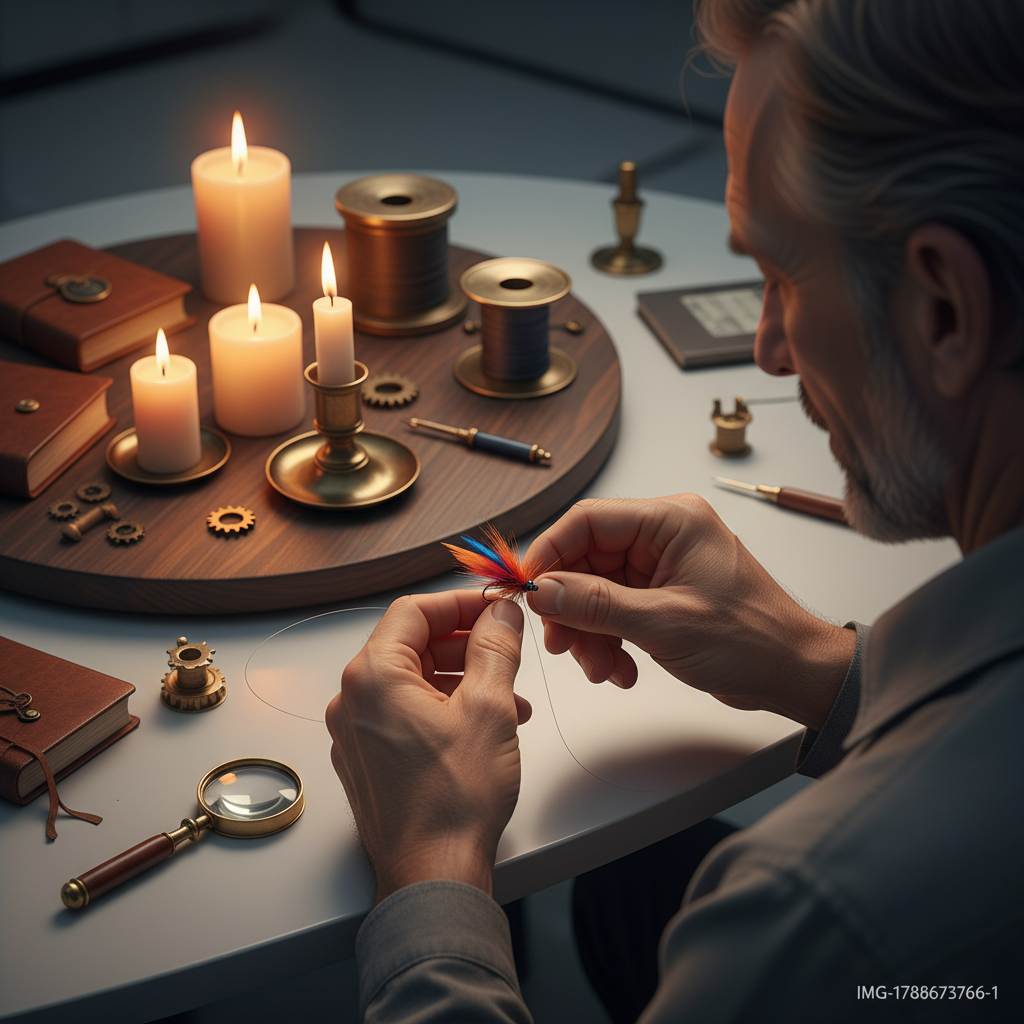
Humility in the Face of Nature
The natural world, in all its grandeur and complexity, has a way of humbling us. It reminds us of our insignificance, of our fleeting existence in the grand scheme of things. The water, in particular, is a powerful teacher of humility. It carves canyons, erodes mountains, and shapes the very landscape we inhabit. It’s a force that can be both life-giving and destructive, a constant reminder of the power of nature.
Think about the experience of wading into a river. You are entering an environment that is not your own, a world governed by different rules and rhythms. You are a visitor, a guest, and you must respect the delicate balance of the ecosystem. You must be mindful of your impact, careful not to disturb the wildlife or pollute the water. You must acknowledge that you are not in control, that the river can turn treacherous in an instant, that the weather can change without warning.
I’ve been caught in sudden storms on the river, the sky turning black, the wind howling, the rain pelting down like needles. In those moments, I felt utterly vulnerable, at the mercy of the elements. There was nothing I could do but hunker down, wait it out, and hope for the best. It was a humbling experience, a reminder that I am not invincible, that nature is a force to be reckoned with. It’s a lesson that stays with you long after the storm has passed, a quiet respect for the power and unpredictability of the natural world.
Beyond the Catch: The Deeper Connection
Fishing is often seen as a solitary pursuit, a way to escape the noise and distractions of modern life. And while solitude certainly has its appeal, the water also teaches us about connection – connection to nature, connection to ourselves, and connection to something larger than ourselves.
When you’re standing in a river, surrounded by the sounds of the water and the birds, you become acutely aware of your connection to the natural world. You are a part of the ecosystem, however small, and your actions have consequences. You start to notice the subtle details – the way the light reflects off the water, the patterns in the rocks, the movement of the insects. You develop a deeper appreciation for the beauty and complexity of the natural world, and a desire to protect it.
Fishing also provides an opportunity for introspection, for connecting with your inner self. The rhythm of casting, the focus required to read the water, the patience needed to wait for a bite – these all create a space for quiet contemplation. You can reflect on your life, your goals, your relationships, without the distractions of the outside world. It’s a chance to reconnect with your values, to gain clarity and perspective.
And finally, fishing can connect us to something larger than ourselves, to a sense of wonder and awe that transcends the everyday. Standing in a river, surrounded by the beauty and power of nature, you can’t help but feel a sense of connection to something ancient and enduring. It’s a feeling that can be hard to put into words, but it’s a feeling that stays with you, a reminder of the interconnectedness of all things.
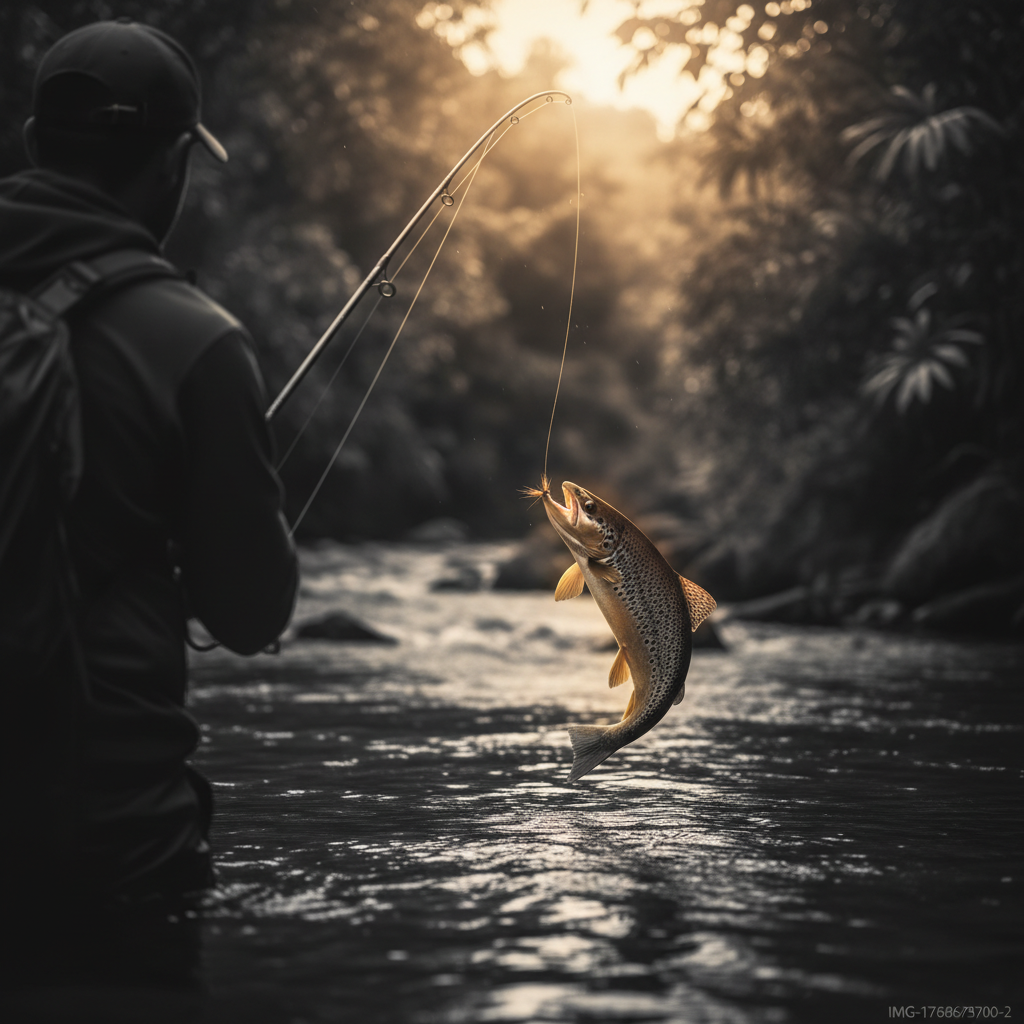
Patience: The Unsung Virtue of the Angler
In a world obsessed with instant gratification, the water offers a powerful antidote: patience. Fishing, by its very nature, demands patience. You can spend hours, even days, without catching a fish. You can try every fly in your box, every technique you know, and still come up empty. The water teaches you to accept this, to be content with the process, to find joy in the simple act of being present in the moment.
I’ve spent countless hours on the river, casting and casting, waiting for a bite that never came. At first, I would get frustrated, impatient, even angry. I would start to question my abilities, my choices, my very purpose for being there. But over time, I learned to embrace the waiting, to see it as an opportunity for reflection, for observation, for simply being. I learned to appreciate the subtle beauty of the river, the play of light and shadow, the movement of the water, the songs of the birds. I learned to find satisfaction in the process, regardless of the outcome.
Patience is not just a virtue for anglers; it’s a valuable skill for life. It allows us to navigate challenges with grace and resilience, to persevere through setbacks, to appreciate the slow, steady progress that leads to lasting success. It teaches us to trust the process, to have faith in ourselves, and to believe that things will eventually work out, even when they don’t seem to be going our way.
The Rhythms of Nature: A Guide to Life
The water follows its own rhythms, its own cycles. It flows from the mountains to the sea, evaporates into the clouds, and returns to the earth as rain. It ebbs and flows with the tides, rises and falls with the seasons. By observing these rhythms, we can learn valuable lessons about the nature of life itself.
Just as the river flows through periods of abundance and scarcity, so too does life. There are times when things are flowing smoothly, when opportunities abound, when everything seems to be going our way. And there are times when things are stagnant, when challenges arise, when we feel stuck or lost. The water teaches us that both periods are temporary, that change is the only constant, and that we must learn to adapt to the ebb and flow of life.
The tides also offer a powerful metaphor for the ups and downs of life. Just as the tide rises and falls, so too does our energy, our motivation, our mood. There are times when we feel energized and inspired, ready to tackle any challenge. And there are times when we feel drained and depleted, in need of rest and rejuvenation. The water teaches us to respect these cycles, to honor our own rhythms, and to allow ourselves to rest and recharge when needed.
Surrendering Control: Embracing Uncertainty
Perhaps the most profound lesson the water teaches is the importance of surrendering control, of embracing uncertainty. In a world that constantly strives for control, where we are taught to plan and predict and manage every aspect of our lives, the water offers a different perspective. It reminds us that life is inherently unpredictable, that things don’t always go according to plan, and that sometimes, the best thing we can do is to let go and trust the process.
When you’re fishing, you can’t control whether or not you catch a fish. You can control your technique, your presentation, your choice of fly, but you can’t control the fish. You can’t force it to bite, you can’t predict its movements, you can’t guarantee success. All you can do is put yourself in the right place, at the right time, with the right presentation, and hope for the best. The rest is up to the fish, up to the river, up to the forces of nature.
This uncertainty can be unsettling, especially for those of us who are used to being in control. But it can also be liberating. When we surrender the need to control the outcome, we free ourselves to be present in the moment, to appreciate the beauty of the experience, to learn from our mistakes, and to grow as individuals. We learn to accept that life is full of surprises, both good and bad, and that the only thing we can truly control is our own response to those surprises.
The Flow State: Finding Peace in the Present
The ultimate expression of surrendering control is the attainment of the flow state, a state of deep immersion and effortless action where we lose ourselves in the present moment. In the flow state, time seems to disappear, our minds are quiet, and we are completely absorbed in the activity at hand. It’s a state of peak performance and profound satisfaction, a state that can be achieved through fishing, through any activity that demands focus, skill, and a willingness to let go.
I’ve experienced the flow state many times while fishing. It’s when the casting becomes automatic, when the presentation is flawless, when the fish strikes with explosive force, and when everything feels perfectly aligned. In those moments, I’m not thinking about anything else, not about my worries, not about my goals, not even about the fish itself. I’m simply present in the moment, responding instinctively to the challenges of the river, and experiencing a sense of joy and fulfillment that is hard to describe.
The flow state is not something that can be forced or manufactured. It arises spontaneously when we are fully engaged in an activity that challenges us without overwhelming us, when we are able to let go of our ego and our expectations, and when we are willing to surrender to the rhythm of the moment. It’s a gift, a reward for our patience, our humility, and our willingness to embrace uncertainty.
The Enduring Wisdom of the Water
The lessons the water teaches are not always easy to learn. They require patience, humility, and a willingness to let go of control. But they are lessons that can transform our lives, helping us to navigate challenges with grace and resilience, to connect with nature and with ourselves, and to find peace in the present moment. The next time you find yourself by the water, take a moment to listen to its whispers, to feel its power, and to learn from its enduring wisdom. You might be surprised at what it has to teach you.
So, the next time you’re out on the water, remember it’s more than just catching fish. It’s about connecting with something bigger, learning to let go, and finding peace in the present moment. It’s about understanding that the invisible lessons are often the most valuable, and that the water, in its silent wisdom, has much to teach us about life itself.