Mastering the Subtleties: Elevating Your Fishing Game
We’ve all been there. Standing on the shore, rod in hand, watching other anglers reel in fish after fish while our own line remains stubbornly still. Frustration mounts, and we start to question everything – our bait, our technique, even our luck. But often, the difference between a successful outing and a disappointing one boils down to a single, often overlooked element: attention to detail. It’s not just about having the right gear or knowing the prime fishing spots; it’s about mastering the subtleties that separate the average angler from the truly exceptional.
What exactly do we mean by “subtleties”? It’s the almost imperceptible adjustments to your presentation, the keen observation of environmental cues, and the unwavering commitment to refining your approach based on the feedback you’re receiving. It’s about becoming a student of the water, learning to read its currents, understand its inhabitants, and anticipate their behavior. Think of it as unlocking a secret code, a hidden language that only the most observant and dedicated anglers can decipher.
But why is this “invisible detail” so crucial? Because fishing, at its core, is a game of deception. You’re trying to convince a creature that is inherently wary and often quite intelligent to take your bait or lure. And to do that effectively, you need to create an illusion that is as realistic and enticing as possible. Any flaw in your presentation, any unnatural movement or sound, can be enough to spook a fish and send it swimming in the opposite direction. This is why the masters of the sport obsess over the tiniest details, knowing that even the smallest adjustment can make a world of difference.
The Power of Observation: Tuning into the Environment
Before you even cast your line, take a moment to truly observe your surroundings. What’s the water clarity like? Is it murky, clear, or somewhere in between? What’s the current doing? Is it strong and fast-moving, or gentle and slow? What’s the weather like? Is it sunny, cloudy, windy, or rainy? All of these factors can influence the behavior of the fish and dictate the best approach to use.
For example, if the water is murky, fish may rely more on their sense of smell and vibration to locate prey. In this case, using a bait with a strong scent or a lure that produces a lot of vibration could be highly effective. On the other hand, if the water is crystal clear, fish may be more easily spooked by unnatural movements or sounds. In this case, using a lighter line, smaller hooks, and a more subtle presentation could be the key to success. Are there insects hatching? What kind of baitfish are present? Matching your lure or bait to the natural forage can dramatically increase your odds.
Don’t just look at the surface of the water, either. Pay attention to what’s happening beneath the surface. Are there any visible structures, such as rocks, logs, or weeds? These areas can provide cover for fish and make excellent ambush points. Are there any signs of fish activity, such as swirling water or jumping fish? These are clear indications that fish are present and actively feeding.

The Art of Presentation: Making Your Bait Irresistible
Once you’ve assessed the environment, it’s time to focus on your presentation. This is where the real artistry of fishing comes into play. It’s about creating an illusion that is so compelling that a fish can’t resist taking your bait or lure.
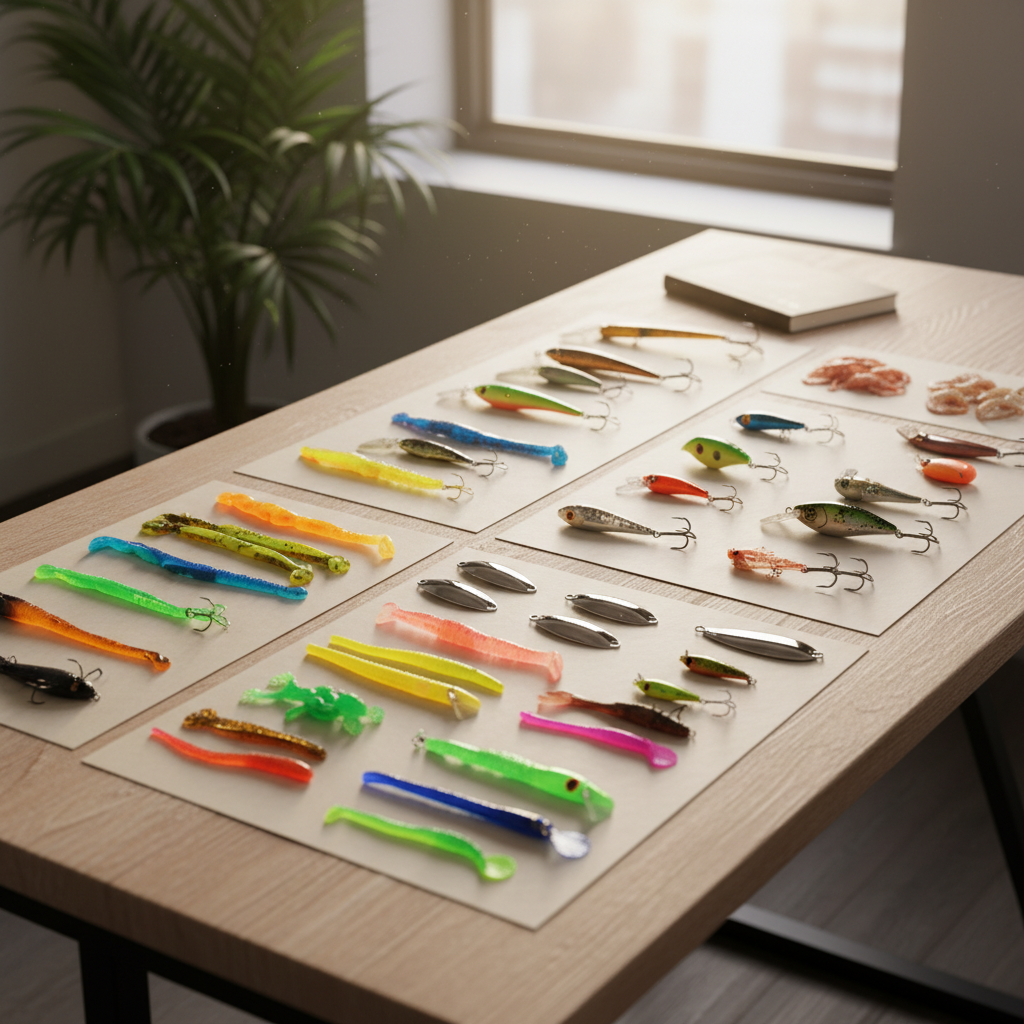
One of the most important aspects of presentation is choosing the right bait or lure. Consider the type of fish you’re targeting, the water conditions, and the time of year. Are you fishing for bass in a weedy lake? A weedless worm or a topwater frog might be a good choice. Are you fishing for trout in a clear stream? A small nymph or a dry fly might be more effective.
But simply choosing the right bait or lure isn’t enough. You also need to present it in a way that is natural and enticing. This means paying attention to your retrieve, your casting technique, and the overall movement of your bait or lure. Experiment with different retrieves to see what the fish respond to. Try varying your speed, pausing occasionally, or adding subtle twitches and jerks. The goal is to mimic the natural movements of the prey that the fish are feeding on.
Another key element of presentation is line management. Too much slack in your line can make it difficult to detect bites and set the hook effectively. Too little slack can create unnatural drag on your bait or lure, spooking the fish. Strive for a happy medium, maintaining just enough tension in your line to feel what’s happening while still allowing your bait or lure to move freely. Learning to mend your line to avoid drag in current is a critical skill.
The Importance of Feel: Becoming One with Your Gear
Experienced anglers often talk about “feeling” the fish. This isn’t just about feeling the tug on your line when a fish bites. It’s about developing a deep connection with your gear and using it to gather information about what’s happening beneath the surface of the water.
Your rod, reel, and line are your sensory extensions, allowing you to feel the bottom structure, detect subtle changes in current, and sense the presence of fish even before they strike. Pay close attention to the vibrations and feedback you’re receiving through your rod tip and line. Can you feel the difference between a rocky bottom and a sandy bottom? Can you feel the subtle tap of a fish investigating your bait? The more attuned you become to these subtle cues, the better equipped you’ll be to detect bites and react accordingly.
Choosing the right equipment is crucial for developing this sense of feel. A sensitive rod will transmit vibrations more effectively, while a smooth reel will allow you to maintain consistent pressure on the line. The type of line you use can also affect your ability to feel what’s happening. Braided line, for example, is more sensitive than monofilament line, but it can also be more visible to fish. Fluoro carbon line is nearly invisible underwater and has low stretch, offering a good balance of sensitivity and stealth.
The Zen of Patience: Embracing the Long Game
Fishing is often described as a test of patience, and for good reason. There will be times when the fish just aren’t biting, no matter what you do. It’s during these times that the importance of patience truly shines through.
Don’t get discouraged if you’re not having immediate success. Instead, use the time to experiment with different techniques, observe your surroundings, and refine your approach. Try different baits, different retrieves, and different locations. Analyze your failures and learn from your mistakes. The more you practice and experiment, the better you’ll become at adapting to changing conditions and figuring out what the fish are responding to.
Patience also involves being willing to wait for the right opportunity. Don’t rush your casts or your retrieves. Take your time and focus on making each presentation as perfect as possible. Be prepared to wait for hours, or even days, for that one perfect bite. The reward for your patience will be all the sweeter when it finally comes.

Case Studies: The Invisible Detail in Action
Let’s look at a few real-world examples of how paying attention to the “invisible detail” can make a significant difference in your fishing success.
Case Study 1: The Trout Whisperer
John, an avid fly fisherman, was struggling to catch trout in a heavily pressured stream. He had tried all of his usual flies, but the trout seemed completely uninterested. After observing the stream for a while, he noticed that the trout were feeding on tiny midges that were barely visible to the naked eye. He rummaged through his fly box and found a midge imitation that was almost as small as the real thing. He tied it on with a delicate tippet and cast it upstream, allowing it to drift naturally with the current. The trout couldn’t resist, and John soon began landing fish after fish. The key to his success was his keen observation and his willingness to adapt his presentation to match the specific conditions of the stream.
Case Study 2: The Bass Master
Sarah, a competitive bass angler, was fishing in a tournament on a lake known for its heavy vegetation. She had tried all of her usual lures, but she couldn’t seem to get the bass to bite. After analyzing the situation, she realized that the bass were buried deep in the weeds, where they were difficult to reach with conventional lures. She switched to a heavy Texas-rigged worm and punched it through the thickest vegetation she could find. The bass were waiting in ambush, and Sarah quickly filled her limit. Her success was due to her ability to identify the bass’s location and adapt her technique to effectively target them in their hiding places.
Case Study 3: The Saltwater Specialist
David, a seasoned saltwater angler, was fishing for redfish in a shallow coastal estuary. The water was murky, and the wind was howling, making it difficult to see or feel anything. He knew that the redfish were likely feeding on crabs and shrimp along the bottom, but he couldn’t get them to bite his artificial lures. He decided to switch to a live shrimp, which he rigged on a jig head and slowly dragged along the bottom. The redfish couldn’t resist the natural scent and movement of the live bait, and David enjoyed a successful day of fishing. His ability to adapt to the challenging conditions and use the most effective bait for the situation was the key to his success.
Practical Exercises: Sharpening Your Observational Skills
Now that you understand the importance of attention to detail, let’s explore some practical exercises that you can use to sharpen your observational skills and become a more successful angler.
Exercise 1: The Water Clarity Test
Find a body of water that you’re familiar with and conduct a water clarity test. Lower a white object into the water and observe how far down you can see it before it disappears. Record your observations and compare them to previous tests. This will help you develop a better understanding of how water clarity can change over time and how it can affect fish behavior.
Exercise 2: The Insect Identification Game
Spend some time observing the insects that are present around the water. Try to identify them using a field guide or online resources. Pay attention to their size, color, and behavior. This will help you choose the right flies or lures to match the natural forage that the fish are feeding on.
Exercise 3: The Bottom Structure Mapping Project
Use a depth finder or a sonar device to create a map of the bottom structure of a lake or river. Identify any areas of interest, such as rocks, logs, weeds, or drop-offs. This will help you locate potential fish-holding areas and develop a more targeted fishing strategy.
Beyond Technique: The Mindset of a Successful Angler
While technique and observation are crucial, the mindset of a successful angler is just as important. It’s about cultivating a sense of curiosity, a willingness to learn, and an unwavering belief in your ability to succeed.
Be curious about the natural world and eager to learn everything you can about fish, their behavior, and their environment. Read books, watch videos, and talk to experienced anglers. The more you know, the better equipped you’ll be to make informed decisions and adapt to changing conditions.
Be willing to experiment with different techniques and try new things. Don’t be afraid to step outside of your comfort zone and challenge your assumptions. The best anglers are constantly learning and evolving, always seeking new and better ways to catch fish.
Believe in yourself and your ability to succeed, even when things get tough. Fishing can be challenging, and there will be times when you feel like giving up. But if you maintain a positive attitude and a strong belief in yourself, you’ll be more likely to persevere and ultimately achieve your goals.
The Ethical Angler: Respecting the Resource
Finally, it’s important to remember that we are all stewards of the environment, and we have a responsibility to protect the resources that we enjoy. Practice catch-and-release whenever possible, and handle fish with care to minimize stress and injury. Avoid using harmful chemicals or pollutants, and always clean up after yourself. By respecting the environment and practicing responsible fishing techniques, we can ensure that future generations will have the opportunity to enjoy the sport that we love.
Furthermore, be aware of local regulations and fishing limits. These rules are in place to protect fish populations and ensure the long-term sustainability of the fishery. Adhering to these regulations is not only ethical but also essential for preserving the sport for future anglers.

The Long Game: Continuous Improvement
Becoming a truly skilled angler is a lifelong journey, not a destination. There’s always something new to learn, a new technique to master, or a new body of water to explore. Embrace the challenge, and never stop striving to improve. Keep a fishing journal to document your experiences, track your successes and failures, and identify areas where you can improve. Review your journal regularly to identify patterns and trends, and use this information to refine your approach. Attend fishing seminars and workshops, and network with other anglers to share knowledge and learn from each other. The more you invest in your fishing education, the more rewarding your experiences will be.
In conclusion, the “invisible detail” that drastically increases your chances of success in fishing is a combination of keen observation, meticulous presentation, unwavering patience, and a deep respect for the environment. It’s about mastering the subtleties, honing your skills, and cultivating a mindset that is both curious and determined. By embracing these principles, you can elevate your fishing game to a whole new level and unlock the secrets to consistently catching more fish. So, go out there, observe, experiment, and most importantly, enjoy the journey. The rewards will be well worth the effort, and you’ll find that fishing is not just a hobby, but a lifelong passion.