The Secret Weapon of the Modern Angler
Fishing, at its heart, is a dance between skill, patience, and a deep understanding of the aquatic world. For centuries, anglers have relied on their intuition, honed by years of experience, to locate and entice their quarry. But the modern era has ushered in a new paradigm, one where technology plays an increasingly vital role. While some purists may scoff at the notion of relying on gadgets, the truth is that the most successful anglers are those who embrace innovation and leverage every advantage available to them. And there’s one gadget, in particular, that’s become so coveted, so effective, that many professional anglers secretly wish they could keep it hidden from the competition: the advanced sonar fish finder.
We’re not talking about your grandfather’s flasher unit here. These aren’t the crude depth sounders of yesteryear. We’re diving into the realm of high-frequency, multi-beam sonar systems capable of creating near-photorealistic images of the underwater world. Imagine being able to see not just the bottom contours, but also the individual fish, their size, their direction of movement, and even the type of structure they’re relating to. It’s like having X-ray vision for the water, and it’s completely transforming the way professional anglers approach their craft. But why is this technology so revolutionary, and why would anyone want to keep it a secret?
Unveiling the Underwater Landscape
The power of advanced sonar lies in its ability to reveal the hidden complexities of the aquatic environment. Before the advent of these sophisticated systems, anglers were largely reliant on maps, anecdotal evidence, and sheer guesswork to identify promising fishing spots. They’d spend countless hours blindly casting into the abyss, hoping to stumble upon a productive area. Now, with a few passes of a transducer, they can instantly create a detailed 3D map of the lake or riverbed, pinpointing submerged structures like fallen trees, rock piles, and weed beds – all the places where fish like to congregate.
Consider this scenario: a professional bass angler is preparing for a major tournament on a sprawling, unfamiliar lake. In the past, they would have spent days pre-fishing, painstakingly searching for productive areas. Now, they can use their advanced sonar to quickly survey the lake, identifying subtle changes in bottom composition, locating hidden channels, and mapping the distribution of vegetation. This allows them to focus their efforts on the most promising locations, significantly increasing their chances of success. It’s not just about finding fish; it’s about understanding their environment.
But the benefits extend far beyond simply locating structure. Advanced sonar can also reveal the presence of baitfish, the primary food source for many game species. By identifying schools of baitfish, anglers can predict where the larger predator fish are likely to be lurking. Furthermore, these systems can even differentiate between different species of fish, allowing anglers to target specific types of their quarry with greater precision. Think of it as having an intelligence network feeding you real-time information about the underwater ecosystem. It’s a game-changer, plain and simple.

The Ethical Dilemma: Fair Chase or Technological Advantage?
The rise of advanced sonar technology has sparked a heated debate within the fishing community, raising fundamental questions about fair chase and the ethics of using technology to gain an advantage. Some anglers argue that these systems give an unfair edge to those who can afford them, effectively taking the skill and intuition out of the equation. They believe that fishing should be a test of wits between angler and fish, not a battle of technological supremacy.
Is it really in the spirit of the sport to essentially “see” the fish before they even have a chance? Are we sacrificing the essence of the angling experience in the pursuit of bigger catches and higher tournament rankings? These are valid concerns, and they deserve careful consideration. After all, fishing is about more than just catching fish; it’s about connecting with nature, challenging oneself, and respecting the traditions of the sport.
However, proponents of advanced sonar argue that it’s simply the natural evolution of fishing. They point out that anglers have always used technology to improve their chances of success, from the development of better fishing rods and reels to the use of GPS and weather forecasting. They argue that advanced sonar is simply another tool in the angler’s arsenal, and that it ultimately enhances the fishing experience by allowing anglers to learn more about the underwater world.
Furthermore, they argue that advanced sonar can actually promote conservation by allowing anglers to target specific species and avoid accidentally catching endangered or protected fish. By providing a more accurate picture of the underwater environment, these systems can help anglers to make more informed decisions about where and how to fish, ultimately leading to more sustainable fishing practices. It’s a complex issue with no easy answers, but it’s one that the fishing community must grapple with as technology continues to advance.
Case Study: The Tournament Trailblazer
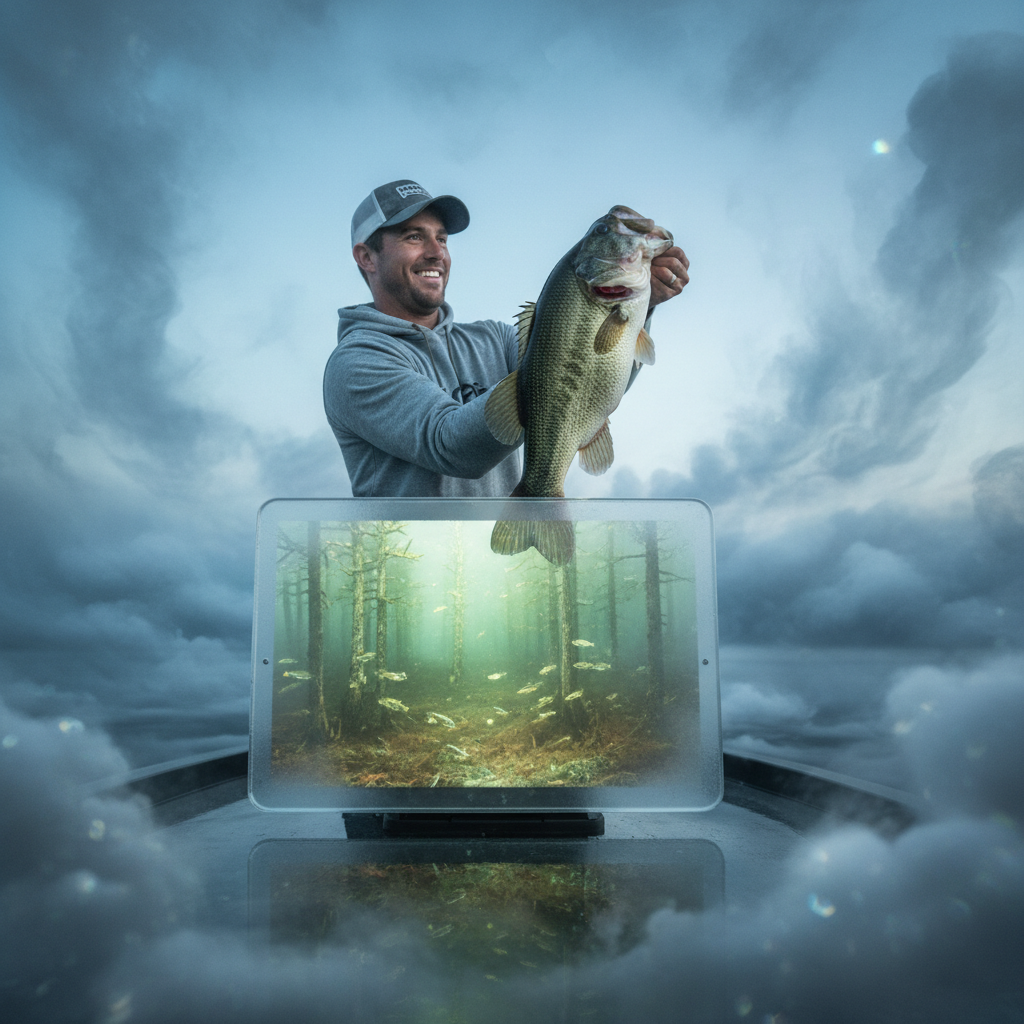
To truly understand the impact of advanced sonar, let’s examine a real-world case study. Consider the story of a professional bass angler named Jake, who was struggling to make a name for himself on the tournament circuit. Despite his years of experience and undeniable skill, Jake consistently finished in the middle of the pack, unable to break through to the top tier of competition.
Frustrated with his lack of success, Jake decided to invest in an advanced sonar system. Initially, he was skeptical, unsure whether the technology would really make a difference. But after spending countless hours learning how to interpret the sonar images, he began to see the underwater world in a whole new light. He discovered hidden structures that he never knew existed, located schools of baitfish that he had previously overlooked, and identified patterns of fish behavior that had eluded him for years.
The results were immediate and dramatic. In his very next tournament, Jake finished in the top five, and he went on to win several major events in the following year. He attributed his success entirely to his newfound ability to understand the underwater environment, thanks to the advanced sonar. He became known as a “tournament trailblazer,” pushing the boundaries of what was possible with technology and inspiring other anglers to embrace innovation. However, he also faced criticism from some who accused him of relying too heavily on technology and lacking the traditional skills of a seasoned angler. Regardless, Jake’s story is a testament to the transformative power of advanced sonar, and it highlights the growing importance of technology in the world of professional fishing.
The Future of Fishing: A Symbiotic Relationship
As technology continues to evolve, the line between traditional angling skills and technological prowess will likely become increasingly blurred. The future of fishing is not about replacing skill with technology, but rather about creating a symbiotic relationship where both elements work in harmony. Anglers who can combine their intuition and experience with the power of advanced sonar will be the ones who truly excel in the years to come.
Imagine a scenario where anglers are equipped with augmented reality headsets that overlay sonar data directly onto their field of vision. They could literally “see” the fish swimming around them, allowing them to make split-second decisions about their lure presentation and retrieve techniques. Or consider the possibility of using artificial intelligence to analyze sonar data and predict fish behavior, providing anglers with even more valuable insights into the underwater world. The possibilities are endless, and they promise to revolutionize the way we fish.
But it’s important to remember that technology is only a tool, and it’s ultimately up to the angler to use it responsibly and ethically. We must strive to find a balance between embracing innovation and preserving the traditions of the sport. We must ensure that technology enhances the fishing experience, rather than detracting from it. And we must always remember that the true joy of fishing lies not just in catching fish, but in connecting with nature and challenging ourselves to become better anglers.
Choosing the Right Sonar: A Deep Dive into Features
If you’re considering investing in an advanced sonar system, it’s important to do your research and choose a unit that’s right for your needs and budget. There are a wide variety of options available, ranging from basic side-imaging units to high-end multi-beam systems with advanced features like CHIRP technology, downscan imaging, and real-time mapping.
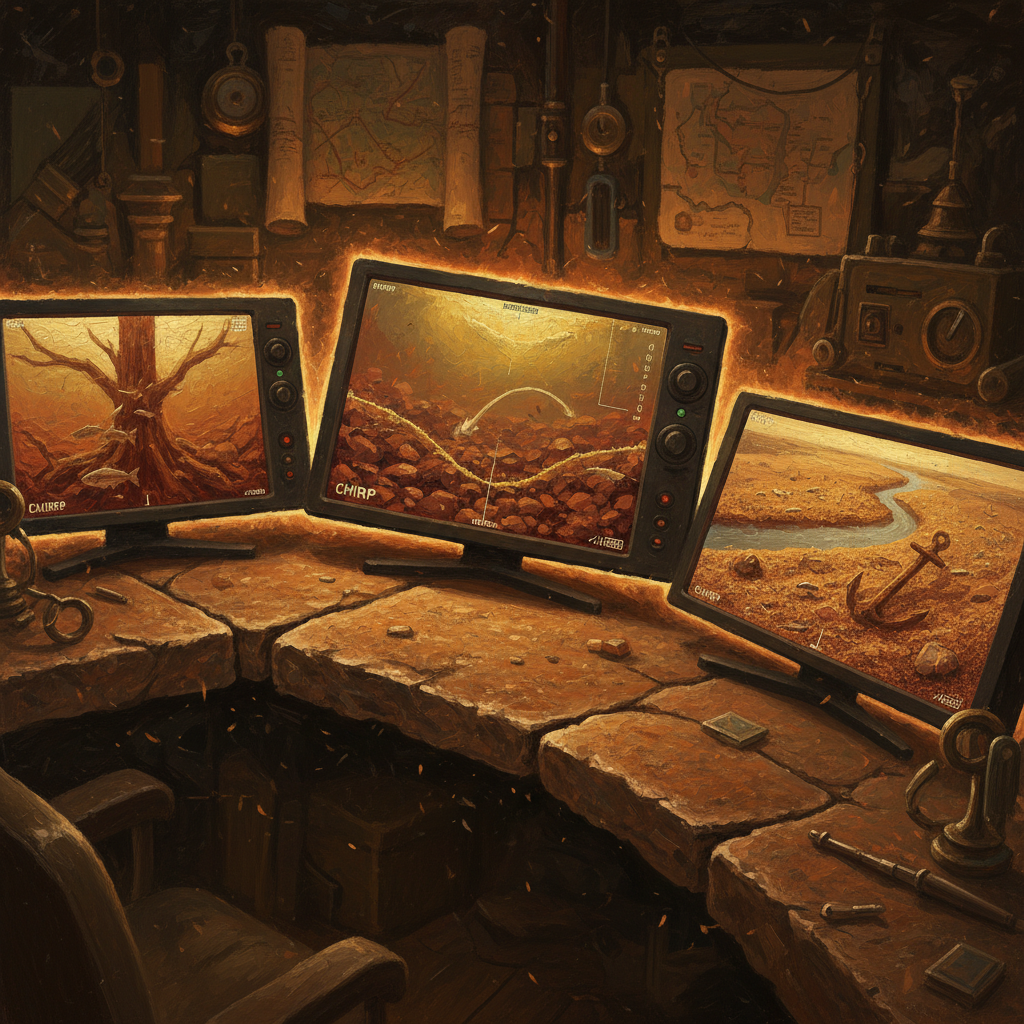
CHIRP (Compressed High-Intensity Radiated Pulse) technology is a game-changer, offering significantly improved target separation and image clarity compared to traditional sonar. Instead of transmitting a single frequency pulse, CHIRP sonar sweeps through a range of frequencies, allowing it to gather more information about the underwater environment. This results in a much more detailed and accurate image, making it easier to identify fish and structure.
Downscan imaging provides a photo-like view of the bottom directly beneath your boat, revealing details that are often missed by traditional sonar. This is particularly useful for identifying small objects and subtle changes in bottom composition.
Sidescan imaging allows you to scan a wide swath of the water column on either side of your boat, covering a much larger area than traditional sonar. This is ideal for locating submerged structures and identifying potential fishing spots quickly and efficiently.
Real-time mapping allows you to create your own custom maps of the lake or river you’re fishing, adding valuable information about depth contours, bottom composition, and submerged structures. This is a powerful tool for anglers who want to gain a deeper understanding of their local waters.
Beyond these core features, you’ll also want to consider factors like screen size, resolution, ease of use, and connectivity. A larger screen with a higher resolution will make it easier to see the sonar images, while a user-friendly interface will make it easier to navigate the menus and adjust the settings. Connectivity features like Bluetooth and Wi-Fi can allow you to connect your sonar unit to your smartphone or tablet, enabling you to access additional features and share your data with other anglers.
Beyond the Hardware: Mastering Sonar Interpretation
Owning an advanced sonar system is only half the battle. To truly unlock its potential, you need to learn how to interpret the sonar images and translate them into actionable fishing strategies. This requires patience, practice, and a willingness to experiment.
One of the most important things to understand is how different types of objects appear on the sonar screen. Hard objects like rocks and submerged trees will typically produce strong, bright returns, while soft objects like weed beds and mud flats will produce weaker, more diffuse returns. Fish will typically appear as small, arch-shaped returns, but their appearance can vary depending on their size, shape, and orientation.
It’s also important to pay attention to the background noise and clutter on the sonar screen. This can be caused by a variety of factors, including turbulence, temperature gradients, and interference from other electronic devices. By learning to filter out the noise and focus on the relevant information, you can gain a much clearer picture of the underwater environment.
Finally, don’t be afraid to experiment with different sonar settings and techniques. Try adjusting the frequency, gain, and range to see how they affect the image quality. Try experimenting with different transducer angles to see how they affect the coverage area. And try using different sonar modes to see which one works best for your particular fishing situation. The more you experiment, the better you’ll become at interpreting sonar images and using them to catch more fish.
The Future is Now: Embrace the Evolution
The advanced sonar fish finder is more than just a gadget; it’s a window into a hidden world. It’s a tool that can empower anglers to become more knowledgeable, more efficient, and more successful. While the ethical considerations surrounding its use are certainly worth discussing, there’s no denying that this technology is transforming the sport of fishing. The gadget every pro angler wishes they could hide is, in reality, a symbol of the evolution of angling, a testament to human ingenuity, and a glimpse into the exciting future that lies ahead.
So, embrace the evolution. Learn the technology. Respect the ethics. And get ready to see the underwater world like never before. The fish are waiting.