The Allure of the Untamed River
There’s a primal pull that draws us back to nature, isn’t there? A yearning for something beyond the concrete and the constant hum of technology. For me, that pull manifests most strongly in the form of a fishing rod and a river. It’s not just about catching fish; it’s about the quiet contemplation, the rhythm of the cast, and the feeling of being a small part of a much larger, more ancient story.
I’ve fished in countless locations, from stocked ponds to bustling coastal waters. But it’s the wild rivers, the ones where nature still dictates the terms, that truly captivate me. These are places where you can’t simply rely on skill or the latest gear. You have to understand the currents, read the subtle signs of the water, and respect the delicate balance of the ecosystem. And sometimes, even that’s not enough.
This particular story unfolds on a river known only to a handful of locals. A river that meanders through a vast, largely untouched wilderness. A place where the only sounds are the rush of the water, the calls of the birds, and the occasional rustle of leaves as a deer passes by. I had heard whispers of its legendary trout population, trout that grew fat and strong on the river’s abundance of insects and the cool, clear water. So, naturally, I had to experience it for myself.
Preparation Meets Reality
I spent weeks preparing for this trip. I meticulously researched the river’s ecosystem, studying the insect hatches and the preferred feeding locations of the trout. I tied flies that mimicked the local insects with painstaking detail. I sharpened my hooks, oiled my reel, and packed my gear with the precision of a surgeon. I felt confident, even cocky. I was ready to conquer this river.
The reality, as it often does, had other plans. The first challenge was simply getting to the river. The access road was little more than a overgrown path, riddled with potholes and washouts. My trusty truck, usually a reliable companion on such adventures, struggled to navigate the treacherous terrain. It was a slow, bumpy, and nerve-wracking journey, but eventually, I arrived at the riverbank, weary but determined.
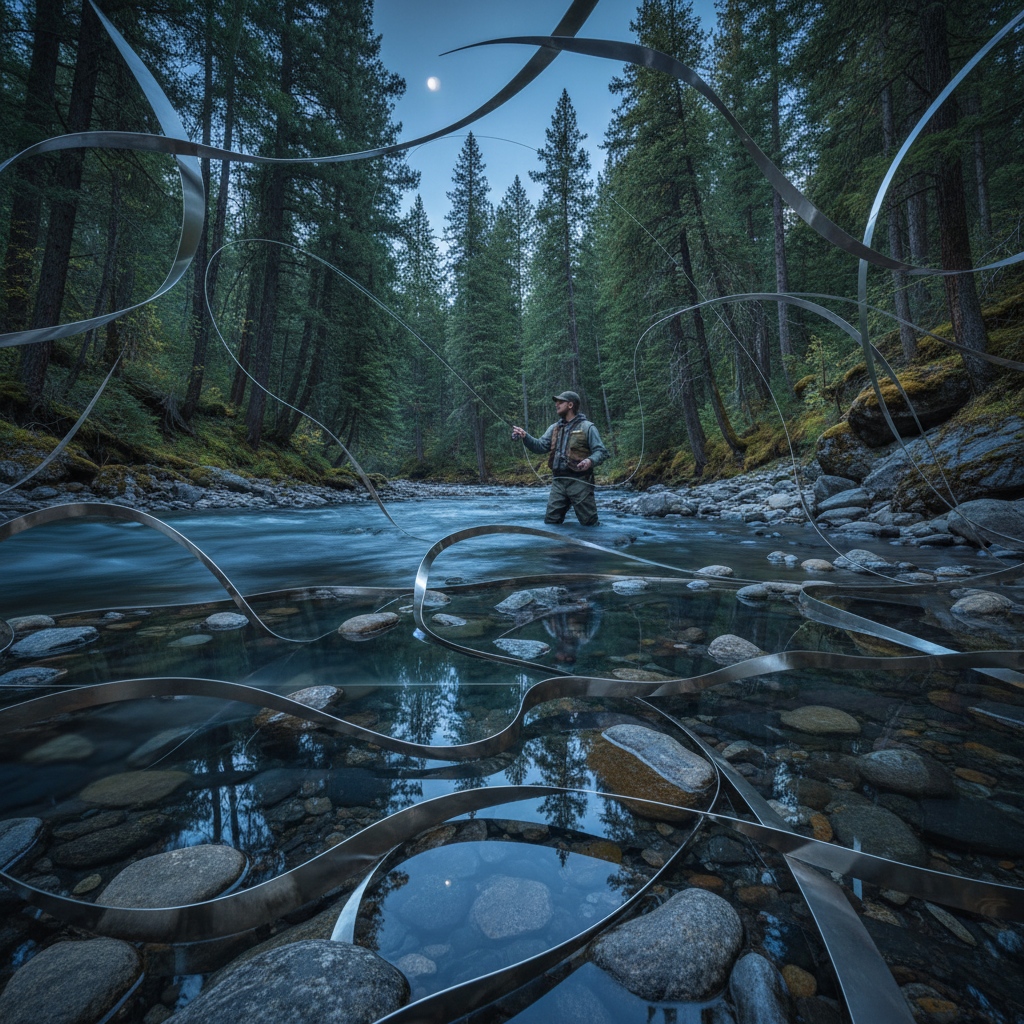
The river itself was even more daunting than I had imagined. The current was strong and unpredictable, swirling around rocks and fallen logs. The water was crystal clear, revealing a rocky bottom teeming with life. I could see the shadows of fish darting beneath the surface, tantalizingly close but frustratingly elusive.

The Art of Humility
My initial attempts to fish were met with complete failure. My perfectly tied flies were ignored, my carefully planned drifts were disrupted by the swirling currents, and my attempts to wade into prime fishing spots were thwarted by the slippery rocks and the sheer force of the water. I started to feel a sense of frustration creeping in. My carefully laid plans were crumbling before my eyes.
It was then that I realized I had approached this river with the wrong attitude. I had come expecting to dominate it, to bend it to my will. But this river was not going to be tamed. It was a force of nature, and I was just a visitor. I needed to change my approach, to shed my ego, and to learn to listen to what the river was telling me.
I took a deep breath, stepped back from the water, and simply observed. I watched the currents, the eddies, and the way the sunlight danced on the surface. I listened to the sounds of the river, the gentle murmur of the flowing water, and the splash of the occasional rising fish. Slowly, I began to understand the rhythm of the river, its subtle nuances and its hidden secrets.
A Lesson in Patience and Observation
I decided to start with a different strategy. Instead of trying to force my will upon the river, I would try to blend in, to become a part of its natural flow. I chose a spot that offered a slightly calmer stretch of water, a place where the current wasn’t quite so fierce. I tied on a smaller, more delicate fly, one that mimicked a tiny mayfly that I had seen hatching earlier in the day.
I cast my line upstream, allowing the fly to drift naturally with the current. I watched it closely, anticipating the slightest sign of a strike. And then, it happened. A subtle twitch in the line, a barely perceptible dimple on the water’s surface. I set the hook gently, and the fight was on.
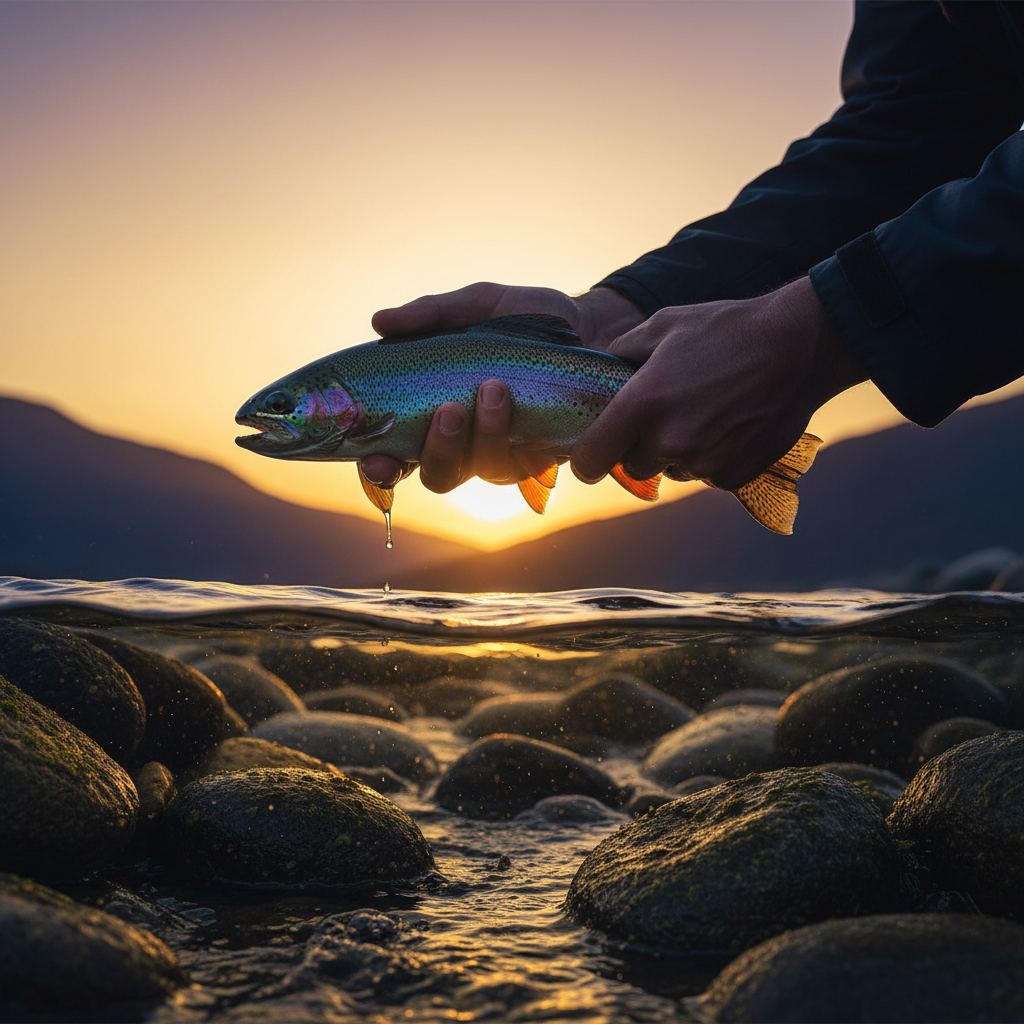
The trout was strong and determined, but I was patient and careful. I allowed it to run, gradually tiring it out. Finally, after a thrilling battle, I brought it to the net. It was a beautiful fish, a wild rainbow trout with vibrant colors and a powerful build. I admired it for a moment, carefully removed the hook, and released it back into the river.
It wasn’t the biggest fish I had ever caught, but it was perhaps the most rewarding. It was a fish that I had earned, not through skill or brute force, but through patience, observation, and respect for the river.
The Unpredictability of Nature
The next few days followed a similar pattern. I learned to adapt to the river’s ever-changing conditions, experimenting with different flies, techniques, and locations. Some days I caught several fish, others I caught none. But even on the days when I came up empty-handed, I never felt disappointed. I was simply grateful to be there, to be immersed in the beauty and the tranquility of the wilderness.
Then came the storm. I had been watching the clouds gather on the horizon, but I hadn’t anticipated how quickly it would arrive. One moment the sun was shining, the next the sky was dark and ominous. The wind picked up, whipping the trees into a frenzy. And then the rain came, a torrential downpour that transformed the river into a raging torrent.
The River’s Fury
I quickly packed up my gear and sought shelter under a large, overhanging rock. The storm raged for hours, the rain pounding down with relentless force. The river rose rapidly, swallowing up the banks and transforming the landscape. It was a powerful and humbling display of nature’s raw power.
I realized I was stranded. The access road, already treacherous under normal conditions, would be impassable after this deluge. I had enough food and supplies to last for a few days, but I knew I couldn’t stay there indefinitely. I had to wait for the storm to pass and the river to subside before I could attempt to make my way back to civilization.
The experience was unsettling. The isolation, the constant roar of the storm, and the uncertainty of my situation created a sense of anxiety that I couldn’t shake. I spent the time reading, thinking, and reflecting on my life. I realized how much I took for granted, how dependent I had become on the conveniences of modern society. This experience was a stark reminder of my vulnerability, of my dependence on the natural world.
The Value of Resilience
When the storm finally passed, the river was a changed landscape. The water was murky and swollen, the banks littered with debris. The access road was completely washed out in several places. It was clear that my journey back would be challenging.
I spent the next day clearing a path through the debris, repairing the road as best I could, and assessing the situation. It was slow, arduous work, but I was determined to make it back. I knew I couldn’t rely on anyone else; I had to rely on my own resourcefulness and resilience.
Finally, after a full day of hard labor, I managed to get my truck across the worst of the washouts. The journey back was slow and precarious, but I eventually made it back to the main road, exhausted but relieved.
A Newfound Respect
The fishing trip was far from what I had expected. I didn’t conquer the river, and I certainly didn’t catch as many fish as I had hoped. But I learned a valuable lesson, a lesson about humility, patience, and respect for the power of nature. The river had taught me that I wasn’t in control, that I was just a small part of a much larger ecosystem. And that, in itself, was a profound and humbling experience.
I returned home with a newfound appreciation for the wild places, the places where nature still dictates the rules. I realized that the true reward of fishing wasn’t the number of fish I caught, but the connection I forged with the natural world. The river had stripped away my ego, challenged my assumptions, and forced me to confront my own vulnerability. And in doing so, it had made me a better angler, and a better person.
Would I go back to that river? Absolutely. But next time, I’ll go with a different mindset. I’ll go not to conquer, but to connect. I’ll go not to impose my will, but to learn from the wisdom of the river. And I’ll go with a deeper appreciation for the power and the beauty of the untamed wilderness.

The Enduring Lesson
The experience on that river stayed with me long after I returned home. It seeped into my approach to fishing in general, and even to life itself. I found myself more patient, more observant, and more willing to adapt to changing circumstances. I learned to appreciate the small victories, the moments of connection with nature, and the simple joy of being present in the moment.
It also made me more aware of the importance of protecting these wild places. These are not just recreational areas; they are vital ecosystems that play a crucial role in the health of the planet. We have a responsibility to preserve them for future generations, to ensure that they remain wild and untamed, places where nature can continue to dictate the rules.
Perhaps the most important lesson I learned was the importance of humility. We often approach the natural world with a sense of entitlement, believing that we can control it, manipulate it, and exploit it for our own benefit. But the river taught me that nature is far more powerful than we are, and that we need to approach it with respect and reverence.
Finding Peace in the Wild
In a world that is increasingly dominated by technology and artificiality, it’s more important than ever to reconnect with the natural world. To spend time in places where we can escape the noise and the distractions of modern life, and simply be present in the moment. For me, fishing is a way to do that. It’s a way to reconnect with my roots, to find peace and tranquility, and to learn from the wisdom of nature.
It’s not always easy. Sometimes the weather is bad, the fish aren’t biting, or the conditions are challenging. But even on those days, I always come away with something valuable. A new appreciation for the beauty of the natural world, a deeper understanding of myself, or simply a sense of gratitude for the opportunity to be alive and to experience the wonders of the wilderness.
So, the next time you’re feeling stressed, overwhelmed, or disconnected, I encourage you to find a wild place and spend some time there. Whether it’s a river, a forest, a mountain, or a desert, allow yourself to be immersed in the beauty and the tranquility of nature. You might be surprised at what you discover.
And who knows, maybe you’ll even catch a fish. But remember, the true reward is not the fish itself, but the experience of connecting with nature, of learning from its wisdom, and of finding peace in the wild. Because sometimes, the greatest catches are the lessons learned, not the fish landed.