The Hubris of a Seasoned Angler
I’ve been fishing since I was a boy. My grandfather, a man whose hands were as weathered as the old wooden dock he built himself, taught me everything I know. He instilled in me not just the techniques of angling, but also a deep respect for the water and its inhabitants. Over the years, I’ve fished in countless lakes, rivers, and oceans, landing everything from small panfish to hefty marlin. I’ve become, in my own mind at least, a pretty damn good fisherman. Perhaps, a little too sure of myself.
That’s why I approached this particular fishing trip with an almost arrogant confidence. It was a weekend getaway to a remote lake nestled deep within the Adirondack Mountains. A friend, Mark, had raved about it for years, describing it as a pristine paradise teeming with trophy-sized trout. I pictured myself effortlessly reeling in one magnificent fish after another, basking in the envy of my fellow anglers. I even packed my “lucky” fishing hat, the one I reserve for guaranteed successes. Looking back, I cringe at my own hubris.
The drive up was scenic, winding through dense forests and past cascading waterfalls. The anticipation built with every mile. Mark’s descriptions had painted a vivid picture, and the reality was even more breathtaking. The lake was a mirror of tranquility, reflecting the surrounding mountains with stunning clarity. The air was crisp and clean, carrying the scent of pine and damp earth. This was it, I thought, the fishing trip of a lifetime. I was ready to conquer this lake and claim my rightful place as the angling champion.
A Rude Awakening: The Lake’s Silent Rebuke

We launched the boat, a small aluminum skiff that felt dwarfed by the vastness of the lake. The silence was profound, broken only by the gentle lapping of water against the hull and the occasional call of a loon. I immediately started casting, my movements precise and practiced. I tried everything in my arsenal: topwater lures, crankbaits, spinners, even a few hand-tied flies I had meticulously crafted. Nothing. Absolutely nothing.
Hours passed, and the sun climbed higher in the sky. My confidence began to waver, replaced by a growing sense of frustration. Mark, usually a chatty companion, was uncharacteristically quiet, focusing intently on his own fishing. He hadn’t had any luck either. We tried different spots, different depths, different techniques. We consulted our fish finders, analyzed the water temperature, and even attempted to mimic the local insect hatch. Still, the lake remained stubbornly silent. It was as if the fish were deliberately mocking us, refusing to acknowledge our presence.
By late afternoon, the reality of the situation had sunk in. I wasn’t going to conquer this lake. In fact, I wasn’t even going to catch a single fish. The realization was a humbling blow to my ego. All my years of experience, all my fancy equipment, all my carefully honed skills were utterly useless against the inscrutable will of nature. The lake had delivered a swift and decisive rebuke, reminding me that I was not, in fact, the master angler I had imagined myself to be.
The Humbling Power of Empty Nets
The frustration was palpable. I started questioning everything. Was my technique off? Was I using the wrong lures? Was the lake simply devoid of fish? Mark, sensing my distress, offered a simple explanation: “Sometimes,” he said, “the fish just aren’t biting.” It was a cliché, I know, but in that moment, it held a profound truth. Fishing, like life itself, is unpredictable. There are days when everything goes your way, and there are days when you’re left empty-handed. The key is to accept the outcome with grace and to learn from the experience.
That evening, as we sat around the campfire, the silence was different. It wasn’t the oppressive silence of the lake, but a comfortable silence of shared experience. We didn’t talk much about fishing. Instead, we discussed life, family, and the challenges we were facing. It was a reminder that fishing, at its core, is about more than just catching fish. It’s about connecting with nature, spending time with friends, and finding solace in the simple act of casting a line.
Beyond the Catch: A Lesson in Humility

The next morning, we decided to try a different approach. We abandoned our fancy lures and sophisticated techniques and instead opted for simple bait: worms. We found a quiet cove, dropped anchor, and simply waited. The sun was warm on our faces, and the gentle breeze rustled through the trees. The tension that had gripped us the previous day began to dissipate. We started to enjoy the moment, appreciating the beauty of our surroundings.
And then, it happened. My line twitched. I felt a subtle tug, a gentle pull. I set the hook, and the fight was on. It wasn’t a monster trout, nothing like the trophies I had envisioned. It was a small, unassuming rainbow trout, barely a foot long. But as I reeled it in, I felt a sense of accomplishment that far exceeded the size of the fish. It wasn’t about the bragging rights or the photo opportunity. It was about perseverance, patience, and the simple joy of connecting with the natural world.
Mark caught a similar-sized trout shortly after. We released both fish back into the lake, watching them swim away with a sense of gratitude. We hadn’t conquered the lake, but we had learned a valuable lesson: humility. The lake had reminded us that we are but small players in a much larger game, and that true satisfaction comes not from dominating nature, but from respecting it.
The True Value of a “Bad” Fishing Trip
It’s funny how a “bad” fishing trip can sometimes be the most rewarding. On the surface, it might seem like a failure. You didn’t catch any big fish, you wasted your time and money, and you might even have returned home feeling defeated. But if you’re willing to look deeper, you’ll often find that these trips offer valuable lessons about yourself, about nature, and about the true meaning of the sport.
They teach you patience, resilience, and the importance of adapting to changing conditions. They force you to confront your own limitations and to accept that you can’t always control the outcome. They remind you that fishing is about more than just catching fish, it’s about connecting with nature, spending time with friends, and finding peace in the present moment.
And perhaps most importantly, they teach you humility. They remind you that you are not the master of the universe, and that nature is a powerful force that deserves respect. They strip away your ego and leave you with a deeper appreciation for the beauty and complexity of the natural world. So the next time you have a “bad” fishing trip, don’t despair. Embrace the experience, learn from your mistakes, and remember that even in failure, there is always something to be gained.
Revisiting the Place of Peace
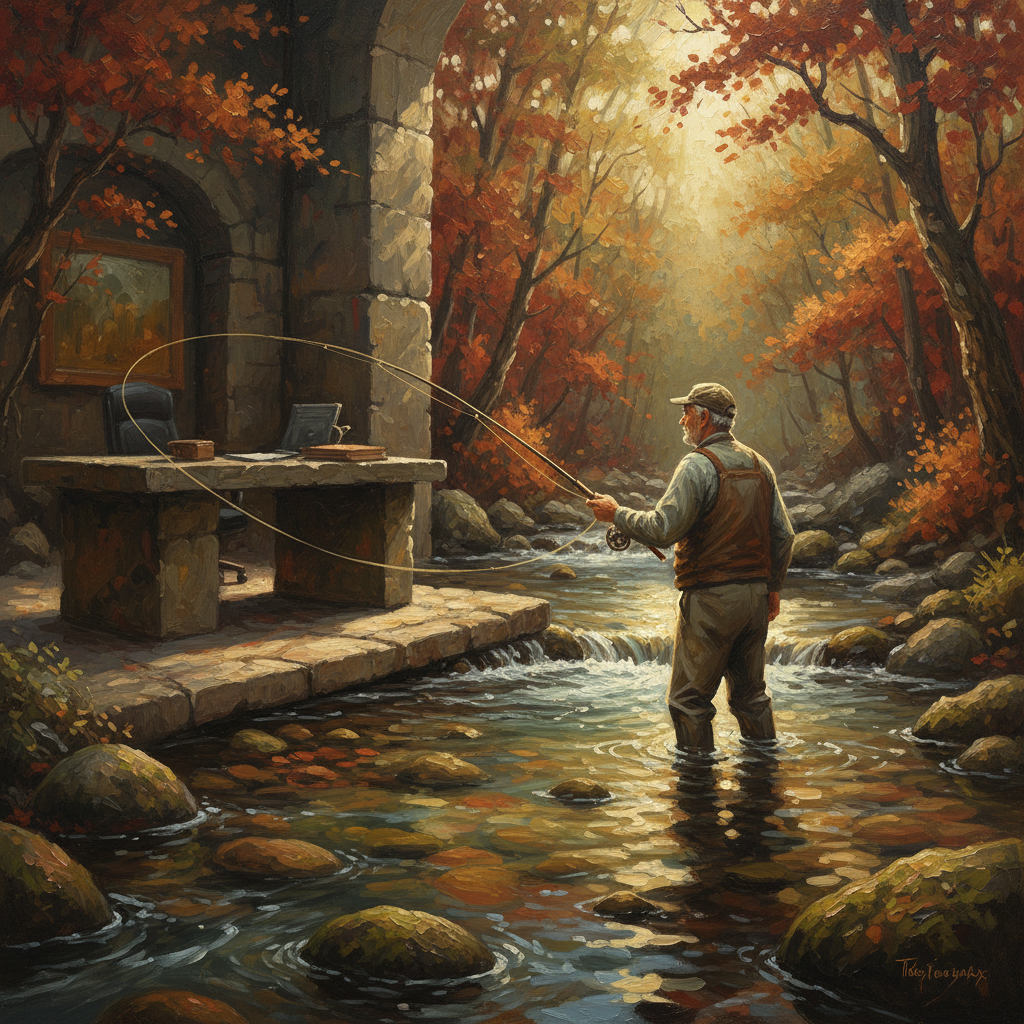
A few years have passed since that humbling trip to the Adirondack lake. I’ve returned several times since, each time approaching the water with a newfound respect and a healthier dose of humility. I still strive to catch fish, of course, but my motivations have shifted. I’m no longer driven by the need to prove myself or to dominate the environment. Instead, I’m drawn by the simple pleasure of being outdoors, the challenge of matching wits with the fish, and the quiet solitude of the lake.
I’ve also learned to appreciate the beauty of the “off” days, the times when the fish simply aren’t biting. These are the days when I can truly relax, observe the wildlife, and soak in the tranquility of the surroundings. I’ve seen eagles soaring overhead, deer drinking at the water’s edge, and beavers building their dams. I’ve listened to the songs of the birds, the rustling of the leaves, and the gentle lapping of the waves. These are the moments that make fishing so rewarding, regardless of whether I catch a fish or not.
The Enduring Allure of the Unpredictable
Why do we fish? Is it the thrill of the chase? The satisfaction of landing a trophy? The camaraderie of sharing a boat with friends? All of these things contribute to the allure of fishing, but I believe there’s something more profound at play. Fishing connects us to something primal, something deep within our souls. It reminds us of our connection to nature, our dependence on the natural world, and our place within the grand scheme of things.
It’s a humbling experience, a reminder that we are not in control, that we are at the mercy of the elements, and that we must respect the power of nature. It’s a challenging pursuit, requiring patience, skill, and a willingness to adapt to changing conditions. And it’s a rewarding pastime, offering moments of peace, tranquility, and connection that are hard to find elsewhere.
From Arrogance to Acceptance: A Fisherman’s Evolution

The fishing trip that put me back in my place was a turning point in my angling career. It forced me to confront my own arrogance, to acknowledge my limitations, and to embrace the uncertainty of the sport. It taught me that true satisfaction comes not from conquering nature, but from respecting it. And it reminded me that fishing is about more than just catching fish; it’s about connecting with nature, spending time with friends, and finding solace in the simple act of casting a line.
I’m still a passionate fisherman, but my approach has changed. I’m less focused on the outcome and more focused on the process. I’m less concerned with catching the biggest fish and more concerned with enjoying the experience. I’m less driven by ego and more driven by a genuine love of the sport. And I’m more grateful than ever for the lessons that fishing has taught me, both on and off the water. The lake is no longer a battleground to be conquered, but a sanctuary to be cherished.
The next time I find myself getting a little too cocky, a little too sure of myself, I’ll remember that humbling trip to the Adirondack Mountains. I’ll remember the silent lake, the empty nets, and the profound lesson in humility. And I’ll remember that true wisdom comes not from mastering nature, but from learning to live in harmony with it.