The Stillness Before the Storm (of Understanding)
There’s a particular kind of quiet that descends upon you when you’re miles from civilization, adrift on a body of water that seems to stretch on forever. It’s not just the absence of noise; it’s a deeper, more profound stillness that seeps into your bones, silencing the internal chatter that usually dominates your thoughts. It was in this very quiet, on a seemingly ordinary fishing trip, that my understanding of water – of its power, its fragility, and its essential role in the tapestry of life – was irrevocably transformed.
I’d always considered myself an outdoorsman, a lover of nature. I’d hiked through dense forests, climbed rugged mountains, and camped under starry skies. But my relationship with water was, until that trip, largely transactional. It was something I drank, something I swam in, something I occasionally fished in. I appreciated its aesthetic beauty, the way it shimmered in the sunlight, the sound of a rushing river. But I hadn’t truly seen it, hadn’t grasped its multifaceted nature, hadn’t felt its pulse in the rhythm of the world.
The trip was planned as a simple escape, a chance to unplug from the relentless demands of modern life. A friend had told me about this remote alpine lake, nestled high in the mountains, teeming with trout and virtually untouched by human activity. The thought of spending a few days immersed in such pristine wilderness was irresistible. We packed our gear, loaded up the car, and set off on the long, winding drive that would eventually lead us to the trailhead.
The Lake’s Silent Lesson
The hike to the lake was arduous, a steep climb through dense forest that tested our physical endurance. But as we emerged from the trees and caught our first glimpse of the water, all the fatigue instantly vanished. The lake was breathtaking, a vast expanse of shimmering blue surrounded by towering peaks. The air was crisp and clean, carrying the scent of pine and damp earth. It was a scene of such profound beauty that it felt almost unreal.
We spent the first day fishing, casting our lines with eager anticipation. The trout were plentiful, and we quickly filled our creels with glistening, silver fish. But as the sun began to set, casting long shadows across the water, I found myself drawn to the lake itself, to its stillness and its mystery. I sat on the shore, watching the ripples spread from a distant splash, and began to contemplate the sheer volume of water before me. It was more than just a lake; it was a reservoir of life, a source of sustenance for countless creatures, a vital component of the entire ecosystem.
That night, as we sat around the campfire, the conversation drifted from fishing to broader topics – environmental conservation, climate change, the interconnectedness of all things. My friend, a marine biologist, shared his extensive knowledge of the world’s oceans, the threats they faced, and the crucial role they played in regulating the planet’s climate. He spoke of the delicate balance of marine ecosystems, the devastating impact of pollution, and the urgent need for sustainable practices.
His words resonated deeply within me. I realized that my previous understanding of water had been woefully inadequate, that I had taken it for granted, that I had failed to appreciate its true value. It wasn’t just something I used; it was something I was inextricably connected to, something that sustained me, something that deserved my utmost respect and protection.
Beyond the Surface: A Deeper Dive
The next morning, I woke up before dawn, eager to experience the lake in a new light. I grabbed my fishing rod and headed down to the shore, where I found the water shrouded in mist. The air was cold and still, and the only sound was the gentle lapping of waves against the shore. I cast my line into the water, but my mind wasn’t on fishing. I was thinking about what my friend had told me the night before, about the fragility of the marine environment, about the interconnectedness of all things.
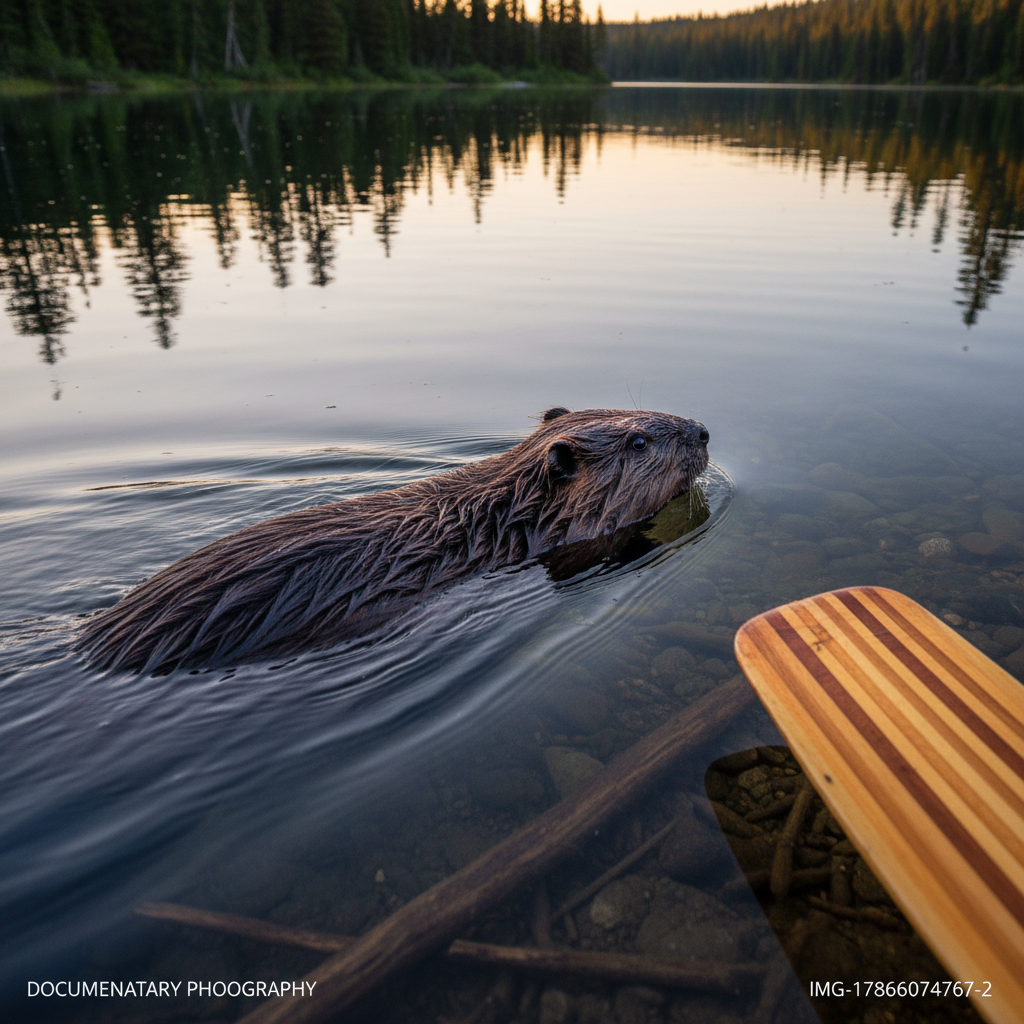
As I stood there, lost in thought, I noticed something moving in the water near the shore. It was a small, dark shape, barely visible through the mist. I watched intently as it slowly emerged, revealing itself to be a beaver. The beaver swam towards me, its sleek fur glistening in the dim light. It reached the shore just a few feet away from me, and then it stopped, looking directly at me with its intelligent, inquisitive eyes.
For a moment, we were locked in a silent gaze, two creatures sharing the same space, acknowledging each other’s presence. In that instant, I felt a profound connection to the beaver, to the lake, to the entire ecosystem. I realized that we were all part of the same web of life, that our fates were intertwined, that our actions had consequences that rippled far beyond our immediate surroundings.
The Ripple Effect of Awareness
The encounter with the beaver was a pivotal moment, a catalyst that sparked a profound shift in my perspective. It was as if a veil had been lifted from my eyes, allowing me to see the world in a new and more meaningful way. I realized that water was more than just a resource to be exploited; it was a sacred element, a life-giving force, a vital part of the planet’s delicate balance.
From that day forward, I made a conscious effort to live more sustainably, to reduce my environmental impact, and to advocate for the protection of our planet’s precious water resources. I started recycling, conserving water at home, and supporting organizations that were working to combat pollution and promote responsible resource management. I also began to educate myself about the complex issues facing our oceans and waterways, reading books, attending lectures, and participating in community events.
My journey of environmental awareness didn’t stop there. I became an active advocate for conservation, speaking out against destructive practices and supporting policies that promoted sustainability. I organized community cleanups, volunteered at local nature centers, and wrote letters to elected officials, urging them to take action on climate change and environmental protection.
From Angler to Advocate: A Personal Transformation
Looking back on that fishing trip, I realize that it was more than just a weekend getaway; it was a transformative experience that changed the course of my life. It taught me the importance of connecting with nature, of appreciating the beauty and fragility of our planet, and of taking responsibility for our actions.
It also taught me that even the smallest of actions can have a significant impact. By making conscious choices in our daily lives, by reducing our consumption, by conserving resources, and by advocating for change, we can all contribute to a more sustainable future. We can all become stewards of our planet, protectors of our precious water resources, and advocates for a world where both humans and nature can thrive.
Perhaps the most important lesson I learned was the power of observation. By taking the time to truly see the world around us, by paying attention to the details, by noticing the interconnectedness of all things, we can gain a deeper understanding of our place in the universe and our responsibility to protect it. The quiet stillness of that alpine lake allowed me to hear the whispers of nature, to understand its silent language, and to embrace its profound wisdom.
The Unseen Connections
The beauty of that lake, the encounter with the beaver, the conversations with my friend – these were all pieces of a larger puzzle, fragments of a truth that was slowly revealing itself to me. It was the truth that water is not just a commodity, not just a resource to be managed, but a living entity, a vital component of the Earth’s circulatory system, a force that shapes our landscapes, sustains our lives, and connects us all.
Consider the rain that falls from the sky, nourishing the plants, filling the rivers, and replenishing the aquifers. It’s the same water that evaporated from the oceans, traveled through the atmosphere, and condensed into clouds. It’s a continuous cycle, a never-ending journey, a testament to the interconnectedness of all things. And we, as humans, are an integral part of that cycle. We drink the water, we use it for agriculture and industry, and we discharge it back into the environment. But what we often fail to realize is that our actions have consequences, that the way we treat water has a direct impact on the health of the planet and the well-being of future generations.
Think about the vastness of the oceans, the home to countless species of marine life, the engine that drives our climate, the source of much of our food. The oceans are facing unprecedented threats – pollution, overfishing, acidification – and their health is inextricably linked to our own. We can’t afford to ignore the warning signs, to continue with business as usual, to treat the oceans as a dumping ground for our waste. We must act now, with urgency and determination, to protect these vital ecosystems and ensure their survival for generations to come.
A Call to Action: Protecting Our Liquid Legacy
The fishing trip that changed how I see water forever wasn’t just about catching fish; it was about catching a glimpse of something larger, something more profound, something that transformed my understanding of the world and my place in it. It was about recognizing the interconnectedness of all things, the importance of environmental stewardship, and the urgent need to protect our planet’s precious water resources.
So, I ask you, what will it take for you to see water in a new light? What will it take for you to realize its true value, to appreciate its beauty, to understand its fragility? Will it take a trip to a remote alpine lake, an encounter with a wild creature, a conversation with a knowledgeable friend? Or will you simply open your eyes, pay attention to the world around you, and recognize the profound truth that water is life?
Whatever it takes, I urge you to take action. Reduce your water consumption, conserve resources, support environmental organizations, and advocate for policies that protect our planet’s water. Educate yourself about the issues, spread awareness, and inspire others to join the cause. Together, we can make a difference. Together, we can create a more sustainable future for ourselves and for generations to come.

The Unfolding Future
The journey of understanding is a continuous process, an unfolding revelation that never truly ends. My fishing trip was just one chapter in that journey, a pivotal moment that set me on a new course, but there’s still so much more to learn, so much more to discover. The more I learn about water, the more I realize how little I actually know. It’s a subject of infinite complexity, a source of endless fascination, a mystery that will likely never be fully unraveled.
But that’s part of its allure. The unknown, the unexplored, the sense of wonder that comes from contemplating the vastness of the oceans and the intricacies of the water cycle – these are the things that keep me engaged, that drive me to learn more, that inspire me to protect this precious resource. I believe that we all have a responsibility to be lifelong learners, to constantly expand our knowledge, to challenge our assumptions, and to seek a deeper understanding of the world around us.
And when it comes to water, the stakes are simply too high to remain complacent. We are facing a global water crisis, a looming threat that could have devastating consequences for our planet and our civilization. Climate change is disrupting weather patterns, leading to droughts and floods, and exacerbating existing water scarcity issues. Pollution is contaminating our rivers, lakes, and oceans, threatening aquatic life and human health. Overpopulation and unsustainable consumption patterns are placing increasing demands on our limited water resources.
Embracing the Challenge: A Sustainable Path Forward
But there is hope. We have the knowledge, the technology, and the resources to address these challenges. We can develop more efficient irrigation systems, implement water-saving technologies, and promote sustainable agricultural practices. We can invest in wastewater treatment plants, reduce pollution, and protect our watersheds. We can educate the public about the importance of water conservation, empower communities to manage their own water resources, and advocate for policies that promote sustainability.
The key is to act now, with courage and determination, to embrace the challenge, and to work together towards a common goal. We can’t afford to wait for someone else to solve the problem; we all have a role to play. Every drop counts, every action matters, every effort makes a difference. By working together, we can create a more sustainable future for ourselves and for generations to come.
The transformation that began on that fishing trip continues to this day. I am constantly learning, constantly evolving, constantly striving to be a better steward of our planet. And I am grateful for the opportunity to share my story, to inspire others to connect with nature, to appreciate the beauty and fragility of our world, and to take action to protect it. The journey is far from over, but I am confident that together, we can create a future where water is valued, respected, and protected for all.
And so, I return to the image of that still alpine lake, the reflection of the mountains sharp on its surface. It’s a reminder of the profound beauty we stand to lose, but also a symbol of the potential we have to protect it. The water waits, patient and powerful, for us to choose wisely.