The Unseen Connection: Angler Anxiety and Aquatic Awareness
Have you ever felt that prickle of self-doubt right before casting your line, a subtle hum of anxiety that seems to radiate outwards? Perhaps you’ve dismissed it as mere pre-fishing jitters, the anticipation of the catch mixing with the fear of failure. But what if those feelings aren’t as contained as you think? What if the fish, those silent inhabitants of the underwater world, can actually sense your nervousness?
It might sound like something ripped from the pages of a fantasy novel, a fisherman’s tall tale spun under the flickering light of a campfire. But the more we delve into the intricacies of animal behavior and the subtle ways in which creatures communicate, the more plausible this seemingly outlandish idea becomes. While we can’t definitively claim that fish possess some kind of psychic ability to read our minds, the scientific evidence suggests a far more nuanced and fascinating connection between angler and fish.
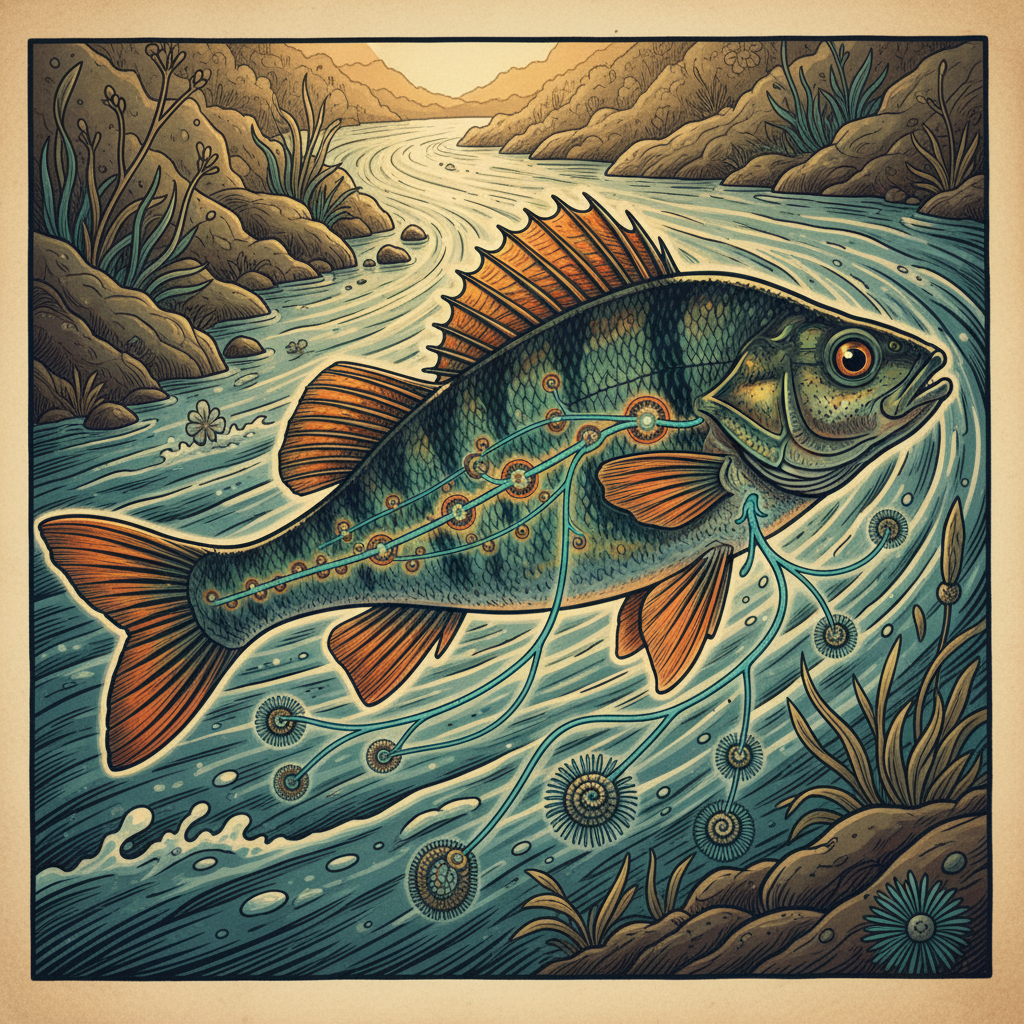
Consider the very environment in which fishing takes place. Water, unlike air, is an excellent conductor of vibrations. Every movement, every sound, creates ripples that travel through the water, carrying information about the source. Fish, with their highly developed lateral line systems, are exquisitely sensitive to these vibrations. They can detect the slightest pressure changes, the subtle tremors caused by a predator approaching, or the rhythmic beat of a nervous angler’s heartbeat transmitted through the rod and line.
Think about it. You’re standing on the bank, gripped by the fear of going home empty-handed. Your muscles tense, your breathing becomes shallow and rapid, and your heart pounds in your chest. These physiological changes, imperceptible to the naked eye, translate into subtle vibrations that travel down the line and into the water. The fish, tuned into this underwater symphony of sensations, may interpret these vibrations as a sign of danger, a warning signal that something is amiss.
But it’s not just vibrations. The release of stress hormones, such as cortisol and adrenaline, can also affect the surrounding environment. While the direct impact of these hormones on fish behavior is still being studied, it’s plausible that they could subtly alter the water’s chemistry, creating a faint “scent” of anxiety that fish can detect. After all, fish rely heavily on their sense of smell to navigate, find food, and avoid predators.
Of course, it’s also important to consider the angler’s behavior. A nervous angler is more likely to make jerky, unnatural movements, to cast clumsily, and to retrieve the lure in an erratic manner. These actions, far more obvious than subtle vibrations, can easily spook fish and send them scurrying for cover.
The key takeaway is this: fishing is not just about skill and equipment; it’s about connection. It’s about understanding the environment, respecting the fish, and cultivating a sense of calm and presence. The more relaxed and focused you are, the more likely you are to succeed.
The Science Behind the Sixth Sense (Or Something Close To It)
Let’s dive deeper into the science that supports the idea of fish sensing angler anxiety. The primary mechanism at play here is the lateral line system, a sensory organ found in most fish that allows them to detect subtle changes in water pressure. Imagine it as a network of tiny hairs embedded in a canal running along the sides of the fish’s body. These hairs are incredibly sensitive, able to detect even the faintest vibrations.
Think of it like this: you’re sitting in a quiet room, and someone whispers something across the room. You might not be able to hear the words clearly, but you can sense the presence of sound waves, the subtle pressure changes in the air. The lateral line system allows fish to do something similar, but with far greater precision and sensitivity.
This system allows fish to detect the approach of predators, the movement of prey, and even the presence of obstacles in murky water. It’s essentially their underwater radar, providing them with a constant stream of information about their surroundings.
Now, consider the vibrations generated by a nervous angler. A tense grip on the rod can translate into subtle tremors that travel down the line and into the water. A fidgety stance, a quick, jerky movement – all of these actions create vibrations that the fish can detect.
Furthermore, the heart rate of a nervous angler is likely to be elevated. This increased heart rate can transmit subtle pulsations through the fishing line, creating a rhythmic vibration that the fish may perceive as a sign of danger. It’s like the frantic drumming of a trapped animal, a clear signal that something is wrong.
Beyond the lateral line system, fish also possess a highly developed sense of hearing. While they lack external ears, they have internal structures that allow them to detect sound waves traveling through the water. These sound waves can be generated by a variety of sources, including the angler’s movements on the bank, the clinking of tackle, and even the subtle vibrations of the fishing line.
Consider a study that examined the effects of noise pollution on fish behavior. The researchers found that exposure to loud or erratic noises could significantly disrupt fish feeding patterns, spawning behavior, and predator avoidance strategies. This suggests that fish are highly sensitive to auditory stimuli and that even subtle changes in the soundscape can have a significant impact on their behavior.
So, while we can’t definitively say that fish can “read” our minds, the scientific evidence strongly suggests that they are highly attuned to our physical state and behavior. They can detect the subtle vibrations and sounds that we generate, and they may interpret these signals as a sign of danger or an indication that something is amiss.
The Zen of Fishing: Cultivating Calm for a Better Catch
If fish can indeed sense our nervousness, what can we do to mitigate its effects and improve our chances of success? The answer lies in cultivating a sense of calm and presence, in embracing the “Zen” of fishing.
This isn’t just about suppressing your anxiety; it’s about transforming it into a state of focused awareness. It’s about being fully present in the moment, attuned to the subtle rhythms of the natural world.
Start by practicing deep breathing exercises. Before you even pick up your rod, take a few moments to inhale deeply and exhale slowly. This simple act can help to calm your nervous system, reduce your heart rate, and clear your mind.
Imagine that you’re breathing in the tranquility of the surrounding environment – the fresh air, the gentle sounds of the water, the rustling of leaves in the trees. And with each exhale, release any tension, stress, or anxiety that you may be holding onto.
Next, focus on your posture. Stand tall, with your shoulders relaxed and your weight evenly distributed. Avoid slouching or hunching over, as this can restrict your breathing and create tension in your muscles.
Think of yourself as a tree, rooted firmly to the ground, yet flexible and adaptable to the changing winds. Maintain a sense of groundedness and stability, allowing your body to move freely and naturally.
As you begin to cast your line, pay attention to your movements. Avoid jerky, abrupt motions that can spook fish. Instead, strive for a smooth, fluid casting motion that is both efficient and graceful.
Visualize the lure landing gently on the water’s surface, creating minimal disturbance. Imagine the fish approaching the lure with curiosity, drawn in by its lifelike appearance and natural movement.
Most importantly, let go of the outcome. Don’t get caught up in the pressure to catch a fish. Instead, focus on the process of fishing itself – the act of casting, retrieving, and connecting with nature.
Remember that fishing is not just about catching fish; it’s about spending time outdoors, enjoying the beauty of the natural world, and connecting with something larger than yourself.
Even if you don’t catch a single fish, you can still have a successful day if you approach it with a sense of calm, presence, and appreciation.
Consider the example of a seasoned angler who has been fishing for decades. They may not always catch the biggest fish, but they consistently catch fish because they have learned to cultivate a state of calm and focus. They move with a quiet confidence, their movements deliberate and precise. They are attuned to the subtle cues of the environment, able to read the water and anticipate the behavior of the fish.
This ability to remain calm and focused under pressure is not something that comes naturally. It’s a skill that is developed over time through practice and experience. But it’s a skill that is well worth cultivating, not only for improving your fishing success, but also for enhancing your overall well-being.
The Power of Observation: Reading the Water and Understanding Fish Behavior
Beyond cultivating inner calm, another crucial aspect of successful fishing is the ability to observe the environment and understand fish behavior. The more you learn about the habits and preferences of the fish you’re trying to catch, the better equipped you’ll be to anticipate their movements and present your lure in a way that is irresistible.
Start by paying attention to the water conditions. Is the water clear or murky? Is it fast-flowing or slow-moving? What is the temperature of the water? All of these factors can influence the behavior of fish and their willingness to bite.
For example, in clear water, fish are more likely to be wary and cautious, so you may need to use lighter line and smaller lures. In murky water, fish are less able to see, so you may need to use brighter lures and make more noise to attract their attention.
Similarly, in fast-flowing water, fish are likely to congregate in areas where they can find shelter from the current, such as behind rocks or submerged logs. In slow-moving water, fish are more likely to be dispersed throughout the area.
Next, observe the surrounding environment. Are there any signs of fish activity, such as jumping fish, feeding swirls, or baitfish schools? Are there any obvious structures or cover that might attract fish, such as submerged trees, weed beds, or rocky outcrops?
Look for patterns in the fish’s behavior. Are they feeding at a particular time of day? Are they congregating in a specific area? Are they responding to a certain type of lure or presentation?
The more you observe, the more you’ll begin to understand the subtle cues that indicate the presence of fish and their willingness to bite.
Consider the example of a fly fisherman who is trying to catch trout in a mountain stream. They might start by observing the insect life in the area, noting the types of insects that are hatching and the time of day when they are most active.
They would then choose a fly that closely imitates the natural insects and present it in a way that mimics their natural movement. They might also pay attention to the water current, casting their fly upstream and allowing it to drift naturally downstream.
By carefully observing the environment and understanding the behavior of the trout, the fly fisherman can significantly increase their chances of success.

The Ethical Angler: Respecting the Fish and the Environment
Finally, it’s important to remember that fishing is not just a sport; it’s a relationship. It’s a relationship between the angler, the fish, and the environment. As ethical anglers, we have a responsibility to respect all three.
This means practicing catch and release whenever possible, using barbless hooks to minimize injury to the fish, and handling fish with care to avoid damaging their scales or fins.
It also means being mindful of the impact that our actions have on the environment. This includes avoiding littering, using biodegradable fishing line, and respecting the rules and regulations of the local fishery.
Remember that the fish we catch are not just objects to be conquered; they are living creatures that deserve our respect and compassion.
Consider the example of an angler who catches a fish that is too small or that is out of season. Instead of keeping the fish, they carefully release it back into the water, ensuring that it has a chance to grow and reproduce.
They might also take the time to clean up any litter that they find along the riverbank, helping to protect the environment for future generations of anglers.
By practicing ethical angling, we can ensure that fishing remains a sustainable and enjoyable activity for years to come. It’s about recognizing our role as stewards of the environment and acting responsibly to protect the fish and their habitat.
Case Studies: Angler Experiences and Anecdotal Evidence
While scientific studies provide valuable insights into the potential connection between angler anxiety and fish behavior, anecdotal evidence from experienced anglers can also shed light on this fascinating phenomenon.
Many seasoned fishermen have reported experiencing a noticeable difference in their success rate when they are feeling calm and relaxed versus when they are feeling stressed or anxious. They often describe situations where they were struggling to catch fish despite using the right techniques and equipment, only to suddenly start catching fish once they managed to calm their nerves and focus their attention.
One angler shared a story about a particularly frustrating day of fishing where he couldn’t seem to catch anything, no matter what he tried. He was feeling increasingly stressed and discouraged, and his movements became more jerky and erratic. Finally, he decided to take a break and sit down by the river to meditate for a few minutes. He closed his eyes, focused on his breath, and let go of his frustration and anxiety. When he resumed fishing, he immediately started catching fish, even though he hadn’t changed his technique or equipment.
Another angler described a similar experience where he was fishing in a tournament and feeling the pressure to perform well. He was so focused on winning that he became tense and anxious, and he couldn’t seem to catch anything. Finally, he decided to shift his focus from winning to simply enjoying the experience of fishing. He relaxed his grip on the rod, took a few deep breaths, and started to appreciate the beauty of the surrounding environment. To his surprise, he immediately started catching fish and ended up winning the tournament.
These anecdotal accounts, while not scientific proof, suggest that there may be a real connection between an angler’s mental state and their fishing success. They highlight the importance of cultivating calm and presence, not only for improving your fishing skills but also for enhancing your overall enjoyment of the sport.

Beyond the Catch: The Intrinsic Rewards of Fishing
Ultimately, the true value of fishing lies not just in the number or size of the fish you catch, but in the intrinsic rewards that the sport offers. It’s about spending time outdoors, connecting with nature, and challenging yourself both physically and mentally.
Fishing can be a form of meditation, allowing you to escape the stresses of modern life and find peace and tranquility in the natural world. It can also be a way to connect with friends and family, sharing stories and creating lasting memories.
Moreover, fishing can be a constant learning experience, requiring you to adapt to changing conditions, experiment with different techniques, and refine your skills over time. It’s a sport that rewards patience, perseverance, and a willingness to learn.
So, the next time you head out to the lake or river, remember that the most important thing is not whether you catch a fish, but whether you enjoy the experience. Embrace the challenges, appreciate the beauty of the natural world, and cultivate a sense of calm and presence.
And who knows, you might just find that the fish are more receptive to your efforts when you’re feeling relaxed and focused. The connection between angler and fish may be more profound than we realize, a subtle dance of energy and awareness that transcends the boundaries of science and logic.

The feeling of connection, of being part of something larger than ourselves, is perhaps the greatest reward that fishing offers. It’s a reminder that we are all interconnected, that our actions have consequences, and that we have a responsibility to protect the natural world for future generations. So, take a deep breath, cast your line with confidence, and remember that the fish may just be able to sense if you’re nervous. But more importantly, remember to enjoy the journey, regardless of the outcome.