Unlocking the Secret to Solid Hooksets: The Perfect Hook Placement
Every angler has experienced the frustration of feeling that telltale tug, setting the hook with all their might, only to reel in… nothing. A bare hook, a mangled bait, and a lingering sense of what could have been. While factors like line strength, rod action, and hook sharpness all play crucial roles, there’s one often-overlooked element that can dramatically improve your hook-up ratio: hook placement. It’s not just about where the hook ends up; it’s about the precise point of entry that maximizes your chances of a secure hold.
Imagine a surgeon performing a delicate operation. They don’t just blindly cut; they meticulously plan each incision, knowing that even a millimeter’s difference can determine the outcome. Similarly, mastering hook placement requires understanding the nuances of fish anatomy, feeding behavior, and the dynamics of the hookset itself. This isn’t about luck; it’s about strategy, precision, and a deep understanding of your quarry.
Why Hook Placement Matters More Than You Think
Think of a fish’s mouth. It’s not just a simple opening; it’s a complex structure of bone, cartilage, and muscle. Some areas offer a firm, reliable anchor for a hook, while others are soft, fleshy, and prone to tearing. A poorly placed hook might simply pull free during the fight, leaving you empty-handed. A perfectly placed hook, on the other hand, will penetrate deep into the jaw, providing a secure hold that even the most acrobatic fish will struggle to escape.
Moreover, hook placement influences the fish’s behavior after the hookset. A hook buried deep in the upper jaw, for example, can effectively prevent the fish from opening its mouth and throwing the hook. Conversely, a hook that’s barely embedded in the lip might allow the fish to use its mouth to leverage the hook out, especially when combined with head-shaking or jumping.
Consider this scenario: You’re fishing for largemouth bass in heavy cover. You feel a solid thump, indicating a good bite. You rear back on the rod, but instead of the satisfying feeling of a hooked fish, you feel nothing but slack line. What went wrong? It’s possible that the hook simply didn’t penetrate properly, perhaps because it was positioned too far back in the fish’s mouth, where the jaw is less dense. Or maybe the hook point was obstructed by weeds or debris, preventing a clean entry. In any case, improper hook placement was likely a contributing factor.
Decoding the Ideal Hook Position for Different Species
The “perfect” hook placement isn’t a one-size-fits-all concept. It varies depending on the species you’re targeting, their feeding habits, and the type of bait or lure you’re using. Let’s explore some common scenarios:
Largemouth Bass: The King of the Hookset
Largemouth bass are known for their aggressive strikes, but their mouths are also surprisingly bony. The ideal hook position for a bass is typically in the upper jaw, just behind the premaxillary bone. This area provides a solid anchor and helps prevent the fish from throwing the hook.
When using artificial lures like crankbaits or spinnerbaits, the hook is often set automatically as the bass strikes and turns away. However, with soft plastics like worms or lizards, you need to be more deliberate. Wait for the bass to take the bait completely, then set the hook with a powerful upward sweep of the rod. This ensures that the hook penetrates the upper jaw and secures a solid hold.
Consider this real-world example: A professional bass angler is fishing a tournament on a heavily pressured lake. The bass are finicky and only lightly striking his Texas-rigged worm. Instead of swinging for the fences on every bite, he employs a “sweeping” hookset, gradually increasing the pressure until he feels the hook penetrate. This subtle adjustment in his hookset technique results in a significant increase in his hook-up ratio, ultimately leading to a tournament victory. The key was recognizing the subtle differences in how the fish were biting and adapting his hookset accordingly.
Trout: Precision and Finesse
Trout have much softer mouths than bass, making them more prone to hook tears. The ideal hook position for trout is typically in the corner of the mouth, where the skin is relatively tough but still allows for a clean hookset.
When fishing with dry flies or nymphs, use a gentle lift of the rod to set the hook. Avoid aggressive strikes, as this can easily tear the hook through the trout’s delicate mouth. With larger streamers or lures, a slightly firmer hookset may be necessary, but still exercise caution to avoid damaging the fish.

For example, imagine you are fishing a small stream with ultra-light tackle. You are using a tiny dry fly to imitate a mayfly hatch. A trout rises and takes your fly gently. Instinctively, you want to set the hook hard, but you resist the urge. Instead, you slowly raise your rod tip, applying just enough pressure to embed the hook in the corner of the trout’s mouth. This gentle hookset preserves the fish’s delicate mouth and ensures a clean release.
Panfish: Small Mouths, Big Challenges
Panfish like crappie, bluegill, and perch have small mouths, making accurate hook placement even more critical. The ideal hook position is usually in the roof of the mouth or the upper lip. This area provides a good hold and helps prevent the fish from spitting the hook.
When fishing with small jigs or live bait, use a quick, short hookset to penetrate the panfish’s mouth. Avoid using hooks that are too large, as they can be difficult for panfish to take completely. Opt for smaller, sharper hooks that will easily penetrate their delicate mouths.
Consider a scenario where you’re ice fishing for crappie. You’re using a small jig tipped with a wax worm. You see a subtle tap on your line, indicating a crappie is investigating your bait. You resist the urge to yank the rod, and instead, give a quick, subtle flick of the wrist. This finesse hookset is perfectly suited for the crappie’s small mouth and delicate bite, resulting in a successful hook-up.
Saltwater Species: Adapting to Different Mouth Structures
Saltwater fish exhibit a wide range of mouth structures, requiring anglers to adapt their hookset techniques accordingly. For example, species like snook and tarpon have tough, bony mouths, requiring aggressive hooksets with strong hooks. Other species, like speckled trout, have softer mouths, requiring a more delicate approach.
When targeting saltwater species, research the specific anatomy and feeding habits of your target fish. This will help you choose the appropriate hook size, style, and hookset technique.
Fine-Tuning Your Hookset: Techniques for Success
Knowing the ideal hook position is only half the battle. You also need to master the art of the hookset itself. Here are some key techniques to help you improve your hook-up ratio:
The Importance of Hook Sharpness
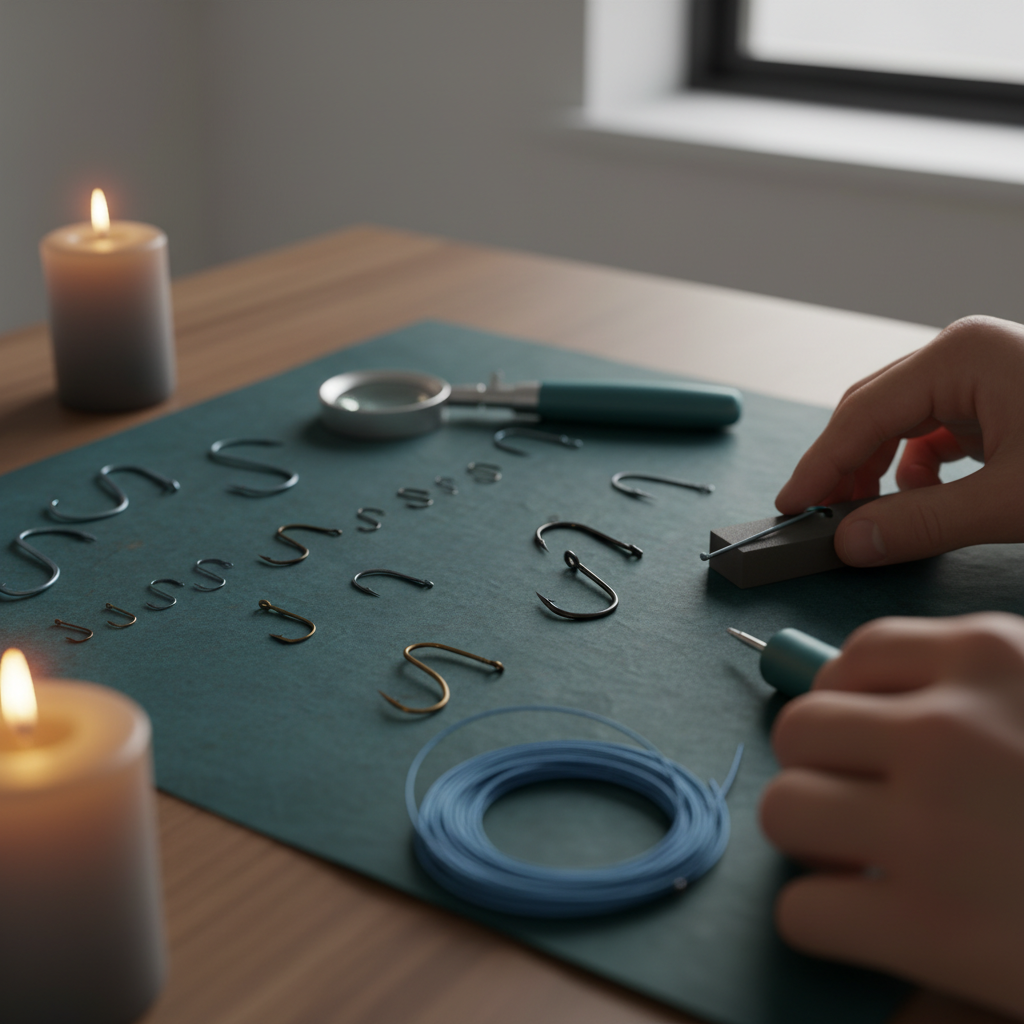
A dull hook is like a blunt knife – it requires excessive force to penetrate. Always ensure that your hooks are razor-sharp. Use a hook sharpener to maintain a keen point and check your hooks regularly for damage or corrosion.
Imagine trying to drive a nail into a piece of wood with a hammer. If the nail is bent or dull, you’ll have to hit it much harder to get it to penetrate. Similarly, a dull hook requires a much more forceful hookset, which can spook the fish or even tear the hook through its mouth. A sharp hook, on the other hand, will penetrate easily with minimal pressure, increasing your chances of a solid hook-up.
Rod Angle and Line Tension
Maintain a tight line between your rod tip and the bait. This ensures that you can quickly and efficiently transfer energy to the hook during the hookset. Use a rod angle that allows you to generate maximum power and leverage. Typically, a low rod angle is best for generating power, while a higher rod angle is better for maintaining control during the fight.
Think of it like drawing a bow and arrow. If the bowstring is slack, you won’t be able to generate much force when you release the arrow. Similarly, if your line is slack, you won’t be able to effectively set the hook. Maintaining a tight line is crucial for transferring the energy from your rod to the hook, ensuring a solid penetration.
The Sweep vs. the Jerk: Choosing the Right Approach
The “sweep” hookset involves a gradual, sweeping motion of the rod, while the “jerk” hookset involves a quick, sharp upward movement. The best approach depends on the species you’re targeting, the type of bait you’re using, and the depth of the water.
For example, when fishing with soft plastics for bass in deep water, a long, sweeping hookset is often the most effective. This allows you to take up slack line and generate enough power to penetrate the bass’s tough jaw. On the other hand, when fishing with topwater lures, a quick, jerk hookset is often necessary to drive the hook home before the bass spits the lure.

Practice Makes Perfect
The best way to improve your hookset technique is to practice. Spend time on the water, experimenting with different hookset styles and paying attention to the results. Analyze your failures and successes, and adjust your approach accordingly. The more you practice, the more instinctive your hookset will become.
Imagine a baseball player practicing their swing. They don’t just step up to the plate and swing blindly; they carefully analyze their form, make adjustments, and repeat the process over and over again. Similarly, improving your hookset requires dedicated practice and careful analysis. The more you practice, the more natural and effective your hookset will become.
Common Mistakes to Avoid: Hookset Blunders and How to Fix Them
Even experienced anglers make mistakes when it comes to hooksets. Here are some common blunders to avoid:
Setting the Hook Too Early or Too Late
Setting the hook too early can result in a missed strike, while setting the hook too late can allow the fish to swallow the bait too deeply. Learn to recognize the subtle cues that indicate a fish has taken the bait completely. This requires practice and careful observation.
For example, if you’re fishing with a Texas-rigged worm, wait until you feel the fish “load up” on the bait before setting the hook. This means waiting until you feel a solid, consistent pull on the line, indicating that the fish has the worm firmly in its mouth. Setting the hook before this point will likely result in a missed strike.
Using the Wrong Hook Size or Style
Using a hook that’s too large can be difficult for fish to take completely, while using a hook that’s too small can result in a weak hookset. Choose a hook size and style that’s appropriate for the species you’re targeting and the type of bait you’re using.
Imagine trying to eat a bite of food with a fork that’s either too big or too small. If the fork is too big, you’ll have difficulty getting the food into your mouth. If the fork is too small, you won’t be able to pick up enough food. Similarly, using the wrong hook size can make it difficult for the fish to take the bait properly.
Neglecting Your Equipment
Frayed line, rusty hooks, and a weak rod can all contribute to missed hooksets. Regularly inspect your equipment and replace any worn or damaged components. Invest in high-quality gear that will perform reliably under pressure.
Not Paying Attention to Water Clarity
Water clarity can significantly impact a fish’s ability to see your bait and react to your hookset. In clear water, fish are more likely to be wary and may spit the bait quickly. In murky water, they may hold onto the bait longer, giving you more time to set the hook. Adjust your hookset technique accordingly.
Consider fishing in a crystal-clear lake. The fish can see your line and bait very clearly, making them more likely to be spooked by any sudden movements. In this situation, a subtle, sweeping hookset is often the best approach. On the other hand, if you’re fishing in a muddy river, the fish may not be able to see your line, allowing you to use a more aggressive hookset.
Beyond the Basics: Advanced Hookset Strategies
Once you’ve mastered the fundamentals of hook placement and hookset technique, you can start exploring more advanced strategies:
The “Circle Hook” Technique
Circle hooks are designed to hook fish in the corner of the mouth, even when they swallow the bait. This makes them a popular choice for live bait fishing, particularly in saltwater. To use circle hooks effectively, avoid setting the hook in the traditional manner. Instead, simply reel slowly and steadily until the hook finds its way into the corner of the fish’s mouth.
Imagine a fish taking a live bait rigged with a circle hook. As the fish swims away, the line pulls the hook towards the corner of its mouth. The curved shape of the hook allows it to rotate and embed itself in the tough cartilage of the jaw. This self-setting action eliminates the need for a traditional hookset, reducing the risk of gut-hooking the fish.
The “Trailer Hook” Advantage
Adding a trailer hook to your lure can significantly increase your hook-up ratio, especially when fishing for species with short strikes. A trailer hook is a small hook that’s attached to the main hook of your lure, providing an extra point of contact for the fish.
Think of a bass striking a spinnerbait. The bass might only nip at the tail of the lure, missing the main hook entirely. However, with a trailer hook attached, the bass is much more likely to get hooked, even if it only makes partial contact with the lure. The trailer hook acts as a safety net, catching those short strikes that would otherwise result in missed opportunities.
Reading the Fish’s Behavior
The more you understand a fish’s behavior, the better you’ll be able to anticipate its movements and set the hook at the perfect moment. Pay attention to the way the fish takes the bait, the depth of the water, and the surrounding cover. All of these factors can provide valuable clues about when and how to set the hook.
For instance, if you’re fishing for bass in heavy cover, you need to be prepared to set the hook quickly and forcefully, as the bass will often try to retreat into the cover after taking the bait. On the other hand, if you’re fishing for trout in a clear stream, you need to be more patient and observant, waiting for the fish to take the bait completely before setting the hook.

The Ultimate Goal: Consistent Hooksets and More Fish Landed
Mastering hook placement and hookset technique is a journey, not a destination. It requires constant learning, experimentation, and adaptation. But the rewards are well worth the effort. By understanding the nuances of fish anatomy, feeding behavior, and the dynamics of the hookset, you can significantly improve your hook-up ratio and land more fish. So, next time you’re on the water, pay close attention to your hook placement and hookset technique. You might be surprised at the difference it makes.
Ultimately, fishing is about more than just catching fish. It’s about connecting with nature, challenging yourself, and honing your skills. By mastering the art of the hookset, you’ll not only become a more successful angler, but you’ll also gain a deeper appreciation for the intricate relationship between predator and prey. Embrace the challenge, learn from your mistakes, and never stop striving to improve your craft. The fish are waiting.