The Invisible Edge: Mastering the Finer Points of Fishing
Fishing, at its core, is a pursuit of patience, knowledge, and skill. While the thrill of the catch often dominates the narrative, the journey to becoming a proficient angler is paved with a multitude of subtle details. These aren’t the flashy techniques touted in magazines, but the quiet, often overlooked nuances that separate the casual beginner from the seasoned pro. We’re not just talking about knowing what bait to use, but why that bait works in specific conditions. It’s not just about casting a line, but about understanding the physics of the cast and how it impacts presentation. Are you ready to delve into the details that truly elevate your fishing game?
This article isn’t about quick fixes or magic formulas. It’s about cultivating a deeper understanding of the art and science of fishing. We’ll explore the critical details that often go unnoticed, providing practical insights and actionable strategies to help you transform from a novice into an angler who consistently outperforms the average fisherman. Get ready to challenge your assumptions and embrace a more meticulous approach to the sport.
Beyond the Basics: Shifting Your Mindset
The first step in mastering the finer points of fishing is a shift in mindset. Beginners often focus solely on the immediate goal – catching a fish. Pros, on the other hand, view each fishing trip as a learning opportunity, a chance to refine their skills and expand their knowledge. They approach the water with a scientific curiosity, constantly observing, analyzing, and adapting their strategies. They understand that failure is an inevitable part of the learning process and use it as fuel for improvement. Think of it like a detective investigating a crime scene – every clue, no matter how small, is meticulously examined and pieced together to solve the puzzle. How can you cultivate this mindset of continuous learning and improvement?
Consider this: a beginner might simply cast their line into a promising-looking spot and hope for the best. A pro, however, will first analyze the water conditions, assess the current, observe any signs of fish activity, and then select their bait and presentation accordingly. They’ll also pay close attention to the weather, knowing that changes in temperature, wind, and barometric pressure can significantly impact fish behavior. It’s about moving beyond the hope and implementing strategy.
Knot Knowledge: The Unsung Hero of Angling
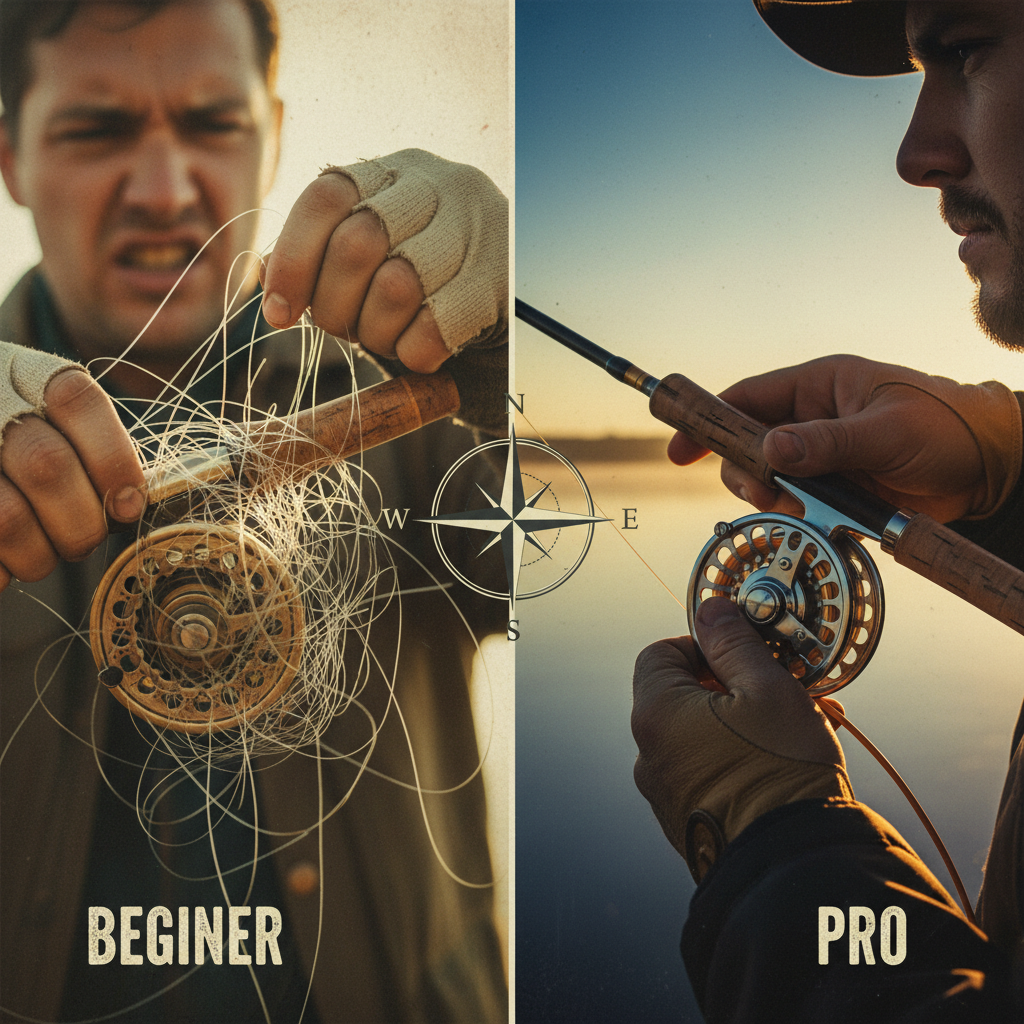
Often underestimated, mastering fishing knots is absolutely crucial. A poorly tied knot is a weak link in your entire fishing system, capable of costing you the fish of a lifetime. Beginners often rely on one or two basic knots, while pros have a repertoire of specialized knots for different lines, lures, and situations. They understand the strengths and weaknesses of each knot and choose the appropriate one based on the specific demands of the fishing scenario. But why is knot selection so important?
Understanding Knot Strength and Efficiency
Not all knots are created equal. Some knots maintain a higher percentage of the line’s original breaking strength than others. A knot that weakens the line significantly can dramatically reduce your chances of landing a large fish. For example, an improved clinch knot, a common knot used for tying line to a hook or swivel, can retain around 80-90% of the line’s strength when tied correctly. However, a poorly tied clinch knot, or one used with the wrong type of line, can easily weaken the line by 50% or more. Imagine hooking into a trophy fish only to have your line snap because of a subpar knot – a truly devastating experience. Beyond strength, the knot’s profile is also important. Some knots are bulkier than others, which can affect lure action or leader presentation. Streamlined knots like the Alberto knot or FG knot are often preferred for connecting braided line to fluorocarbon leaders, as they pass smoothly through rod guides and minimize drag in the water.
Essential Knots Every Angler Should Know
Expanding your knot knowledge beyond the basics is a worthwhile investment. Here are a few essential knots that every angler should master:
- Improved Clinch Knot: For attaching line to hooks, swivels, and lures.
- Palomar Knot: A strong and reliable knot, particularly for braided line.
- Uni Knot: Versatile knot for various applications, including attaching line to spools and tying leaders.
- Alberto Knot (or Modified Albright Knot): For connecting lines of different diameters, especially braid to fluorocarbon.
- FG Knot: Considered one of the strongest and thinnest knots for connecting braid to fluorocarbon, often used in saltwater fishing.
- Snelling Knot: Used for attaching hooks with the line running along the shank, providing a direct pull and improved hookset.
Practice tying these knots regularly until they become second nature. Use a knot-tying tool to ensure consistent tension and proper formation. Test your knots by pulling on them firmly before each cast to identify any weaknesses. Remember, a strong knot is your lifeline to landing the fish of your dreams.
Reading the Water: Unlocking the Secrets Beneath the Surface
One of the most significant differences between beginner and pro anglers is their ability to “read the water.” This involves observing the surface conditions, understanding the underwater structure, and interpreting the subtle clues that indicate the presence and behavior of fish. Beginners often cast blindly into the water, hoping to get lucky. Pros, however, use their knowledge of the environment to target specific areas where fish are likely to be holding. What exactly does it mean to read the water, and how can you develop this crucial skill?
Understanding Water Clarity and Structure
Water clarity plays a crucial role in determining fish behavior and the effectiveness of different fishing techniques. In clear water, fish are more likely to be spooked by movement and shadows, requiring a more stealthy approach. Lighter lines, smaller lures, and longer casts are often necessary to avoid detection. Conversely, in murky or stained water, fish rely more on their sense of smell and vibration to locate prey. Larger, more vibrant lures that create a strong disturbance in the water can be highly effective. Structure, such as submerged logs, rock piles, weed beds, and drop-offs, provides cover and ambush points for fish. Understanding the types of structure present in a particular body of water and how fish relate to them is essential for successful fishing. Fish often congregate around structure that offers protection from predators, access to food, and favorable current conditions.
For instance, a fallen tree in a lake might provide cover for bass, while a rocky outcrop in a river could create eddies where trout can feed on drifting insects. By identifying these key structural elements, you can significantly increase your chances of finding fish. Consider using a fish finder to map out the underwater structure and identify potential hotspots. Fish finders use sonar technology to create a detailed image of the bottom, revealing the location of submerged objects, changes in depth, and even the presence of fish. Using a fish finder effectively can dramatically reduce the amount of time you spend fishing unproductive water.

Identifying Subtle Signs of Fish Activity
Beyond water clarity and structure, there are numerous subtle signs that can indicate the presence of fish. These include:
- Surface disturbances: Ripples, swirls, or splashes can indicate fish feeding on insects or small baitfish near the surface.
- Baitfish activity: Schools of minnows or other small fish are a sure sign that larger predatory fish are nearby.
- Bird activity: Birds diving or hovering over the water can indicate the presence of baitfish and the predators that feed on them.
- Current seams: Areas where two currents meet often concentrate food and attract fish.
- Changes in water color: Variations in water color can indicate changes in depth, bottom composition, or the presence of algae blooms, all of which can affect fish behavior.
By paying close attention to these subtle clues, you can gain valuable insights into the behavior and location of fish. Train yourself to become more observant and to connect the dots between different environmental factors and fish activity. The more you practice, the better you’ll become at “reading the water” and predicting where fish are likely to be.
Presentation Perfection: The Art of Deception
Even with the right bait and the perfect location, a poor presentation can ruin your chances of catching a fish. Presentation refers to the way you present your lure or bait to the fish, including the speed, action, and depth. Beginners often make the mistake of simply casting their line and reeling it in, without paying attention to how the lure is behaving in the water. Pros, however, meticulously control their presentation to mimic the natural movements of prey and entice fish to strike. How can you master the art of presentation and consistently fool even the most wary fish?
Matching the Hatch: Imitating Natural Prey
One of the most effective ways to improve your presentation is to “match the hatch,” which means using lures or baits that closely resemble the natural prey that fish are feeding on. This requires careful observation of the local ecosystem and an understanding of the types of insects, crustaceans, and baitfish that are prevalent in the area. For example, if you’re fishing a trout stream and notice mayflies hatching on the surface, you should use a dry fly that imitates the size, shape, and color of the mayflies. If you’re fishing a lake and see schools of shad swimming near the surface, you should use a swimbait or crankbait that mimics the appearance and action of the shad.
To accurately match the hatch, consider collecting samples of the natural prey and comparing them to your lures and baits. Pay attention to the size, shape, color, and movement of the prey and try to replicate these characteristics as closely as possible. You can also consult with local tackle shops or fishing guides to learn about the prevalent prey in the area and the most effective lures and baits to use. Remember, the more closely you can imitate the natural prey, the more likely you are to fool a fish.
Varying Your Retrieval Techniques
In addition to matching the hatch, it’s also important to vary your retrieval techniques to find what the fish are responding to on a given day. Experiment with different speeds, actions, and depths until you discover the presentation that triggers the most strikes. Some days, fish may prefer a slow, steady retrieve with minimal action, while other days they may prefer a fast, erratic retrieve with aggressive jerks and pauses. Try using a variety of different retrieval techniques, such as:
- Straight retrieve: A simple and consistent retrieve at a steady speed.
- Stop-and-go retrieve: A retrieve with intermittent pauses, allowing the lure to sink and then resume its action.
- Twitch retrieve: A retrieve with short, sharp twitches of the rod tip, imparting a darting action to the lure.
- Jerkbait retrieve: A more aggressive retrieve with long, sweeping jerks of the rod tip, causing the lure to slash and dart erratically.
- Bottom bouncing: A technique where the lure is allowed to sink to the bottom and then retrieved with a series of hops and bumps.
Pay close attention to the behavior of the fish and adjust your presentation accordingly. If you’re not getting any strikes, try changing your retrieve speed, action, or depth. Don’t be afraid to experiment and try new things until you find what works. Remember, the key to successful presentation is to be adaptable and responsive to the changing conditions and the preferences of the fish.

Gear Optimization: Fine-Tuning Your Equipment
While skill and knowledge are paramount, having the right gear can significantly enhance your fishing experience and improve your chances of success. Beginners often use generic equipment that is not well-suited to the specific type of fishing they are doing. Pros, however, meticulously select their gear to optimize performance and maximize their effectiveness in different fishing situations. This includes everything from choosing the right rod and reel to selecting the appropriate line, hooks, and lures. What are the key considerations when optimizing your fishing gear, and how can you ensure that you’re using the right equipment for the job?
Rod and Reel Selection: Matching the Tool to the Task
The rod and reel are the foundation of your fishing setup, and it’s crucial to choose equipment that is well-suited to the type of fishing you are doing. Consider the following factors when selecting a rod:
- Length: Longer rods generally provide greater casting distance and leverage, while shorter rods are more maneuverable and precise.
- Power: Rod power refers to the amount of force required to bend the rod. Heavier power rods are better for larger fish and heavier lures, while lighter power rods are more sensitive and better for smaller fish and lighter lures.
- Action: Rod action refers to where the rod bends when pressure is applied. Fast action rods bend primarily near the tip, providing greater sensitivity and hooksetting power, while slow action rods bend more evenly along the entire length, providing greater cushioning and forgiveness.
When selecting a reel, consider the following factors:
- Size: Reel size should be matched to the size of the rod and the type of line you are using.
- Gear ratio: Gear ratio refers to the number of times the spool rotates for each turn of the handle. Higher gear ratios provide faster retrieves, while lower gear ratios provide more power.
- Drag system: The drag system controls the amount of resistance applied to the line when a fish pulls. A smooth and reliable drag system is essential for landing large fish.
For example, if you’re fishing for bass in heavy cover, you might choose a medium-heavy power, fast action rod paired with a baitcasting reel with a high gear ratio. This setup will provide the power and sensitivity needed to pull bass out of thick vegetation. Conversely, if you’re fishing for trout in a clear stream, you might choose a light power, slow action rod paired with a spinning reel with a smooth drag system. This setup will provide the sensitivity and cushioning needed to protect delicate trout from breaking off. Think about the specific conditions and how your rod and reel will allow you to have an advantage.
Line Selection: Choosing the Right Type and Strength
The fishing line is the direct connection between you and the fish, and it’s crucial to choose the right type and strength for the fishing situation. There are three main types of fishing line:
- Monofilament: A versatile and inexpensive line that is suitable for a wide range of fishing applications.
- Fluorocarbon: A virtually invisible line that is highly resistant to abrasion and UV damage.
- Braided: A strong and durable line with minimal stretch, providing excellent sensitivity and hooksetting power.
The appropriate line strength depends on the size and fighting ability of the fish you are targeting, as well as the type of cover you are fishing in. In general, it’s better to err on the side of caution and use a slightly heavier line than you think you need. However, using too heavy of a line can reduce your casting distance and sensitivity. For example, if you’re fishing for panfish, you might use 4-6 pound test monofilament line. If you’re fishing for bass in heavy cover, you might use 15-20 pound test fluorocarbon or braided line. Always check your line for abrasions and weaknesses before each fishing trip and replace it if necessary. Old line will cost you fish. Period.

Continuous Learning: The Path to Mastery
Ultimately, the journey to becoming a pro angler is a process of continuous learning and improvement. The best anglers are those who are always seeking new knowledge, experimenting with new techniques, and adapting to changing conditions. They understand that there is always more to learn and that the pursuit of knowledge is an integral part of the fishing experience. How can you cultivate a mindset of continuous learning and stay ahead of the curve in the ever-evolving world of fishing?
Embracing New Technologies and Techniques
The world of fishing is constantly evolving, with new technologies and techniques emerging all the time. From advanced fish finders and GPS systems to innovative lures and fishing methods, there is always something new to learn and explore. Don’t be afraid to embrace these new developments and incorporate them into your fishing arsenal. Attend fishing seminars, read fishing magazines and books, watch online videos, and join online fishing communities to stay up-to-date on the latest trends and innovations. Experiment with new lures and techniques on the water and see what works best for you. The more you embrace new technologies and techniques, the more versatile and effective you will become as an angler.
Sharing Knowledge and Learning from Others
Fishing is often seen as a solitary pursuit, but it can also be a highly social and collaborative activity. Sharing knowledge and learning from other anglers is a valuable way to accelerate your learning and expand your understanding of the sport. Join a local fishing club or association, participate in online fishing forums, and fish with experienced anglers whenever possible. Ask questions, share your experiences, and learn from the successes and failures of others. The more you interact with other anglers, the more you will learn and grow as a fisherman. Remember, the fishing community is a vast and valuable resource, and there is always someone willing to share their knowledge and expertise.
By committing to continuous learning, you’ll not only become a more skilled and successful angler, but you’ll also deepen your appreciation for the natural world and the art of fishing. The pursuit of knowledge is a lifelong journey, and the rewards are well worth the effort. So, embrace the challenge, stay curious, and never stop learning. It’s the detail that separates the beginners from the pros, and it’s the key to unlocking your full potential as an angler. Tight lines!