The Unseen Edge: Mastering Bait Presentation
Fishing, at its heart, is a game of deception. We, as anglers, are attempting to convince a creature driven by instinct and survival that our offering – our bait – is a safe and desirable meal. But what separates a successful angler from one who spends hours casting with little to show for it? While factors like location, timing, and equipment certainly play a role, there’s one often-overlooked element that can dramatically impact your success: the art of meticulous bait presentation.
Bait presentation goes beyond simply hooking a worm or attaching a lure. It’s about understanding the nuances of how your bait appears to the fish, how it moves in the water, and how those factors align with the fish’s feeding habits and the prevailing environmental conditions. Think of it like this: a master chef doesn’t just throw ingredients together; they carefully consider the flavors, textures, and presentation to create a culinary masterpiece. Similarly, a skilled angler meticulously crafts their bait presentation to appeal to the fish’s senses and trigger a strike.
But why is this attention to detail so crucial? Because fish are far more discerning than we often give them credit for. They have evolved keen senses and instincts that allow them to distinguish between a natural food source and an artificial imitation. A poorly presented bait can raise red flags, alerting the fish to danger and causing them to reject the offering. On the other hand, a well-presented bait can appear irresistible, triggering a feeding response even in wary or pressured fish.
The Devil is in the Details: Common Mistakes to Avoid
Before we dive into the specifics of crafting the perfect presentation, let’s address some common mistakes that can sabotage your efforts. These seemingly minor errors can be the difference between a day of reeling in fish and a frustrating day of casting into the void.
- Using Dull Hooks: A dull hook is arguably the most common and easily avoidable mistake. A sharp hook penetrates easily and quickly, increasing your chances of a solid hookset. Regularly sharpen your hooks or replace them when they become dull. Think of it like trying to cut a tomato with a butter knife – it might work eventually, but it’s much easier and more efficient with a sharp blade.
- Poor Knot Strength: A weak knot is a recipe for disaster. Imagine hooking into a trophy fish, only to have your line snap at the knot. Take the time to learn and practice reliable knot-tying techniques. Different knots are suited for different line types and fishing situations, so do your research and choose the right knot for the job.
- Unnatural Bait Movement: This is especially critical when using artificial lures. If your lure is moving erratically or unnaturally, it can deter fish. Pay attention to the lure’s action and adjust your retrieve accordingly. Experiment with different speeds, pauses, and twitches to find what triggers the fish’s interest.
- Ignoring Water Clarity: Water clarity plays a significant role in how fish perceive your bait. In clear water, fish can see your bait from a greater distance, so presentation becomes even more critical. In murky water, fish rely more on scent and vibration, so using baits with strong scents or rattles can be effective.
- Overlooking Line Visibility: In clear water, fish can sometimes see your fishing line, especially if it’s thick or brightly colored. Use fluorocarbon line, which is virtually invisible underwater, or use a longer leader of fluorocarbon tied to your main line.
The Art of Natural Presentation: Mimicking Nature
The key to effective bait presentation is to make your offering appear as natural as possible. This means understanding the fish’s natural food sources and replicating their appearance and behavior. Whether you’re using live bait, dead bait, or artificial lures, the goal is to create an illusion that fools the fish into thinking your bait is a genuine meal.
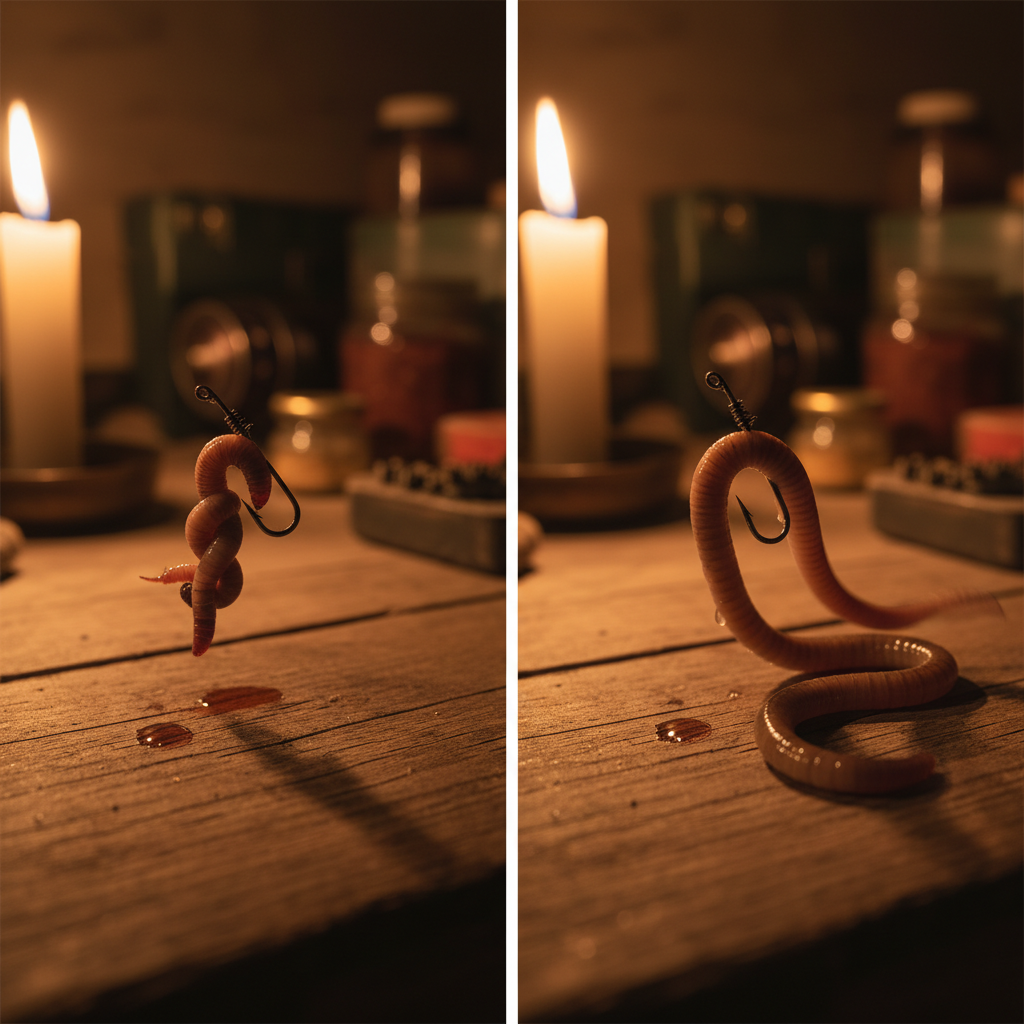
With live bait, presentation often involves hooking the bait in a way that allows it to move freely and naturally. For example, when using minnows, hooking them through the lips or behind the dorsal fin allows them to swim with a lifelike action. With worms, threading them onto the hook so they retain their natural shape and wiggle is essential. Consider how the natural prey of your target species behaves in the water. Does it dart erratically, drift slowly, or burrow into the bottom? Mimic these movements with your bait presentation.
Dead bait presentation is a different beast altogether. Since the bait isn’t alive, you need to rely on other factors to attract the fish. Scent is crucial here. Use fresh or properly preserved bait that retains its natural odor. You can also enhance the scent by adding attractants or oils. The presentation itself should aim to create a natural appearance, even though the bait is dead. Position the bait in a way that it looks like it would naturally occur in the environment, such as lying on the bottom or drifting in the current.
Case Study: Trout Fishing in a Clear Stream
Let’s consider a specific example: trout fishing in a clear, shallow stream. Trout are notoriously wary fish, especially in clear water. They have excellent eyesight and can easily spot unnatural presentations. In this scenario, meticulous bait presentation is paramount. Here’s how you might approach it:
- Use Light Line: Trout can easily see heavier lines, especially in clear water. Use a light fluorocarbon leader (4-6 lb test) to minimize line visibility.
- Choose Small Hooks: Match the hook size to the size of your bait. Small, fine-wire hooks are less likely to spook wary trout.
- Present Bait Naturally: If you’re using live bait like worms or crickets, hook them in a way that allows them to drift naturally with the current. Avoid adding any unnecessary weight that might cause the bait to sink unnaturally.
- Use Stealth Tactics: Approach the stream cautiously and avoid making any sudden movements that might spook the trout. Cast upstream and allow the bait to drift down naturally towards the fish.
- Match the Hatch: Pay attention to the insects that are hatching in the stream. If you see trout feeding on mayflies, try using a mayfly nymph imitation.
By paying attention to these details, you can significantly increase your chances of catching trout in a clear stream. It’s about understanding the fish’s behavior and adapting your presentation to match the conditions.
The Role of Scent: Attracting Fish from a Distance
While visual presentation is important, scent plays a crucial role in attracting fish, especially in murky water or low-light conditions. Fish have highly developed olfactory senses that allow them to detect even faint traces of scent in the water. By using baits with strong scents or adding attractants to your bait, you can increase your chances of attracting fish from a distance and triggering a feeding response.
Different fish species are attracted to different scents. For example, catfish are known for their love of strong, pungent odors, such as those found in stinkbaits or chicken liver. Trout, on the other hand, tend to be attracted to more subtle scents, such as those found in earthworms or salmon eggs. Experiment with different scents to see what works best in your area and for your target species.
There are various ways to incorporate scent into your bait presentation. You can use pre-scented baits, such as scented worms or lures. You can also add attractants or oils to your bait. Some anglers even use homemade scent concoctions, such as garlic or anise oil. When using scent attractants, be sure to apply them sparingly. Too much scent can be just as detrimental as not enough. Start with a small amount and increase it gradually until you find the right balance.
Case Study: Catfishing in Murky Waters
Consider the scenario of catfishing in murky waters. Visibility is limited, so scent becomes the primary means of attracting fish. Here’s how you might leverage scent to your advantage:
- Use Strong-Scented Baits: Opt for baits known for their strong odors, such as stinkbaits, chicken liver, or cut bait.
- Add Scent Attractants: Enhance the scent of your bait by adding attractants or oils. Catfish attractants often contain ingredients like anise, garlic, or blood.
- Use a Scent Trail: Create a scent trail by using a chum bag or a mesh bag filled with bait scraps. The scent will disperse in the water, attracting catfish from a distance.
- Position Your Bait Strategically: Place your bait near areas where catfish are likely to congregate, such as submerged logs, creek channels, or deep holes.
By focusing on scent presentation, you can significantly increase your chances of catching catfish in murky waters. It’s about using the fish’s sense of smell to your advantage and guiding them to your bait.

The Importance of Hookset: Turning a Bite into a Catch
Even with a perfectly presented bait, you still need to execute a solid hookset to turn a bite into a catch. A hookset is the act of jerking the rod to drive the hook into the fish’s mouth. A weak or delayed hookset can result in a missed opportunity, while a strong, well-timed hookset can secure the fish.
The type of hookset you use will depend on the type of bait you’re using and the species of fish you’re targeting. When using live bait, a more gentle hookset is often sufficient. Allow the fish to take the bait for a few seconds before setting the hook. This gives the fish time to get the bait fully into its mouth. When using artificial lures, a more aggressive hookset is typically required. As soon as you feel a bite, snap the rod sharply to drive the hook home.
The key to a good hookset is to use a sharp hook and to apply sufficient force to penetrate the fish’s mouth. Practice your hookset technique until it becomes second nature. The more consistent and effective your hookset, the more fish you’ll land.
Case Study: Bass Fishing with Soft Plastics
Let’s consider the scenario of bass fishing with soft plastic lures. Bass often strike soft plastics aggressively, but they can also spit them out quickly if they detect something amiss. Here’s how to ensure a solid hookset when fishing with soft plastics:
- Use Sharp Hooks: Employ offset worm hooks or EWG (Extra Wide Gap) hooks that are designed for soft plastics and provide excellent hook penetration.
- Maintain a Tight Line: Keep a tight line between you and the lure so you can feel even the slightest bite.
- React Quickly: As soon as you feel a bite, drop your rod tip slightly and reel up the slack.
- Set the Hook Hard: Once you feel the fish, snap the rod sharply upwards in a sweeping motion.
- Reel Quickly: After setting the hook, reel quickly to keep the line tight and prevent the fish from throwing the hook.
By mastering the hookset technique, you can significantly improve your hook-up ratio when bass fishing with soft plastics. It’s about reacting quickly and decisively to turn a bite into a landed fish.
Adapting to Conditions: Flexibility is Key
The most skilled anglers are those who can adapt their bait presentation to changing conditions. Factors like water temperature, water clarity, weather, and fishing pressure can all influence how fish behave and what they’re willing to bite. Be prepared to experiment with different techniques and presentations until you find what works best on a given day.
If the water is cold, fish tend to be less active and may prefer slower-moving baits. If the water is warm, fish may be more aggressive and willing to chase faster-moving lures. In clear water, fish may be more wary and require a more subtle presentation. In murky water, they may be more attracted to baits with strong scents or vibrations.
Don’t be afraid to try new things and break out of your comfort zone. The more you experiment, the more you’ll learn about fish behavior and the more successful you’ll become as an angler.

Example: Adjusting to Fishing Pressure
Let’s say you’re fishing a popular lake that receives a lot of fishing pressure. The fish in this lake are likely to be more wary and selective than fish in a less-fished lake. Here’s how you might adjust your bait presentation to overcome this challenge:
- Use Finesse Techniques: Employ techniques that are designed to entice wary fish, such as drop-shotting, shaky-head fishing, or using small, subtle lures.
- Downsize Your Bait: Fish that have seen a lot of lures may become accustomed to larger baits. Try using smaller, more natural-looking baits to trigger their interest.
- Use Lighter Line: Wary fish can often detect heavier lines. Use a lighter fluorocarbon leader to minimize line visibility.
- Fish During Off-Peak Hours: Avoid fishing during the busiest times of day, such as weekends and holidays. Fish are often more active and less pressured during off-peak hours.
- Try Unconventional Baits: Experiment with baits that are not commonly used by other anglers. This can give you an edge and surprise the fish.
By adapting your bait presentation to the specific challenges of fishing pressured waters, you can increase your chances of success. It’s about thinking outside the box and finding ways to outsmart the fish.
Beyond the Basics: Advanced Presentation Techniques
Once you’ve mastered the fundamentals of bait presentation, you can start exploring more advanced techniques that can give you an even greater edge. These techniques often involve subtle nuances and require a keen understanding of fish behavior and the environment.
- Dead-Sticking: This technique involves casting your bait out and letting it sit motionless on the bottom. It can be effective for enticing inactive fish or for fishing in areas with heavy cover.
- Walking the Dog: This technique involves using a topwater lure with a side-to-side action that mimics a wounded baitfish. It can be highly effective for attracting aggressive fish.
- Carolina Rigging: This technique involves using a sliding weight above a swivel and a leader to present a bait along the bottom. It’s a versatile technique that can be used for a variety of species and conditions.
- Drop-Shotting: This technique involves suspending a bait above a weight that sits on the bottom. It’s an effective technique for fishing deep water or for presenting a bait in a vertical manner.
Learning and mastering these advanced techniques can take time and practice, but the rewards can be significant. They allow you to present your bait in a variety of ways and to target fish in different situations.

The Journey of Mastery: A Never-Ending Pursuit
Mastering the art of bait presentation is a lifelong journey. There’s always something new to learn, a new technique to try, or a new challenge to overcome. The more you fish, the more you’ll learn about fish behavior and the more refined your bait presentation will become. Don’t be afraid to experiment, to make mistakes, and to learn from your experiences. Embrace the challenge and enjoy the process. The rewards of becoming a skilled angler are well worth the effort.
So, the next time you’re out on the water, take a moment to think about your bait presentation. Are you paying attention to the details? Are you mimicking nature? Are you adapting to the conditions? By focusing on these elements, you can significantly increase your chances of success and unlock the true potential of your bait. The detail that makes your bait work better is not just about the bait itself, but about the artistry with which you present it to the underwater world.