Unlocking the Sixth Sense: Line Sensitivity in Fishing
Imagine casting your line into the water, the lure gliding effortlessly through the air. It lands with a gentle splash, and you begin your retrieve. But what happens beneath the surface, in the silent world of the underwater landscape? How do you know when a fish is subtly investigating your bait, or when it’s made the commitment to strike? The answer lies in line sensitivity, that elusive “sixth sense” that separates the weekend angler from the seasoned pro. But what if I told you there’s a single detail, often overlooked, that can drastically amplify your line sensitivity, transforming your fishing experience? Are you ready to unlock it?
Why Line Sensitivity Matters: Feeling the Unseen
Line sensitivity is the ability to detect subtle vibrations and movements transmitted through your fishing line. It’s your underwater eyes and ears, allowing you to “feel” what’s happening at the end of your line. Without it, you’re essentially fishing blind, relying solely on visual cues or the brute force of a hard strike. A highly sensitive line allows you to:
- Detect subtle strikes: Many fish, especially in pressured waters, don’t smash lures. They gently mouth them, requiring the angler to detect the faintest of taps.
- Identify structure: You can “feel” the bottom composition, identify rocks, weeds, and other underwater features, allowing you to present your bait more effectively.
- Distinguish between strikes and snags: A sensitive line helps you differentiate between a fish taking your bait and your lure snagging on an object.
- React quickly: Early detection leads to quicker hooksets, increasing your landing ratio.
Think of it like this: imagine trying to read a book while wearing thick gloves. You can see the pages, but you can’t feel the texture of the paper or the subtle indentations of the letters. Line sensitivity is like removing those gloves, allowing you to experience the full sensory input of the underwater world. But how do we achieve this heightened sense of touch?
The Unsung Hero: Line Diameter
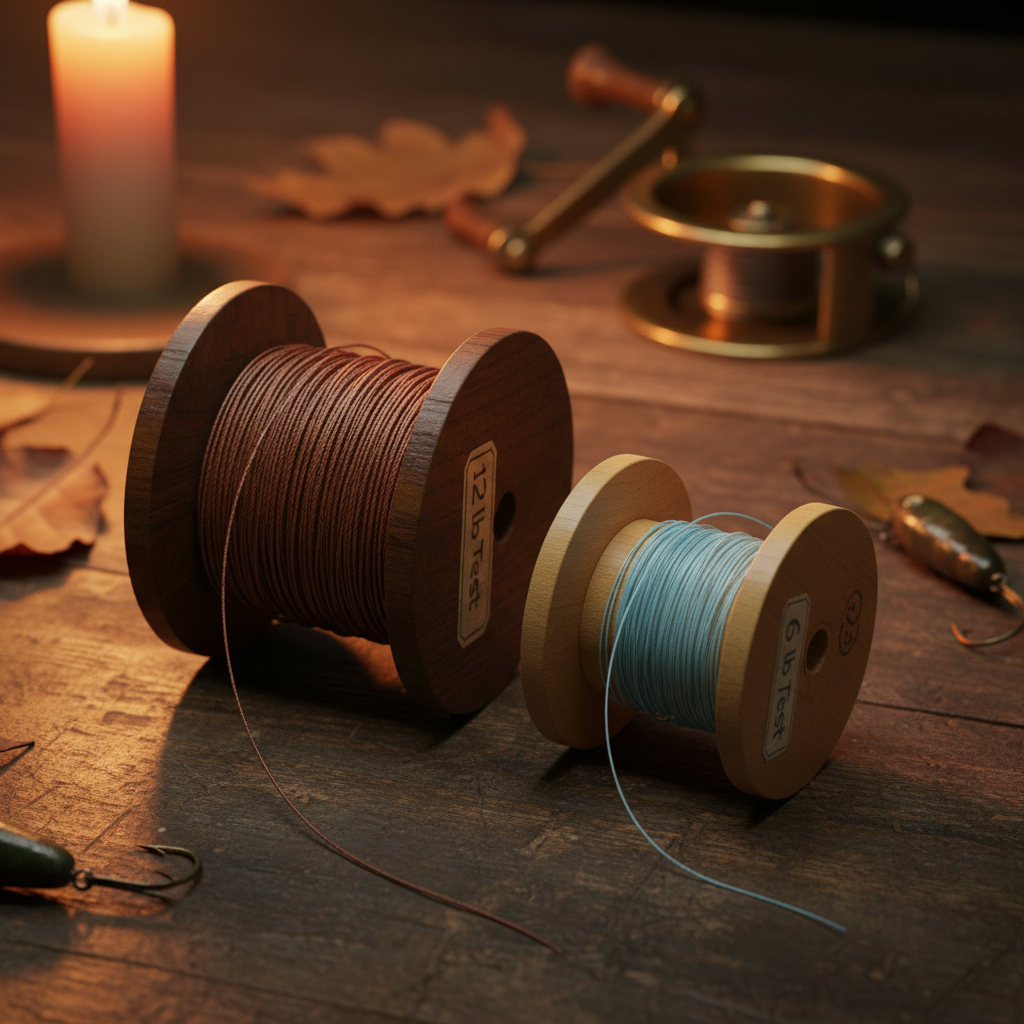
While factors like rod material, reel design, and even the type of lure you’re using contribute to overall sensitivity, there’s one detail that often gets overlooked: line diameter. Specifically, using the thinnest possible line that’s appropriate for the species you’re targeting and the conditions you’re fishing in can dramatically increase your line sensitivity. Why? Because thinner lines offer less resistance in the water, transmit vibrations more efficiently, and create a more direct connection to your lure.
The Science Behind the Sensitivity
The relationship between line diameter and sensitivity is rooted in physics. Thicker lines have a larger surface area exposed to the water, creating more drag and resistance. This drag dampens vibrations, making it harder to detect subtle movements. Think of it like shouting across a crowded room. The more noise and interference there is (like drag in the water), the harder it is for your message to be heard (or, in this case, felt). Thinner lines, on the other hand, slice through the water with less resistance, allowing vibrations to travel more freely and directly to your rod tip and ultimately, to your hand.
Furthermore, thinner lines generally have less stretch than thicker lines of the same material. Less stretch means more direct contact with your lure, allowing you to feel even the slightest nibble. It’s like the difference between pushing a car with a rope and pushing it directly with your hands. The rope (a thicker, stretchier line) absorbs some of your effort, while your bare hands (a thinner, less stretchy line) transmit your force directly to the car.
Real-World Examples: Thinner Line in Action
Let’s consider a few specific scenarios where using a thinner line can make a significant difference:
- Finesse fishing for bass: When fishing clear water with light lures like drop shots or shaky heads, using a thin fluorocarbon line (e.g., 6-8 lb test) can be crucial for detecting the subtle bites of pressured bass. A thicker line would not only be more visible to the fish but would also dampen the faint vibrations caused by a tentative strike.
- Trout fishing in streams: Trout are notoriously finicky, and their strikes can be incredibly subtle. Using a thin monofilament or fluorocarbon line (e.g., 4-6 lb test) is essential for feeling those delicate takes and reacting quickly.
- Ice fishing for panfish: In the frigid depths beneath the ice, panfish often strike with the lightest of touches. A thin ice fishing line (e.g., 2-4 lb test) is critical for detecting these subtle bites and landing these delicate fish.
In each of these scenarios, the increased sensitivity provided by a thinner line can be the difference between a successful fishing trip and a frustrating day on the water. But it’s not just about feeling the bite; it’s also about presenting your bait more naturally.
The Art of Presentation: Less is More
Thinner lines not only enhance sensitivity but also improve lure presentation. Because they offer less resistance in the water, they allow your lures to move more freely and naturally. This is particularly important when fishing with lightweight lures or in areas with current. A thicker line can create unnatural drag, causing your lure to behave unnaturally and potentially spooking fish. Think of it as the difference between flying a kite with a heavy rope and flying it with a thin string. The thin string allows the kite to soar and dance in the wind, while the heavy rope restricts its movement and makes it less responsive.
Furthermore, thinner lines are less visible to fish, especially in clear water. This can be a significant advantage when targeting wary species that are easily spooked by thick, visible lines. The more invisible your line, the more natural your presentation, and the more likely you are to entice a strike. But, of course, there’s a tradeoff to consider: strength.
The Trade-Off: Balancing Sensitivity and Strength
While thinner lines offer increased sensitivity and improved presentation, they also have less breaking strength than thicker lines. This means you need to be more careful when fighting fish and be mindful of potential snags. The key is to find the right balance between sensitivity and strength, choosing a line that’s thin enough to maximize sensitivity but strong enough to handle the size and fighting ability of the fish you’re targeting.
This is where experience and knowledge of your local waters come into play. Understanding the typical size of the fish you’re likely to encounter, the type of cover you’ll be fishing around, and the overall water conditions will help you make an informed decision about which line diameter to use. For example, if you’re fishing for trophy-sized bass around heavy cover, you might need to sacrifice some sensitivity and opt for a slightly thicker line to ensure you have enough strength to pull the fish out of the weeds. Conversely, if you’re fishing for panfish in open water, you can get away with using a much thinner line to maximize sensitivity.

Choosing the Right Line: Material Matters
The material of your fishing line also plays a significant role in its sensitivity and strength. The three most common types of fishing line are monofilament, fluorocarbon, and braid, each with its own unique characteristics.
- Monofilament: Monofilament is the most affordable and widely used type of fishing line. It’s known for its all-around performance, good knot strength, and relatively low visibility in the water. However, it also has more stretch than fluorocarbon or braid, which can reduce sensitivity.
- Fluorocarbon: Fluorocarbon is virtually invisible underwater, making it a great choice for clear water and wary fish. It also has less stretch than monofilament, providing better sensitivity. However, it can be more expensive and less abrasion-resistant than monofilament.
- Braid: Braid is the strongest and most sensitive type of fishing line. It has virtually no stretch, providing incredible sensitivity and allowing you to feel even the slightest bites. It’s also extremely durable and abrasion-resistant. However, it’s also the most visible type of line and can be expensive.
When choosing a line material, consider the specific conditions you’ll be fishing in and the type of fish you’re targeting. For example, if you’re fishing clear water for bass, fluorocarbon might be a good choice. If you’re fishing heavy cover for bass, braid might be a better option. And if you’re fishing for trout in a stream, monofilament might be the most versatile and affordable choice.
Beyond Diameter: Other Factors Affecting Sensitivity
While line diameter is a critical factor in line sensitivity, it’s not the only thing that matters. Other factors that can affect your ability to detect subtle bites include:
- Rod Material: A sensitive rod, made from materials like graphite, will transmit vibrations more effectively than a less sensitive rod made from fiberglass.
- Reel Design: A reel with a smooth drag and a direct connection to the spool will enhance sensitivity.
- Knot Strength: A weak knot can dampen vibrations and reduce sensitivity. Use strong, reliable knots like the Palomar knot or the Improved Clinch knot.
- Line Condition: Old, worn-out line can lose its sensitivity and strength. Replace your line regularly to maintain optimal performance.
By paying attention to these factors, you can further enhance your line sensitivity and improve your overall fishing experience. But perhaps the most important factor of all is practice.
The Art of Feeling: Training Your Sixth Sense
Like any skill, developing line sensitivity takes practice. The more time you spend on the water, paying attention to the subtle vibrations and movements transmitted through your line, the better you’ll become at detecting even the faintest of bites. Here are a few tips for honing your line sensitivity:
- Fish with a variety of lures: Experiment with different types of lures and retrieves to learn how they feel in the water.
- Pay attention to the bottom: Try to “feel” the bottom composition, identifying rocks, weeds, and other underwater features.
- Focus on the line: Watch your line carefully for any subtle twitches or movements that might indicate a strike.
- Practice in clear water: Clear water allows you to see your line and lure, making it easier to correlate visual cues with the sensations you feel.
- Fish with a friend: Compare notes with a fellow angler to learn from each other’s experiences.
Remember, line sensitivity is not just about feeling the bite; it’s about developing a deeper connection to the underwater world. It’s about learning to “read” the water and anticipate the movements of the fish. It’s about unlocking that elusive “sixth sense” that separates the casual angler from the seasoned pro.

Case Study: The Power of Thin Line in Tournament Fishing
Consider the case of a professional bass angler competing in a tournament on a heavily pressured lake. The fish are finicky and reluctant to strike, and the angler is struggling to get bites. After trying a variety of lures and techniques, he decides to switch to a lighter fluorocarbon line (6 lb test) on his drop shot rod. Immediately, he starts to feel subtle taps and nibbles that he hadn’t detected before. He adjusts his presentation accordingly, and within minutes, he lands a crucial fish that puts him in contention for the win. This is a real-world example of how the subtle detail of line diameter can make a significant difference in fishing success, especially in competitive situations.
Debunking the Myths: Common Misconceptions About Line Sensitivity
There are several common misconceptions about line sensitivity that can hinder anglers from maximizing their potential. Let’s address a few of them:
- Myth: Thicker lines are always stronger. Reality: While thicker lines generally have higher breaking strength, modern fishing line technology has advanced to the point where thinner lines can be incredibly strong. High-quality fluorocarbon and braid lines, in particular, offer excellent strength-to-diameter ratios.
- Myth: You need expensive gear to have good line sensitivity. Reality: While high-end rods and reels can certainly enhance sensitivity, you can still improve your line sensitivity with relatively inexpensive gear by focusing on line diameter, knot strength, and proper technique.
- Myth: Line sensitivity is only important for finesse fishing. Reality: While line sensitivity is crucial for finesse techniques, it’s also important for a wide range of fishing styles, from crankbaiting to jigging. Being able to “feel” what your lure is doing and detect subtle strikes is always an advantage, regardless of the technique you’re using.
By debunking these myths and focusing on the fundamentals, you can unlock the full potential of your line sensitivity and become a more successful angler.
The Future of Line Sensitivity: Innovation and Technology
The pursuit of greater line sensitivity is an ongoing process, driven by innovation and technology. Manufacturers are constantly developing new materials and designs that push the boundaries of what’s possible. From advanced fluorocarbon coatings that reduce friction to braided lines with even greater strength-to-diameter ratios, the future of line sensitivity is bright. Imagine fishing lines that can actively transmit data about water temperature, lure depth, and even fish activity directly to your smartphone! While that may seem like science fiction, it’s not entirely outside the realm of possibility.

As technology continues to evolve, anglers will have access to even more sophisticated tools for detecting subtle bites and understanding the underwater world. But even with all the advancements in technology, the fundamental principles of line sensitivity will remain the same: use the thinnest possible line, maintain a direct connection to your lure, and practice your technique. These are the keys to unlocking that elusive “sixth sense” and becoming a more successful angler. So, the next time you’re rigging up your rod, remember the importance of line diameter. That single detail, often overlooked, can drastically increase your line sensitivity and transform your fishing experience. Are you ready to feel the difference?
Ultimately, fishing is a pursuit that blends skill, knowledge, and intuition. While technology can undoubtedly enhance our abilities, it’s the connection we forge with the natural world, the understanding of fish behavior, and the honed sensitivity to subtle cues that truly elevate the experience. So, go forth, experiment with different line diameters, refine your technique, and embrace the art of feeling. The rewards will be well worth the effort, leading to more successful fishing trips and a deeper appreciation for the intricate dance between angler and fish.