The Lure of the Unseen
There I was, knee-deep in the cool, rushing waters of the Deschutes River, the morning mist still clinging to the pine trees like a shy lover. The air was crisp, carrying the scent of damp earth and the promise of a day yet unwritten. I was there, ostensibly, to fish. To feel the tug of a rainbow trout on the line, to witness its shimmering dance as I reeled it in, a primal connection to the natural world. But as the hours ticked by, and the river remained stubbornly silent, a different kind of realization began to dawn.
I’d been fishing for years, chasing that elusive “perfect catch.” The thrill of the hunt, the satisfaction of providing for myself (even if I usually released the fish back into the water), the quiet contemplation that only nature could offer – these were the justifications I gave myself. But this time, something felt different. The absence of fish wasn’t frustrating me; it was liberating. It forced me to confront the uncomfortable truth: that the fish, the act of catching, was just the excuse.
What was I really seeking? Was it merely the adrenaline rush of the catch, or something deeper, something more profound? Was the river a means to an end, or an end in itself? These questions swirled in my mind, mirroring the eddies and currents around my waders. I began to understand that the true lure wasn’t the shiny metal and feathers at the end of my line, but the unseen forces that drew me to the river in the first place.
The River as a Mirror
The river, in its ceaseless flow, became a mirror reflecting my own inner landscape. The smooth, gliding stretches represented periods of tranquility and contentment, while the turbulent rapids mirrored times of challenge and uncertainty. The deep, dark pools held the mysteries of the unknown, the fears and doubts that lurked beneath the surface of my conscious mind. And the sun-drenched shallows offered glimpses of clarity, moments of pure joy and gratitude.
I watched a mayfly delicately land on the water, its wings catching the sunlight like tiny prisms. A kingfisher, a flash of blue and orange, plunged into the river with laser-like precision, emerging with a struggling fish in its beak. Life and death played out before me in a constant, unwavering rhythm. It was a stark reminder of the impermanence of all things, the ebb and flow of existence. And in that moment, I felt a sense of peace I hadn’t known I was missing.
The fish, or lack thereof, became irrelevant. The river, the experience, the introspection – these were the true prizes. I realized that I had been so focused on the outcome, on the external validation of a successful catch, that I had completely missed the point. The journey, the process, the being present in the moment – these were the things that truly mattered.
The Illusion of Control
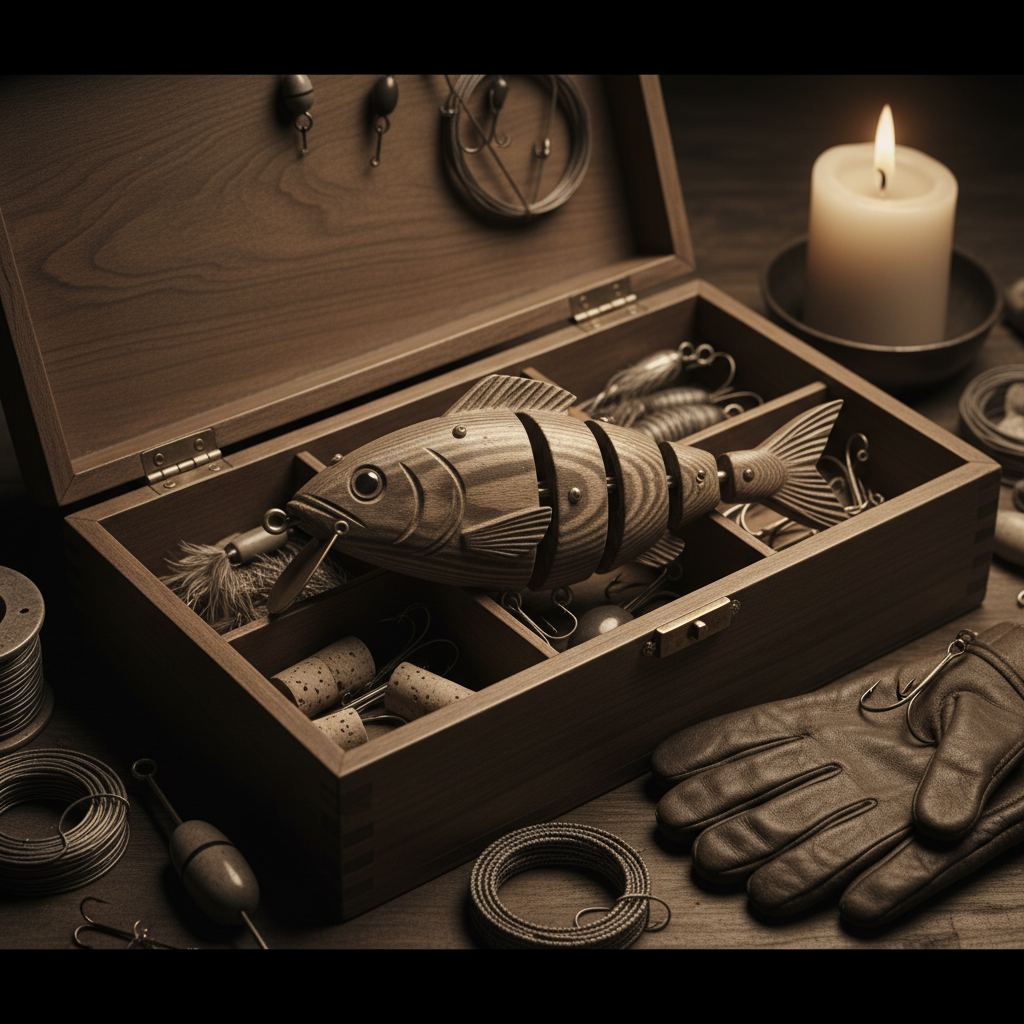
Fishing, in many ways, is an exercise in the illusion of control. We choose our gear, our bait, our location, meticulously planning every detail in an attempt to influence the outcome. We cast our lines with precision, hoping to entice a fish to bite. But ultimately, the decision rests with the fish. We can only present the opportunity; we cannot force the result.
This is a powerful metaphor for life itself. We can strive to control our circumstances, to plan our futures, to manipulate events to our advantage. But ultimately, we are at the mercy of forces beyond our control. Chance encounters, unexpected setbacks, unforeseen opportunities – these are the currents that shape our lives, often in ways we could never have imagined.
The realization that I wasn’t in control, that the fish would bite or not bite on its own terms, was strangely liberating. It allowed me to release the pressure, to surrender to the moment, to simply be present and appreciate the experience for what it was. And in that surrender, I found a deeper connection to the river, to myself, and to the universe at large.
Beyond the Binary: Success and Failure
Our society is obsessed with success and failure, with measuring our worth by external achievements. We are constantly bombarded with messages telling us to strive for more, to achieve more, to be more. But what happens when we redefine success on our own terms? What happens when we embrace the possibility of “failure” as an opportunity for growth and learning?
That day on the Deschutes, I redefined success. It wasn’t about catching a fish; it was about connecting with nature, about quieting the noise in my mind, about gaining a deeper understanding of myself. And in that context, the absence of fish was not a failure, but a profound success. It forced me to confront my own motivations, to question my assumptions, and to emerge with a renewed sense of purpose.
Think about it: How often do we judge ourselves based on external metrics? How often do we equate our self-worth with our achievements? What if we shifted our focus from the outcome to the process, from the destination to the journey? What if we embraced the uncertainty, the ambiguity, the inevitable setbacks as opportunities for growth and self-discovery?
The Language of the River
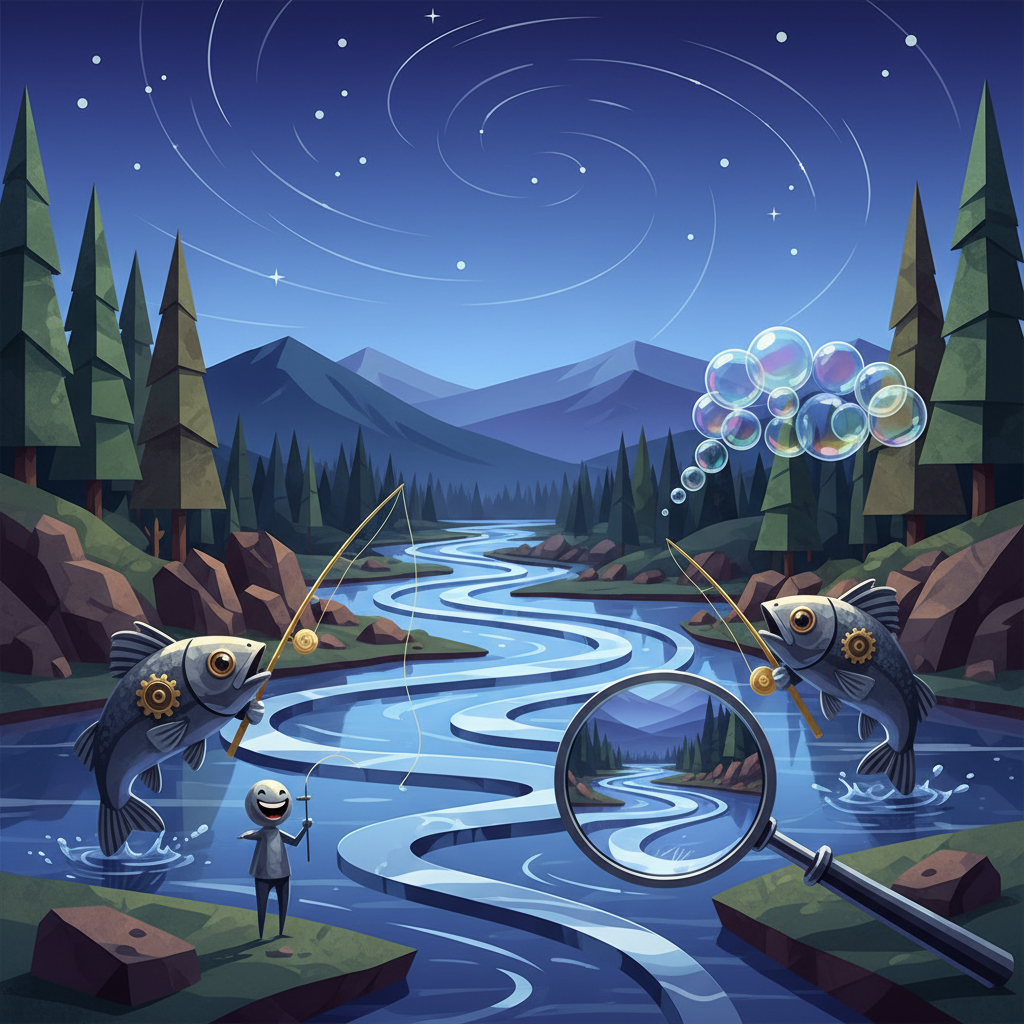
The river speaks a language all its own. It whispers secrets in the rustling leaves, it roars with power in the cascading rapids, it murmurs gently in the quiet pools. To truly understand the river, you must learn to listen, to observe, to feel its energy flowing through you.
I spent hours that day simply observing the river, watching the dance of light and shadow on the water’s surface, listening to the symphony of sounds that filled the air. The chirping of crickets, the rustling of leaves, the splash of a leaping fish – each sound a note in the river’s grand composition. And as I listened, I began to hear a deeper message, a message about impermanence, about resilience, about the interconnectedness of all things.
The river reminded me that everything is in constant flux, that nothing stays the same for long. The water flows continuously, carving new paths, eroding old ones, constantly reshaping the landscape. The trees grow and fall, providing shelter and sustenance for countless creatures. The fish swim upstream to spawn, continuing the cycle of life. Everything is interconnected, interdependent, part of a larger, more complex system.
Finding Your Own River
We all have our own “river,” our own source of inspiration, our own place of refuge. It may not be a literal river; it could be a mountain range, a forest, an ocean, a garden, a library, a studio, a concert hall – any place where we feel connected to something larger than ourselves.
The key is to find that place, to nurture that connection, to allow it to nourish your soul. To listen to its language, to learn from its wisdom, to allow it to guide you on your journey. And to remember that the true purpose is not to conquer or control, but to simply be present, to appreciate the beauty and wonder of the moment.
What is your river? What place brings you a sense of peace, a sense of connection, a sense of belonging? How can you incorporate that place into your life, to allow it to guide you, to inspire you, to help you navigate the challenges and uncertainties of life?
The Gift of Disappointment
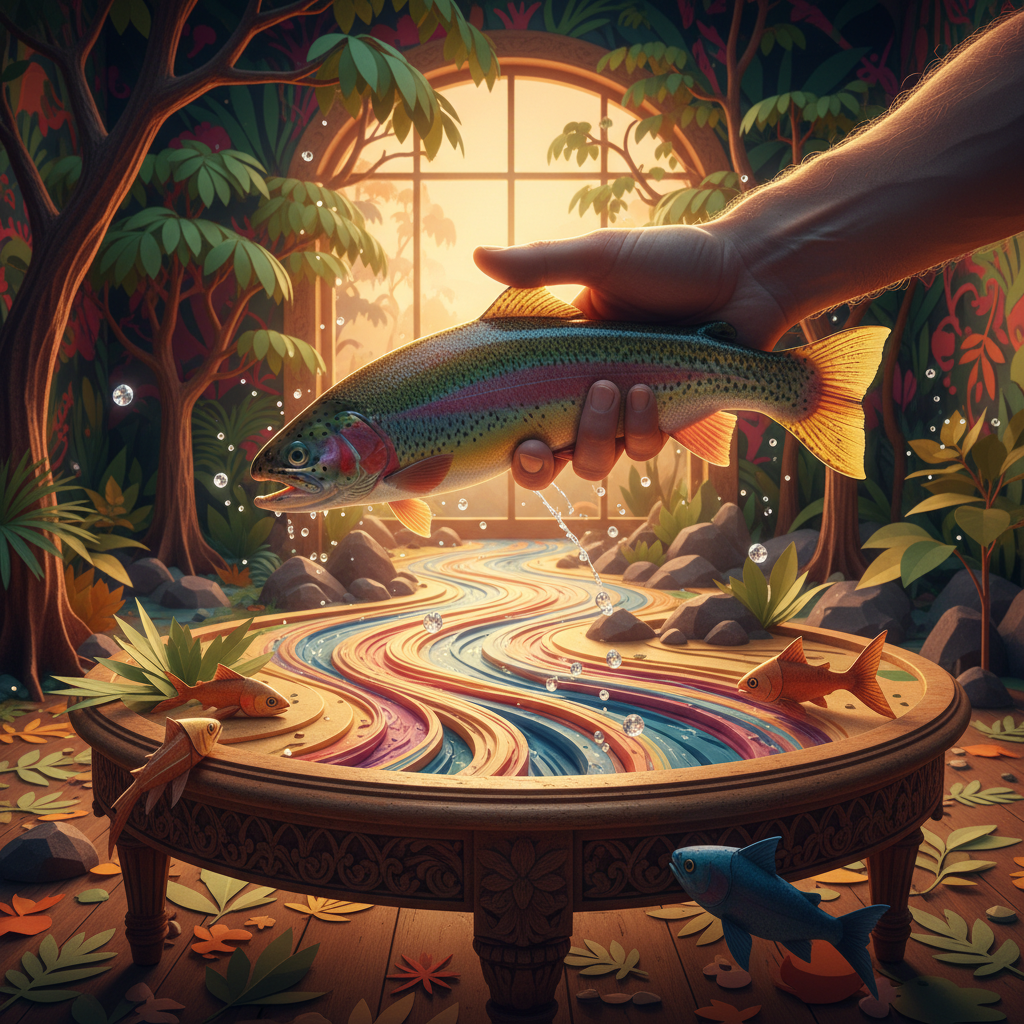
Disappointment is an inevitable part of life. We all experience it at some point, whether it’s a missed opportunity, a broken relationship, a failed project, or simply a day of unsuccessful fishing. But disappointment, like the absence of fish, can be a gift in disguise.
It forces us to re-evaluate our expectations, to question our assumptions, to confront our limitations. It pushes us to grow, to adapt, to become more resilient. It teaches us valuable lessons about patience, perseverance, and the importance of letting go. And it can ultimately lead us to a deeper understanding of ourselves and the world around us.
That day on the Deschutes, the disappointment of not catching a fish forced me to confront my own motivations, to question my definition of success, and to ultimately discover a deeper meaning in the experience. It taught me that the true value lies not in the outcome, but in the process, in the journey, in the being present in the moment.
Embracing the Imperfect
Our society often glorifies perfection, striving for flawless results and unattainable standards. But true beauty lies in imperfection, in the quirks and flaws that make us unique. A perfectly manicured garden lacks the charm of a wild meadow, a perfectly smooth stone lacks the character of a jagged rock, a perfectly caught fish lacks the story of the one that got away.
Embrace your imperfections, your flaws, your mistakes. They are what make you human, what make you interesting, what make you unique. Learn from them, grow from them, and allow them to shape you into the person you are meant to be. And remember that the true measure of success is not the absence of failure, but the ability to learn and grow from your experiences, to embrace the imperfect beauty of life.
Beyond the Catch: A Deeper Connection
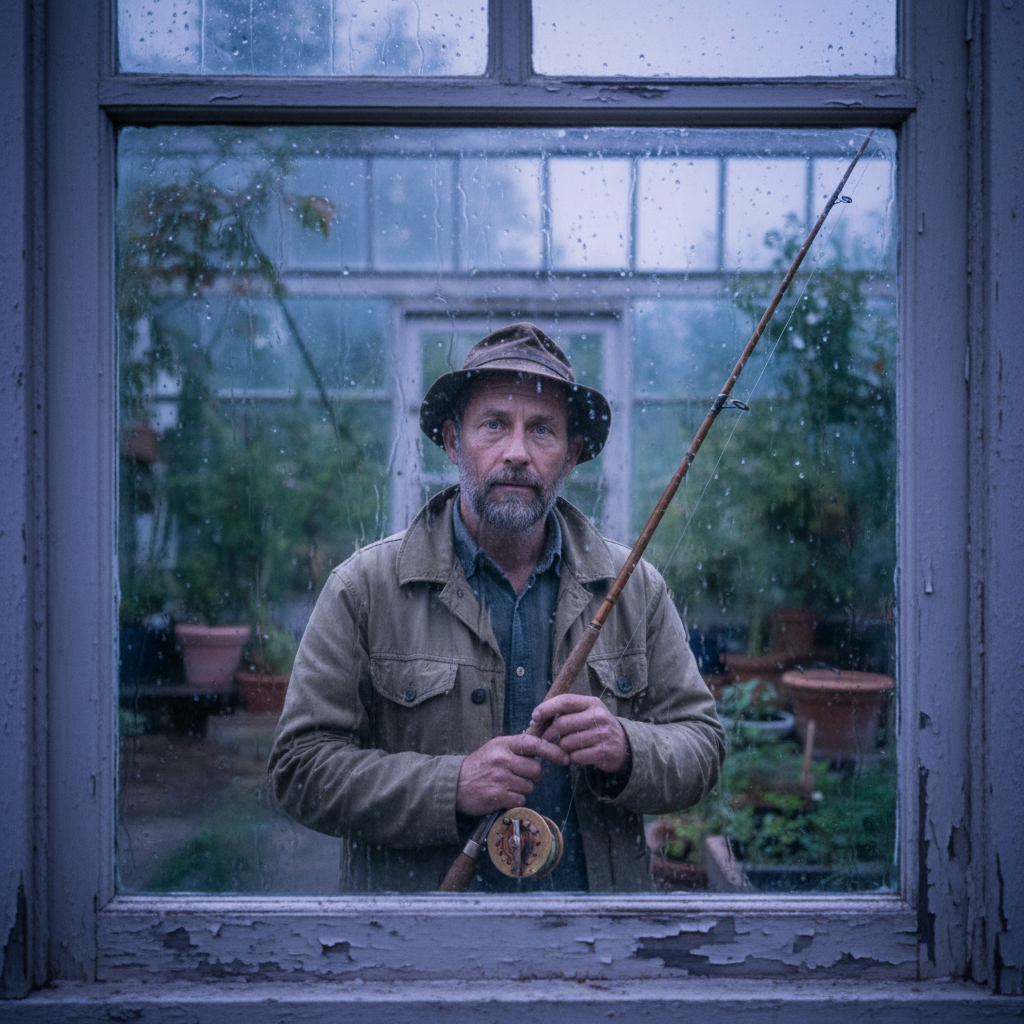
Ultimately, my day on the Deschutes River wasn’t about catching a fish. It was about forging a deeper connection with nature, with myself, and with the universe at large. It was about surrendering to the moment, embracing the uncertainty, and finding beauty in the unexpected. It was about realizing that the fish was just the excuse, a catalyst for a deeper understanding of life.
As the sun began to set, casting long shadows across the water, I packed up my gear and began the trek back to my car. The air was cooler now, the silence broken only by the rustling of leaves and the distant call of an owl. I didn’t catch any fish that day, but I caught something far more valuable: a glimpse into my own soul. And that, I realized, was a catch worth more than all the trout in the river.
So, the next time you find yourself fishing, or pursuing any other goal, remember to look beyond the catch, beyond the outcome, beyond the external validation. Remember to listen to the language of the river, to embrace the imperfect beauty of life, and to find your own deeper connection to the world around you. You might just discover that the true treasure lies not in what you catch, but in what you find within yourself.