The Dance of Power and Submission in Angling
Sport fishing, at its heart, is a complex and nuanced dance. It’s a ballet of power and submission, a delicate negotiation between the angler and the aquatic realm. It’s about knowing when to yield to the strength of your quarry and when to assert your will, to guide the fish towards your desired outcome. This balance, this understanding of when to give and when to take, is what separates the merely competent angler from the truly masterful one. Have you ever stopped to consider the philosophical implications of this interaction? It’s more than just catching a fish; it’s about understanding a dynamic ecosystem and your role within it.
The Illusion of Control
We often enter the water with the assumption that we are in control. We choose the lure, the line, the rod, the location. We believe we dictate the terms of engagement. But the truth is far more humbling. The fish, the currents, the weather, the very nature of the aquatic environment – these are all forces that can, and often do, laugh in the face of our carefully laid plans.
Think about the countless hours spent researching the perfect fly pattern, meticulously tying knots, and practicing your casting technique. Then, you arrive at the river, and the fish are feeding on something completely different, or the wind makes casting impossible, or a sudden rainstorm turns the water murky. Suddenly, all your preparation seems futile.
This is where the art of yielding comes into play. It’s about recognizing that you are not the master of the universe, that you are but a small part of a much larger and more complex system. It’s about adapting, adjusting your strategy, and accepting the limitations imposed upon you by the environment. It’s about acknowledging that sometimes, the best thing you can do is simply let go and try something different.
The Assertion of Skill
However, yielding doesn’t mean passive acceptance. It doesn’t mean giving up at the first sign of difficulty. It means recognizing the limits of your direct control and finding ways to influence the situation subtly, skillfully. This is where the assertion of skill comes in.
It’s about using your knowledge of fish behavior to anticipate their movements, to present your lure in a way that is irresistible, to read the currents and find the places where fish are likely to be holding. It’s about using your casting technique to place your fly precisely where it needs to be, to mend your line to avoid drag, to set the hook with the perfect amount of force.
It’s also about the equipment you choose. A carefully selected rod and reel, matched with the appropriate line and leader, can give you a significant advantage in fighting a fish. Knowing how to properly adjust your drag, how to apply pressure without breaking the line, and how to use the current to your advantage are all crucial skills.
Consider the example of fighting a large tarpon. These powerful fish are notorious for their acrobatic leaps and blistering runs. Trying to muscle them in directly will almost certainly result in a broken line or a pulled hook. Instead, the skilled angler will yield to the tarpon’s initial run, allowing it to expend its energy. Then, they will gradually apply pressure, using the rod to absorb the shocks of its jumps and the reel to slowly gain line. It’s a delicate dance of give and take, a constant negotiation between the angler and the fish.

The Ethics of the Equation
The balance between yielding and dominating isn’t just about technique; it’s also deeply intertwined with ethics. A responsible angler understands that they are interacting with a living creature and that their actions have consequences. This understanding shapes their approach to the sport and influences their decisions about when to fish, how to fish, and whether to release their catch.
Catch and Release: A Moral Imperative?
The rise of catch and release fishing has been a significant development in the world of angling. It reflects a growing awareness of the need to conserve fish populations and to minimize the impact of fishing on the environment. But is catch and release always the right choice? Is it always ethical?
Some argue that catch and release is inherently cruel, that it subjects fish to unnecessary stress and injury. They point to studies that show that even when fish are handled carefully, they can suffer from delayed mortality as a result of being caught and released.
Others argue that catch and release is a necessary tool for conservation, that it allows anglers to enjoy their sport without depleting fish stocks. They point to the fact that many fish populations have rebounded significantly in areas where catch and release is widely practiced.
The truth, as is often the case, lies somewhere in between. Catch and release can be a valuable tool for conservation, but it is not a panacea. It is important to consider the specific circumstances of each situation and to make informed decisions based on the best available science.
For example, if you are fishing in a heavily pressured area where fish are already stressed, it may be best to avoid catch and release altogether. Or, if you are fishing for a species that is particularly vulnerable to handling, you may want to consider using barbless hooks and minimizing the time that the fish is out of the water.
Ultimately, the decision of whether or not to catch and release is a personal one. But it is a decision that should be made with careful consideration of the ethical implications and the potential impact on the fish.
The Respect for the Resource
Beyond catch and release, there is a broader ethic of respect for the resource. This includes things like minimizing your impact on the environment, following fishing regulations, and educating yourself about the fish and their habitats.
It also means being mindful of the other anglers who are sharing the water with you. Avoid crowding other anglers, be courteous and respectful, and leave the area as you found it.
Consider the example of fishing in a pristine wilderness area. The beauty and solitude of these places are a precious resource, and it is our responsibility to protect them. This means packing out all of your trash, avoiding disturbing wildlife, and staying on designated trails.
It also means being mindful of the impact of your fishing on the ecosystem. Avoid using lead weights, which can be toxic to wildlife. Use biodegradable fishing line, which will decompose if it is lost or discarded. And be careful not to introduce invasive species, which can wreak havoc on local ecosystems.
This respect for the resource is not just about following the rules; it’s about cultivating a deep appreciation for the natural world and recognizing our responsibility to protect it for future generations.
The Mental Game: Patience and Persistence
Sport fishing is as much a mental game as it is a physical one. It requires patience, persistence, and the ability to remain calm and focused in the face of frustration. It’s about learning to embrace the uncertainty of the sport and to find joy in the process, even when the fish aren’t biting.
The Art of Waiting
In a world of instant gratification, fishing teaches us the value of patience. There are times when you will cast for hours without getting a single bite. There will be days when the fish simply aren’t cooperating, no matter what you try.
In these moments, it’s easy to become discouraged and to give up. But the skilled angler understands that patience is key. They know that the fish will eventually start feeding, that the conditions will eventually change, and that their persistence will eventually be rewarded.
Think about the example of ice fishing. Spending hours sitting on a frozen lake, waiting for a flag to pop up, requires an extraordinary amount of patience. But the anticipation of that moment, the thrill of the chase, and the satisfaction of finally landing a fish make it all worthwhile.
This patience is not just about waiting passively; it’s about remaining alert and observant. It’s about using the time to study the water, to adjust your technique, and to learn from your mistakes. It’s about being ready to capitalize on any opportunity that presents itself.
The Power of Perseverance
Closely related to patience is perseverance. This is the ability to keep going, even when things are tough, to overcome obstacles and to never give up on your goal.
Fishing can be challenging. There will be times when you lose fish, when you break your line, when you get skunked. There will be days when the weather is miserable, when your gear malfunctions, and when everything seems to be conspiring against you.
In these moments, it’s easy to become discouraged and to pack it in. But the successful angler is the one who perseveres, who learns from their failures, and who keeps coming back for more.
Consider the example of pursuing a trophy fish. These fish are often elusive and difficult to catch. They require specialized equipment, advanced techniques, and a willingness to put in long hours on the water. But the reward of landing a truly exceptional fish is well worth the effort.
This perseverance is not just about stubbornness; it’s about a deep passion for the sport and a unwavering belief in your ability to succeed. It’s about the thrill of the challenge and the satisfaction of overcoming adversity.
The Spiritual Connection: Nature and Self
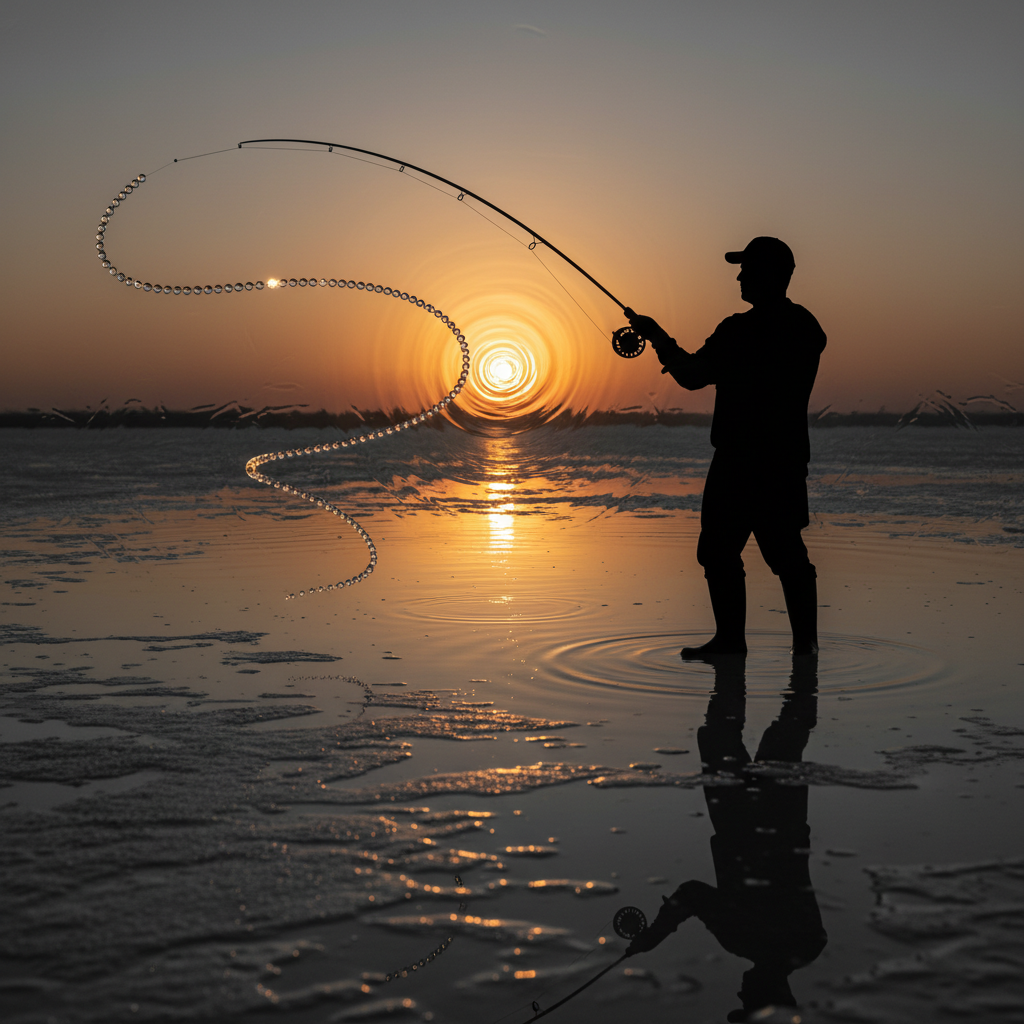
Beyond the technique, the ethics, and the mental game, there is a deeper, more profound aspect to sport fishing. It’s a spiritual connection to nature, a chance to escape the stresses of modern life, and an opportunity to connect with your inner self.
The Healing Power of Nature
In today’s fast-paced world, it’s easy to become disconnected from nature. We spend our days indoors, surrounded by technology, and bombarded with information. Fishing offers a chance to escape this artificial environment and to reconnect with the natural world.
Being on the water, surrounded by the sights and sounds of nature, can be incredibly therapeutic. It can help to reduce stress, to improve your mood, and to promote a sense of well-being.
Think about the example of fishing in a remote mountain stream. The fresh air, the sound of the rushing water, the beauty of the surrounding landscape – these are all things that can help to calm your mind and to restore your soul.
This connection to nature is not just about aesthetics; it’s about a deeper understanding of our place in the ecosystem. It’s about recognizing that we are part of something larger than ourselves and that our actions have consequences.
The Journey Inward
Fishing can also be a journey inward, a chance to reflect on your life, to confront your fears, and to discover your inner strength.
The solitude of fishing can provide an opportunity to quiet your mind and to listen to your intuition. It can be a time for contemplation, for self-reflection, and for personal growth.
Consider the example of fishing alone on a vast, open lake. The silence, the solitude, the vastness of the landscape – these can all create a sense of awe and wonder, and can help you to connect with something deeper within yourself.
This journey inward is not always easy. It can be challenging to confront your own thoughts and emotions, especially when you are alone and vulnerable. But the rewards can be immense. Fishing can help you to develop greater self-awareness, to build resilience, and to find meaning and purpose in your life.
The Evolution of Technique: Adapting and Learning
The world of sport fishing is constantly evolving. New techniques are developed, new technologies are introduced, and new challenges arise. A successful angler is one who is willing to adapt and to learn, to embrace change and to constantly improve their skills.
Embracing New Technologies
From sophisticated sonar systems to GPS-enabled fish finders, technology has revolutionized the way we fish. These tools can help us to locate fish, to understand their behavior, and to improve our chances of success.
However, it’s important to remember that technology is just a tool. It can enhance our skills, but it cannot replace them. The best anglers are those who can combine their knowledge of traditional techniques with the power of modern technology.
Think about the example of using a fish finder to locate a school of tuna. The fish finder can tell you where the fish are, but it can’t tell you how to catch them. You still need to know how to present your lure effectively, how to fight the fish, and how to handle it properly.
This embrace of technology is not just about using the latest gadgets; it’s about understanding the underlying principles and applying them intelligently. It’s about using technology to enhance your understanding of the fish and their environment, and to make more informed decisions about how to fish.
The Constant Pursuit of Knowledge
The most successful anglers are those who are constantly learning. They read books and articles, they watch videos, they attend seminars, and they talk to other anglers. They are always looking for new ways to improve their skills and to expand their knowledge.
This pursuit of knowledge is not just about memorizing facts; it’s about developing a deeper understanding of the fish, their behavior, and their environment. It’s about learning to read the water, to interpret the signs, and to anticipate the actions of the fish.
Consider the example of learning about the life cycle of a particular species of fish. Understanding when they spawn, where they migrate, and what they eat can give you a significant advantage in targeting them.
This constant pursuit of knowledge is not just about becoming a better angler; it’s about developing a lifelong passion for the sport and a deep appreciation for the natural world.

The Community of Anglers: Sharing and Connecting
Sport fishing is not just an individual pursuit; it’s also a community. Anglers share their knowledge, their experiences, and their passion for the sport. They support each other, they encourage each other, and they learn from each other.
The Value of Mentorship
For many anglers, a mentor played a crucial role in their development. A mentor can provide guidance, share their knowledge, and offer encouragement. They can help you to avoid common mistakes, to develop good habits, and to accelerate your learning.
If you are new to fishing, finding a mentor can be one of the best things you can do. Look for an experienced angler who is willing to share their knowledge and to take you under their wing.
Think about the example of a young angler learning to fly fish from an experienced guide. The guide can teach them the basics of casting, knot tying, and fly selection. They can also share their knowledge of the local waters and the habits of the fish.
This mentorship is not just about technical skills; it’s also about instilling a love for the sport and a respect for the environment.
The Power of Shared Experiences
Even if you don’t have a formal mentor, you can still learn from other anglers. Attend fishing club meetings, participate in online forums, and talk to other anglers at the tackle shop.
Sharing your experiences with other anglers can be incredibly rewarding. It can help you to learn from your mistakes, to celebrate your successes, and to build lasting friendships.
Consider the example of a group of anglers who travel together to fish in a remote location. The shared experience of overcoming challenges, of catching fish, and of exploring new places can create a bond that lasts a lifetime.

Ultimately, the balance between yielding and dominating in sport fishing is not just about catching more fish. It’s about developing a deeper understanding of yourself, of the environment, and of your place in the world. It’s about respecting the delicate balance of nature and finding a way to participate in it responsibly and ethically. It’s a journey of continuous learning, adaptation, and connection – a journey that enriches our lives and connects us to something far greater than ourselves. It’s a testament to the human spirit and our enduring fascination with the wild.