The Allure of Simplicity in Fishing
In today’s world, where technology reigns supreme and consumerism often dictates our pursuits, it’s easy to get caught up in the endless cycle of acquiring more gear. This is especially true in fishing. The latest rods, reels boasting impossible ratios, sonar systems that paint underwater landscapes with uncanny accuracy – the temptations are everywhere. But what if true success, true enjoyment, lies not in the accumulation of things, but in the cultivation of awareness? What if, by shedding the burden of excessive equipment, we unlock a deeper, more profound connection with the art of angling and the natural world it inhabits?
This isn’t a condemnation of technology or innovation. Rather, it’s an invitation to re-evaluate our priorities. To ask ourselves: are we truly enhancing our experience, or are we simply masking a lack of fundamental understanding and attentiveness? Are we so focused on the tools that we forget to appreciate the craft?
The Trap of Gear Dependence
The fishing industry, like many others, thrives on the perceived need for constant upgrades. Each season brings a new wave of “must-have” items, promising to revolutionize our fishing game. We’re bombarded with advertisements showcasing anglers effortlessly reeling in trophy fish, thanks to the latest, greatest widget. It’s a powerful narrative, one that subtly suggests that our current equipment is inadequate, that our lack of success is simply a matter of not having the right tools. This can lead to a cycle of compulsive buying, where we chase the elusive promise of perfection, always searching for the next gadget that will magically transform us into expert anglers.
But what happens when we become overly reliant on our gear? Do we become better observers, more attuned to the nuances of the environment? Or do we simply become passive participants, letting technology dictate our actions? The angler who relies solely on sonar to locate fish may miss subtle cues in water clarity, insect activity, or bird behavior – clues that a more observant angler would immediately recognize. The angler who constantly switches lures based on online reviews may never develop a true understanding of how different presentations affect fish behavior in varying conditions.
Consider the example of a fly fisherman obsessed with matching the hatch perfectly. They spend hours meticulously tying flies, scrutinizing insect samples, and obsessively switching patterns throughout the day. While dedication to detail is admirable, they might miss the bigger picture: that presentation, drift, and understanding of the fish’s feeding behavior are often far more crucial than the precise imitation of a particular insect. They become so focused on the “what” that they forget about the “how.”
Cultivating Awareness: The Key to Deeper Fishing
The alternative to gear dependence is cultivating awareness. This means developing a heightened sensitivity to the environment, a deeper understanding of fish behavior, and a more intuitive approach to angling. It’s about learning to read the water, to interpret subtle signs, and to adapt our strategies based on real-time observations, rather than relying solely on pre-programmed solutions.
This process begins with mindful observation. Before even casting a line, take the time to truly observe your surroundings. What is the water clarity like? Is there any surface activity? Are there any insects hatching? What is the current doing? What is the weather doing? Pay attention to the subtle details that most anglers overlook. The more you observe, the more you’ll begin to notice patterns and connections that will inform your fishing decisions.

Reading the Water: Beyond the Surface
Learning to “read the water” is a crucial skill for any angler. It’s about understanding how the current, depth, and structure of a body of water influence fish behavior. Look for seams in the current, where faster water meets slower water. These areas often hold fish waiting to ambush prey. Identify submerged rocks, fallen logs, and other structures that provide cover and attract fish. Pay attention to changes in depth, as these can create holding areas for fish, depending on the species and time of year.
Understanding the relationship between water temperature and fish activity is also crucial. Different species have different temperature preferences, and their behavior will change accordingly. In colder water, fish tend to be less active and hold in deeper, more sheltered areas. In warmer water, they become more active and may move into shallower areas to feed.
Consider a scenario where you’re fishing a river known for its trout population. Instead of blindly casting to every likely looking spot, you take the time to observe the current. You notice a subtle seam forming where a faster current meets a slower eddy behind a large rock. You know that trout often hold in these areas, waiting for insects to be swept downstream. Instead of using a complicated rig with multiple flies, you opt for a simple dry fly pattern that imitates the insects you see hatching on the surface. You make a precise cast, ensuring that your fly drifts naturally along the seam. Within a few casts, a trout rises and takes your fly. This is the power of observation and awareness in action.
Understanding Fish Behavior: Beyond Instinct
Beyond reading the water, it’s essential to understand fish behavior. This involves learning about their feeding habits, spawning cycles, and preferred habitats. Different species have different behaviors, and understanding these nuances can significantly improve your fishing success. For example, knowing that bass tend to ambush prey from cover can help you target your casts more effectively. Knowing that salmon migrate upstream to spawn during specific times of year can help you plan your fishing trips accordingly.
Learning about fish behavior also involves understanding their senses. Fish have excellent vision, hearing, and sense of smell. They can detect subtle vibrations in the water and are highly sensitive to changes in light. Understanding these sensory capabilities can help you choose the right lures, baits, and presentations to attract their attention. For instance, using lures with rattles can be effective in murky water, where visibility is limited. Using natural-scented baits can be effective when fish are wary or heavily pressured.
Imagine you are targeting walleye in a lake. You know that walleye are primarily nocturnal feeders and tend to hold in deeper water during the day. Instead of fishing shallow areas during daylight hours, you focus your efforts on deeper structure, such as submerged humps and points. You use a jig tipped with a minnow, a presentation that mimics the walleye’s natural prey. You slowly jig the bait along the bottom, paying close attention to your line for any subtle strikes. By understanding the walleye’s behavior and adapting your strategies accordingly, you significantly increase your chances of success.
The Benefits of a Minimalist Approach
Adopting a minimalist approach to fishing – less gear, more awareness – offers a multitude of benefits. It fosters a deeper connection with nature, enhances our understanding of fish behavior, and ultimately, leads to a more rewarding and fulfilling angling experience.
One of the most significant benefits is the increased focus and attention that comes with simplifying our gear. When we’re not constantly fiddling with different lures, adjusting settings on our sonar, or worrying about the latest gadgets, we’re free to focus on the present moment. We can truly immerse ourselves in the experience of fishing, appreciating the beauty of the surroundings, the feel of the line in our hands, and the subtle movements of the water.

Reduced Stress and Increased Enjoyment
The stress of managing excessive gear can detract from the enjoyment of fishing. Constantly worrying about losing expensive equipment, struggling to organize a cluttered tackle box, or feeling overwhelmed by the sheer volume of choices can take the fun out of the experience. By simplifying our gear, we reduce stress and create space for more enjoyment. We can focus on the simple pleasures of fishing: the camaraderie of friends, the challenge of outsmarting a fish, and the satisfaction of a successful catch.
Moreover, a minimalist approach can lead to greater self-reliance and resourcefulness. When we’re limited to a few essential items, we’re forced to be more creative and adaptable. We learn to make the most of what we have, improvising solutions when necessary and relying on our own skills and knowledge rather than simply reaching for the next gadget in our tackle box. This fosters a sense of independence and confidence that can be applied to all aspects of our lives.
A Deeper Connection with Nature
Perhaps the most profound benefit of a minimalist approach is the deeper connection it fosters with nature. When we’re not distracted by technology, we’re free to truly appreciate the beauty and complexity of the natural world. We become more attuned to the subtle rhythms of the environment, noticing the changing seasons, the migration patterns of birds, and the delicate balance of the ecosystem. We develop a sense of stewardship and responsibility towards the environment, recognizing our role in protecting and preserving it for future generations.
Consider the experience of fishing a remote wilderness stream with only a fly rod, a handful of flies, and a small pack containing the bare essentials. You’re miles away from civilization, surrounded by towering trees, crystal-clear water, and the sounds of nature. There are no distractions, no crowds, and no pressures to catch a certain number of fish. You’re simply present in the moment, fully immersed in the experience of fishing. This is the essence of a minimalist approach: a stripping away of the unnecessary, a return to the fundamentals, and a profound connection with the natural world.
Practical Steps to Embrace Minimalism in Fishing
Embracing a minimalist approach to fishing is not about deprivation or self-denial. It’s about making conscious choices, prioritizing quality over quantity, and focusing on the essential elements that contribute to a meaningful and fulfilling experience. Here are some practical steps you can take to embrace minimalism in your fishing pursuits:
First, conduct a thorough inventory of your existing gear. Take everything out of your tackle boxes, bags, and storage containers. Lay it all out and examine each item critically. Ask yourself: do I really need this? Have I used it in the past year? Does it serve a specific purpose, or is it simply redundant? Be honest with yourself and get rid of anything that you don’t truly need or use. Donate it to a local charity, sell it online, or simply give it away to a friend.

Curating Your Essential Gear
Once you’ve decluttered your gear, focus on curating a collection of essential items that are versatile, durable, and effective. Choose a high-quality rod and reel that can handle a variety of fishing situations. Select a handful of lures, baits, or flies that you have confidence in and that have proven successful in the past. Invest in a few essential tools, such as pliers, clippers, and a hook remover. Pack everything into a compact tackle box or bag that is easy to carry and organize.
When choosing new gear, prioritize quality over quantity. Invest in fewer, higher-quality items that will last longer and perform better than cheaper alternatives. Look for gear that is versatile and adaptable to different fishing situations. Choose items that are durable and easy to maintain. Consider the environmental impact of your gear choices and opt for sustainable materials and practices whenever possible.
Developing Essential Skills
Finally, focus on developing essential skills rather than relying on technology. Learn to read the water, understand fish behavior, and master fundamental fishing techniques. Practice your casting, knot-tying, and lure presentation skills. Seek out mentors or experienced anglers who can share their knowledge and expertise. The more skilled and knowledgeable you become, the less you’ll need to rely on expensive gadgets and complicated equipment.
Consider the example of a beginner angler who is struggling to catch fish. Instead of immediately buying the latest sonar system, they focus on learning to read the water. They spend time observing the current, identifying structure, and paying attention to changes in depth. They experiment with different lures and presentations, carefully noting which ones are most effective in different conditions. They seek advice from experienced anglers and practice their casting and knot-tying skills. Over time, they develop a deep understanding of fish behavior and become a skilled and successful angler, without ever relying on expensive technology. This is the power of embracing a minimalist approach: focusing on the essential skills and knowledge that truly matter.
Beyond the Catch: The True Reward
Ultimately, the benefits of a minimalist approach to fishing extend far beyond the number of fish caught. It’s about cultivating a deeper connection with nature, enhancing our understanding of fish behavior, and fostering a more mindful and rewarding angling experience. It’s about recognizing that true success lies not in the accumulation of things, but in the cultivation of awareness, skill, and appreciation for the natural world.
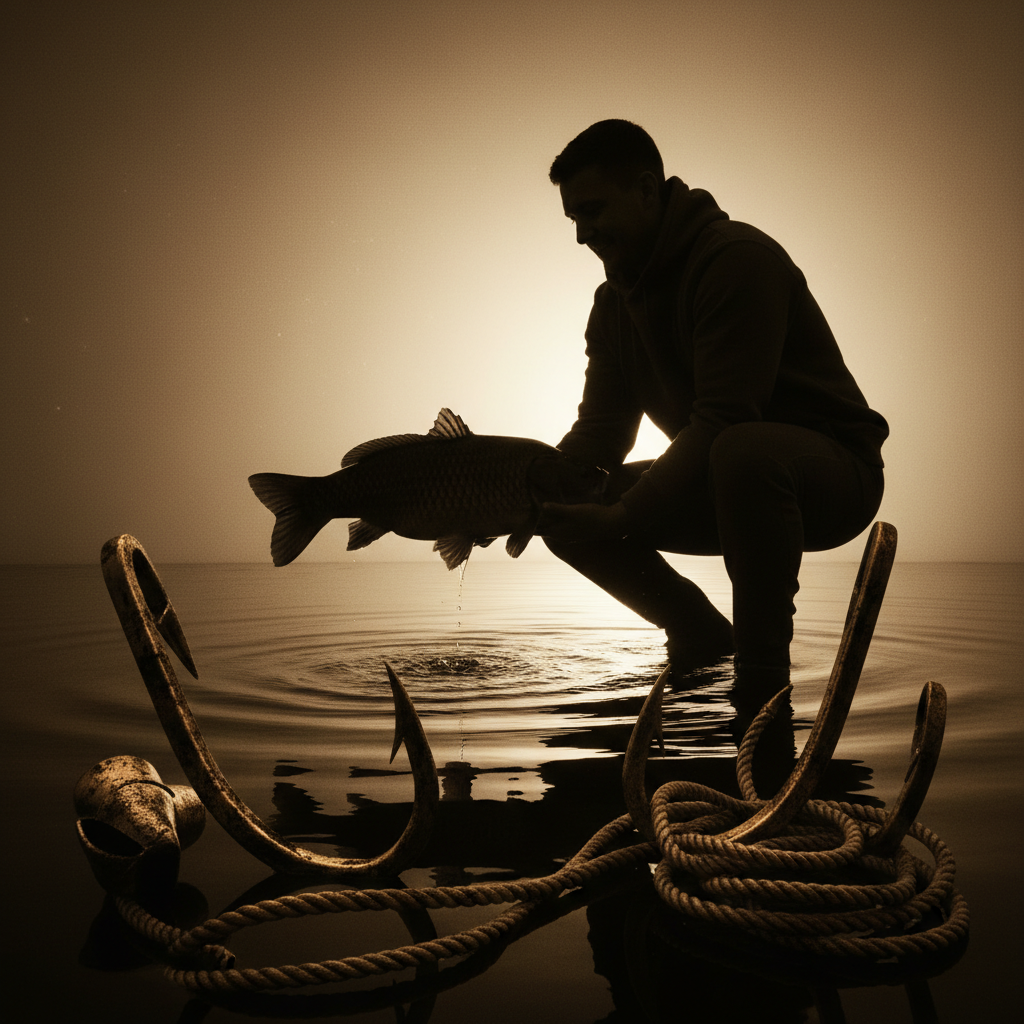
When we embrace a minimalist approach, we become more present in the moment, more attuned to the subtle rhythms of the environment, and more appreciative of the simple pleasures of fishing. We learn to find joy in the process, rather than simply focusing on the outcome. We develop a deeper respect for the fish we catch and the ecosystems they inhabit. We become stewards of the environment, committed to protecting and preserving it for future generations.
So, the next time you’re preparing for a fishing trip, ask yourself: do I really need all this gear? Could I simplify my approach and still have a meaningful and rewarding experience? Could I focus more on observation, skill, and connection with nature? By embracing a minimalist philosophy, you can unlock a deeper, more profound appreciation for the art of angling and the natural world it inhabits. It’s not just about catching fish; it’s about cultivating awareness, fostering respect, and finding joy in the journey. It’s about less gear, more awareness, and a richer, more fulfilling experience on the water.