The Paradox of Gentle Persuasion in Fishing
There’s a common misconception, deeply ingrained in many aspects of life, that more force equates to better results. In the world of sport fishing, this translates to aggressive casting, forceful reeling, and a general sense of overpowering the fish. But what if I told you that the most successful anglers often employ the opposite approach? What if the key to landing that trophy fish lies not in brute strength, but in subtle finesse, in the art of gentle persuasion?
It’s a counterintuitive concept, I know. We’re conditioned to believe that to achieve anything worthwhile, we must exert maximum effort, push ourselves to the limit, and leave no stone unturned. This mindset, while admirable in some contexts, can be detrimental when applied to the delicate dance between angler and fish. Imagine trying to convince someone of a different viewpoint by yelling at them. Would they be more likely to agree with you, or would they dig in their heels and resist even more? The same principle applies to fishing.
Consider the analogy of a tightrope walker. Do they muscle their way across the rope with sheer force? No, they rely on balance, subtle adjustments, and a deep understanding of physics. They yield to the rope’s movements, working with it rather than against it. Similarly, a skilled angler understands that the fishing rod is an extension of their senses, a tool for communicating with the fish, not dominating it.
The Art of the Subtle Presentation
One of the most crucial elements of gentle persuasion in fishing is the presentation of the bait or lure. A sloppy cast, a lure that splashes down with a loud thud, or a bait that drifts unnaturally in the current can all spook fish and send them scurrying for cover. The goal is to present your offering in a way that appears enticing and non-threatening. This requires precision, patience, and an understanding of the fish’s feeding habits and the environment they inhabit.
Think about it: would you be more likely to eat a beautifully presented dish that smells delicious, or a plate of food that looks and smells unappetizing? Fish are no different. They are constantly assessing their surroundings for potential threats and opportunities, and they are far more likely to strike at a bait or lure that appears natural and appealing.
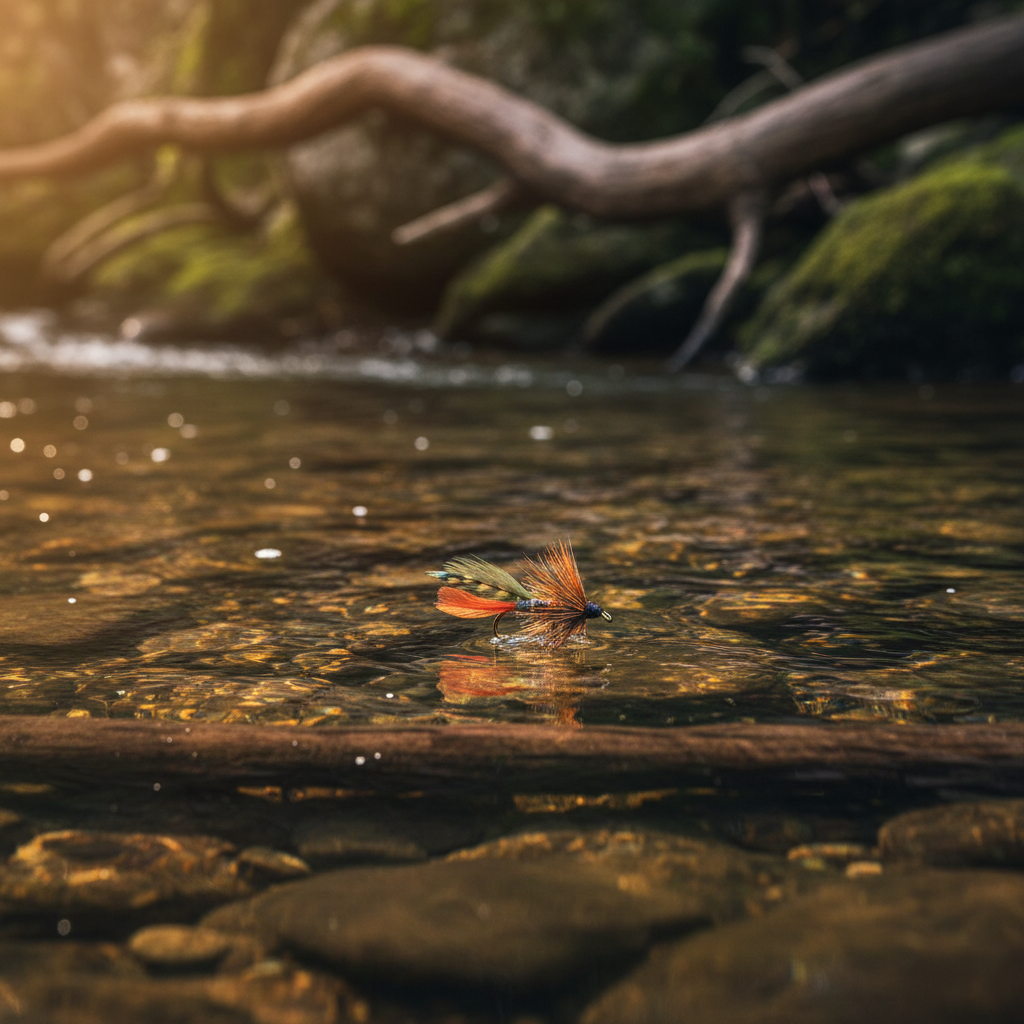
For example, when fly fishing for trout, a delicate presentation is paramount. The fly must land softly on the water’s surface, imitating a natural insect. The angler must control the drift of the fly, allowing it to flow naturally with the current, avoiding any unnatural drag or movement that might alert the fish. This requires a mastery of casting techniques, line control, and an understanding of the river’s currents.
Feeling the Fish: The Importance of Sensitivity
Another aspect of gentle persuasion is the ability to “feel” the fish. This means developing a sensitivity to the subtle vibrations and movements transmitted through the fishing line and rod. A novice angler might react to every tug and bump with a forceful jerk, often resulting in a missed hookset or a broken line. An experienced angler, on the other hand, can differentiate between a curious nibble, a tentative strike, and a committed take. They can feel the fish’s movements, anticipate its next move, and react accordingly.
This sensitivity is developed through years of experience and a willingness to learn from every fishing trip. It’s about paying attention to the details, observing the fish’s behavior, and understanding the nuances of the environment. It’s about becoming one with the rod and line, feeling the pulse of the water, and understanding the language of the fish.
Imagine trying to communicate with someone without speaking their language. You might resort to shouting or gesturing wildly, but your message is likely to be lost in translation. Similarly, if you lack sensitivity to the fish’s movements, you’re essentially trying to communicate with it in a language it doesn’t understand. Gentle persuasion, in this context, is about learning to speak the fish’s language, understanding its needs, and responding in a way that encourages it to cooperate.
The Power of Patience and Observation
Patience is perhaps the most underrated virtue in fishing. In a world that demands instant gratification, the pursuit of fishing often requires hours of quiet contemplation, unwavering focus, and the willingness to wait for the right opportunity. It’s about accepting that you can’t control everything, that the fish will strike when they’re ready, and that all you can do is be prepared.
Observation goes hand in hand with patience. A skilled angler is constantly observing the environment, looking for clues that might indicate the presence of fish. They pay attention to the weather conditions, the water clarity, the insect activity, and the behavior of other animals. They use this information to make informed decisions about where to fish, what bait or lure to use, and how to present it.
Think of a detective solving a crime. They don’t rush to judgment or jump to conclusions. They meticulously gather evidence, analyze the clues, and piece together the puzzle until they arrive at the truth. Similarly, an angler must become a detective of the water, patiently gathering information and using it to unravel the mystery of where the fish are hiding and what they are feeding on.
Case Study: The Tale of the Reluctant Bass
Let me share a personal anecdote to illustrate the power of patience and gentle persuasion. I was fishing in a small, heavily pressured lake known for its notoriously picky bass. I had tried everything in my tackle box – crankbaits, spinnerbaits, jigs, you name it. Nothing seemed to work. The bass were simply not interested. Frustrated and about to give up, I decided to take a break and simply observe the water.
I noticed that small schools of minnows were congregating near a patch of submerged weeds. I also observed that the bass were occasionally darting out from the weeds to ambush the minnows. Armed with this new information, I tied on a small, weightless soft plastic swimbait that mimicked the appearance of the minnows. I cast it gently near the weeds and let it sink slowly, allowing it to drift naturally with the current. I didn’t impart any aggressive action or jerking motions. I simply let the bait do its work.
After a few casts, I felt a subtle tap on the line. Instead of reacting with a forceful jerk, I simply tightened the line and waited. I could feel the fish testing the bait, mouthing it cautiously. After a few agonizing seconds, I felt a solid tug. I set the hook gently but firmly, and the fight was on. After a thrilling battle, I landed a beautiful, healthy bass. It wasn’t the biggest bass I had ever caught, but it was one of the most rewarding, because it was a testament to the power of patience and gentle persuasion.

Understanding the Ecosystem: A Holistic Approach
True mastery in fishing goes beyond simply catching fish. It involves a deep understanding of the entire ecosystem and the interconnectedness of all living things. It’s about recognizing that you are a guest in the fish’s home and that your actions have consequences. It’s about practicing ethical fishing techniques, respecting the environment, and ensuring the sustainability of the fishery for future generations.
Think of a doctor treating a patient. A good doctor doesn’t just focus on the symptoms; they look for the underlying cause of the illness and treat the whole person. Similarly, a responsible angler doesn’t just focus on catching fish; they consider the health of the entire ecosystem and take steps to minimize their impact.
This holistic approach to fishing includes practices such as catch and release, using barbless hooks, avoiding fishing during spawning season, and properly disposing of fishing line and other trash. It also involves educating others about responsible fishing practices and advocating for policies that protect our waterways.
The Zen of Fishing: Finding Peace in the Pursuit
Beyond the technical skills and knowledge, there’s a deeper, more philosophical aspect to fishing. It’s about finding peace and tranquility in the natural world, connecting with something larger than yourself, and escaping the stresses and distractions of modern life. It’s about being present in the moment, appreciating the beauty of your surroundings, and finding joy in the simple act of casting a line and waiting for a bite.
Imagine a monk meditating in a quiet temple. They are not striving for anything, they are simply being present, observing their thoughts and feelings without judgment. Similarly, fishing can be a form of meditation, a way to quiet the mind, focus on the present moment, and connect with the natural world.
The gentle lapping of the water, the rustling of the leaves, the chirping of the birds – these are the sounds of nature that can soothe the soul and restore balance to our lives. Fishing provides an opportunity to escape the noise and chaos of the city and immerse ourselves in the tranquility of the wilderness. It’s a chance to reconnect with our primal instincts, to remember our connection to the earth, and to find peace in the pursuit.
Beyond the Catch: The Real Rewards of Fishing
Ultimately, the real rewards of fishing go far beyond the number of fish caught or the size of the trophy. It’s about the experiences, the memories, and the lessons learned along the way. It’s about the camaraderie shared with fellow anglers, the challenges overcome, and the personal growth that comes from spending time in nature.
Think of a painter creating a masterpiece. They don’t just focus on the finished product; they enjoy the process of mixing the colors, applying the brushstrokes, and bringing their vision to life. Similarly, fishing is about more than just catching fish; it’s about the entire experience, from planning the trip to cleaning the gear afterwards.
It’s about the thrill of the chase, the satisfaction of outsmarting a wily fish, and the joy of sharing the experience with friends and family. It’s about the lessons learned from failures, the resilience developed in the face of adversity, and the humility gained from spending time in the humbling presence of nature.

Embracing the Finesse: A Lifelong Journey
Mastering the art of gentle persuasion in fishing is a lifelong journey. It requires a willingness to learn, to experiment, and to adapt to changing conditions. It’s about embracing the finesse, developing sensitivity, and understanding the interconnectedness of all things. It’s about recognizing that less force can often yield more results, and that the greatest rewards come from the process, not just the outcome.
So, the next time you’re out on the water, remember the principles of gentle persuasion. Slow down, observe your surroundings, and connect with the fish on a deeper level. You might be surprised at what you discover. You might just find that the key to landing that trophy fish lies not in brute strength, but in the subtle art of finesse.
Consider the ancient practice of Tai Chi. It appears slow and deliberate, almost effortless. Yet, behind the graceful movements lies immense power and control. The practitioners aren’t forcing their bodies; they are channeling energy, working with the flow, and achieving incredible feats of strength through gentleness. This is the essence of the philosophy: less force, more results.
And that, my friends, is a logic worth accepting, not just in fishing, but in life itself.

So, go forth, cast your lines with intention, and remember: the greatest catches often come to those who listen, observe, and persuade with a gentle hand.