Understanding the Current: Nature’s Unseen Hand
The current. It’s the lifeblood of any river, the engine that drives its ecosystem, and the silent architect of the underwater landscape. For the angler, understanding the current is not just helpful; it’s absolutely essential. To ignore it is to fish blind, to cast aimlessly into the void, hoping for a lucky strike. To embrace it, however, is to unlock a deeper understanding of the river, to predict the movements of your quarry, and to present your bait or lure with surgical precision.
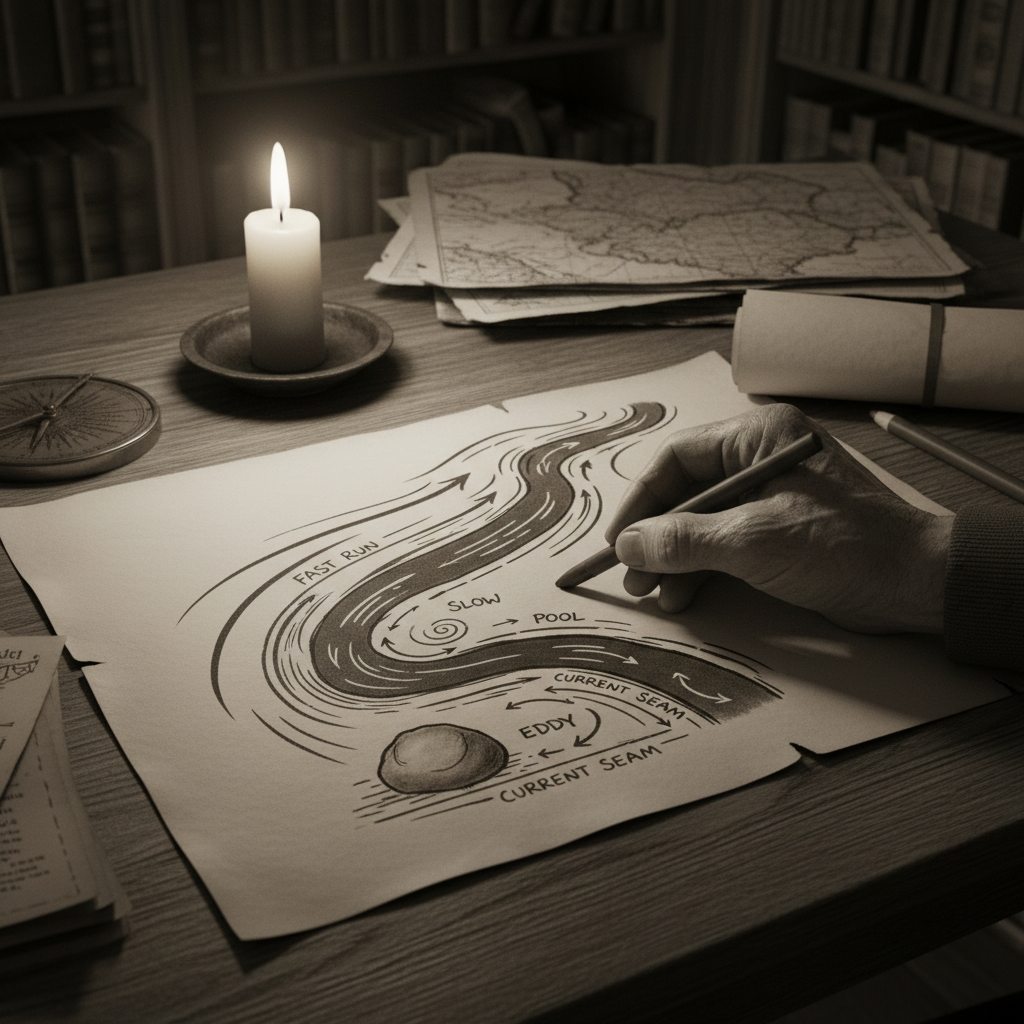
But what exactly is the current? It’s more than just water moving downstream. It’s a complex interplay of forces, shaped by the river’s topography, the season, the weather, and even the presence of obstacles like rocks, trees, and submerged vegetation. The current’s velocity isn’t uniform; it varies dramatically from one section of the river to another, creating a mosaic of fast-flowing runs, swirling eddies, and tranquil pools. These variations are not random; they are predictable, and they hold the key to finding fish.
Have you ever stood on the bank of a river and simply observed the water? Really observed it? Watched how it flows around a rock, how it speeds up in a narrow channel, how it slows down in a wider pool? That’s the beginning of understanding the current. It’s about becoming attuned to the river’s rhythm, learning to read its subtle cues, and using that knowledge to your advantage.
The Current as a Highway: Fish Movement and Feeding
Fish are masters of energy conservation. They instinctively seek out areas where they can minimize their effort and maximize their reward. This is where the current comes into play. Fish often use the current as a highway, allowing it to carry food directly to them. They will position themselves in areas where the current brings a constant supply of insects, crustaceans, or smaller fish. These are often behind rocks, in eddies, or along the seams where fast and slow currents meet.
Consider a trout holding behind a large boulder in a fast-flowing river. The boulder creates a “current shadow,” a pocket of slower-moving water where the trout can rest and conserve energy. At the same time, the current sweeps insects and other food items around the boulder, delivering a constant buffet right to the trout’s doorstep. All the trout has to do is dart out into the current, grab a meal, and then retreat back to its sheltered position.
Understanding this principle is crucial for effective fishing. Instead of casting blindly into the main current, focus on these areas where fish are likely to be holding and feeding. Target the current seams, the edges of eddies, and the downstream sides of obstructions. By presenting your bait or lure in these key locations, you significantly increase your chances of success.
Think of it like this: would you rather set up a food stall in the middle of a deserted highway or in a busy marketplace? The river current is the marketplace for fish, and knowing where the “stalls” are located is the key to attracting customers.
Reading the Water: Deciphering the Current’s Secrets
Learning to “read the water” is a skill that takes time and practice, but it’s one of the most rewarding aspects of fishing. It involves observing the surface of the water for clues about what’s happening beneath the surface. The current’s speed, direction, and turbulence can all provide valuable information about the river’s structure and the location of fish.
One of the most important things to look for is the “seam” – the boundary between fast and slow currents. This is a prime location for fish because it provides both a steady supply of food and a comfortable holding area. The faster current brings the food, while the slower current allows the fish to conserve energy. Fish will often position themselves along the seam, facing into the current, waiting for food to drift by.
Another key indicator is the presence of surface disturbances, such as riffles or boils. Riffles are areas of shallow, turbulent water, often caused by rocks or gravel on the riverbed. These areas are rich in oxygen and insects, making them attractive to fish. Boils are swirling, upward currents that indicate the presence of an obstruction on the riverbed. Fish will often hold near these boils, using the obstruction as cover and waiting for food to be dislodged by the current.
Pay close attention to the color of the water as well. Clear water generally indicates faster currents and shallower depths, while darker water suggests slower currents and deeper pools. Fish will often seek out darker water for cover and protection from predators.
Case Study: The Rock Garden
Imagine a section of river filled with large, scattered rocks. The current flows around these rocks, creating a complex mosaic of fast and slow currents, eddies, and pockets of calm water. This “rock garden” is a haven for fish, providing them with ample cover, feeding opportunities, and protection from predators.
To fish this type of water effectively, you need to understand how the current is interacting with the rocks. The upstream side of each rock will create a “current shadow,” a pocket of slower-moving water where fish can hold and conserve energy. The downstream side of each rock will create an eddy, a swirling current that can trap food and provide additional cover. Fish will often position themselves along the edges of these eddies, waiting for food to drift by.
The key to fishing the rock garden is to target these specific locations. Cast your bait or lure upstream of the rocks, allowing the current to carry it down to the holding areas. Pay close attention to the drift, and adjust your presentation as needed to ensure that your bait or lure is moving naturally with the current. Experiment with different retrieves to find what the fish are responding to.
Using the Current to Your Advantage: Techniques and Tactics
Once you understand how the current works and how fish use it, you can start to employ specific techniques and tactics to maximize your success. This involves using the current to your advantage to present your bait or lure in the most natural and enticing way possible.
One of the most effective techniques is the “dead drift.” This involves casting your bait or lure upstream and allowing it to drift naturally with the current, without any added action or manipulation. The goal is to mimic the natural movement of a food item, such as an insect or a small fish. This technique is particularly effective for trout and other species that feed on insects.
Another useful technique is the “swing.” This involves casting your bait or lure across the current and allowing it to swing downstream in an arc. As the bait or lure swings, it will cover a wide area of water, increasing your chances of attracting a strike. This technique is particularly effective for salmon and steelhead, which are often aggressive predators.
The choice of technique will depend on the specific conditions of the river and the type of fish you are targeting. Experiment with different techniques to find what works best in each situation.
Controlling Your Drift: Mastering the Art of Presentation
One of the biggest challenges in fishing is controlling your drift. The current can be a powerful force, and it can easily pull your bait or lure out of position, ruining your presentation. To overcome this challenge, you need to master the art of line control.
This involves using your rod and reel to manage the amount of slack in your line. Too much slack, and you will lose contact with your bait or lure, making it difficult to detect strikes. Too little slack, and you will impede the natural drift of your bait or lure, making it look unnatural to the fish.
The key is to find the right balance, maintaining just enough tension in your line to feel what’s happening with your bait or lure, while still allowing it to drift freely with the current. This requires practice and patience, but it’s a skill that will greatly improve your fishing success.
Equipment Considerations: Choosing the Right Tools for the Job
The equipment you use can also play a significant role in your ability to effectively fish the current. The right rod, reel, line, and lures can make a big difference in your presentation and your ability to detect strikes.
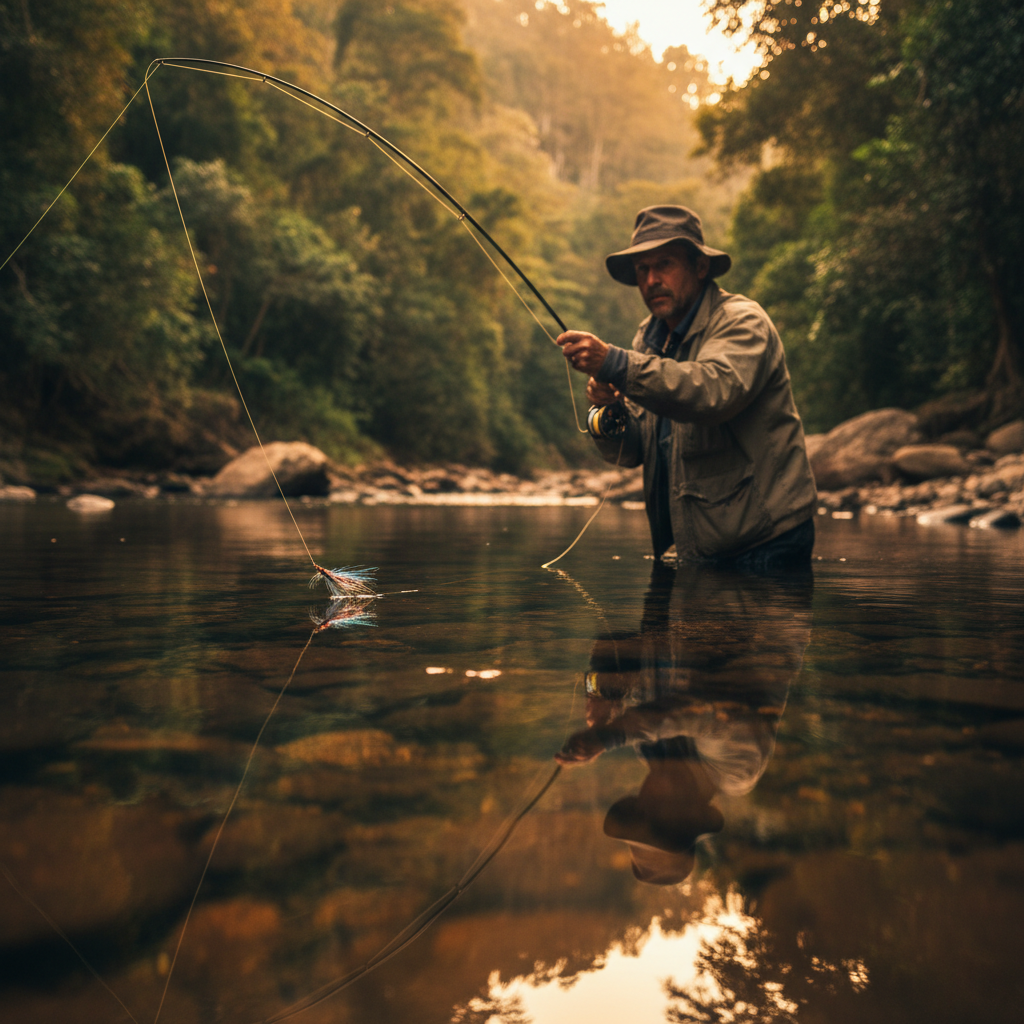
For fishing in strong currents, a longer rod is often advantageous. A longer rod allows you to keep more line off the water, reducing drag and improving your drift control. It also provides more leverage for fighting larger fish in fast-flowing water.
A reel with a smooth drag system is essential for fishing in the current. A smooth drag will allow you to apply consistent pressure to the fish, preventing it from breaking your line or escaping. A reel with a high line capacity is also important, especially when fishing for larger species that may run long distances.
The type of line you use can also affect your presentation. Low-stretch lines, such as braided lines or fluorocarbon lines, are more sensitive and allow you to detect strikes more easily. However, they can also be less forgiving, increasing the risk of breaking your line. Monofilament lines are more forgiving, but they are also less sensitive.
Lure Selection: Matching the Hatch and Mimicking Natural Prey
Choosing the right lure is crucial for attracting fish in the current. The key is to match the hatch, selecting lures that resemble the natural prey that the fish are feeding on. This may involve using different lures at different times of the year, depending on the availability of food.
In general, smaller lures are more effective in clear water and slower currents, while larger lures are more effective in murky water and faster currents. Lures with a lot of action, such as spinners and crankbaits, can be effective in attracting fish in fast-flowing water. However, lures with less action, such as spoons and jigs, may be more effective in slower currents.
Experiment with different lures to find what the fish are responding to. Pay attention to the size, shape, color, and action of the lures, and adjust your selection as needed.
Safety First: Navigating the River with Confidence
Fishing in the current can be a rewarding experience, but it’s also important to be aware of the potential hazards. Rivers can be unpredictable and dangerous, and it’s essential to take precautions to ensure your safety.
Always wear a personal flotation device (PFD) when fishing in the river. This is especially important in fast-flowing water, where a fall can quickly become life-threatening. Choose a PFD that is comfortable and fits properly.
Be aware of your surroundings. Watch out for slippery rocks, deep holes, and other hazards. Avoid wading in water that is too deep or too fast. If you are unsure about the conditions, err on the side of caution.
Never fish alone. Always fish with a buddy, so that you can help each other in case of an emergency. Let someone know where you are going and when you expect to be back.
Respecting the Environment: Practicing Sustainable Fishing
As anglers, we have a responsibility to protect the rivers and the fish that live in them. Practicing sustainable fishing is essential for ensuring that future generations can enjoy the same opportunities that we do.
Always practice catch and release, especially with sensitive species. Handle fish carefully and release them quickly and gently. Use barbless hooks to minimize injury. Avoid fishing in spawning areas during spawning season.
Respect the environment. Pack out all your trash and leave the area as you found it. Avoid disturbing wildlife or damaging vegetation. Follow all fishing regulations and guidelines.
Advanced Techniques: Taking Your Skills to the Next Level
Once you have mastered the basics of fishing the current, you can start to explore more advanced techniques. These techniques require a deeper understanding of the river and the behavior of fish, but they can also be incredibly rewarding.
One advanced technique is “nymphing.” This involves fishing with small, weighted nymphs that imitate the larval stage of aquatic insects. Nymphing is a highly effective technique for trout and other species that feed on insects. It requires precise presentation and delicate line control.
Another advanced technique is “streamer fishing.” This involves fishing with larger lures that imitate baitfish or other prey. Streamer fishing is a more aggressive technique that can be effective for targeting larger fish. It often involves casting and retrieving the streamer in a jerky, erratic motion.
These advanced techniques require practice and patience, but they can greatly expand your fishing repertoire and allow you to catch fish in even the most challenging conditions.
The Art of Observation: Continuously Learning and Adapting
The most important skill for any angler is the ability to observe and adapt. Rivers are constantly changing, and the behavior of fish is constantly evolving. To be successful, you need to be able to read the water, understand the current, and adapt your techniques accordingly.
Pay attention to the weather, the water conditions, and the time of year. Experiment with different lures, techniques, and presentations. Don’t be afraid to try new things. The more you learn and adapt, the more successful you will become.
Consider keeping a fishing journal to track your observations and successes. Note the date, time, location, weather conditions, water conditions, lures used, techniques employed, and results achieved. Over time, this journal will become a valuable resource, helping you to identify patterns and improve your fishing skills.
The Zen of the Current: Finding Peace and Connection
Fishing is more than just a sport; it’s a way to connect with nature, to escape the stresses of daily life, and to find peace and tranquility. The current, with its constant flow and ever-changing patterns, can be a source of endless fascination and inspiration.
When you are on the river, take the time to appreciate the beauty of your surroundings. Listen to the sound of the water, watch the birds fly overhead, and breathe in the fresh air. Let the current wash away your worries and clear your mind.
Fishing is a journey, not a destination. It’s about the process, not just the outcome. It’s about learning, growing, and connecting with something larger than yourself.
So, the next time you are on the river, take a moment to appreciate the current. Understand its power, respect its force, and use it to your advantage. But more importantly, allow it to connect you to the natural world and to bring you a sense of peace and tranquility.
Ultimately, mastering the current is about more than just catching fish. It’s about developing a deeper understanding of the river and your place within its ecosystem. It’s about honing your skills, expanding your knowledge, and continuously learning and adapting. It’s a lifelong pursuit that can bring endless rewards, both on and off the water.