Navigating the Tech Tsunami: Choosing Fishing Gadgets Wisely
The world of fishing technology is a vast and ever-expanding ocean. From sonar systems that paint a vivid picture of the underwater landscape to GPS devices that pinpoint your favorite honey holes with uncanny accuracy, the options can feel overwhelming. It’s easy to get caught in a relentless tide of advertisements, each promising the “ultimate” fishing experience. But how do you cut through the noise and choose technology that truly enhances your angling, rather than becoming an expensive distraction?
This isn’t just about buying the latest gadgets. It’s about understanding your needs, recognizing the capabilities (and limitations) of different technologies, and making informed decisions that align with your fishing style and goals. Are you targeting specific species? Do you prefer freshwater or saltwater environments? Are you a weekend warrior or a seasoned tournament angler? The answers to these questions will guide you through the tech jungle and help you emerge with the right tools in hand.
Beyond the Hype: Understanding Your Fishing Needs
Before you even start browsing online retailers or flipping through catalogs, take some time to reflect on your fishing habits. What are your biggest challenges on the water? Are you struggling to locate fish? Are you having trouble maintaining accurate records of your catches? Are you looking for ways to improve your casting distance or accuracy?
For example, if you primarily fish in murky water, a high-end sonar system with side-imaging capabilities might be a worthwhile investment. However, if you mostly fish in clear, shallow water, a simpler and more affordable fish finder might suffice. Similarly, if you’re constantly losing track of your favorite fishing spots, a GPS device with waypoint marking functionality could be a game-changer. But if you primarily fish in familiar locations, a simple compass and a keen sense of direction might be all you need.
Consider your budget as well. Fishing technology can be expensive, and it’s easy to get carried away with features you might not even need. Set a realistic budget and stick to it. Remember, the most expensive gear doesn’t always guarantee the best results. Often, a well-chosen and properly used piece of simpler technology can outperform a flashy, feature-laden device.
The Siren Song of Advertising: Recognizing Marketing Tactics
The fishing industry, like any other, relies heavily on advertising to promote its products. And while some advertising can be informative and helpful, it’s important to be aware of the common marketing tactics used to entice anglers.
One common tactic is the “fear of missing out,” or FOMO. Advertisers often create a sense of urgency by highlighting limited-time offers or exclusive deals. They might also showcase testimonials from “expert” anglers who swear by a particular product. Don’t let these tactics pressure you into making a hasty decision. Take your time, do your research, and consider whether the product truly aligns with your needs.
Another common tactic is the use of technical jargon to impress potential customers. Advertisers might bombard you with terms like “CHIRP sonar,” “down imaging,” and “side scan,” without adequately explaining what these terms mean or how they can benefit your fishing. Don’t be afraid to ask questions and seek clarification. A reputable retailer should be able to explain the features of their products in clear and concise language.
Be wary of exaggerated claims and unrealistic promises. No piece of technology can guarantee you’ll catch more fish. Fishing is a complex activity that depends on a variety of factors, including weather conditions, water clarity, and the skill of the angler. Technology can certainly enhance your chances of success, but it’s not a magic bullet.

Deciphering the Tech: A Guide to Common Fishing Gadgets
Now that you have a better understanding of your needs and the marketing tactics used to promote fishing technology, let’s take a closer look at some of the most common gadgets available. This section will provide a brief overview of each technology, along with its potential benefits and drawbacks.
Fish Finders and Sonar Systems: Seeing Beneath the Surface
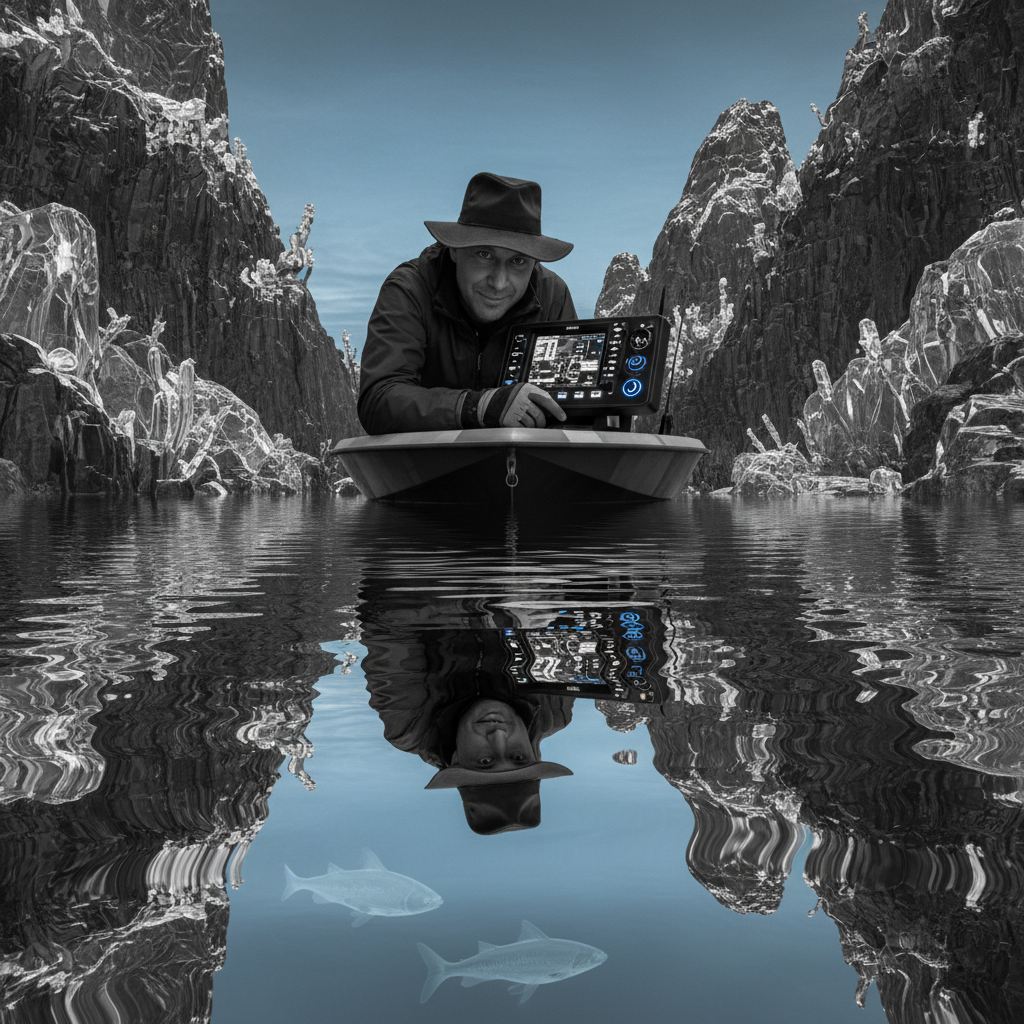
Fish finders, also known as sonar systems, use sound waves to create an image of the underwater environment. They can detect fish, structures, and changes in depth, providing valuable information about the location of potential fishing spots.
Basic fish finders use a single frequency to scan the water column. More advanced systems use multiple frequencies, allowing for greater detail and accuracy. CHIRP sonar, for example, transmits a range of frequencies, resulting in a clearer and more defined image. Down imaging and side scan sonar technologies provide even more detailed views of the underwater landscape, allowing you to identify submerged structures and fish holding areas with greater precision.
Benefits: Locating fish, identifying structures, determining depth, mapping underwater terrain.
Drawbacks: Can be expensive, requires proper setup and calibration, interpretation of sonar images can be challenging.
GPS Devices: Navigating with Precision
GPS devices use satellite signals to determine your location and track your movements. They can be used to mark waypoints, navigate to specific locations, and record your fishing routes.
Basic GPS devices provide basic navigational information, such as latitude, longitude, and speed. More advanced units feature detailed maps, chartplotting capabilities, and the ability to connect to other devices, such as fish finders and autopilots.
Benefits: Accurate navigation, waypoint marking, route tracking, enhanced safety.
Drawbacks: Requires satellite signal, can be affected by weather conditions, can be expensive.
Smart Reels and Rods: Enhancing Your Casting and Retrieval
Smart reels and rods are equipped with sensors and microprocessors that provide real-time feedback on your casting and retrieval techniques. They can track your casting distance, monitor line tension, and even alert you when a fish strikes.
These devices can be particularly helpful for anglers who are looking to improve their casting accuracy and efficiency. They can also provide valuable data for analyzing your fishing performance and identifying areas for improvement.
Benefits: Improved casting accuracy, enhanced efficiency, real-time feedback, data analysis.
Drawbacks: Can be expensive, requires batteries, may not be suitable for all fishing styles.
Underwater Cameras: Seeing the Fish Up Close
Underwater cameras allow you to see what’s happening beneath the surface in real-time. They can be used to identify fish species, assess water clarity, and observe fish behavior.
These cameras can be particularly useful for ice fishing or fishing in murky water. They can also provide valuable insights into the effectiveness of your lures and baits.
Benefits: Real-time underwater viewing, fish identification, assessment of water clarity, lure and bait evaluation.
Drawbacks: Limited visibility in murky water, requires batteries, can be expensive.
Beyond the Purchase: Maximizing Your Tech Investment
Buying the right technology is only half the battle. To truly maximize your investment, you need to learn how to use it effectively. This requires patience, practice, and a willingness to experiment.
Read the Manual: Understanding the Fundamentals
This might seem obvious, but it’s surprising how many anglers fail to read the instruction manual thoroughly. The manual contains valuable information about the features, functions, and limitations of your device. It also provides guidance on proper setup, calibration, and maintenance.
Don’t just skim the manual. Read it carefully and take the time to understand each section. If you’re unsure about something, consult online resources or contact the manufacturer for assistance.
Practice Makes Perfect: Experimenting on the Water
The best way to learn how to use your fishing technology is to practice on the water. Experiment with different settings and features to see how they affect your results. Try using your fish finder to locate different types of structures, or use your GPS device to navigate to unfamiliar fishing spots.
Don’t be afraid to make mistakes. Learning from your errors is an essential part of the process. Keep a log of your fishing trips, noting the conditions, your equipment settings, and your results. This will help you identify patterns and optimize your techniques over time.
Online Resources: Tapping into the Community
The internet is a treasure trove of information about fishing technology. There are countless websites, forums, and social media groups dedicated to specific gadgets and techniques. Take advantage of these resources to learn from other anglers and share your own experiences.
Be selective about the information you consume. Not all online sources are created equal. Look for reputable websites and forums that are moderated by experienced anglers. Be wary of unsolicited advice or exaggerated claims.
Maintenance and Care: Protecting Your Investment
Fishing technology can be expensive, so it’s important to take proper care of your equipment to ensure its longevity. This includes cleaning your devices regularly, protecting them from the elements, and storing them properly when not in use.
Follow the manufacturer’s recommendations for cleaning and maintenance. Avoid using harsh chemicals or abrasive materials that could damage the delicate components of your devices. Store your equipment in a dry, secure location to prevent damage from moisture, dust, or impact.
Case Studies: Real-World Examples of Tech in Action
To illustrate the potential benefits of fishing technology, let’s examine a few real-world case studies.
Case Study 1: Locating Suspended Crappie
A group of anglers was struggling to locate crappie in a large reservoir. They knew the fish were present, but they couldn’t pinpoint their exact location. Using a high-end sonar system with down imaging and side scan capabilities, they were able to identify schools of crappie suspended near submerged timber. By targeting these specific areas, they were able to catch a significant number of fish.
Key Technology: High-end sonar system with down imaging and side scan.
Benefit: Precise location of fish in a challenging environment.
Case Study 2: Navigating a Coastal Estuary
An angler was fishing in a complex coastal estuary with numerous channels and sandbars. He was unfamiliar with the area and was concerned about running aground. Using a GPS device with detailed charts, he was able to navigate the estuary safely and efficiently. He also used the GPS to mark productive fishing spots and return to them later.
Key Technology: GPS device with detailed charts.
Benefit: Safe and efficient navigation in a complex environment.
Case Study 3: Improving Casting Accuracy
An angler was struggling to cast accurately with a baitcasting reel. He was consistently overshooting or undershooting his target. Using a smart reel with real-time feedback on his casting technique, he was able to identify and correct his flaws. Within a few weeks, his casting accuracy had improved significantly.
Key Technology: Smart reel with real-time feedback.
Benefit: Improved casting accuracy and efficiency.

The Future of Fishing Technology: What’s on the Horizon?
The field of fishing technology is constantly evolving, with new innovations emerging all the time. What can we expect to see in the years ahead?
Artificial Intelligence and Machine Learning
Artificial intelligence (AI) and machine learning (ML) are poised to revolutionize the way we fish. AI-powered fish finders could analyze sonar data in real-time, identifying fish species, predicting their behavior, and even suggesting the best lures and techniques to use. ML algorithms could analyze historical fishing data to identify patterns and predict future fishing conditions.
Augmented Reality
Augmented reality (AR) could overlay digital information onto the real world, providing anglers with a wealth of data about their surroundings. AR-enabled glasses could display information about water depth, fish locations, and weather conditions, all in real-time.
Drones and Remote Sensing
Drones equipped with cameras and sensors could be used to scout fishing spots from above, providing anglers with a bird’s-eye view of the underwater environment. Remote sensing technologies could be used to monitor water quality, temperature, and other environmental factors that affect fish populations.
Connectivity and Data Sharing
The future of fishing technology will be increasingly connected. Devices will communicate with each other seamlessly, sharing data and insights in real-time. Anglers will be able to share their fishing experiences with others, contributing to a collective knowledge base that can benefit the entire community.
Striking the Right Balance: Tech as a Tool, Not a Crutch
While technology can undoubtedly enhance your fishing experience, it’s important to remember that it’s just a tool, not a replacement for skill, experience, and a deep understanding of the natural world. Don’t let technology become a crutch that prevents you from developing your own angling abilities.
Spend time learning the fundamentals of fishing, such as casting techniques, knot tying, and fish identification. Observe the natural environment and pay attention to the subtle cues that can indicate the presence of fish. Develop your own intuition and instincts, and learn to trust your gut. This is what separates a true angler from someone who simply relies on technology.
Ultimately, the goal of fishing technology should be to enhance your connection with nature, not to replace it. Use technology to deepen your understanding of the underwater world, to improve your skills, and to increase your chances of success. But never forget the simple joy of being outdoors, surrounded by the beauty and tranquility of nature.
Choosing the right fishing technology is a personal journey. There’s no one-size-fits-all solution. By understanding your needs, recognizing marketing tactics, and learning how to use your equipment effectively, you can navigate the tech tsunami and emerge with the tools you need to enhance your angling experience. Remember, the best technology is the technology that helps you connect with nature, improve your skills, and catch more fish – all while enjoying the process.