The Art and Science of Bait Selection: A Fisherman’s Guide
Choosing the right bait isn’t just about tossing something shiny into the water and hoping for the best. It’s a nuanced blend of understanding fish behavior, environmental conditions, and the subtle cues that nature provides. Think of it as culinary artistry for the underwater world, where you’re not just presenting food, but a tempting, irresistible offering that triggers a predator’s instinct. So, how do you master this art and transform from a casual angler into a bait-selection virtuoso?
The journey begins with knowledge. Knowing your target species, their preferred diet, and their typical behavior patterns is paramount. Are you after largemouth bass lurking in the shadows, or trout gracefully navigating a swift-flowing stream? Each species has its own unique preferences, and understanding these nuances is the first step toward a successful catch. But it doesn’t stop there. The time of year, water temperature, clarity, and even the prevailing weather conditions all play crucial roles in influencing a fish’s appetite and feeding habits.
Understanding the Underwater Menu: Matching the Hatch
The concept of “matching the hatch” isn’t limited to fly fishing. It applies to all forms of angling, whether you’re using live bait, artificial lures, or prepared baits. Matching the hatch simply means presenting a bait that closely resembles the natural food sources available in the water. This could include insects, crustaceans, smaller fish, or even plant matter. By mimicking these natural offerings, you significantly increase your chances of attracting a fish’s attention and triggering a strike.
For example, if you’re fishing a lake where shad are the primary forage for bass, using a shad-imitation swimbait or crankbait would be a wise choice. Similarly, if you’re fishing a stream teeming with mayflies, selecting a fly that closely resembles the size, shape, and color of the prevalent mayfly species is crucial. Take the time to observe the water and identify the dominant food sources. What are the fish feeding on? What insects are hatching? What small fish are abundant? Answering these questions will guide you towards the optimal bait selection.
But what if you can’t precisely match the hatch? Sometimes, the natural food sources are too diverse or difficult to imitate. In these situations, you can still use the principle of matching the hatch as a starting point. Look for baits that share similar characteristics to the natural forage, such as size, shape, color, or movement. Even a close approximation can be enough to entice a hungry fish.

The Seasonal Symphony of Bait Choice
The seasons dictate the rhythm of life, and this holds true for fish as well. As water temperatures rise and fall, fish behavior and feeding habits undergo significant changes. Understanding these seasonal shifts is essential for selecting the right bait at the right time.
Spring: The Awakening. After a long winter, fish emerge from their lethargic state with a renewed appetite. Spawning is often on their minds, and they’re actively seeking food to replenish their energy reserves. This is a prime time for aggressive lures that trigger reaction strikes, such as crankbaits, spinnerbaits, and jerkbaits. Colors like chartreuse, white, and red are often effective during the spring, as they mimic spawning baitfish or injured prey. Live bait, such as minnows and worms, can also be highly productive during this period.
Summer: The Abundance. Summer brings an abundance of food sources, making fish more selective in their feeding habits. They may be less likely to chase after fast-moving lures, preferring instead to target slower-moving or stationary prey. This is a good time to switch to finesse techniques, such as using soft plastics rigged wacky style or drop shot. Natural colors and subtle presentations are often more effective during the summer months. Topwater lures can also be deadly during early morning or late evening hours when fish are actively feeding on the surface.
Autumn: The Feast. As water temperatures begin to cool, fish enter a feeding frenzy to prepare for the upcoming winter. They’re actively seeking out high-calorie meals to build up their fat reserves. This is a great time to use larger lures that mimic the size of the baitfish they’re targeting. Crankbaits, swimbaits, and jigs can be highly effective during the fall. Colors that resemble the changing foliage, such as browns, oranges, and yellows, can also be productive.
Winter: The Slowdown. Winter is a time of dormancy for many fish species. Their metabolism slows down, and they become less active and less likely to feed. This is the most challenging time of year to catch fish, but it’s not impossible. The key is to use extremely slow presentations and small, subtle baits. Live bait, such as minnows and worms, can be highly effective during the winter months. Finesse techniques, such as drop shotting and jigging, can also be productive. Patience is key when fishing in the winter.
Reading the Water: Understanding Environmental Clues
The water itself provides valuable clues about what bait to use. Water clarity, temperature, and depth all influence fish behavior and feeding habits. By carefully observing these environmental factors, you can narrow down your bait selection and increase your chances of success.
Water Clarity: In clear water, fish can see your bait from a greater distance. This means you can often get away with using more natural colors and subtle presentations. In murky or stained water, fish rely more on their other senses, such as smell and vibration, to locate prey. This is when brighter colors and lures with strong vibrations can be more effective.
Water Temperature: Water temperature affects a fish’s metabolism and activity level. In warm water, fish are more active and likely to chase after fast-moving lures. In cold water, fish are less active and prefer slower-moving or stationary baits. As a general rule, use faster presentations in warmer water and slower presentations in colder water.
Water Depth: Different fish species prefer different depths. Some fish prefer to feed in shallow water, while others prefer deeper water. Knowing the preferred depth range of your target species is crucial for selecting the right bait. For example, if you’re targeting bass in a shallow lake, you might use topwater lures or shallow-diving crankbaits. If you’re targeting trout in a deep river, you might use weighted nymphs or streamers.
Live Bait vs. Artificial Lures: The Eternal Debate
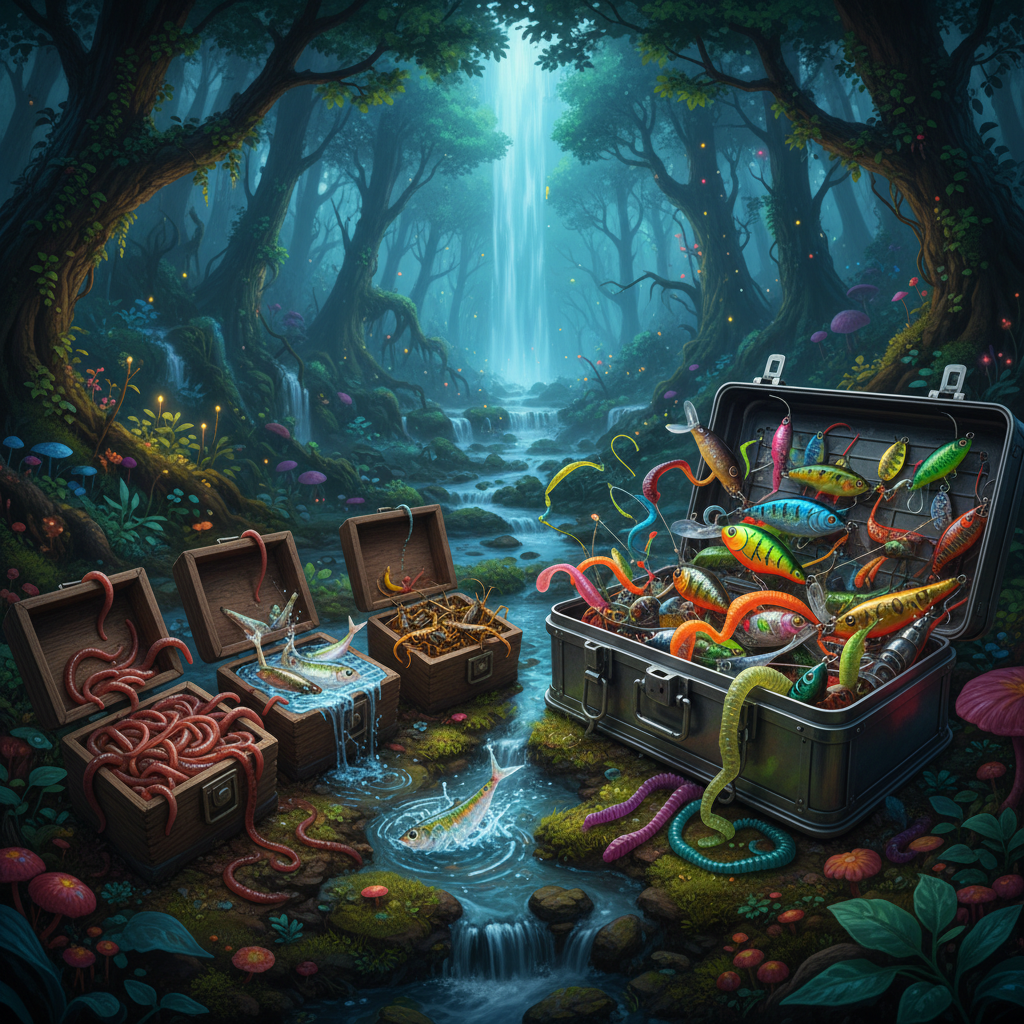
The debate between live bait and artificial lures is as old as fishing itself. Both have their advantages and disadvantages, and the best choice often depends on the specific fishing situation and personal preference. Let’s delve into the pros and cons of each.
Live Bait: The Natural Choice. Live bait offers a natural presentation that can be irresistible to fish. The scent, movement, and taste of live bait are often enough to trigger a strike, even when fish are not actively feeding. Live bait is also versatile and can be used in a variety of fishing situations. However, live bait can be more expensive and require more maintenance than artificial lures. It can also be more difficult to transport and store. Furthermore, ethical considerations sometimes arise regarding the responsible use of live bait.
Artificial Lures: The Versatile Option. Artificial lures offer a wide range of options for imitating different types of prey. They can be used to target specific species, depths, and water conditions. Artificial lures are also more durable and reusable than live bait. They require less maintenance and are easier to transport and store. However, artificial lures may not always be as effective as live bait, especially when fish are being picky or the water is murky.
Ultimately, the choice between live bait and artificial lures is a personal one. Experiment with both and see what works best for you in different situations. Don’t be afraid to mix and match techniques. For example, you might use a live worm on a jig head or a minnow behind a spinner.
Beyond the Basics: Advanced Bait Selection Strategies
Once you’ve mastered the basics of bait selection, you can start exploring more advanced strategies. These strategies involve understanding fish behavior on a deeper level and adapting your bait selection to specific conditions.
Using Scents and Attractants: Fish have a highly developed sense of smell, and using scents and attractants can significantly increase your chances of getting a strike. There are many different types of scents and attractants available, each designed for specific species and situations. Some scents are designed to mask human odor, while others are designed to attract fish from a distance. Experiment with different scents and attractants to see what works best for you.
Varying Your Retrieval Techniques: The way you retrieve your bait can be just as important as the bait itself. Vary your retrieval speed, cadence, and action to see what triggers a strike. Sometimes a slow, steady retrieve is all it takes to entice a fish. Other times, you need to use a more erratic, jerky retrieve. Experiment with different retrieval techniques until you find one that works.
Fishing Pressure and Bait Adjustment: Heavily fished waters often produce fish that are more wary and selective. They’ve seen it all, so you need to offer something different to entice them. Try using smaller baits, lighter line, and more natural presentations. You might also try fishing during off-peak hours or in areas that are less heavily fished.
The Power of Observation: Pay attention to what’s happening around you. Are birds diving into the water? Are fish jumping? Are insects hatching? These are all clues that can help you determine what bait to use. The more you observe, the better you’ll become at predicting fish behavior and selecting the right bait.
Case Studies: Bait Selection in Action
Let’s examine a few real-world examples to illustrate how bait selection can make a difference.
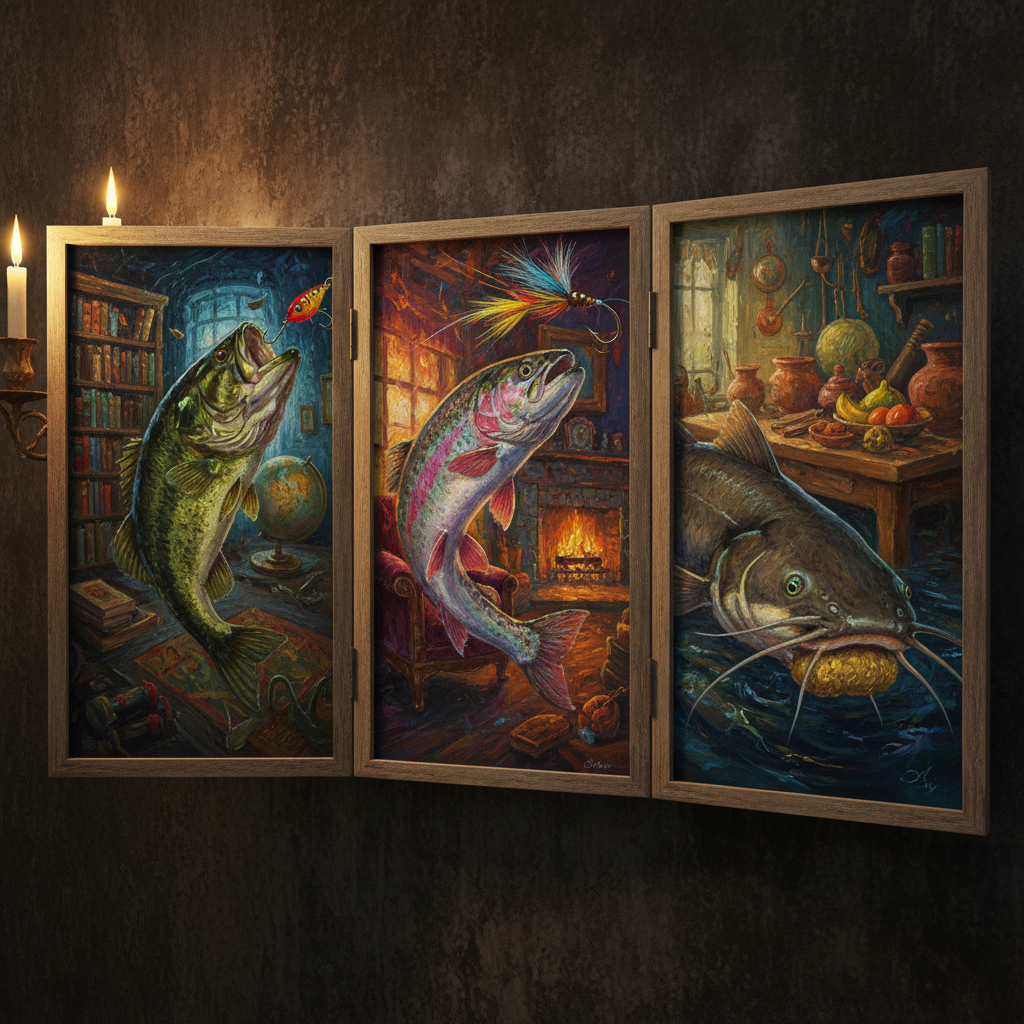
Case Study 1: The Shifting Sands of Lake Okeechobee. A bass tournament angler noticed that despite the early morning topwater bite slowing down, the bass were still actively chasing baitfish. He switched from a traditional topwater popper to a shallow-running crankbait that mimicked the frantic action of fleeing shad. This subtle change resulted in a significant increase in strikes and ultimately secured his victory in the tournament. The key was observing the continued presence of baitfish activity and adapting the lure presentation accordingly.
Case Study 2: The Clear Waters of the Au Sable River. A fly fisherman was struggling to catch trout in a crystal-clear section of the Au Sable River. He noticed that the trout were spooked by the slightest movement. He switched to a longer, lighter leader and a smaller, more delicate fly that mimicked the size and color of the tiny mayflies that were hatching. This subtle adjustment reduced the disturbance in the water and allowed him to present the fly in a more natural manner, resulting in a successful day of fishing. This highlights the importance of stealth and finesse in clear water conditions.
Case Study 3: The Murky Depths of the Mississippi. A catfish angler was fishing a muddy section of the Mississippi River with little success. He realized that the catfish were relying heavily on their sense of smell to locate food. He switched to a strong-smelling prepared bait that contained blood and other attractants. The potent scent attracted catfish from a distance, resulting in a steady stream of bites. This emphasizes the significance of scent and attractants in murky water environments.
The Importance of Experimentation and Record-Keeping
Bait selection is not an exact science. There’s no magic formula that will guarantee success every time. The best way to improve your bait selection skills is to experiment and keep detailed records of your results. Try different baits, colors, sizes, and retrieval techniques. Note the date, time, location, water conditions, and weather conditions for each fishing trip. Record what baits you used and how many fish you caught. Over time, you’ll begin to identify patterns and trends that will help you make more informed bait selections in the future.
Don’t be afraid to try new things. The fishing world is constantly evolving, and new baits and techniques are being developed all the time. Stay up-to-date on the latest trends and be willing to experiment with different approaches. You might just discover a new secret weapon that will give you a significant edge over other anglers.
Remember that even the most experienced anglers have days when they can’t catch a fish. Don’t get discouraged. Learn from your mistakes and keep experimenting. The more you fish, the better you’ll become at understanding fish behavior and selecting the right bait.
The Ethical Angler: Responsible Bait Practices
As anglers, we have a responsibility to protect the environment and ensure the sustainability of our fisheries. This includes using responsible bait practices. Avoid using invasive species as bait, as they can harm native ecosystems. Dispose of used bait properly and avoid littering. Practice catch and release whenever possible to help conserve fish populations. By following these simple guidelines, we can help ensure that future generations will have the opportunity to enjoy the sport of fishing.
Consider the impact of your bait choices on the environment. Some artificial lures contain lead, which can be harmful to wildlife. Choose lead-free alternatives whenever possible. Be mindful of the potential for plastic lures to break down and pollute the water. Collect any discarded lures and dispose of them properly.
Support sustainable fishing practices and advocate for responsible fisheries management. By working together, we can protect our precious resources and ensure that fishing remains a sustainable activity for years to come.

The Everlasting Pursuit: Continuous Learning and Adaptation
The journey of mastering bait selection is a lifelong pursuit. There’s always more to learn, and the fishing world is constantly changing. New baits, techniques, and technologies are constantly being developed. To stay ahead of the curve, you need to be a continuous learner and be willing to adapt to new challenges.
Read books, magazines, and online articles about fishing. Attend fishing seminars and workshops. Talk to other anglers and share your experiences. The more you learn, the better you’ll become at understanding fish behavior and selecting the right bait. And never underestimate the value of time spent on the water, simply observing and learning from the environment. Each cast, each retrieve, each day on the water is a lesson in itself.
In the end, choosing the right bait for the exact moment is about more than just luck. It’s about knowledge, observation, experimentation, and a deep understanding of the underwater world. It’s about connecting with nature and becoming a true student of the sport. And as you continue on this journey, you’ll not only become a better angler, but you’ll also gain a deeper appreciation for the beauty and complexity of the natural world.