Unlocking the Secrets of the Deep: Data-Driven Fishing
The rhythmic rocking of the boat, the salty spray on your face, the anticipation as you feel a tug on the line – these are the timeless sensations of fishing. But beneath the surface, a revolution is brewing. A revolution powered by data. Gone are the days of relying solely on intuition and generations of inherited knowledge. Today, cutting-edge technology provides anglers with an unprecedented ability to understand the underwater world, transforming hunches into calculated strategies and turning potential catches into near certainties.
We’re not just talking about slightly better fish finders. We’re talking about a paradigm shift in how we approach the art of angling. Think of it: real-time data on water temperature, depth, salinity, underwater structure, fish behavior, and even historical catch data, all available at your fingertips. This wealth of information, once the stuff of science fiction, is now readily accessible through a growing ecosystem of fishing gadgets and technologies. But simply possessing the data isn’t enough. The real power lies in knowing how to interpret it, how to translate raw numbers and graphical representations into actionable insights that lead to more successful and fulfilling fishing experiences. This is where the art of data-driven fishing truly begins.
From Intuition to Insight: Embracing the Data Revolution
For centuries, fishing has been a blend of skill, experience, and a healthy dose of luck. Fishermen relied on their senses, their understanding of tides and currents, and the wisdom passed down through their families. While these elements still hold value, they are increasingly complemented, and even enhanced, by the power of data. Consider the seasoned captain who claims he can “smell” where the fish are. What if that “smell” could be quantified, mapped, and correlated with other environmental factors? That’s the promise of data-driven fishing.
This isn’t about replacing the human element; it’s about augmenting it. It’s about providing anglers with the tools to make more informed decisions, to reduce uncertainty, and to increase their chances of success. It’s about moving from simply reacting to what’s happening around you to proactively predicting and capitalizing on opportunities. Think of it as adding a scientific layer to the inherent artistry of fishing.
Decoding the Data Deluge: Essential Gadgets and Their Insights
The sheer volume of data available can be overwhelming. Knowing which gadgets to use and how to interpret their output is crucial. Here’s a look at some key technologies and the insights they provide:
1. Sonar and Fish Finders: Seeing Beneath the Surface
Sonar technology has revolutionized fishing, allowing anglers to “see” what lies beneath the surface. Modern fish finders go far beyond simply displaying blobs representing fish. They offer detailed images of underwater structures, differentiate between various types of fish, and even provide information about the size and density of schools.
Insights: Understanding the bottom topography, identifying potential hiding spots for fish, locating schools of baitfish, and determining the depth and density of fish populations.
Example: A bass fisherman uses side-scan sonar to locate submerged timber and weed beds in a lake. By analyzing the sonar images, he identifies areas with dense cover and high concentrations of baitfish, focusing his efforts on these promising locations. He further refines his strategy by using down-imaging sonar to pinpoint individual bass lurking within the structure.
2. GPS and Chartplotters: Navigating with Precision
GPS technology allows anglers to pinpoint their location with incredible accuracy and to navigate to specific fishing spots. Chartplotters combine GPS data with detailed nautical charts, providing a comprehensive view of the surrounding waters.
Insights: Marking productive fishing spots, creating routes to avoid hazards, tracking boat speed and direction, and understanding the relationship between location and fishing success.
Example: A deep-sea fisherman uses GPS to return to a productive offshore reef that he discovered months earlier. He uses his chartplotter to monitor his drift in relation to the reef, ensuring that his bait stays within the strike zone. He also uses the chartplotter to track his boat’s speed and direction, adjusting his course as needed to compensate for wind and current.

3. Water Temperature Sensors: Finding the Thermal Sweet Spots
Water temperature plays a critical role in fish behavior. Different species of fish have different temperature preferences, and they will often congregate in areas where the water temperature is optimal. Water temperature sensors provide real-time data on surface and subsurface temperatures, allowing anglers to identify these thermal sweet spots.
Insights: Locating areas where fish are most likely to be active, understanding the relationship between temperature and fish distribution, and adapting fishing strategies to changing temperature conditions.
Example: A trout fisherman uses a handheld water temperature sensor to measure the temperature of different sections of a stream. He discovers that the water temperature is cooler in areas where there is shade and flowing water. He focuses his efforts on these cooler areas, knowing that trout are more likely to be active in these conditions.
4. Underwater Cameras: Seeing the Unseen
Underwater cameras provide a direct view of what’s happening beneath the surface. They can be used to identify fish species, assess bait presentation, and observe fish behavior in their natural habitat.
Insights: Confirming the presence of fish, observing their feeding habits, evaluating the effectiveness of different baits and lures, and gaining a better understanding of the underwater environment.
Example: An ice fisherman uses an underwater camera to observe fish reacting to his jigging presentation. He notices that the fish are attracted to the jig but are hesitant to strike. He experiments with different jigging techniques and lure colors until he finds a combination that triggers a strike.
5. Weather Stations: Anticipating Environmental Changes
Weather conditions have a significant impact on fish behavior. Changes in barometric pressure, wind direction, and cloud cover can all affect fish activity. Portable weather stations provide real-time data on these critical environmental factors, allowing anglers to anticipate changes and adjust their strategies accordingly.
Insights: Predicting changes in fish activity, understanding the relationship between weather conditions and fishing success, and making informed decisions about when and where to fish.
Example: A saltwater fisherman uses a portable weather station to monitor barometric pressure. He knows that falling barometric pressure often triggers increased fish activity. He anticipates a feeding frenzy and positions himself in an area where he is likely to intercept migrating fish.
Turning Data into Decisions: A Practical Guide
Having the data is one thing; knowing how to use it is another. Here’s a step-by-step guide to turning gadget data into perfect fishing decisions:
1. Define Your Objective: What Are You Trying to Catch?
Before you even turn on your gadgets, it’s essential to define your fishing objective. What species of fish are you targeting? What type of fishing are you planning to do (e.g., trolling, casting, jigging)? Knowing your objective will help you focus your data collection efforts and prioritize the most relevant information.
2. Gather Relevant Data: Focus on the Key Indicators
Once you know your objective, you can begin gathering data. Start by focusing on the key indicators that are most relevant to your target species and fishing style. For example, if you’re targeting bass in a lake, you’ll want to pay close attention to water temperature, depth, and the location of underwater structures. If you’re trolling for salmon in the ocean, you’ll want to monitor water temperature, current speed, and the location of baitfish.
Avoid information overload. Resist the temptation to collect every piece of data available. Focus on the indicators that are most likely to influence your fishing success.
3. Analyze the Data: Look for Patterns and Trends
After you’ve gathered your data, it’s time to analyze it. Look for patterns and trends that might provide clues about where the fish are located and how they are behaving. For example, you might notice that fish are congregating in areas where the water temperature is slightly warmer, or that they are more active during periods of falling barometric pressure.
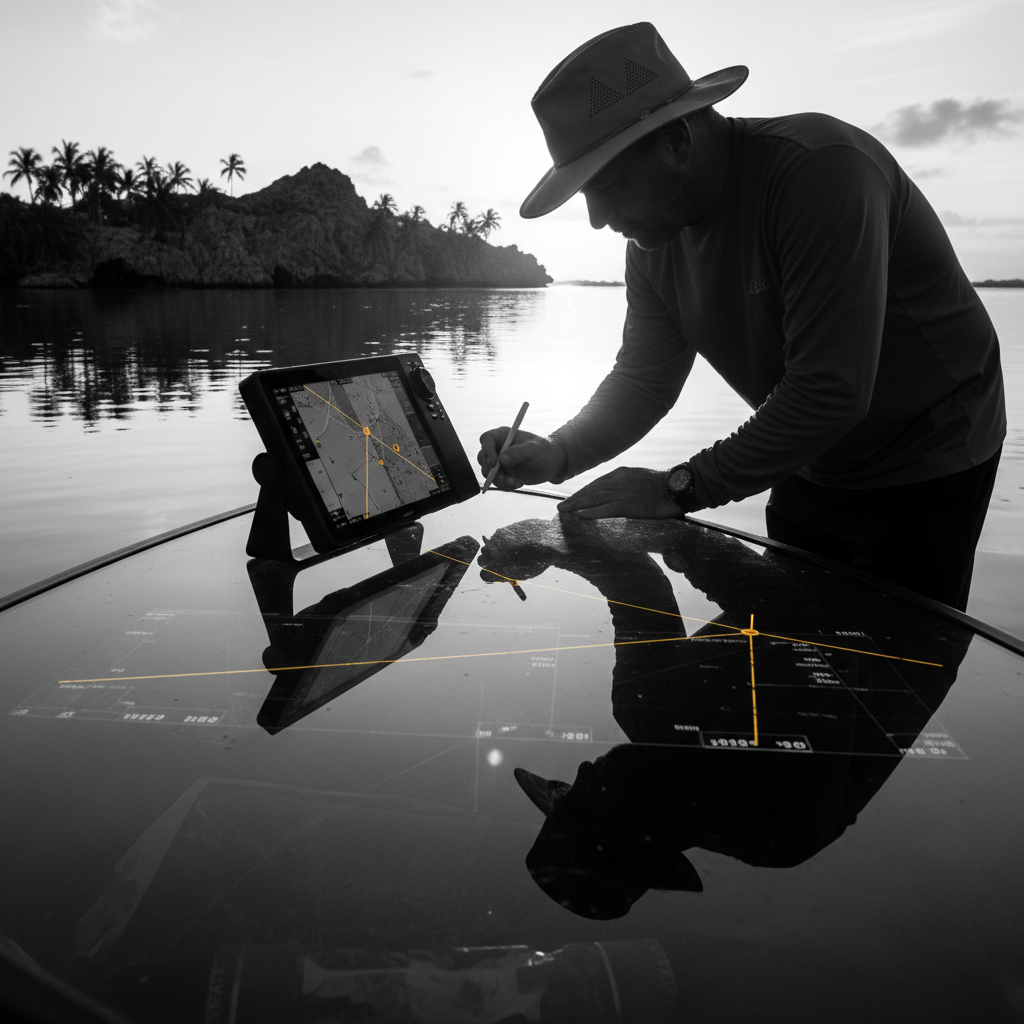
Use data visualization tools, such as charts and graphs, to help you identify these patterns and trends. Many fish finders and chartplotters have built-in data visualization capabilities.
4. Formulate a Hypothesis: What Do You Expect to Happen?
Based on your data analysis, formulate a hypothesis about where the fish are likely to be located and how they are likely to behave. For example, you might hypothesize that bass will be holding near submerged timber in areas where the water temperature is between 68 and 72 degrees Fahrenheit.
Your hypothesis should be specific and testable. It should also be based on sound reasoning and supported by the data you’ve collected.
5. Test Your Hypothesis: Put Your Plan into Action
Now it’s time to test your hypothesis. Put your plan into action and see if your predictions hold true. Fish in the areas where you expect to find fish, and use the techniques that you believe will be most effective.
Pay close attention to the results of your efforts. Are you catching fish? If so, are they the species you were targeting? Are they located in the areas where you expected to find them? If not, it’s time to re-evaluate your hypothesis and adjust your strategy.
6. Adapt and Iterate: Continuously Refine Your Approach
Data-driven fishing is an iterative process. It’s about continuously gathering data, analyzing it, formulating hypotheses, testing those hypotheses, and adapting your strategy based on the results. Don’t be afraid to experiment with different techniques and approaches. The more you experiment, the more you’ll learn about the underwater world and the better you’ll become at catching fish.
Beyond the Catch: Data for Conservation and Sustainability
The power of data extends beyond simply increasing catch rates. It also plays a crucial role in conservation and sustainability. By collecting and analyzing data on fish populations, water quality, and other environmental factors, we can gain a better understanding of the health of our aquatic ecosystems and develop strategies to protect them.
Citizen science initiatives are empowering anglers to contribute to these efforts. By reporting their catches, sharing data on water conditions, and participating in monitoring programs, anglers can play a vital role in ensuring the long-term health of our fisheries.
Imagine a future where every angler is equipped with the tools and knowledge to collect valuable data on the aquatic environment. This data could be used to track fish populations, monitor water quality, and identify areas that are in need of protection. By working together, anglers and scientists can create a more sustainable future for fishing.
Ethical Considerations: Using Data Responsibly
As we embrace the power of data-driven fishing, it’s important to consider the ethical implications. We must ensure that we are using technology responsibly and that we are not harming fish populations or the environment.
Avoid using data to target fish in areas where they are particularly vulnerable, such as spawning grounds. Practice catch-and-release fishing whenever possible, and handle fish with care to minimize stress. Be mindful of the impact of your fishing activities on the surrounding ecosystem, and take steps to reduce your environmental footprint.
Remember, the goal of data-driven fishing is not simply to catch more fish. It’s to enhance our understanding of the underwater world, to improve our fishing skills, and to promote the long-term health of our fisheries.

The Future of Fishing: A Data-Driven Ecosystem
The future of fishing is undoubtedly data-driven. As technology continues to evolve, we can expect to see even more sophisticated gadgets and tools that provide anglers with unprecedented insights into the underwater world. Artificial intelligence and machine learning will play an increasingly important role in analyzing data and predicting fish behavior.
Imagine a fishing ecosystem where anglers are seamlessly connected to a network of sensors, databases, and analytical tools. This ecosystem would provide real-time information on fish populations, water conditions, and weather patterns, allowing anglers to make informed decisions about when and where to fish. It would also facilitate collaboration and knowledge sharing among anglers, creating a community of data-driven fishermen.
This future is not far off. As the cost of technology continues to decline and the availability of data continues to increase, data-driven fishing will become increasingly accessible to anglers of all skill levels. The key is to embrace the power of data, to learn how to interpret it, and to use it responsibly to enhance our fishing experiences and protect our aquatic resources.
Case Study: Optimizing Tournament Fishing with Data Analytics
Let’s examine a hypothetical case study to illustrate the power of data analytics in competitive fishing. Imagine a professional bass fisherman participating in a major tournament on a large, complex lake. The fisherman, armed with a suite of sophisticated gadgets and a deep understanding of data analytics, approaches the tournament with a strategic, data-driven mindset.
Before the tournament begins, the fisherman spends days pre-fishing, meticulously collecting data on water temperature, depth, clarity, and the presence of baitfish. He uses side-scan sonar to map underwater structures, identifying potential holding areas for bass. He also uses historical catch data from previous tournaments to identify patterns and trends in fish behavior.
During the tournament, the fisherman continuously monitors his gadgets, adjusting his strategy based on real-time data. He uses water temperature sensors to locate thermal sweet spots, and he uses underwater cameras to observe fish behavior around different types of cover. He also uses GPS to precisely navigate to his chosen fishing spots and to track his boat’s movement in relation to underwater structures.
By analyzing the data he collects, the fisherman is able to identify subtle patterns and trends that would be invisible to the naked eye. For example, he might discover that bass are more likely to strike a particular lure color in areas where the water clarity is slightly lower. Or he might notice that bass are holding tighter to cover during periods of high boat traffic.
Based on these insights, the fisherman is able to make informed decisions about where to fish, what lures to use, and how to present those lures. He maximizes his fishing time by focusing on the most promising areas and by adapting his strategy to changing conditions. As a result, he consistently catches more fish than his competitors, ultimately winning the tournament.

The Ethical Angler in the Age of Information
The surge in accessible fishing data brings a heightened responsibility. We must be ever mindful of the ecological impact. Using data to pinpoint vulnerable spawning grounds and then relentlessly targeting fish there is not only unsportsmanlike, but potentially devastating to populations. The ethical angler embraces data as a tool for understanding, not exploitation. It’s about applying knowledge to improve technique, appreciate the nuances of the aquatic environment, and ultimately, to become better stewards of our fisheries.
This means practicing responsible catch and release, minimizing our footprint on delicate habitats, and advocating for policies that protect our aquatic resources. The future of fishing depends on our ability to blend technological advancement with a deep respect for the natural world. It’s about ensuring that future generations can experience the same joys and challenges of angling that we do today. Let us use the power of data to not only become better anglers, but also better conservationists, safeguarding the health and vitality of our waters for years to come.