The Illusion of Safety in Numbers: Why Bait Fish Trust Even Under Pressure
Have you ever watched a school of bait fish darting through the water, seemingly as one? A shimmering, unified entity, moving with an almost telepathic grace? It’s a mesmerizing sight, a testament to the power of collective behavior. But beneath the surface of this synchronized ballet lies a complex interplay of instinct, survival, and, perhaps surprisingly, a degree of trust. The question is, is that trust justified, or are these tiny creatures simply playing a dangerous game of chance, relying on the illusion of safety in numbers?
We often romanticize the natural world, projecting our own values and emotions onto the animals that inhabit it. We see the school of fish as a symbol of unity, of cooperation, of mutual support. But the reality is often far more brutal, far more Darwinian. The truth is, that tightly packed group of fish is not necessarily a haven of safety. It’s also a buffet, a readily available meal for any predator that happens to cross their path. So why do they do it? Why do they maintain this formation, even when the pressure mounts, when the shadows of predators loom?
The answer, as is often the case in nature, is multifaceted. It involves a delicate balancing act between risk and reward, between individual survival and the propagation of the species. Understanding this intricate dance is crucial, not just for anglers looking to improve their bait presentation, but for anyone interested in the fundamental principles that govern the natural world.
The Evolutionary Roots of Schooling Behavior
The phenomenon of schooling, or shoaling, behavior is not unique to bait fish. It’s observed in a wide range of marine and freshwater species, from the smallest minnows to some of the largest sharks. Its prevalence suggests a deep evolutionary significance, a strategy that has proven remarkably effective over millions of years.
But what exactly are the benefits of swimming together in a tightly packed group?
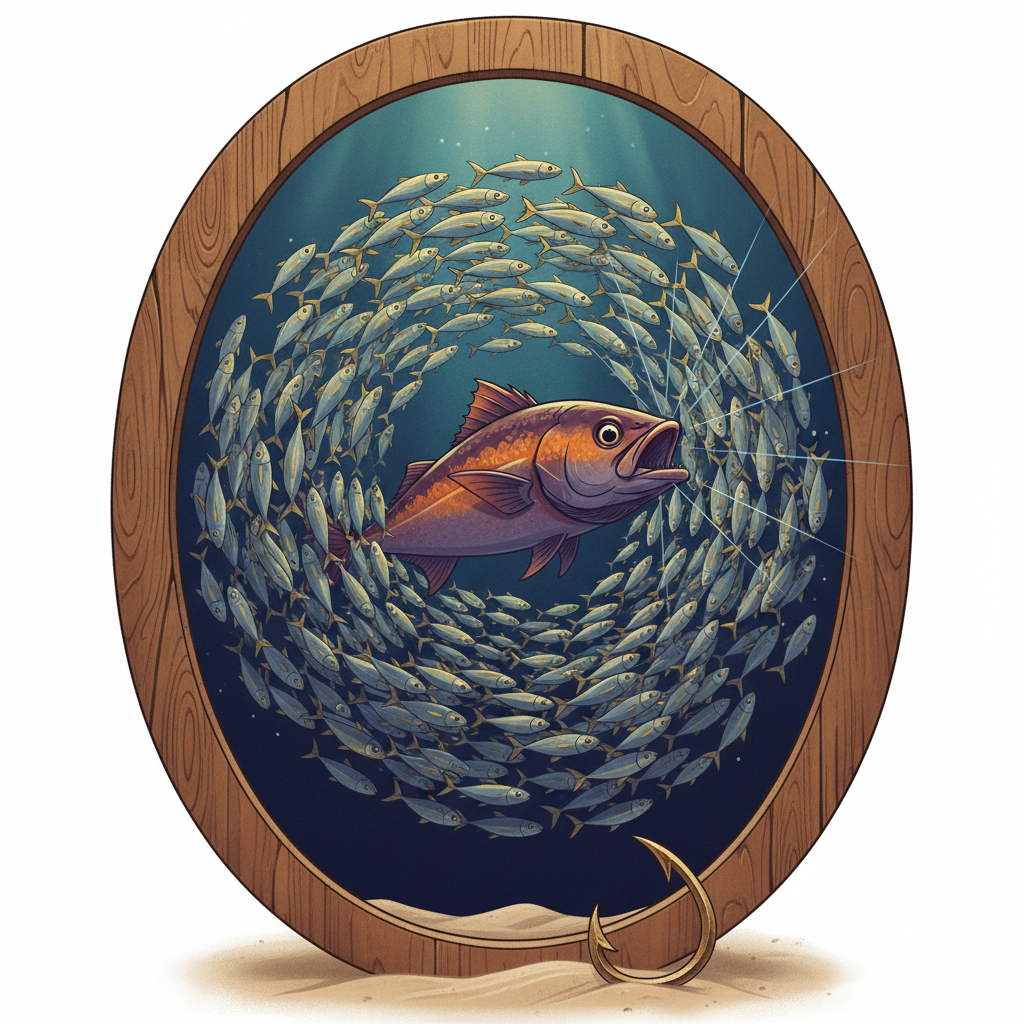
One of the most obvious advantages is predator avoidance. When confronted with a predator, a school of fish can execute a series of coordinated maneuvers that can confuse and disorient the attacker. This “confusion effect” makes it difficult for the predator to single out and target an individual fish. Imagine trying to pick a specific grain of sand from a swirling sandstorm. The sheer number of potential targets dilutes the risk for each individual.
Another benefit is enhanced vigilance. With many eyes constantly scanning the surroundings, the school is more likely to detect approaching predators early on. This early warning system allows the fish to react quickly and effectively, increasing their chances of survival. It’s a classic example of the wisdom of the crowd. Each fish contributes to the collective awareness, creating a surveillance network that is far more effective than any individual could achieve on their own.
Furthermore, schooling behavior can improve foraging efficiency. By working together, the fish can locate and exploit food resources more effectively than they could on their own. They can share information about the location of food patches and coordinate their feeding efforts, maximizing their intake. This cooperative foraging strategy is particularly important in environments where food is scarce or patchy.
Finally, schooling can facilitate mating. By congregating in large numbers, the fish increase their chances of finding a suitable mate. The school becomes a hub of reproductive activity, a place where individuals can display their fitness and attract potential partners. This is particularly important for species that have limited opportunities for interaction outside of the spawning season.
The Dark Side of the School: When Trust Becomes a Liability
While schooling offers numerous advantages, it’s not without its risks. The very density that provides protection can also create vulnerabilities. A large school of fish can attract the attention of predators from a greater distance, making them a more conspicuous target. It’s like painting a giant bullseye on your back.
Moreover, competition for resources within the school can be intense. The fish may have to compete for food, space, and mates, leading to stress and aggression. This internal conflict can undermine the cohesiveness of the school and make it more vulnerable to attack. It’s a delicate balancing act between cooperation and competition, a constant struggle for survival within the collective.
Perhaps the most insidious risk is the potential for disease transmission. In a tightly packed school, diseases can spread rapidly from one individual to another, decimating the population. This is particularly true in environments where the fish are stressed or immune-compromised. The close proximity that provides protection also creates a perfect breeding ground for pathogens.
Consider, for instance, a school of menhaden, a small, oily fish that forms massive schools along the Atlantic coast. These schools can be so dense that they literally blacken the water. While this provides a degree of protection from predators like sharks and birds, it also makes them incredibly vulnerable to viral outbreaks. When a virus strikes, it can spread like wildfire through the school, killing thousands of fish in a matter of days.
So, where does the “trust” come into play? It’s not trust in the human sense of the word, not a conscious decision based on empathy or shared values. It’s a more primal, instinctive form of trust, a reliance on the collective behavior of the group. Each fish trusts that the others will react appropriately to threats, that they will maintain the integrity of the school, and that they will contribute to the overall survival of the group.
But this trust can be misplaced. It can lead to a false sense of security, a belief that the school will always protect them. And when the school fails, when the predator breaks through the defenses, the consequences can be devastating.

The Angler’s Advantage: Exploiting the Bait Fish’s Trust
For anglers, understanding the schooling behavior of bait fish is crucial for success. By understanding how these fish behave under pressure, you can develop strategies to exploit their vulnerabilities and increase your chances of landing a trophy.
One of the most important things to remember is that bait fish are highly sensitive to changes in their environment. They can detect subtle vibrations, changes in water pressure, and even the presence of predators. If they sense danger, they will react quickly and decisively.
Therefore, it’s essential to approach bait fish schools with caution. Avoid making sudden movements or loud noises that could spook them. Instead, try to blend in with the surroundings and approach the school slowly and deliberately. Think of it as stalking prey, rather than simply casting a line.
Another key strategy is to mimic the natural behavior of predators. Predators often target the edges of the school, where the fish are more vulnerable. By casting your lure or bait near the edge of the school, you can increase your chances of attracting the attention of a predatory fish.
You can also use lures or baits that mimic the appearance and behavior of injured or disoriented bait fish. Predators are often attracted to these easy targets, as they represent a low-risk, high-reward meal. A wounded bait fish struggling to keep up with the school is an irresistible temptation for a hungry predator.
Consider the effectiveness of a crankbait that imitates a fleeing bait fish. Its erratic movements and flashing colors can trigger a predatory response in nearby fish, leading to explosive strikes. Or, think about the subtle presentation of a live bait rig, perfectly mimicking the natural drift of a vulnerable bait fish.
Ultimately, the key to success is to understand the psychology of the predator-prey relationship. By putting yourself in the mind of the predator, you can anticipate its behavior and develop strategies to exploit the vulnerabilities of the bait fish.
Beyond the Hook: Lessons in Trust and Vulnerability
The story of the bait fish, and their seemingly unwavering trust in the collective, offers lessons that extend far beyond the realm of angling. It’s a microcosm of the human experience, a reminder of the inherent vulnerabilities that come with being part of a group.
We, too, often find ourselves relying on the collective wisdom and support of others. We trust in our communities, our institutions, and our leaders to protect us and guide us. But this trust can be misplaced. It can lead to complacency, to a willingness to overlook warning signs, and to a susceptibility to manipulation.
Think about the financial crisis of 2008. Millions of people placed their trust in the financial institutions and the regulatory agencies that were supposed to protect them. They believed that these institutions were too big to fail, that their investments were safe and secure. But when the system collapsed, many people lost their life savings, their homes, and their sense of security.
Or consider the rise of social media and the echo chambers that it has created. Many people now rely on social media platforms for their news and information, trusting that these platforms will provide them with an accurate and unbiased view of the world. But these platforms are often algorithms designed to reinforce existing beliefs and filter out dissenting voices. This can lead to a distorted perception of reality and a susceptibility to misinformation and propaganda.

The bait fish, in their unwavering trust, offer a cautionary tale. It’s a reminder that even in the face of overwhelming pressure, we must remain vigilant, question our assumptions, and be prepared to adapt to changing circumstances. It is a testament to the fact that blind trust can be a dangerous thing, that we must always be willing to challenge the status quo and think for ourselves.
The Constant Evolution of Trust and Survival
The dynamic between bait fish and their predators is a never-ending arms race. As predators evolve new strategies for hunting, bait fish evolve new strategies for survival. This constant cycle of adaptation and counter-adaptation ensures that neither side gains a permanent advantage.
Consider the evolution of camouflage. Many bait fish have evolved coloration patterns that allow them to blend in with their surroundings, making them more difficult for predators to spot. Predators, in turn, have evolved more sophisticated visual systems that allow them to detect subtle variations in color and texture.
Or, consider the evolution of speed and agility. Bait fish have evolved to be incredibly fast and agile, allowing them to evade predators. Predators, in turn, have evolved to be even faster and more agile, allowing them to catch their prey.
This constant evolution of strategies underscores the importance of adaptability and resilience. In a constantly changing environment, those who are able to adapt and evolve will be the ones who survive.
And so, the school of bait fish continues to swim, a shimmering testament to the power of collective behavior and the enduring struggle for survival. They trust, but they also adapt. They rely on the group, but they also remain vigilant. They are a reminder that even in the face of overwhelming pressure, there is always hope for survival.
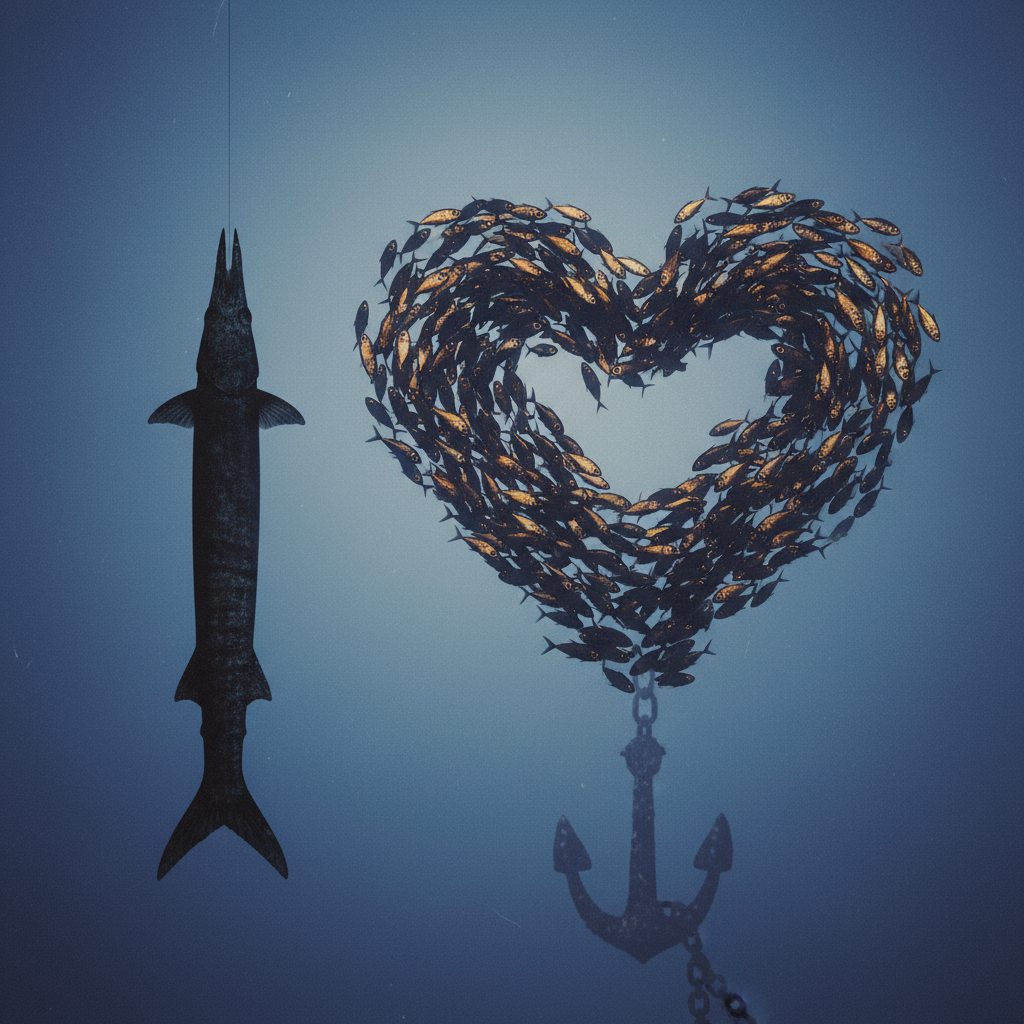
The next time you see a school of bait fish darting through the water, take a moment to appreciate the complexity and beauty of their behavior. Remember that beneath the surface of their synchronized movements lies a story of trust, vulnerability, and the relentless pursuit of survival. And perhaps, consider the lessons that these tiny creatures can teach us about our own lives, about the importance of vigilance, adaptability, and the enduring power of the human spirit. It’s a reminder that even the smallest creatures can offer profound insights into the fundamental truths that govern our world.