The Angler’s Paradox: Finding Opportunity in Frustration
Fishing, at its core, is a masterclass in patience. It’s an activity where the serenity of the environment often clashes directly with the inner turmoil of expectation. We cast our lines, hoping for a tug, a thrilling battle of wills, and ultimately, the satisfaction of a successful catch. But what happens when the fish simply aren’t biting? What happens when hours stretch into an eternity of stillness, punctuated only by the gentle lapping of water against the hull of the boat or the distant call of a bird? This is where frustration creeps in, and it’s a feeling familiar to every angler, from the seasoned pro to the weekend novice.
But frustration, that nagging sense of disappointment and unmet expectations, doesn’t have to be the end of the line. In fact, it can be the very catalyst that leads to a breakthrough, that transforms a seemingly fruitless outing into a valuable learning experience, and ultimately, into a more rewarding pursuit. The secret lies not in avoiding frustration, but in understanding it, embracing it, and using it to sharpen your skills and deepen your connection with the art of angling.
The Anatomy of Angler’s Frustration
Let’s dissect this feeling a little further. Frustration in fishing often stems from a disconnect between expectation and reality. We envision ourselves reeling in a trophy-sized fish, showcasing it proudly, and basking in the glory of our angling prowess. But the reality can be far different. Perhaps the fish aren’t responding to your chosen bait, the weather isn’t cooperating, or the techniques you’ve relied on in the past are suddenly proving ineffective. The gap between this desired outcome and the current situation is where frustration takes root.
Think about it. You’ve spent hours researching the best spots, carefully selecting your tackle, and meticulously preparing your bait. You arrive at the lake or river full of anticipation, ready to put your skills to the test. But as the hours pass without a single nibble, doubt starts to creep in. Are you using the wrong lure? Is the water too cold? Are you simply in the wrong place at the wrong time? These questions swirl around in your mind, fueling your frustration and making it increasingly difficult to focus on the task at hand.
It’s important to recognize that this frustration is a natural and even necessary part of the learning process. No angler, no matter how experienced, is immune to it. Even the most successful fishermen have faced countless days of empty nets and unanswered casts. The difference lies in how they respond to these moments of frustration. Do they succumb to it, allowing it to cloud their judgment and diminish their enthusiasm? Or do they use it as an opportunity to learn, adapt, and ultimately, become better anglers?
Turning Frustration into a Tactical Advantage
So, how do we transform this seemingly negative emotion into a positive force? How do we convert frustration into a tactical advantage that leads to more catches and a more fulfilling fishing experience?
1. The Power of Observation: Becoming a Student of the Water
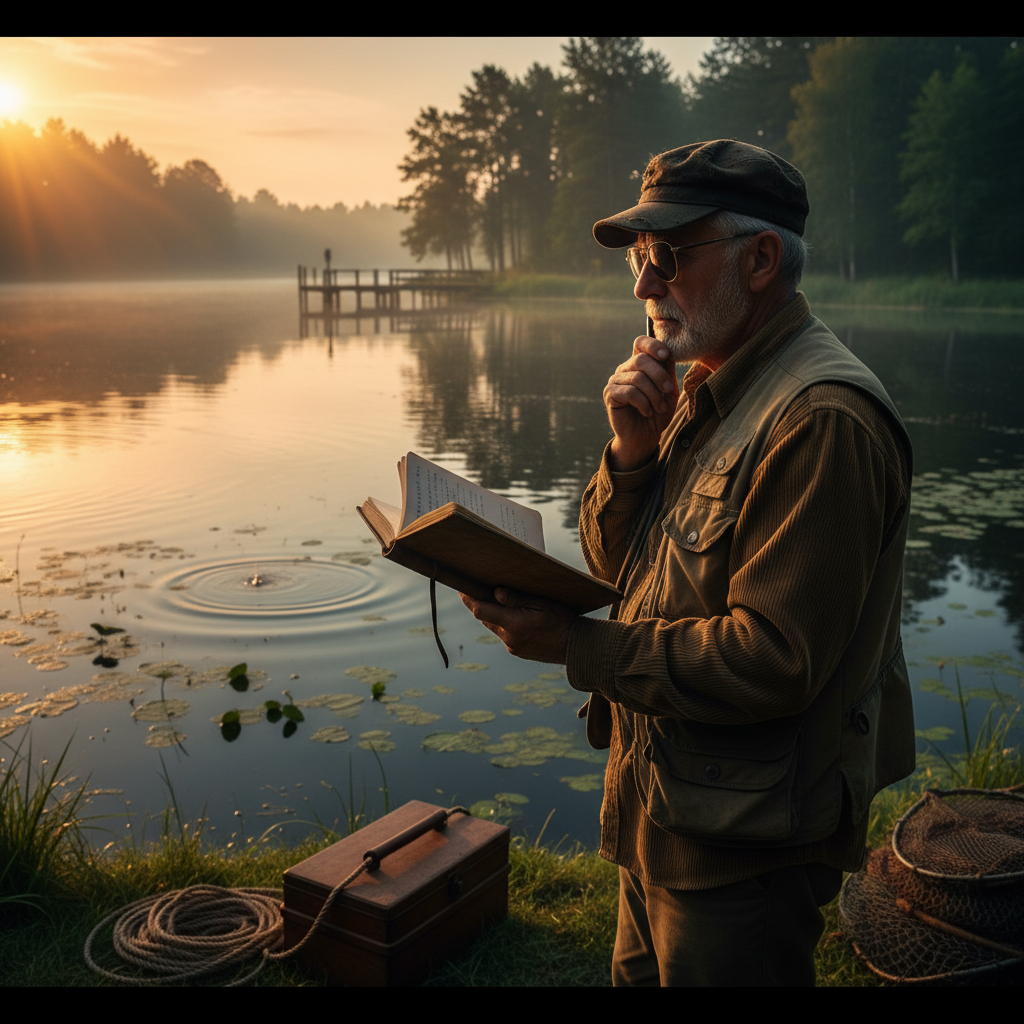
One of the most effective ways to combat frustration is to shift your focus from the outcome (catching a fish) to the process (understanding the environment). Instead of dwelling on the fact that you’re not catching anything, use the time to observe your surroundings. What is the water temperature? Is there any surface activity? What are the prevailing wind conditions? Are there any signs of fish feeding? The more you learn about the ecosystem you’re fishing in, the better equipped you’ll be to adapt your tactics and increase your chances of success.
Imagine you’re fishing a new lake and haven’t had any luck for several hours. Instead of simply casting and retrieving the same lure repeatedly, take a moment to observe the water. Notice that the wind is blowing from the north, creating a slight chop on the surface. This might indicate that the fish are concentrated on the windward side of the lake, where the wind is pushing food and creating a more turbulent environment. Armed with this information, you can move to the windward side and adjust your presentation accordingly.
2. Experimentation and Adaptation: The Key to Unlocking the Bite
Another crucial element in turning frustration into a catch is the willingness to experiment and adapt. If your current tactics aren’t working, don’t be afraid to try something new. Change your lure, adjust your presentation, or try fishing a different area. The more versatile you are, the better your chances of finding what the fish are responding to.
Consider a scenario where you’ve been fishing with a crankbait all morning without any success. Instead of continuing to blindly cast the same lure, try switching to a different type of bait, such as a soft plastic worm or a spinnerbait. You might also try varying your retrieve speed or depth. Perhaps the fish are holding deeper than you initially thought, or maybe they’re more attracted to a slower, more subtle presentation. By experimenting with different options, you can gradually narrow down the possibilities and increase your chances of finding the magic combination that triggers a bite.
Remember, every fishing trip is a learning opportunity. Even when you’re not catching fish, you’re still gathering valuable information about the environment and the behavior of the fish. The key is to remain open-minded, adaptable, and willing to learn from your mistakes.
3. Reframing Failure: Embracing the Learning Curve
Perhaps the most important step in overcoming frustration is to reframe your perception of failure. Instead of viewing a fishless day as a sign of incompetence, see it as an opportunity to learn and grow. Every cast, every retrieve, and every observation provides valuable data that you can use to improve your skills and increase your chances of success in the future.
Think of it like this: each time you try a new tactic and it doesn’t work, you’re effectively eliminating one possibility. You’re narrowing down the range of potential solutions and getting closer to discovering what the fish are actually responding to. This process of trial and error is essential for developing your skills and becoming a more successful angler.
Instead of dwelling on your failures, focus on what you can learn from them. What did you try? What worked? What didn’t work? What could you do differently next time? By asking yourself these questions, you can transform a frustrating experience into a valuable learning opportunity.
The Mental Game: Cultivating Patience and Resilience
Beyond the tactical aspects, overcoming frustration in fishing also requires a strong mental game. Cultivating patience, resilience, and a positive attitude are essential for staying focused and motivated, even when the fish aren’t biting.
1. Setting Realistic Expectations: Avoiding Disappointment
One of the biggest sources of frustration for anglers is unrealistic expectations. We often go into a fishing trip expecting to catch a certain number of fish or a fish of a certain size. When these expectations aren’t met, we’re naturally disappointed. To avoid this, it’s important to set realistic expectations and to focus on the process of fishing rather than the outcome.
Instead of saying, “I’m going to catch five bass today,” try setting a goal like, “I’m going to experiment with three different lures and try fishing two new locations.” This allows you to focus on the things you can control, such as your effort and your attitude, rather than the things you can’t, such as the behavior of the fish.
2. Mindfulness and Presence: Enjoying the Moment
Another powerful tool for managing frustration is mindfulness. By focusing on the present moment and appreciating the beauty of your surroundings, you can reduce your stress and anxiety and stay more centered, even when things aren’t going your way. Take a deep breath, listen to the sounds of nature, and observe the details of your environment. Notice the way the sunlight glints off the water, the patterns of the clouds in the sky, and the movements of the birds and other wildlife. By fully immersing yourself in the present moment, you can find joy and satisfaction in the simple act of fishing, regardless of whether you’re catching anything or not.
3. Positive Self-Talk: Rewiring Your Mindset
The way you talk to yourself can have a profound impact on your attitude and your performance. When you’re feeling frustrated, it’s easy to fall into negative self-talk, telling yourself that you’re a bad fisherman, that you’ll never catch anything, or that you should just give up. To counter this, it’s important to practice positive self-talk, reminding yourself of your strengths, your past successes, and your ability to overcome challenges. Instead of saying, “I’m terrible at this,” try saying, “I’ve caught fish before, and I can do it again. I just need to keep trying and learning.” This simple shift in mindset can make a big difference in your ability to stay positive and motivated.
Case Studies: Anglers Who Turned Frustration into Triumph
Let’s look at a few real-world examples of anglers who successfully navigated their frustration and ultimately turned it into triumph.
Case Study 1: The Bass Pro and the Uncooperative Lake
A professional bass fisherman, let’s call him Mark, was competing in a tournament on a lake known for its finicky bass. For the first two days of the tournament, Mark struggled to catch anything, despite trying a variety of different lures and techniques. He felt the pressure mounting and the frustration threatening to overwhelm him. But instead of giving in to despair, Mark decided to take a step back and reassess his approach. He spent the evening studying maps of the lake, analyzing weather patterns, and reviewing his past experiences. He realized that he had been focusing too much on the areas where the bass were *supposed* to be and not enough on the areas where they *actually* were. On the final day of the tournament, Mark decided to focus on a shallow, weedy area that he had previously overlooked. He used a topwater frog lure and caught several large bass, catapulting him into the top 10 and earning him a significant payout. Mark attributed his success to his ability to overcome his frustration, reassess his strategy, and adapt to the changing conditions.
Case Study 2: The Weekend Warrior and the Stubborn Trout
Sarah, a weekend angler, had been trying to catch trout in a local river for months without any success. She had tried every lure and fly in her tackle box, but the trout seemed completely uninterested. She started to feel discouraged and wondered if she would ever catch a trout. One day, while fishing with a more experienced angler, Sarah noticed that he was using a technique she had never seen before: nymph fishing. He explained to her that nymph fishing involves using small, weighted flies that imitate the aquatic insects that trout feed on. Sarah decided to give it a try, and to her surprise, she immediately started catching trout. She learned that the key to success was to match the hatch, meaning to use flies that closely resemble the insects that the trout are currently feeding on. Sarah’s frustration turned into elation as she finally unlocked the secret to catching trout in her local river.
Long-Term Benefits: Beyond the Catch
The ability to turn frustration into a catch extends far beyond the realm of fishing. The skills and mindset you develop on the water can be applied to all aspects of your life, from your career to your relationships to your personal goals.
1. Enhanced Problem-Solving Skills
Learning to overcome frustration in fishing teaches you how to approach problems with a more analytical and resourceful mindset. You learn to break down complex challenges into smaller, more manageable steps, to identify the root causes of your difficulties, and to develop creative solutions. These problem-solving skills are invaluable in any field, whether you’re trying to troubleshoot a technical issue at work, resolve a conflict with a colleague, or simply figure out how to fix a leaky faucet.
2. Increased Resilience and Adaptability
Facing setbacks and overcoming challenges in fishing builds resilience and adaptability. You learn to bounce back from disappointment, to persevere in the face of adversity, and to adjust your plans when things don’t go according to plan. These qualities are essential for navigating the inevitable ups and downs of life and for achieving your long-term goals. The world is constantly changing, and the ability to adapt to new situations is more important than ever. By learning to embrace change and to view challenges as opportunities, you can thrive in any environment.

3. Deeper Appreciation for Nature
Spending time in nature, even when you’re not catching fish, can have a profound impact on your mental and emotional well-being. Being surrounded by natural beauty can reduce stress, improve your mood, and increase your sense of connection to the world around you. Fishing provides a unique opportunity to immerse yourself in nature and to appreciate the intricate details of the ecosystem. You learn to observe the subtle changes in the weather, the movements of the wildlife, and the rhythms of the natural world. This deeper appreciation for nature can enrich your life in countless ways and inspire you to become a more responsible steward of the environment.
The Ultimate Catch: A Lesson in Life
In the end, the true secret of turning frustration into a catch isn’t just about landing more fish. It’s about cultivating a mindset of resilience, adaptability, and unwavering optimism. It’s about embracing the challenges that life throws your way and using them as opportunities to learn, grow, and become a better version of yourself. It’s about recognizing that the journey is just as important as the destination and that the real reward lies not in the prize you win, but in the person you become along the way.
So, the next time you find yourself feeling frustrated on the water, remember this: frustration is not a roadblock, but a stepping stone. Embrace the challenge, adapt your approach, and never give up on your quest for the ultimate catch – a catch that represents not just a fish in the net, but a victory over yourself and a deeper understanding of the world around you. And remember, sometimes the greatest catches are the lessons learned and the resilience built during the times when the fish aren’t biting.

Ultimately, the secret that turns frustration into a catch is the understanding that fishing, like life, is a constant process of learning, adapting, and persevering. It’s about embracing the challenges, celebrating the small victories, and never losing sight of the joy and wonder that can be found in the simple act of connecting with nature.