Unlocking the Bait’s True Potential: It’s All About the Presentation
We’ve all been there. Standing on the bank, armed with what we believe is the perfect bait, only to be met with frustrating silence. Hours can tick by without even a nibble, leaving us questioning everything from our choice of lure to our very existence as anglers. The truth is, often the problem isn’t the bait itself, but rather how we’re presenting it to the fish. Think of it like this: a Michelin-star chef can create a masterpiece from simple ingredients, but even the finest caviar can be ruined by poor preparation and presentation. The same principle applies to fishing.
This article isn’t about selling you the latest miracle lure. Instead, we’ll delve into the subtle art of bait presentation, focusing on the simple adjustments that can transform an ordinary bait into an irresistible temptation. We’ll explore the key elements that attract fish, the nuances of different fishing techniques, and the small tweaks that can make all the difference between a frustrating day and a triumphant one. Are you ready to unlock your bait’s true potential?
The Sensory World of the Fish: Understanding What Attracts
To truly master bait presentation, we need to understand how fish perceive their environment. Unlike us, they rely heavily on senses beyond sight. Consider these key sensory inputs:
- Sight: While fish can see, their vision is often limited by water clarity and depth. They are particularly sensitive to movement and contrast. Brightly colored lures or those that create a lot of flash can be highly effective, especially in murky water.
- Smell: Fish have an incredibly acute sense of smell. They use it to locate food, identify predators, and even navigate. This is why scented baits and attractants can be so potent.
- Vibration: Fish possess a lateral line system, a series of sensory receptors along their sides that detect vibrations in the water. This allows them to “feel” the presence of prey, even in complete darkness. Lures that create vibration, such as crankbaits or spinnerbaits, can trigger aggressive strikes.
- Taste: Once a fish takes a bait in its mouth, taste comes into play. Baits that have a natural or appealing flavor are more likely to be held onto, giving you more time to set the hook.
By understanding these sensory preferences, we can tailor our bait presentation to maximize its appeal. For example, if fishing in clear water, a subtle, natural-looking presentation might be more effective than a flashy, aggressive one. Conversely, in murky water, a brightly colored lure with a strong vibration could be the key to getting noticed.
The Art of the Retrieve: Bringing Your Bait to Life
The retrieve is arguably the most critical aspect of bait presentation. It’s the action you impart to the lure that makes it mimic a living creature, triggering the predatory instincts of the fish. There’s no single “right” retrieve; it depends on the type of bait, the species you’re targeting, and the prevailing conditions. However, here are some fundamental techniques to master:
Straight Retrieve: Simple, But Effective
The straight retrieve is the most basic technique, involving simply winding the lure back at a steady pace. While seemingly simple, it can be surprisingly effective, especially with lures that have built-in action, such as crankbaits or spinnerbaits. The key is to vary the speed of the retrieve to find what the fish are responding to. Sometimes a slow, deliberate retrieve is best, while at other times a fast, erratic retrieve will trigger more strikes. Experimentation is crucial.
Consider this scenario: you’re fishing a shallow lake for bass with a lipless crankbait. You start with a medium-speed retrieve, but after several casts, you don’t get any action. Try speeding up the retrieve, causing the lure to vibrate more aggressively. If that doesn’t work, slow it down, allowing the lure to sink slightly deeper and wobble enticingly. Small adjustments can make a big difference.
Stop-and-Go Retrieve: Mimicking Injured Prey
The stop-and-go retrieve involves alternating between periods of reeling and pausing, creating an erratic, unpredictable action that mimics injured prey. This technique is particularly effective with lures like jerkbaits and soft plastics. The pause allows the lure to suspend in the water, giving the fish time to hone in on it. When you resume the retrieve, the sudden movement can trigger a reaction strike.
Imagine you’re fishing for walleye in a river with a soft plastic swimbait. You cast upstream and allow the lure to sink to the desired depth. As you begin the retrieve, you incorporate pauses of varying lengths. Sometimes you let the lure sit for a second or two, other times for five or six seconds. This unpredictable action can be irresistible to walleye lurking in the current.
Twitching and Jerking: Creating Aggressive Action
Twitching and jerking techniques involve using the rod tip to impart sharp, erratic movements to the lure. This is particularly effective with topwater lures and jerkbaits, creating a lifelike action that mimics a fleeing or injured baitfish. The key is to use short, sharp twitches or jerks, followed by pauses, allowing the lure to dart and dance in the water. This technique requires practice and finesse, but the results can be spectacular.
Picture this: you’re fishing for largemouth bass on a lily pad field with a topwater frog. You cast the frog onto the pads and let it sit for a moment. Then, you use short, sharp twitches of the rod tip to make the frog “walk” across the pads, creating a disturbance that attracts the attention of lurking bass. The sudden, erratic movement can trigger explosive strikes.
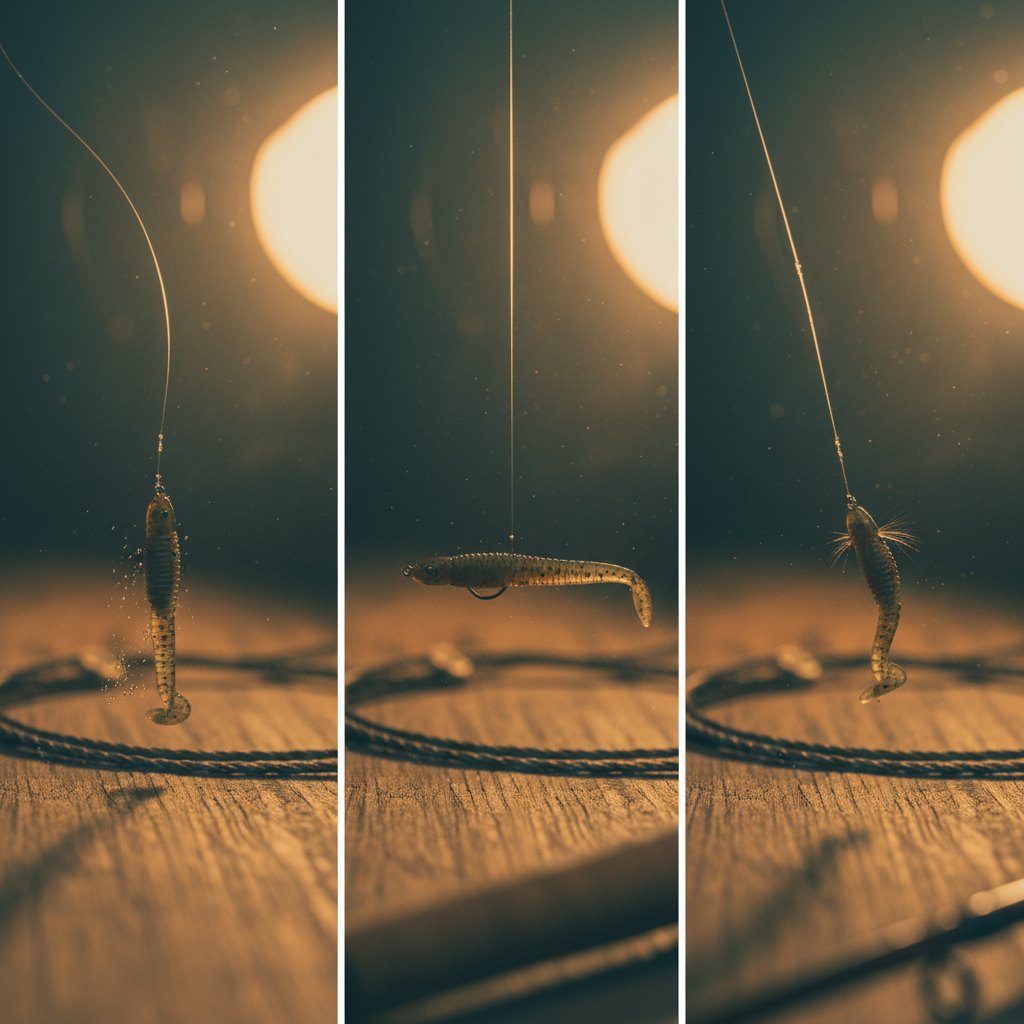
The Importance of Depth Control: Fishing the Right Zone
Knowing the depth at which fish are holding is crucial for effective bait presentation. Fish often congregate at specific depths based on factors like water temperature, light penetration, and food availability. If you’re fishing too shallow or too deep, you’re simply not putting your bait in front of the fish.
Using Weight to Control Depth
The weight of your lure or the addition of weights to your line is the primary means of controlling depth. Heavier lures sink faster and allow you to fish deeper. Lighter lures are ideal for shallow water or when you want the lure to suspend in the water column. Experiment with different weights to find the optimal presentation for the conditions.
For example, if you’re fishing for trout in a deep pool, you might use a heavy spoon or spinner to get your bait down to the bottom where the trout are likely holding. Conversely, if you’re fishing for panfish in a shallow weedy area, you might use a small, lightweight jig that will stay near the surface.
Counting Down: A Simple Technique for Determining Depth
The “count down” method is a simple but effective way to determine the depth your lure is reaching. After casting, allow the lure to sink and count the seconds until it hits the bottom. Repeat this process several times to get an average sink rate. Then, you can adjust your retrieve to keep the lure at the desired depth by counting down for a specific number of seconds before starting your retrieve. This technique is particularly useful when fishing with soft plastics or lures that don’t have a built-in diving depth.
Let’s say you’re fishing for crappie around submerged timber. You cast your jig and count down until it hits the bottom. You find that it takes about five seconds to reach the bottom. If you suspect the crappie are suspended halfway down, you can count down for two or three seconds before starting your retrieve.
Using Diving Lures: Reaching Specific Depths
Diving lures, such as crankbaits, are designed to reach specific depths based on their lip size and shape. The larger the lip, the deeper the lure will dive. These lures are ideal for targeting fish holding at known depths. Consult the lure’s packaging or manufacturer’s specifications to determine its diving depth at different retrieve speeds.
Imagine you’re fishing a lake with a well-defined thermocline at 15 feet. You know that the bass are likely holding just above the thermocline. You can select a crankbait that dives to 12-14 feet and use a steady retrieve to keep the lure in the strike zone.
Matching the Hatch: Offering What the Fish Want
Matching the hatch refers to the practice of using baits that closely resemble the natural food sources that fish are currently feeding on. This can be particularly important in clear water or when fishing for finicky species. Pay attention to the size, shape, and color of the insects, crustaceans, or baitfish that are prevalent in the area and choose your baits accordingly.
Observing the Environment: Clues to What Fish Are Eating
Take some time to observe the environment before you start fishing. Look for signs of insect activity, such as mayfly hatches or caddisfly swarms. Check the shallows for baitfish. Examine the stomach contents of any fish you catch (if you’re keeping them) to get a better idea of what they’re eating. These observations will provide valuable clues for selecting the right bait.
For instance, if you notice a mayfly hatch in progress, you might switch to a small nymph or dry fly that imitates the mayflies. If you see schools of minnows near the surface, you might try a small crankbait or spinnerbait that resembles the minnows.
Considering Seasonal Changes: Adjusting Your Approach
The food sources available to fish change throughout the year. In the spring, fish may be focused on spawning baitfish. In the summer, they may be feeding on insects and crustaceans. In the fall, they may be gorging themselves on baitfish to prepare for winter. Adjust your bait selection and presentation to match the seasonal changes in the food supply.
For example, in the spring, you might use a swimbait or jerkbait that imitates spawning shad. In the fall, you might use a crankbait or spinnerbait that mimics migrating baitfish.

The Subtle Art of Hook Setting: Ensuring a Solid Connection
Even with the perfect bait and presentation, you won’t catch many fish if you can’t set the hook properly. Hook setting is the act of driving the hook point into the fish’s mouth, ensuring a solid connection. The technique you use will depend on the type of hook, the type of bait, and the species you’re targeting.
Understanding Hook Types: Matching the Hook to the Bait
Different types of hooks are designed for different types of baits and fishing techniques. Circle hooks, for example, are designed to hook the fish in the corner of the mouth as the line is tightened. They are commonly used with live bait and require a different hook-setting technique than traditional J-hooks.
Treble hooks are often used on crankbaits and other hard lures. They provide multiple points of contact, increasing the chances of hooking the fish. However, they can also be more difficult to remove and can cause more damage to the fish.
The Sweep Set vs. the Jerk Set: Choosing the Right Technique
The sweep set involves slowly sweeping the rod to the side as you reel in the slack line. This technique is often used with circle hooks or when fishing with live bait. The jerk set involves a quick, sharp upward jerk of the rod tip. This technique is typically used with J-hooks and when fishing with lures.
When using a circle hook, avoid the urge to jerk the rod. Instead, simply reel in the slack line as the fish runs with the bait. The hook will set itself in the corner of the mouth. When using a J-hook, a quick, sharp jerk of the rod tip is necessary to drive the hook point into the fish’s mouth.
Maintaining a Tight Line: Preventing Lost Fish
Once you’ve set the hook, it’s crucial to maintain a tight line to prevent the fish from throwing the hook. Keep constant pressure on the line and avoid allowing any slack. If the fish jumps, lower your rod tip to absorb the shock and prevent the line from breaking.
Remember the feeling of that first tug, the adrenaline rush as you set the hook, and the satisfaction of landing a fish that was truly earned. These moments are what make fishing so rewarding.
Adaptability and Experimentation: The Keys to Consistent Success
The most important thing to remember about bait presentation is that there are no hard and fast rules. What works one day may not work the next. Fish are constantly adapting to changing conditions, and so must you. Be willing to experiment with different baits, retrieves, and techniques until you find what works best in a given situation.
Paying Attention to the Details: Small Tweaks, Big Results
Sometimes the smallest adjustments can make the biggest difference. Try changing the size or color of your bait, adjusting the speed of your retrieve, or adding a scent attractant. Pay attention to what the fish are responding to and make adjustments accordingly.
Consider this example: you’re fishing for trout with a small spinner. You’re getting some follows, but the fish aren’t committing to the strike. Try downsizing to a smaller spinner, or changing to a different color. Sometimes a subtle change is all it takes to trigger a strike.
Keeping a Fishing Log: Learning from Your Experiences
One of the best ways to improve your bait presentation skills is to keep a fishing log. Record the date, time, location, weather conditions, water clarity, bait used, retrieve technique, and any other relevant information. Over time, you’ll begin to see patterns and trends that will help you become a more consistent angler.
Your fishing log can become a valuable resource, providing insights into what works best in different situations. It can also serve as a reminder of past successes and failures, helping you avoid repeating mistakes.

Never Stop Learning: Embracing the Journey
Fishing is a lifelong learning process. There’s always something new to discover, a new technique to master, or a new species to target. Embrace the journey and never stop learning. Read books and articles, watch videos, talk to other anglers, and most importantly, spend time on the water. The more you learn, the more successful you’ll become.
Think of each fishing trip as an opportunity to learn and grow. Even on days when you don’t catch any fish, you can still gain valuable experience by observing the environment, experimenting with different techniques, and reflecting on your mistakes. The key is to approach each trip with an open mind and a willingness to learn.
Mastering bait presentation is a journey, not a destination. It’s about understanding the nuances of fish behavior, the intricacies of different fishing techniques, and the subtle art of presentation. It requires patience, persistence, and a willingness to experiment. But the rewards are well worth the effort. The satisfaction of fooling a fish with a perfectly presented bait is a feeling that every angler cherishes. It’s a testament to your skill, your knowledge, and your connection to the natural world.
So, the next time you’re standing on the bank, armed with your favorite bait, remember that it’s not just about casting and reeling. It’s about understanding the sensory world of the fish, mastering the art of the retrieve, controlling your depth, matching the hatch, setting the hook properly, and adapting to changing conditions. It’s about unlocking your bait’s true potential and transforming an ordinary day into an extraordinary one.

The simple adjustment that turns any bait into an effective one isn’t a magic trick or a secret formula. It’s a mindset. It’s the commitment to understanding the fish, the environment, and the art of presentation. It’s the willingness to experiment, adapt, and never stop learning. It’s the passion that drives us to become better anglers, more connected to nature, and more appreciative of the incredible world beneath the surface.