Understanding the Dance Between Wind, Current, and Fish
Fishing isn’t just about casting a line and hoping for the best. It’s a complex interaction with the natural world, a dance between angler, environment, and the elusive prey. Among the most powerful forces that shape this interaction are wind and current. Mastering the art of using these elements to your advantage can transform you from a casual fisherman into a true master of the sport.
Consider this: Have you ever noticed how certain spots consistently yield better catches? It’s rarely a matter of pure luck. More often than not, these hotspots are locations where wind and current converge in ways that benefit fish. They create zones of concentrated food, provide cover, and influence the overall behavior of the fish you’re trying to catch. To truly understand this, we need to delve deeper than just surface-level observations. We need to understand the underlying physics and biology that govern this aquatic ballet.
The Fundamental Forces at Play
Wind and current are intertwined, but they operate in different ways. Wind, blowing across the surface of the water, creates waves and surface currents. These currents can be localized and relatively shallow, but they can have a significant impact on the distribution of plankton, small baitfish, and even larger predators. Think of it like this: the wind is the conductor of an orchestra, setting the tempo and direction for the entire aquatic ecosystem.
Currents, on the other hand, are often driven by larger forces, such as tides, temperature differences, and the Earth’s rotation. These currents can be deep and powerful, influencing the movement of water masses over vast distances. They create upwellings that bring nutrient-rich water from the depths to the surface, fueling the food chain and attracting fish. They also carve out channels, create eddies, and shape the underwater landscape, providing diverse habitats for a wide range of species.
Understanding the relationship between these two forces is crucial. Wind can amplify or counteract the effects of existing currents, creating complex flow patterns that require careful observation and interpretation. For instance, a strong wind blowing against the current can create turbulent conditions that disorient baitfish and make it easier for predators to ambush them. Conversely, a wind blowing in the same direction as the current can create a smooth, consistent flow that allows fish to conserve energy and feed efficiently.
Harnessing the Wind: A Tactical Guide
The wind, often perceived as an obstacle, can be a powerful ally if understood and utilized correctly. It can influence your casting distance, drift speed, and even the presentation of your bait or lure. But how do you transform this seemingly unpredictable force into a valuable asset?
Casting with the Wind: Mastering the Art of Distance and Accuracy
Casting into the wind is a common challenge for anglers. The wind can catch your line, reduce your casting distance, and affect the accuracy of your casts. However, there are techniques you can employ to minimize these effects.
First, consider your casting angle. Casting slightly across or even into the wind can help you maintain control of your line and prevent it from being blown off course. Short, powerful casts are often more effective than long, sweeping casts in windy conditions. Use your body weight to generate power, and focus on maintaining a tight line throughout the cast.
Second, choose your equipment wisely. Heavier lures and lines are less susceptible to the effects of wind. Consider using a heavier sinker or a lure with a more aerodynamic profile. Braided lines, with their low stretch and high sensitivity, can also help you maintain better contact with your lure in windy conditions.
Finally, practice your technique. Spend time practicing your casting in different wind conditions. Experiment with different casting angles and power levels. The more comfortable you are casting in the wind, the more effectively you’ll be able to use it to your advantage.
Drifting with the Wind: Positioning for Success
Drifting with the wind can be an incredibly effective way to cover a large area of water and locate fish. However, it requires careful planning and execution. The key is to position your boat or kayak so that you drift through productive areas, such as weed beds, drop-offs, or rocky structures.
Before you start drifting, take some time to observe the wind direction and speed. Use a landmark or a GPS device to track your drift path. Identify any potential hazards, such as shallow areas or submerged obstacles.
Once you’re ready to start drifting, use your trolling motor or oars to maintain your position and adjust your drift speed. Experiment with different lure presentations to see what the fish are responding to. Pay close attention to your sonar or fish finder to identify areas where fish are concentrated.
Remember, drifting is not a passive activity. You need to be constantly adjusting your position and presentation to maximize your chances of success. Be prepared to change your tactics as the wind and current change.
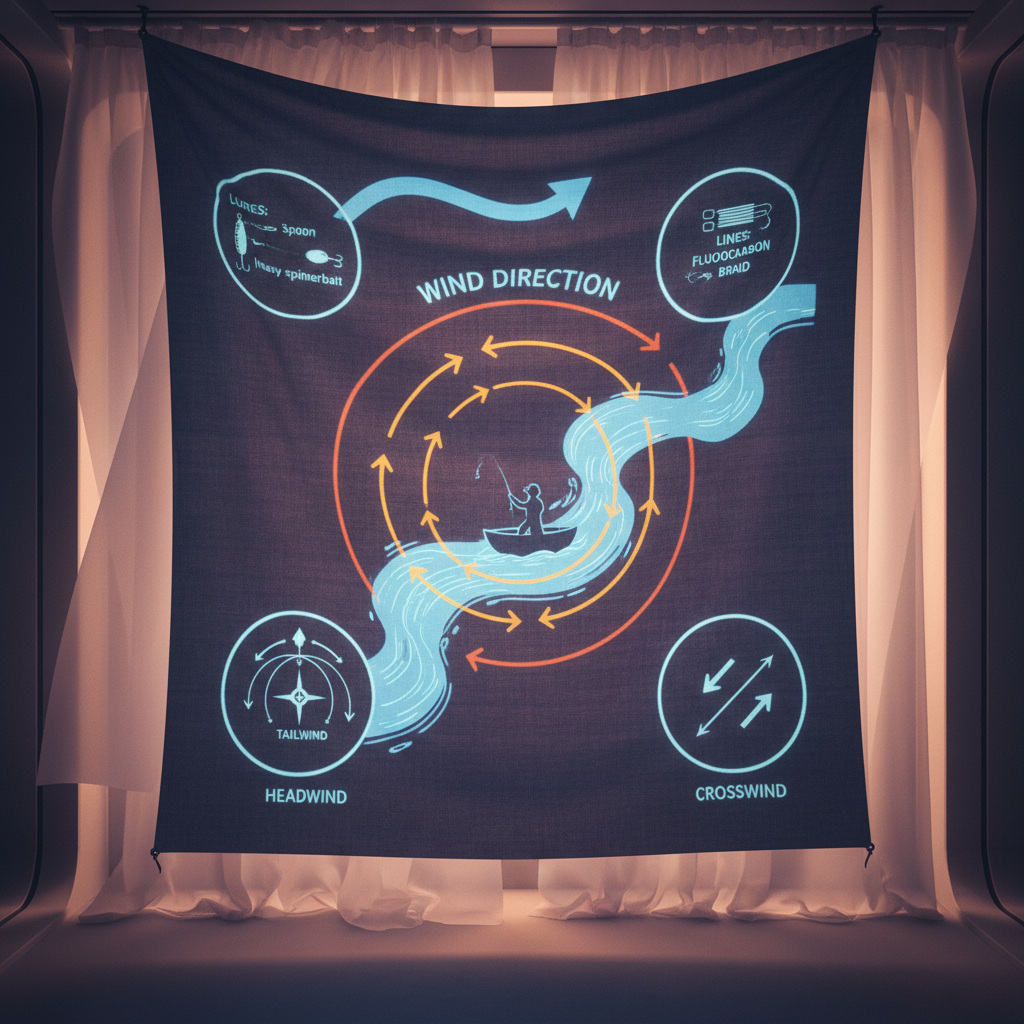
Navigating the Current: Unlocking Underwater Secrets
Currents are the highways of the underwater world, influencing everything from the distribution of nutrients to the migration patterns of fish. Understanding how currents work and how to fish them effectively is essential for any serious angler.
Identifying Key Current Zones: Where Fish Congregate
Currents create a variety of distinct zones that attract fish. Understanding these zones is crucial for targeting your efforts effectively.
* **Current Seams:** These are the boundaries between fast-moving and slow-moving water. They create eddies and slack water areas where fish can rest and ambush prey. Look for current seams along the edges of channels, around points of land, or near submerged structures.
* **Upwellings:** These are areas where deep, nutrient-rich water rises to the surface. They create localized blooms of plankton that attract baitfish and larger predators. Look for upwellings in areas with strong currents or near underwater cliffs.
* **Eddies:** These are circular currents that form behind obstructions, such as rocks or bridge pilings. They provide refuge for fish and concentrate food. Fish often hold in eddies to conserve energy and wait for prey to drift by.
* **Converging Currents:** When two or more currents meet, they create areas of concentrated food and increased turbulence. These areas can be highly productive, attracting a wide variety of fish species.
Presenting Your Lure in the Current: Matching the Flow
Presenting your lure or bait effectively in the current requires a different approach than fishing in still water. The key is to match the speed and direction of your presentation to the natural flow of the current.
* **Dead Drifting:** This technique involves allowing your lure or bait to drift naturally with the current. It’s particularly effective for targeting fish that are holding in eddies or along current seams. Use a light weight or no weight at all to allow your lure to drift freely.
* **Swinging:** This technique involves casting your lure upstream and allowing it to swing across the current. It’s effective for covering a large area of water and targeting fish that are actively feeding. Use a heavier weight to keep your lure near the bottom.
* **Vertical Jigging:** This technique involves dropping your lure vertically into the current and jigging it up and down. It’s effective for targeting fish that are holding near the bottom in deep water. Use a heavy jig to maintain contact with the bottom.
No matter which technique you choose, be sure to pay close attention to the speed and direction of the current. Adjust your presentation accordingly to ensure that your lure is moving naturally and attracting fish.

Combining Wind and Current: The Master Angler’s Secret
The true mastery of fishing comes from understanding how wind and current interact and using that knowledge to your advantage. It’s about seeing the big picture and recognizing how these forces shape the underwater environment and influence the behavior of fish.
Case Study: Fishing a Tidal River
Let’s consider a case study of fishing a tidal river. Tidal rivers are dynamic environments where the wind and current constantly change. To be successful in this environment, you need to understand how the tides affect the current, and how the wind interacts with the current to create different fishing conditions.
During high tide, the current will typically be flowing upstream, pushing saltwater into the river. This can create opportunities to target saltwater species that venture into the river in search of food. The wind can either amplify or counteract the effects of the tide, depending on its direction. A wind blowing upstream will increase the current, while a wind blowing downstream will decrease it.
During low tide, the current will typically be flowing downstream, pulling freshwater out of the river. This can create opportunities to target freshwater species that are forced to move downstream as the water level drops. The wind can again play a significant role, influencing the speed and direction of the current.
The most productive fishing times in a tidal river are often during the transition periods between high and low tide. These are the times when the current is changing direction, creating eddies, current seams, and other features that attract fish. By understanding how the wind and current interact during these transition periods, you can position yourself in the right place at the right time to maximize your chances of success.
The Art of Observation: Reading the Water
The ability to “read the water” is a crucial skill for any angler who wants to master the art of using wind and current to their advantage. It involves observing the surface of the water for clues about what’s happening beneath the surface.
Look for signs of current seams, eddies, and upwellings. Pay attention to the way the wind is affecting the surface of the water. Look for areas where the water is choppy or turbulent, indicating strong currents or wind.
Also, observe the behavior of other creatures. Are there birds diving into the water? Are there baitfish schooling near the surface? These are all signs that fish are likely to be present.
Advanced Techniques: Beyond the Basics
Once you have a solid understanding of the fundamentals, you can start to experiment with more advanced techniques that combine wind and current in creative ways.
Using the Wind to Steer Your Bait: The “Kite Fishing” Technique
Kite fishing is a specialized technique that uses the wind to suspend a bait or lure above the water’s surface. This allows you to target fish that are feeding on the surface, such as tuna, marlin, and sailfish.
The technique involves using a kite to lift your line and bait into the air. The wind then carries the kite and bait away from the boat, allowing you to cover a large area of water. When a fish strikes, the line is released from the kite, and you can fight the fish in the normal way.
Kite fishing requires specialized equipment and a good understanding of wind conditions. However, it can be an incredibly effective technique for targeting certain species of fish.
Current Manipulation: Creating Artificial Hotspots
In some situations, you can actually manipulate the current to create artificial hotspots. This can be done by using underwater structures, such as rocks or logs, to deflect the current and create eddies or current seams.
For example, if you’re fishing in a river with a strong current, you can place a large rock in the water to create an eddy behind it. Fish will often hold in the eddy to conserve energy and wait for prey to drift by. You can then target these fish by casting your lure or bait into the eddy.
This technique requires careful planning and execution. You need to be sure that the structure you’re using is stable and won’t be washed away by the current. You also need to be aware of any potential hazards, such as submerged obstacles.
The Ethical Angler: Respecting the Elements
As you become more skilled at using wind and current to your advantage, it’s important to remember to fish ethically and responsibly. This means respecting the environment, following all fishing regulations, and practicing catch-and-release whenever possible.
Avoid disturbing sensitive habitats, such as spawning beds or seagrass beds. Be careful not to pollute the water with litter or chemicals. And always be mindful of the impact your fishing activities are having on the fish population.
By fishing ethically and responsibly, you can help ensure that future generations will be able to enjoy the sport of fishing for years to come.
In conclusion, mastering the art of using wind and current to your advantage is a lifelong pursuit. It requires a combination of knowledge, skill, and experience. But the rewards are well worth the effort. By understanding how these forces shape the underwater environment and influence the behavior of fish, you can transform yourself from a casual fisherman into a true master of the sport. Remember to observe, adapt, and respect the elements, and you’ll be well on your way to unlocking the secrets of the aquatic world. Embrace the challenge, and enjoy the journey!