The Unspoken Language of Fish: Beyond the Bite
We often think of fishing as a game of patience, of waiting for that telltale tug on the line. But what if I told you that the truly skilled angler isn’t just reacting to a bite, but anticipating it? What if you could learn to read the subtle signs, the unspoken language of fish, and know exactly when and where to cast your line for maximum success? This isn’t about luck; it’s about understanding.
Most anglers focus solely on the obvious – the sudden strike, the bent rod. They react. But the real masters of the sport are proactive. They’re constantly gathering information, piecing together a puzzle that reveals the hidden activity beneath the surface. They understand that fish are constantly communicating, not with words, but with movements, patterns, and subtle shifts in behavior. Learning to decipher these signals is the key to unlocking a whole new level of fishing success.
Think of it like learning a foreign language. At first, it seems like a jumble of incomprehensible sounds. But with practice and dedication, you begin to recognize patterns, to understand the nuances of pronunciation and grammar. Eventually, you can hold a conversation, express your thoughts, and understand the thoughts of others. The language of fish is no different. It requires observation, patience, and a willingness to learn. Are you ready to listen?
Understanding the Aquatic Environment: The Foundation of Fish Communication
Before we can begin to decode the specific signals fish use, we need to understand the environment in which they live. The aquatic world is a complex tapestry of interwoven factors that influence fish behavior. Water temperature, current, light penetration, oxygen levels, and the presence of food sources all play a crucial role.
For example, water temperature directly affects a fish’s metabolism. In colder water, fish become sluggish and less active, requiring less food. In warmer water, their metabolism speeds up, increasing their need for sustenance. Understanding this basic principle can help you choose the right bait and fishing location. A fast-moving lure might be effective in warm water, but a slow, deliberate presentation might be more appropriate in colder conditions.
Current also plays a significant role. Fish often congregate in areas with moderate current, where food is readily available. These areas provide a constant supply of insects, crustaceans, and other organisms that fish feed on. Conversely, fish may seek refuge in slack water areas to conserve energy, especially during periods of strong currents. Learning to identify these areas can dramatically increase your chances of success.
Light penetration influences fish behavior in several ways. In clear water, fish may be more cautious and selective in their feeding habits, as they are more vulnerable to predators. In murky water, they may rely more on their sense of smell and vibration to locate food. Understanding the water clarity can help you choose the right lure color and presentation. Brighter colors may be more effective in murky water, while natural colors may be more appropriate in clear water.
Oxygen levels are also crucial for fish survival. Fish require oxygen to breathe, just like humans. Areas with low oxygen levels, such as stagnant ponds or heavily polluted waters, may not be able to support fish populations. Conversely, areas with high oxygen levels, such as riffles and waterfalls, are often teeming with life. Paying attention to these environmental factors is essential for understanding where fish are likely to be found.
Finally, the presence of food sources is a major driver of fish behavior. Fish are constantly searching for food, and they will often congregate in areas where food is abundant. This could be a weed bed teeming with insects, a rocky bottom crawling with crustaceans, or a school of baitfish swimming near the surface. Learning to identify these food sources is a key step in decoding the language of fish.
Deciphering Visual Cues: What Your Eyes Can Tell You
One of the most important tools you have as an angler is your eyesight. By carefully observing the water and the surrounding environment, you can gather a wealth of information about fish behavior. Look beyond the obvious ripples and splashes; pay attention to the subtle nuances that can reveal the presence and activity of fish.
Surface Disturbances: These can range from subtle dimples to violent splashes. A gentle dimple on the surface often indicates a fish feeding on small insects, such as mayflies or midges. A larger splash may indicate a fish chasing baitfish or attacking a larger insect, such as a dragonfly. By observing the size and frequency of these disturbances, you can get a sense of the type of fish present and their feeding habits.
Shadows and Cover: Fish often seek refuge in areas that provide shade and cover. This could be under docks, overhanging trees, or submerged vegetation. These areas offer protection from predators and provide a comfortable environment for ambush predation. Pay close attention to these areas, as they are often prime locations for finding fish.
Water Clarity: As mentioned earlier, water clarity can significantly impact fish behavior. In clear water, fish may be more skittish and selective in their feeding habits. In murky water, they may be more aggressive and less discriminating. Adjust your tactics accordingly. For instance, in clear water, using longer leaders and smaller lures could lead to more success, while larger, brightly colored lures might work better in murky water.
Reading the Water: Identifying Key Features
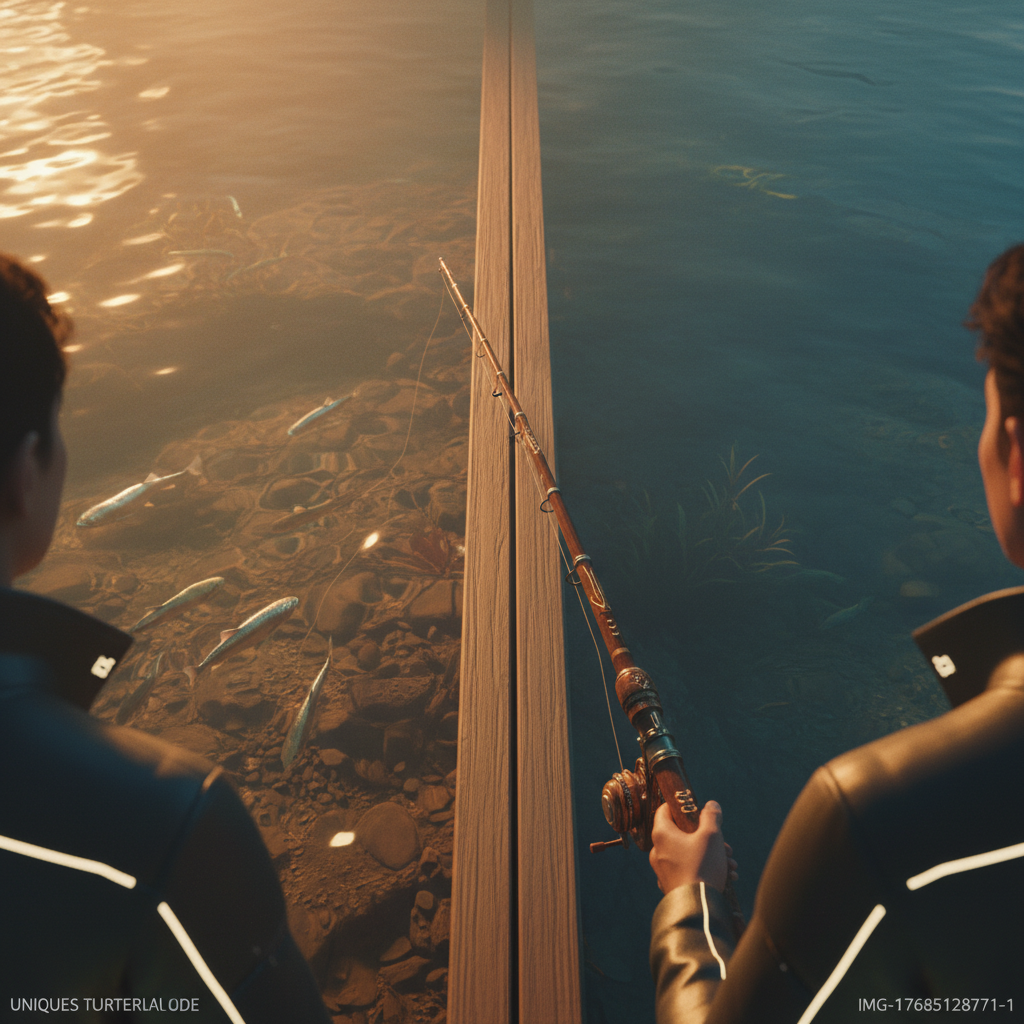
Learning to “read the water” is a crucial skill for any angler. It involves identifying key features that are likely to hold fish. These features can be natural or man-made, and they can vary depending on the type of water you are fishing.
Structure: This refers to any object that disrupts the flow of water or provides cover for fish. This could be a fallen tree, a submerged rock pile, or a bridge piling. Structure provides a refuge for fish and attracts baitfish, making it a prime location for ambush predation. When fishing structure, be sure to vary your presentation to determine what the fish are responding to. Try different lure depths, retrieves, and colors to find the most effective combination.
Drop-offs: These are sudden changes in depth that can concentrate fish. Drop-offs provide a transition zone between shallow and deep water, offering fish access to both feeding and resting areas. Fish often patrol drop-offs, searching for prey that wanders too close to the edge. When fishing drop-offs, try using lures that can be worked at different depths, such as crankbaits or jigs.
Weed Beds: These are areas of dense vegetation that provide cover and food for fish. Weed beds are particularly attractive to fish during the warmer months, as they offer shade and oxygen. Fish often hide within the weed beds, ambushing prey that swims by. When fishing weed beds, try using weedless lures or topwater baits that can be worked over the top of the vegetation.
Current Seams: These are areas where two different currents meet. Current seams can concentrate food and attract fish. The slower-moving water provides a resting area for fish, while the faster-moving water brings in a constant supply of food. When fishing current seams, try casting your lure into the faster-moving water and allowing it to drift into the slower-moving water. This will mimic the natural movement of prey and increase your chances of getting a strike.
Listening to the Underwater World: Sounds and Vibrations
While visual cues are important, fish also rely heavily on their sense of hearing and vibration to navigate and hunt. Fish have a lateral line system, which is a series of sensory receptors that run along the sides of their bodies. This system allows them to detect even the slightest vibrations in the water, giving them a sense of their surroundings that is far more acute than our own. Understanding how fish use this system can give you a significant advantage.
The Lateral Line: A Fish’s Sixth Sense
The lateral line allows fish to detect the movement of prey, the presence of predators, and even the flow of water. It’s like having a sixth sense that allows them to “see” the world around them in a completely different way. By paying attention to the types of lures and techniques that generate vibrations, you can effectively trigger a fish’s predatory instincts.
For example, lures with rattles or internal ball bearings create vibrations that can attract fish from a distance. These lures are particularly effective in murky water, where visibility is limited. Crankbaits, spinnerbaits, and jigs also generate vibrations as they move through the water. The type of vibration produced by a lure can vary depending on its shape, size, and retrieve speed. Experiment with different lures and retrieves to find what works best in different situations.
In addition to artificial lures, natural baits also produce vibrations. Live bait, such as worms, minnows, and crickets, emit vibrations that attract fish. These vibrations are often more subtle than those produced by artificial lures, but they can be just as effective, especially when fishing in clear water or for wary fish. Remember, the key is to think about how your lure or bait is interacting with the water and what kind of signals it is sending to the fish.
The Sound of Silence: Knowing When to Be Quiet
While vibrations can be a powerful attractant, there are also times when it’s important to be quiet. Excessive noise can spook fish and drive them away. This is particularly true in shallow water or in areas with heavy fishing pressure.
Try to minimize any unnecessary noise while you are fishing. Avoid slamming your boat hatches, dropping your tackle box, or talking loudly. Move slowly and deliberately, and try to blend in with your surroundings. Use stealthy techniques, such as wading or using a trolling motor, to approach your fishing spot without alerting the fish. If you are fishing from a boat, consider using an anchor to hold your position instead of constantly adjusting your motor.
Remember, fish are highly sensitive to their environment. They can detect even the slightest disturbances in the water. By being mindful of your noise levels, you can increase your chances of catching fish and avoid spooking them away.
Case Studies: Real-World Examples of Decoding Fish Signals
Theory is important, but nothing beats practical experience. Let’s examine a few case studies that illustrate how decoding fish signals can lead to success.
Case Study 1: The Selective Trout
An angler was fishing a clear, slow-moving stream known for its selective trout. He had been fishing for hours without a single bite. He noticed that the trout were rising to the surface, but they were ignoring his dry flies. He examined the insects that were hatching and realized that they were small, pale mayflies. He switched to a smaller fly that matched the size and color of the mayflies, and immediately started catching fish. This example demonstrates the importance of observing the insects that are hatching and matching your fly accordingly.
Case Study 2: The Deep-Water Bass
An angler was fishing a deep, clear lake for bass. He had been fishing with crankbaits and spinnerbaits without much success. He noticed that the bass were congregated around a submerged rock pile. He switched to a jig and slowly hopped it along the bottom, around the rock pile. He immediately started catching bass. This example demonstrates the importance of identifying structure and fishing it effectively.
Case Study 3: The Murky Water Pike
An angler was fishing a murky, weedy lake for pike. He had been fishing with spinnerbaits and crankbaits without any luck. He noticed that the pike were ambushing prey from within the weed beds. He switched to a weedless spoon and cast it into the weed beds. He allowed the spoon to sink to the bottom and then retrieved it with a slow, steady retrieve. He immediately started catching pike. This example demonstrates the importance of adapting your tactics to the water conditions and the fish’s behavior.

Putting It All Together: Developing Your Fish-Reading Skills
Decoding fish signals is a skill that takes time and practice to develop. It’s not something that you can learn overnight. But by being observant, patient, and persistent, you can gradually improve your ability to read the water and understand the behavior of fish.
Practice Active Observation: Pay attention to everything around you, from the water temperature and clarity to the weather conditions and the presence of insects. The more information you gather, the better equipped you will be to make informed decisions about your fishing tactics.
Experiment with Different Techniques: Don’t be afraid to try new things. Experiment with different lures, baits, and retrieves to see what works best in different situations. Keep a fishing journal to track your successes and failures. This will help you identify patterns and learn from your mistakes.
Learn from Experienced Anglers: Talk to other anglers and learn from their experiences. Ask them about their favorite techniques and their strategies for reading the water. Attend fishing seminars and workshops to learn from the experts. Watch fishing videos and read fishing books to expand your knowledge.
Be Patient and Persistent: Don’t get discouraged if you don’t see results immediately. Decoding fish signals is a challenging skill that takes time to master. Just keep practicing and learning, and you will eventually start to see improvements in your fishing success. The more you practice, the more intuitive it will become. You’ll start to anticipate fish movements and understand their behavior almost instinctively.
Beyond the Catch: The Deeper Connection
Learning to decode fish signals isn’t just about catching more fish. It’s about developing a deeper connection with the natural world. It’s about understanding the intricate relationships between fish, their environment, and the other creatures that share their habitat.
When you learn to read the water, you start to see the world in a different way. You notice the subtle changes in the weather, the subtle shifts in the current, and the subtle signs of life that are all around you. You become more attuned to the rhythms of nature and more aware of your place within it.
Fishing becomes more than just a sport; it becomes a form of meditation, a way to connect with the natural world and to find peace and tranquility. It’s a journey of discovery, a constant learning process that never ends. And ultimately, that’s what makes fishing so rewarding.
So, the next time you’re out on the water, take a moment to pause and observe. Look beyond the obvious. Listen to the subtle sounds. Feel the vibrations in the water. And ask yourself, what are the fish telling you? The answers are there, waiting to be discovered. All you have to do is learn to listen.