The Siren Song of Shiny New Things
Every beginner stumbles. It’s inevitable. Whether you’re learning to ride a bike, bake a cake, or, in our case, cast a line, the path to mastery is paved with missteps, tangles, and the occasional lost lure. But there’s one particular error that seems to ensnare nearly every novice angler, a mistake so pervasive it borders on a rite of passage: getting caught up in the gear before understanding the game.
We’ve all seen it, haven’t we? The newbie at the local tackle shop, eyes wide with wonder, loading up on the latest high-tech rods, reels that sound like they belong on a spaceship, and a mountain of lures that could stock a small army. They’re convinced that the right equipment will instantly transform them into a fishing prodigy. It’s the siren song of shiny new things, promising effortless success and instant gratification. But here’s the cold, hard truth: all the fancy gear in the world won’t catch you fish if you don’t know where to cast, what to cast, and, most importantly, why.
Think of it like learning to play the guitar. You could buy the most expensive, handcrafted instrument imaginable. You could even hire a virtuoso to give you lessons. But if you don’t practice, if you don’t learn the basics of chords and scales, if you don’t develop an ear for music, that beautiful guitar will just sit in its case, a symbol of unfulfilled potential. Fishing is no different. It’s a craft, a skill, an art form that requires patience, observation, and a deep understanding of the natural world.
The Illusion of Instant Expertise
The lure of advanced equipment is understandable. We live in a society that constantly bombards us with messages promising shortcuts and instant results. Marketing campaigns often portray fishing as a simple equation: expensive gear + beautiful location = trophy fish. But this is a dangerous illusion. It creates the false impression that expertise can be purchased, that skill can be bypassed with the right tools. This couldn’t be further from the truth.
Consider the seasoned angler, the one who consistently brings home the fish, even when everyone else is skunked. What’s their secret? Is it the thousand-dollar rod or the limited-edition reel? Probably not. More likely, it’s their intimate knowledge of the water, their understanding of fish behavior, and their ability to adapt to changing conditions. They’ve spent countless hours honing their skills, learning from their mistakes, and developing a sixth sense for where the fish are holding.
They know the subtle nuances of the current, the preferred feeding spots, and the exact time of day when certain species are most active. They can read the water like a book, interpreting the signs that others miss. This knowledge, this experience, is far more valuable than any piece of equipment you can buy. It’s earned, not purchased.
The Fundamentals First: Building a Solid Foundation
So, what’s the alternative? How do you avoid the trap of overspending on gear and underinvesting in knowledge? The answer is simple: focus on the fundamentals. Before you even think about buying that top-of-the-line rod, master the basics of casting, knot tying, and fish identification. Learn to read the water, understand fish behavior, and adapt your techniques to different conditions.
Start with a simple, reliable rod and reel combo. You don’t need the most expensive model; just something that’s comfortable to use and appropriate for the type of fishing you’ll be doing. A medium-action rod with a spinning reel is a great all-around choice for beginners. Pair it with some basic line, hooks, and a few essential lures.
Then, get out on the water. Practice your casting technique until you can consistently hit your target. Experiment with different retrieves and presentations. Observe the water, the weather, and the behavior of the fish. Pay attention to the details, and learn from every cast.
The Power of Observation and Experimentation
One of the most valuable skills you can develop as an angler is the ability to observe and experiment. Don’t just blindly cast your line and hope for the best. Take the time to analyze the situation. What’s the water clarity like? What’s the current doing? Are there any signs of fish activity? What are other anglers using?
Based on your observations, make educated guesses about where the fish might be holding and what they might be feeding on. Then, experiment with different lures, techniques, and presentations until you find something that works. Don’t be afraid to try new things, and don’t be discouraged if you don’t catch anything right away. Every cast is a learning opportunity.
For example, let’s say you’re fishing a lake on a sunny afternoon. The water is clear, and you can see fish cruising near the surface. Based on these observations, you might conclude that the fish are actively feeding on insects. You could then try casting a small dry fly or a lightweight lure that imitates an insect. If that doesn’t work, you could try a different lure or a different presentation. The key is to keep experimenting until you find something that triggers a strike.
Mastering Essential Skills: Knots, Casting, and Fish ID
Beyond observation and experimentation, there are three fundamental skills that every beginner angler should master: knot tying, casting, and fish identification. These skills are the foundation upon which all other fishing knowledge is built.
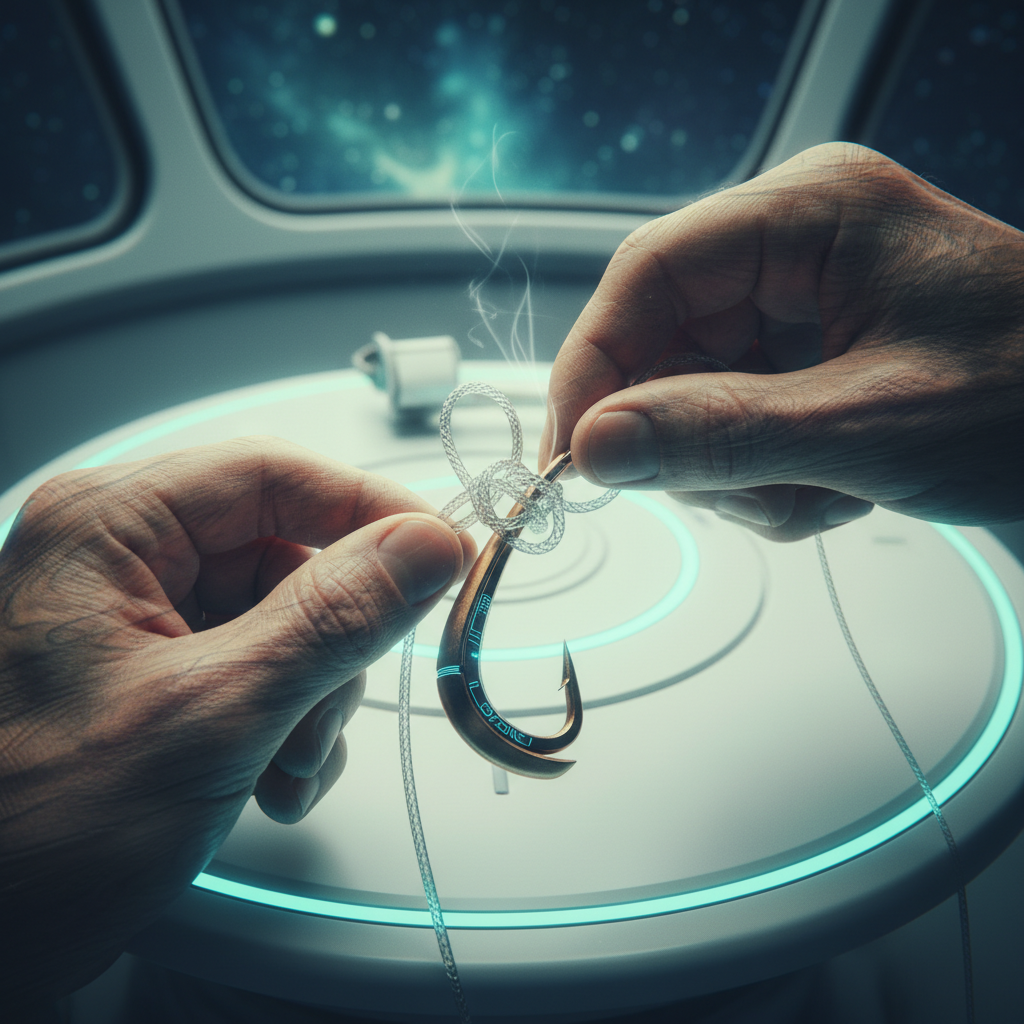
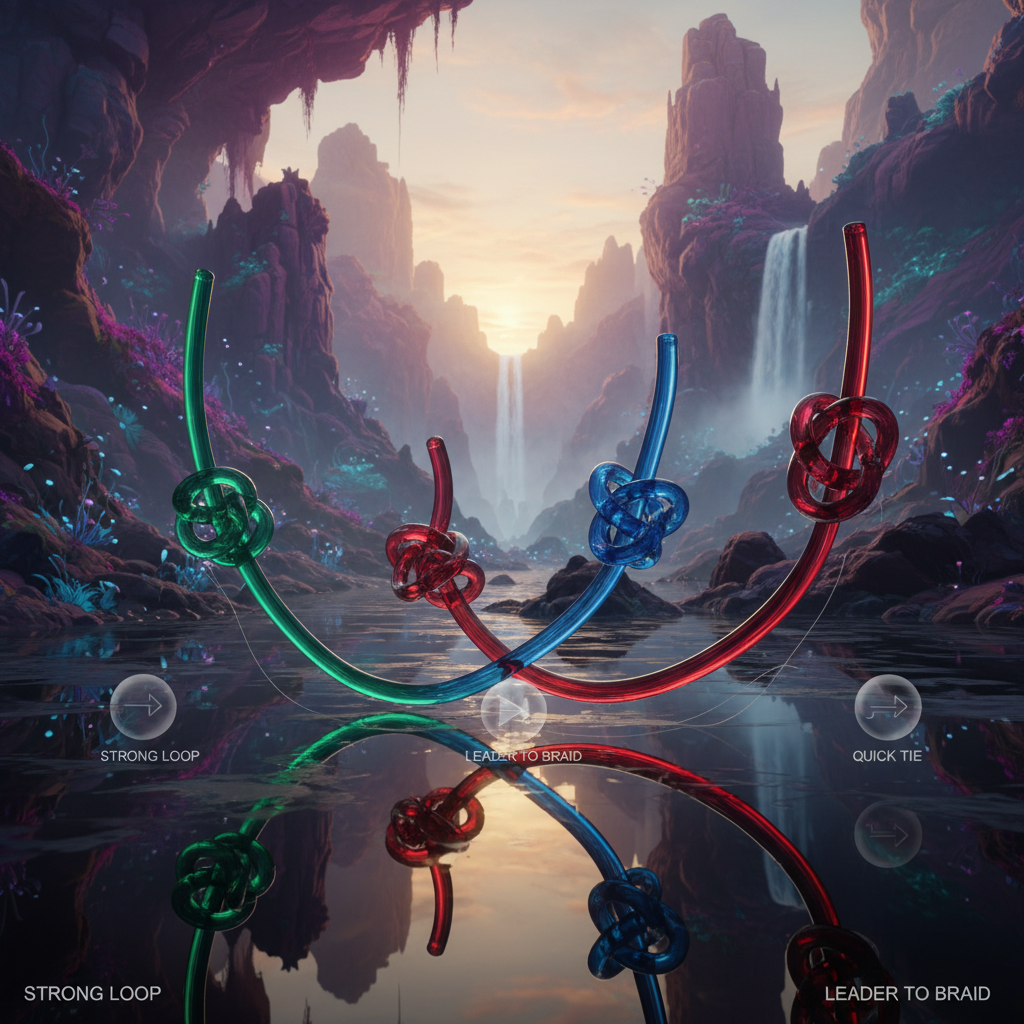
Knot Tying: A weak knot can be the difference between landing a trophy fish and losing it forever. Learn to tie a few essential knots, such as the improved clinch knot, the palomar knot, and the uni knot. Practice tying these knots until you can do it quickly and confidently, even in low light conditions. There are countless online resources and videos that can help you learn and practice knot tying.
Casting: Accurate casting is essential for presenting your lure effectively and reaching fish that are holding in specific locations. Practice your casting technique until you can consistently hit your target, whether it’s a specific spot in the water or a structure like a log or a rock. Experiment with different casting styles, such as the overhead cast, the sidearm cast, and the roll cast, to find the ones that work best for you in different situations.
Fish Identification: Knowing what kind of fish you’re targeting is crucial for selecting the right lures, techniques, and locations. Learn to identify the common fish species in your area, and research their preferred habitats, feeding habits, and spawning seasons. This knowledge will give you a significant advantage on the water.
The Art of Reading the Water
Perhaps the most challenging, yet rewarding, skill to develop as an angler is the ability to “read” the water. This involves interpreting the subtle clues that the water provides to determine where fish are likely to be holding. It’s a skill that takes time and practice to develop, but it’s essential for consistent success.
Look for structure, such as submerged logs, rocks, and weed beds. These features provide cover and attract baitfish, making them prime locations for predatory fish. Pay attention to changes in depth, current, and water clarity. Fish often congregate in areas where these factors converge.
Decoding the Clues: Structure, Current, and Clarity
Let’s break down these key elements of reading the water:
Structure: Fish are ambush predators, and they rely on structure to provide cover and concealment. Submerged logs, rocks, weed beds, and even changes in the bottom contour can all provide ideal hiding places for fish. When you’re fishing, always target these areas of structure. Cast your lure close to the structure, and be prepared for a strike.
Current: Current is another important factor to consider when reading the water. Fish often position themselves in areas of current where they can easily ambush prey. Look for areas where the current slows down or where there are eddies or seams. These areas can hold large numbers of fish. Experiment with different lures and techniques to find what works best in different current conditions.
Clarity: Water clarity can also have a significant impact on fish behavior. In clear water, fish are more likely to be wary and easily spooked. In murky water, they’re more likely to be aggressive and willing to strike at anything that moves. Adjust your lure selection and presentation based on the water clarity. In clear water, use smaller, more natural-looking lures. In murky water, use larger, brighter lures that will attract attention.
Beyond the Surface: Understanding Fish Behavior
Ultimately, reading the water is about understanding fish behavior. Why do fish choose to hold in certain locations? What do they eat? When are they most active? The more you understand about fish behavior, the better you’ll be at finding them and catching them. Spend time researching the fish species you’re targeting, and learn about their habits and preferences. Talk to experienced anglers, and ask them for their advice. The more you learn, the more successful you’ll be.
Consider the example of trout fishing in a stream. Trout are known to hold in areas where they can easily ambush insects that are drifting downstream. They often position themselves behind rocks or logs, where they can wait for unsuspecting prey to float by. Knowing this, you can target these areas of structure with your fly or lure, increasing your chances of catching a trout.
The Value of Patience and Persistence
Fishing is not a sprint; it’s a marathon. It requires patience, persistence, and a willingness to learn from your mistakes. There will be days when you don’t catch anything, no matter how hard you try. Don’t get discouraged. Every day on the water is a learning experience. Use those slow days to practice your skills, experiment with new techniques, and observe the environment. The more time you spend on the water, the better you’ll become.
The angler who consistently succeeds is not necessarily the one with the most expensive gear or the most natural talent. It’s the one who is willing to put in the time, effort, and dedication required to master the craft. It’s the one who is willing to learn from their mistakes, adapt to changing conditions, and never give up.
Embrace the Learning Curve
Think of fishing as a journey, not a destination. There will be ups and downs, successes and failures. Embrace the learning curve, and celebrate every small victory. Every fish you catch, every knot you tie correctly, every new technique you master is a step forward on your path to becoming a skilled angler.
Don’t be afraid to ask for help. Talk to experienced anglers, join a fishing club, or take a fishing class. There are countless resources available to help you improve your skills and knowledge. The fishing community is generally very welcoming and supportive, and most anglers are happy to share their tips and tricks with newcomers.
The Long Game: Sustaining Your Passion
Ultimately, the most important thing is to cultivate a genuine passion for fishing. If you enjoy the process, the challenge, and the connection with nature, you’ll be much more likely to stick with it through the inevitable ups and downs. Find what you love about fishing, and focus on that. Whether it’s the thrill of the catch, the tranquility of being on the water, or the camaraderie of fishing with friends, find what motivates you and keep you coming back for more.
Consider the joy of simply being outdoors, surrounded by nature. The fresh air, the sound of the water, the sight of the wildlife – these are all intrinsic rewards that make fishing a worthwhile pursuit, regardless of whether you catch anything. Learn to appreciate these aspects of the experience, and you’ll find that fishing is much more than just a sport or a hobby; it’s a way of life.
Beyond the Gear: The Intangible Rewards
While the pursuit of the perfect cast and the trophy fish can be exhilarating, it’s important to remember that fishing offers rewards that extend far beyond the tangible. It’s a chance to connect with nature, to escape the stresses of modern life, and to cultivate a sense of peace and tranquility. It’s an opportunity to learn about the natural world, to develop new skills, and to challenge yourself in new ways. And it’s a chance to create lasting memories with friends and family.
Don’t let the allure of expensive gear distract you from these intangible rewards. Focus on the fundamentals, embrace the learning curve, and cultivate a genuine passion for the sport. The gear will come in time, but the knowledge, skills, and experiences you gain along the way will be far more valuable.
So, the next time you’re tempted to splurge on the latest and greatest fishing gadget, ask yourself: am I investing in my knowledge and skills, or am I simply trying to buy my way to success? The answer to that question will determine whether you become a truly skilled angler or just another beginner caught in the siren song of shiny new things. Remember, the best gear is the knowledge you carry in your head and the experience you gain on the water. That’s the real secret to catching fish – and enjoying the process along the way.