The Allure of the Perfect Bait: A Beginner’s Temptation
As a novice angler, the sheer volume of information can be overwhelming. Every seasoned fisherman seems to have their own secret recipe, their own magic concoction that guarantees a bountiful catch. We’re bombarded with advertisements for the latest lures, the most advanced synthetic baits, and the most potent attractants. The promise is always the same: use this, and you’ll catch more fish.
It’s a seductive narrative, isn’t it? The idea that a single purchase, a single piece of equipment, can bridge the gap between beginner and expert. We spend hours researching the perfect worm imitation, debating the merits of scented vs. unscented dough baits, and meticulously crafting our own personalized blends, hoping to unlock the key to angling success. We focus so intensely on what we put on the hook, we often overlook a far more crucial element: where we put it.
Think about it: have you ever seen a fisherman meticulously preparing their bait, only to cast it into a lifeless, barren expanse of water? Perhaps a stagnant pond with no visible structure, or a wide-open lake with no discernible features? While the bait might be perfectly irresistible under ideal conditions, its effectiveness is severely limited by its environment. The truth is, even the most enticing bait is useless if there are no fish around to be tempted.
Location, Location, Location: The Real Estate of Fishing
Just like in the world of real estate, the value of a bait is intrinsically linked to its location. A prime piece of fishing “real estate” – a spot teeming with potential – can elevate even a mediocre bait to new heights. Conversely, the most exquisite bait presented in an unproductive location will likely yield nothing but frustration.
What constitutes a prime fishing location? It’s not always about the most scenic spot or the most easily accessible bank. It’s about understanding the habits and needs of the fish you’re targeting. Where do they feed? Where do they seek shelter? Where do they spawn? The answers to these questions will guide you to the most promising fishing grounds.
Understanding Fish Behavior: A Foundation for Success
To truly master the art of location fishing, you need to become a student of fish behavior. Different species have different preferences. Trout, for example, often congregate in cool, oxygen-rich waters near riffles and submerged structures. Bass, on the other hand, tend to lurk near weed beds, fallen logs, and rocky outcroppings, waiting to ambush unsuspecting prey. Catfish are often found in deeper holes and near muddy bottoms, where they scavenge for food.
Learning to identify these habitats is crucial. This involves careful observation and a willingness to explore different areas. Spend time walking the banks of your local fishing spots, looking for clues. Are there signs of fish activity, such as rising fish or swirling water? Are there obvious structures or features that might provide shelter or attract food? Pay attention to the water temperature and clarity, as these factors can also influence fish distribution.
Reading the Water: Unlocking the Secrets of the Stream
Experienced anglers often talk about “reading the water.” This refers to the ability to interpret the subtle cues and signals that the water provides, revealing the presence and behavior of fish. It’s a skill that takes time and practice to develop, but it’s well worth the effort.
For example, consider a flowing river. The current isn’t uniform; it varies in speed and direction depending on the depth, width, and underwater structure. Fish often seek refuge in areas of slower current, where they can conserve energy while still having access to food. Look for areas behind rocks, logs, or bridge pilings, where the current is broken and the water is calmer. These are prime spots for ambush predators like bass and trout.
Similarly, the color of the water can provide valuable information. Murky water often indicates the presence of sediment and organic matter, which can attract baitfish and the predators that feed on them. Clear water, on the other hand, might suggest a lack of nutrients, but it can also provide excellent visibility for sight-feeding fish. The key is to adapt your approach based on the conditions you encounter.
Beyond the Obvious: Finding the Hidden Honey Holes
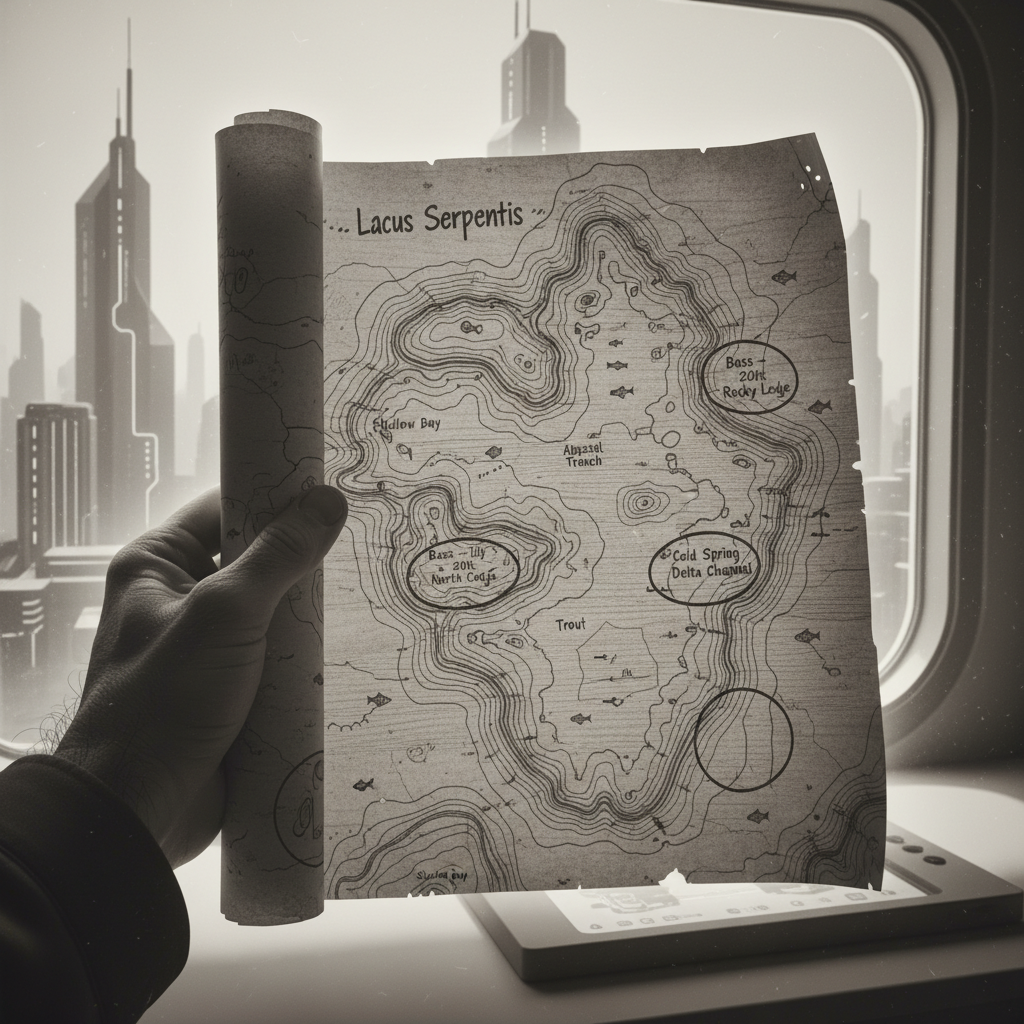
While understanding general fish behavior and reading the water are essential skills, they’re not always enough to guarantee success. Sometimes, you need to go beyond the obvious and seek out the hidden “honey holes” that other anglers might overlook. These are the secret spots that hold the key to a truly memorable fishing experience.
How do you find these hidden gems? The answer lies in exploration, experimentation, and a willingness to think outside the box. Don’t be afraid to venture off the beaten path, to try fishing in areas that are less accessible or less popular. Sometimes, the best spots are the ones that require a little extra effort to reach.
The Power of Research: Unveiling Local Secrets
Before you embark on your quest for hidden honey holes, it’s wise to do your research. Talk to local anglers, visit bait and tackle shops, and consult online forums and fishing reports. These resources can provide valuable insights into the best fishing spots in your area, as well as information about current conditions and effective techniques.
However, keep in mind that not everyone is willing to share their secrets. Some anglers are fiercely protective of their favorite fishing spots, and they may be reluctant to divulge their knowledge to outsiders. Be respectful and discreet when asking for information, and don’t expect anyone to hand you a guaranteed recipe for success. The best way to learn is often through trial and error, by spending time on the water and observing the results of your efforts.
Thinking Like a Fish: Adapting to the Changing Environment
Ultimately, the key to finding hidden honey holes is to think like a fish. Ask yourself: if you were a fish, where would you want to be? What would you be looking for in a habitat? The answers to these questions will guide you to the most promising locations.
Consider the impact of weather patterns, seasonal changes, and human activity on fish behavior. Fish are highly sensitive to changes in their environment, and they will often alter their habits in response to these factors. For example, during periods of heavy rain, fish may move to areas with stronger currents to take advantage of the increased food supply. During the spawning season, they will congregate in specific areas with suitable spawning habitat. And during periods of heavy fishing pressure, they may become more wary and move to less accessible locations.
By staying informed about these factors and adapting your approach accordingly, you can significantly increase your chances of finding hidden honey holes and enjoying a successful fishing trip.
The Art of Presentation: Making Your Bait Irresistible
While location is paramount, the way you present your bait is also crucial. Even in the most productive location, a poorly presented bait can go unnoticed or be rejected by wary fish. The art of presentation involves factors such as the type of rig you use, the speed and direction of your retrieve, and the overall subtlety of your approach.
Choosing the Right Rig: Matching the Hatch
The type of rig you use should be tailored to the specific species of fish you’re targeting, as well as the conditions you’re fishing in. For example, if you’re fishing for bass in heavy cover, you might use a Texas rig or a Carolina rig to prevent your bait from getting snagged. If you’re fishing for trout in a clear stream, you might use a small nymph on a light tippet to avoid spooking the fish.
Matching the hatch is another important consideration. This refers to the practice of selecting a bait that closely resembles the natural food sources that fish are currently feeding on. For example, if you observe a large number of mayflies hatching on a stream, you might try using a mayfly imitation to entice trout.
Mastering the Retrieve: Adding Life to Your Bait
The speed and direction of your retrieve can also have a significant impact on your success. Different species of fish respond to different types of retrieves. Some prefer a slow, steady retrieve, while others are more attracted to a fast, erratic retrieve. Experiment with different retrieves until you find one that works.
Adding subtle movements and pauses to your retrieve can also make your bait more enticing. Try twitching your rod tip, allowing your bait to sink momentarily, or varying the speed of your retrieve. These small changes can often trigger a strike from a hesitant fish.

The Importance of Patience: A Virtue in Fishing
Even with the perfect bait and the ideal location, success in fishing is not guaranteed. Fishing requires patience, perseverance, and a willingness to learn from your mistakes. There will be days when you don’t catch anything, despite your best efforts. Don’t get discouraged. Use these experiences as opportunities to learn and refine your skills.
Learning from Failure: The Path to Mastery
Every time you go fishing, you have the opportunity to learn something new. Pay attention to the conditions, the behavior of the fish, and the effectiveness of your techniques. Keep a fishing log to record your observations and track your progress. This will help you identify patterns and make adjustments to your approach.
Don’t be afraid to experiment with different baits, rigs, and retrieves. The more you try, the more you’ll learn about what works and what doesn’t. And don’t be afraid to ask for advice from other anglers. Most fishermen are happy to share their knowledge and help beginners get started.
Embracing the Journey: Finding Joy in the Process
Ultimately, fishing is about more than just catching fish. It’s about spending time outdoors, connecting with nature, and enjoying the peace and quiet of the water. It’s about the thrill of the chase, the satisfaction of outsmarting a fish, and the camaraderie of sharing the experience with friends and family.
Embrace the journey, and don’t let the pursuit of the perfect catch overshadow the simple pleasures of fishing. The rewards will come, not just in the form of fish, but in the form of memories, experiences, and a deeper appreciation for the natural world.
Beyond Bait: The Holistic Angler
Becoming a truly successful angler transcends the simple act of choosing the right bait. It’s about developing a holistic understanding of the environment, the fish, and your own capabilities. It’s about appreciating the delicate balance of the ecosystem and practicing responsible fishing habits.
Conservation and Respect: Protecting Our Resources
As anglers, we have a responsibility to protect the resources that we enjoy. This means practicing catch and release whenever possible, following fishing regulations, and minimizing our impact on the environment. It also means advocating for conservation efforts and supporting organizations that work to protect our waterways and fish populations.
Respect for the environment is not just a matter of ethics; it’s also a matter of self-interest. Healthy ecosystems support healthy fish populations, which in turn provide better fishing opportunities for us all. By practicing responsible fishing habits, we can ensure that future generations will have the opportunity to enjoy the same benefits that we do.
The Never-Ending Pursuit of Knowledge: A Lifetime of Learning
Fishing is a lifelong pursuit of knowledge and skill. There’s always something new to learn, a new technique to master, or a new species to target. The more you learn, the more you’ll appreciate the complexity and beauty of the sport.
Stay curious, stay open-minded, and never stop learning. Read books and articles, watch videos, attend workshops, and talk to other anglers. The more you immerse yourself in the world of fishing, the more you’ll grow as an angler and as a person.
Case Study: The Tale of Two Fishermen
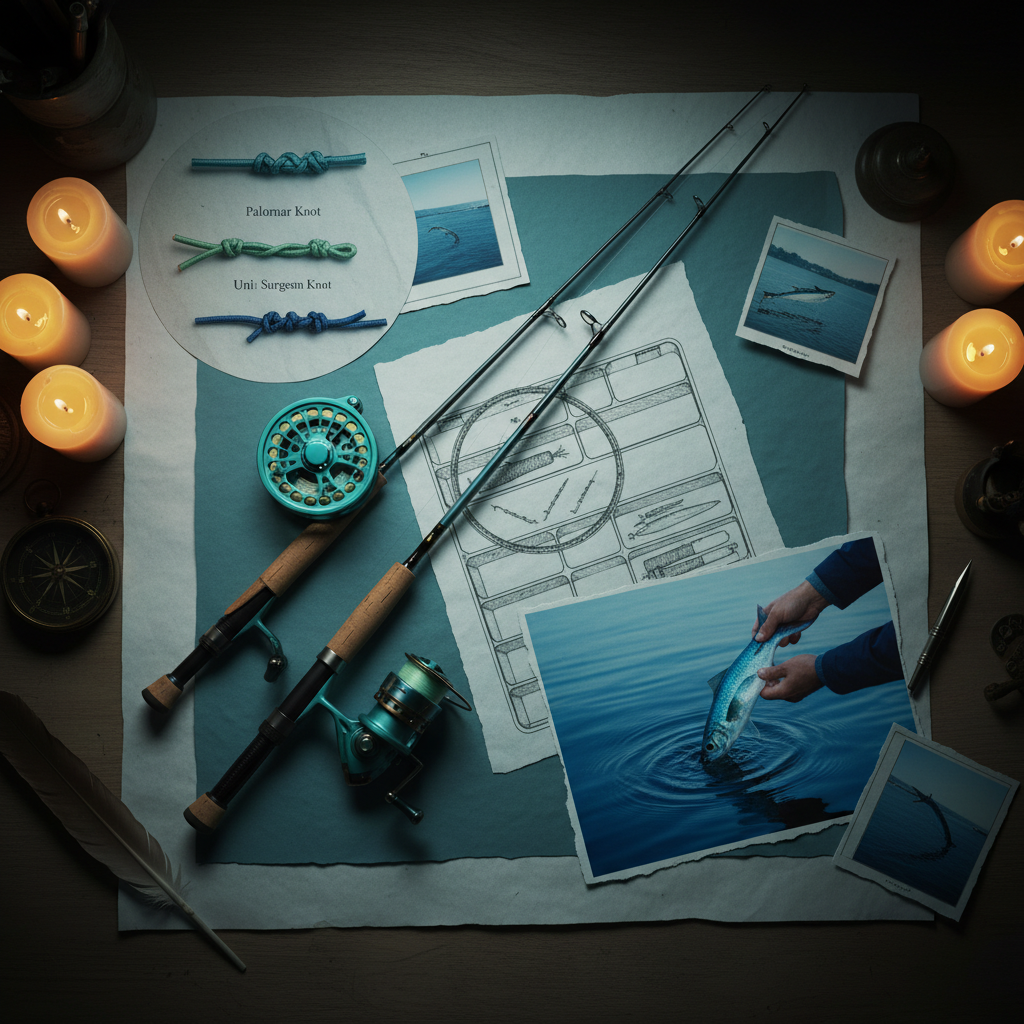
Let’s illustrate the importance of location with a practical example. Imagine two novice fishermen, both eager to catch their first bass. Fisherman A invests heavily in the latest, most expensive lure on the market, a multi-jointed swimbait designed to mimic a live baitfish perfectly. Fisherman B, on the other hand, opts for a simple, inexpensive plastic worm.
Fisherman A, convinced of his lure’s superior effectiveness, casts it repeatedly into a wide-open area of the lake, far from any visible structure. He retrieves it with a steady, consistent motion, confident that the lure’s lifelike action will entice any nearby bass. Hours pass, and he doesn’t get a single bite. Frustrated and discouraged, he begins to doubt his skills and the effectiveness of his lure.
Meanwhile, Fisherman B, using his simple plastic worm, carefully approaches a submerged log near the shoreline. He knows that bass often use logs as ambush points, waiting for unsuspecting prey to swim by. He casts his worm near the log and allows it to sink slowly, twitching it occasionally to mimic the movements of a wounded baitfish. Within minutes, he feels a sharp tug on his line. He sets the hook and begins to reel in a feisty bass. He lands the fish, admires it briefly, and then carefully releases it back into the water.
The difference between the two fishermen wasn’t the quality of their bait, but their choice of location. Fisherman B understood the importance of targeting areas where bass were likely to be present, while Fisherman A focused solely on the lure itself. This simple example illustrates the fundamental principle that location matters more than bait, especially for beginner anglers.
The Ultimate Bait: Knowledge and Experience
In the end, the most effective “bait” you can use is knowledge and experience. Understanding fish behavior, reading the water, and mastering the art of presentation are far more valuable than any fancy lure or expensive piece of equipment. The more you learn, the more you’ll increase your chances of success, and the more you’ll appreciate the beauty and challenge of fishing.
So, the next time you head out to the water, remember the lesson: the right spot matters more than the best bait. Focus on finding the prime fishing real estate, adapt your approach to the conditions you encounter, and never stop learning. With patience, perseverance, and a little bit of luck, you’ll be well on your way to becoming a successful angler.
The journey of an angler is one of constant learning and adaptation. No single bait, no matter how enticing, can guarantee success. The true magic lies in understanding the environment, respecting the fish, and honing your skills. So, cast your line wisely, explore the depths, and embrace the adventure that awaits you on the water. It’s a pursuit that will reward you with not only fish, but with a deeper connection to nature and a lifetime of cherished memories.