The Unseen Thread: Fishing as a Bridge Back to Nature
In our increasingly digitized and urbanized world, it’s easy to feel disconnected from the natural rhythms that once governed our lives. We spend countless hours indoors, glued to screens, often losing sight of the beauty and complexity that surrounds us. But what if there was a way to rekindle that ancient connection, to rediscover the profound sense of belonging that comes from being truly present in nature? What if that connection could be found in the simple act of fishing?
Fishing, often viewed as a mere recreational activity, holds a deeper potential: it’s a pathway to rebuilding our bond with the natural world. It’s an invitation to slow down, to observe, and to immerse ourselves in the intricate tapestry of life that unfolds around us. It’s a practice that can cultivate patience, resilience, and a profound appreciation for the delicate balance of ecosystems.
This isn’t just about catching fish; it’s about becoming a part of the landscape, about understanding the interconnectedness of all living things. It’s about learning to read the signs of nature, to anticipate the movements of the water, and to respect the power and vulnerability of the creatures that inhabit it.
Beyond the Catch: Cultivating Awareness
The modern obsession with productivity often blinds us to the subtle nuances of our environment. We rush through our days, ticking off tasks, rarely pausing to truly notice the world around us. Fishing, in its essence, is an antidote to this relentless pace. It demands patience, focus, and a willingness to be present in the moment.
Consider the angler standing patiently by the riverbank, waiting for a bite. They are not merely waiting; they are observing. They are attuned to the currents, the wind, the changing light. They are watching for the telltale signs of fish activity – a subtle ripple on the surface, a flash of silver beneath the water. This heightened awareness extends beyond the immediate vicinity, encompassing the entire ecosystem. They might notice the flight of a kingfisher, the rustling of leaves in the trees, or the croaking of frogs in the nearby marsh. Each observation contributes to a deeper understanding of the intricate web of life.
This cultivated awareness extends beyond the immediate fishing experience. Anglers who spend significant time in nature often develop a keen sense of environmental responsibility. They become more attuned to the impact of pollution, habitat destruction, and climate change. They are more likely to advocate for conservation efforts and to protect the natural resources that they cherish.
Think about the contrast: someone who spends all their time indoors, versus someone who regularly immerses themselves in nature. Which person is more likely to feel a deep connection to the environment, and which is more likely to passively accept its degradation? The answer is clear. Fishing, as a gateway to nature, fosters a sense of stewardship and a commitment to preserving the planet for future generations.
The Language of the River: Understanding Ecosystems
Fishing is not simply a matter of casting a line and hoping for the best. It requires a deep understanding of the aquatic ecosystem, from the smallest microorganisms to the largest predators. To be a successful angler, one must become a student of the river, lake, or ocean, learning its rhythms, its inhabitants, and its vulnerabilities.
Consider the importance of understanding the food chain. A skilled angler knows what the fish are feeding on, and they choose their bait accordingly. This requires knowledge of the local insect life, the types of aquatic plants that thrive in the area, and the behavior of other fish species. It’s a complex puzzle that demands careful observation and a willingness to learn.
Furthermore, anglers must be aware of the environmental factors that affect fish populations. Water temperature, oxygen levels, and pH can all play a significant role in the health and abundance of fish. Changes in these factors, often caused by pollution or habitat degradation, can have devastating consequences. By understanding these dynamics, anglers can become advocates for responsible environmental practices and help protect the ecosystems they rely on.
For example, imagine a fly fisherman who meticulously studies the insect hatches on a particular river. They learn to identify the different species of mayflies, caddisflies, and stoneflies that emerge at different times of the year. They then select their artificial flies to mimic these insects, increasing their chances of attracting a trout. This process requires a deep understanding of the river’s ecology and a commitment to ethical angling practices. It’s a far cry from the image of the casual angler who simply tosses a worm into the water and hopes for the best.

Case Study: Restoring a River, One Cast at a Time
The story of the River Thames in England is a compelling example of how fishing can contribute to ecosystem restoration. Once declared biologically dead in the 1950s due to industrial pollution, the Thames has undergone a remarkable transformation in recent decades. Thanks to concerted efforts to reduce pollution and improve water quality, the river is now teeming with life, including a diverse range of fish species.
Anglers have played a crucial role in this restoration. By monitoring fish populations, reporting pollution incidents, and advocating for stricter environmental regulations, they have helped to ensure the long-term health of the river. They have also contributed to habitat restoration projects, such as planting trees along the riverbanks and creating artificial spawning grounds for fish.
The resurgence of fishing on the Thames has not only benefited the environment but has also provided economic and social benefits to local communities. Angling clubs have sprung up along the river, providing opportunities for people to connect with nature and to learn about the importance of conservation. The river has become a popular destination for tourists and anglers from around the world, boosting the local economy and raising awareness of the importance of protecting our waterways.
This success story demonstrates the power of collective action and the vital role that anglers can play in environmental stewardship. It’s a reminder that even the most degraded ecosystems can be restored with dedication, perseverance, and a deep commitment to the natural world.
The Stillness Within: Fishing and Mindfulness
In today’s hyper-connected world, it’s easy to feel overwhelmed by the constant bombardment of information and stimuli. Our minds are often racing, filled with anxieties and distractions. Fishing offers a refuge from this mental chaos, a chance to find stillness and peace in the present moment.
The act of casting a line, waiting for a bite, and observing the natural world can be a deeply meditative experience. It requires focus, patience, and a willingness to let go of distractions. As you immerse yourself in the rhythms of nature, your thoughts begin to quiet down, and you become more attuned to your surroundings. The gentle lapping of the water, the chirping of birds, and the warmth of the sun on your skin become the focus of your attention, allowing you to escape the mental chatter that often consumes you.
Many anglers describe a sense of flow state when they are fishing, a state of complete absorption in the activity at hand. In this state, time seems to stand still, and worries fade away. It’s a feeling of deep connection to nature and to oneself. This sense of mindfulness can have profound benefits for mental health, reducing stress, improving focus, and fostering a sense of well-being.
Consider the analogy of a Zen garden. The carefully raked gravel, the strategically placed stones, and the overall sense of tranquility are designed to promote contemplation and mindfulness. Fishing, in its own way, can be seen as a similar practice. The river, the lake, or the ocean becomes your Zen garden, and the act of fishing becomes your meditation. It’s a chance to connect with something larger than yourself and to find peace in the present moment.

The Unexpected Lessons: Resilience and Adaptability
Fishing is not always easy. There are days when the fish simply aren’t biting, when the weather is unfavorable, or when equipment malfunctions. These challenges, however, can be valuable learning experiences, teaching us resilience and adaptability.
Imagine an angler who has spent hours trying to catch a fish, only to come up empty-handed. They could easily become discouraged and give up. But a resilient angler will learn from their mistakes, adjust their tactics, and try again. They might experiment with different baits, try fishing in a different location, or seek advice from other anglers. They understand that failure is a part of the learning process and that perseverance is key to success.
Furthermore, fishing requires adaptability. The conditions on the water can change rapidly, from sunny skies to sudden storms. Anglers must be able to adapt to these changes, adjusting their gear, their techniques, and their expectations. They must be able to think on their feet and to make quick decisions based on the available information.
These qualities of resilience and adaptability are not only valuable in fishing but also in life. They are essential for navigating the challenges and uncertainties that we all face. By learning to overcome obstacles in the natural world, we can develop the skills and the mindset to thrive in all aspects of our lives.
The Ethical Angler: Respect and Responsibility
Rebuilding our bond with the natural world through fishing requires a commitment to ethical practices and responsible stewardship. This means respecting the fish, the environment, and the rights of other anglers. It means understanding the impact of our actions and striving to minimize our footprint on the delicate ecosystems we rely on.
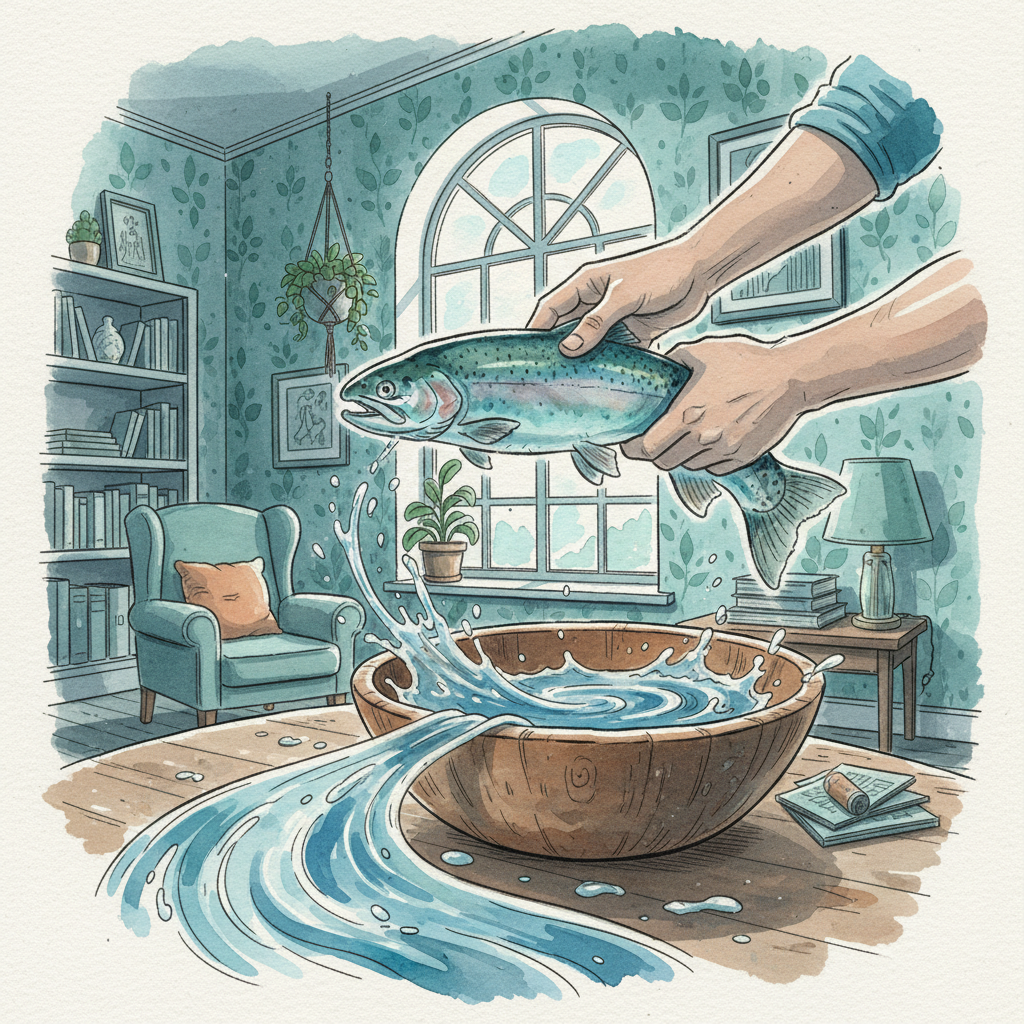
One of the most important aspects of ethical angling is practicing catch and release. This involves carefully unhooking the fish and returning it to the water unharmed. Catch and release helps to ensure the long-term sustainability of fish populations and allows future generations to enjoy the sport of fishing. However, it’s crucial to practice catch and release properly, minimizing stress to the fish and ensuring its survival.
Ethical anglers also respect the environment by avoiding littering, minimizing disturbance to wildlife, and following all fishing regulations. They understand that their actions have consequences and that it’s their responsibility to protect the natural resources that they enjoy. They also advocate for responsible environmental policies and support conservation efforts that benefit fish and their habitats.
Consider the difference between an angler who carelessly discards their trash and pollutes the waterway, and an angler who diligently cleans up after themselves and actively participates in river cleanup projects. The latter demonstrates a deep respect for the environment and a commitment to responsible stewardship. They understand that their actions have a direct impact on the health of the ecosystem and that it’s their duty to protect it.
The Future of Fishing: Conservation and Connection
The future of fishing depends on our ability to balance the recreational enjoyment of the sport with the need to protect and conserve our aquatic resources. This requires a shift in mindset, from viewing fishing as simply a pastime to recognizing it as a powerful tool for environmental stewardship and personal growth.
Conservation organizations and angling clubs are working together to promote sustainable fishing practices, restore degraded habitats, and educate anglers about the importance of responsible behavior. They are also engaging young people in fishing, fostering a new generation of environmental stewards who are passionate about protecting our waterways.
By embracing ethical angling practices, supporting conservation efforts, and sharing our love of fishing with others, we can ensure that future generations have the opportunity to experience the profound connection with nature that this ancient practice offers. We can also use fishing as a catalyst for building stronger communities, promoting mental well-being, and fostering a deeper appreciation for the natural world.
Imagine a future where fishing is not only a popular recreational activity but also a driving force for environmental conservation. A future where anglers are recognized as stewards of our waterways and advocates for responsible environmental policies. This vision is within our reach, but it requires a collective effort and a commitment to rebuilding our bond with the natural world, one cast at a time.
More Than a Sport: A Path to Belonging
Ultimately, fishing is more than just a sport or a hobby. It’s a pathway to belonging, a way to reconnect with our primal instincts and to rediscover our place in the natural world. It’s a practice that can cultivate patience, resilience, mindfulness, and a deep appreciation for the delicate balance of ecosystems. It’s an invitation to slow down, to observe, and to immerse ourselves in the intricate tapestry of life that unfolds around us.
In a world that often feels fragmented and disconnected, fishing offers a sense of wholeness and integration. It reminds us that we are part of something larger than ourselves, that we are interconnected with all living things. It fosters a sense of humility and respect for the power and beauty of nature. It provides a refuge from the noise and chaos of modern life, a place where we can find peace, tranquility, and a renewed sense of purpose.
So, the next time you feel disconnected from the natural world, consider picking up a fishing rod. Find a quiet spot by a river, a lake, or the ocean, and cast your line. Take a deep breath, observe your surroundings, and allow yourself to be present in the moment. You might be surprised at what you discover. You might just find that fishing is not only a way to catch fish but also a way to catch a glimpse of your true self, connected to the web of life that sustains us all.

The journey back to nature is a personal one, but it’s a journey worth taking. Fishing, with its inherent connection to the environment, offers a tangible and rewarding path. It’s a reminder that we are not separate from the natural world, but intrinsically linked to it. And perhaps, in rediscovering this connection, we can find a deeper understanding of ourselves and our place within the grand scheme of things.