The Paradox of Expectation in Fishing and Life
We often approach experiences, especially those we cherish like fishing, with a set of expectations. We anticipate the thrill of the catch, the serenity of the surroundings, the camaraderie of fellow anglers, or perhaps even just the perfect Instagram-worthy photo. But what if I told you that shedding these expectations, embracing the uncertainty, and simply being present could lead to a far richer, more profound, and ultimately more satisfying experience? This isn’t just about fishing; it’s a principle that resonates deeply with connection, nature, and the human condition itself. Have you ever considered that the very thing you’re striving for might be obscured by the lens of your preconceived notions?
Think about it. When we fish with the sole expectation of landing a trophy-sized fish, we often miss the subtle beauty of the rising mist, the intricate dance of dragonflies, the quiet wisdom whispered by the rustling leaves. We become so focused on the outcome that we bypass the journey, the very essence of the experience. We sacrifice the present moment on the altar of a future we may never reach. This holds true not only for fishing but also for our relationships, our careers, and our lives as a whole.
The paradox lies in the fact that by releasing our grip on expectations, we actually create the space for deeper connection – connection with ourselves, with nature, and with others. It’s about trading the pursuit of a specific result for the embrace of whatever unfolds. It’s about finding contentment in the “is” rather than relentlessly chasing the “should be.”
The Burden of Anticipation
Expectations, while seemingly harmless, can be incredibly burdensome. They create a framework through which we filter our experiences, often leading to disappointment, frustration, and even resentment when reality fails to align with our preconceived notions. Imagine meticulously planning a fishing trip, envisioning a day of abundant catches and perfect weather. Then, you arrive to find the river swollen with rain, the fish uninterested, and your meticulously chosen flies ignored. If your entire enjoyment hinges on meeting those initial expectations, the day is likely to be a complete bust.
But what if, instead, you approached the day with open curiosity? What if you saw the swollen river as a challenge, an opportunity to learn new techniques or explore different areas? What if you embraced the quiet solitude of a fishless day as a chance for reflection and connection with the natural world? The difference lies not in the external circumstances, but in your internal response to them. Expectations bind us to a rigid script, while acceptance allows us to dance with the unpredictable rhythm of life.
This “burden of anticipation” extends far beyond the realm of fishing. How often do we project our expectations onto our loved ones, demanding they fulfill our needs or desires? How often do we judge ourselves harshly for failing to meet the unrealistic standards we’ve set? By releasing these burdens, we free ourselves to experience the world with greater joy, compassion, and understanding. We open ourselves up to the possibility of unexpected beauty and serendipitous moments that would otherwise be obscured by our rigid expectations.

Letting Go: The Art of Surrender in Fishing
Surrender isn’t about giving up; it’s about relinquishing control. It’s about acknowledging that we are not the masters of the universe and that life, like a flowing river, has its own current and direction. In fishing, surrender manifests as the willingness to accept whatever the day brings, to adapt to changing conditions, and to find enjoyment in the process, regardless of the outcome. It’s about respecting the fish, the environment, and the unpredictable nature of the sport.
Consider the fly fisherman who spends hours meticulously tying flies, only to discover that the fish are only interested in something completely different. Instead of clinging stubbornly to his pre-selected patterns, he observes, experiments, and adapts. He surrenders to the wisdom of the river, allowing it to guide his choices. This willingness to let go of control, to embrace the unknown, is often the key to success, both in fishing and in life.
The act of catch and release itself can be seen as an act of surrender. We hook a fish, admire its beauty and strength, and then release it back into its natural habitat. We acknowledge that its life is more valuable than our momentary gratification. We relinquish our desire to possess and control, and instead choose to respect its freedom and autonomy. This simple act embodies the essence of surrender, a profound recognition of the interconnectedness of all things.
Finding Freedom in the Flow
When we surrender to the flow of the river, both literally and metaphorically, we discover a sense of freedom and ease that is often elusive in our goal-oriented lives. We stop fighting against the current and instead learn to navigate it with grace and skill. We become more attuned to the subtle cues of the environment, more receptive to the wisdom of our intuition, and more open to the unexpected opportunities that life presents.
Think of a skilled kayaker navigating a challenging rapid. He doesn’t try to control every drop of water; instead, he reads the current, anticipates the obstacles, and adapts his movements accordingly. He surrenders to the power of the river, using his skill and experience to guide his craft through the turbulent waters. Similarly, when we surrender to the flow of life, we learn to navigate its challenges with greater resilience and adaptability.
This doesn’t mean we become passive or complacent. It simply means we approach life with a greater sense of acceptance, trust, and openness. We release our attachment to specific outcomes and instead focus on the process of living, learning, and growing. We find joy in the journey, not just the destination. We discover a deeper sense of connection with ourselves, with others, and with the world around us. Isn’t that a far more valuable prize than any trophy fish?
The Deeper Connection: Beyond the Catch
Fishing, at its core, is about more than just catching fish. It’s about connecting with nature, with ourselves, and with others. It’s about escaping the distractions of modern life and immersing ourselves in the present moment. It’s about finding solace, inspiration, and a sense of belonging in the natural world. When we shed our expectations and embrace the present moment, we open ourselves up to a deeper and more meaningful connection with all that surrounds us.
Consider the experience of fishing with a child. The focus shifts from personal achievement to shared discovery. You become a guide, a mentor, and a fellow explorer. You teach them about the intricacies of the ecosystem, the patience required for success, and the importance of respecting the environment. You witness their wonder and excitement as they connect with nature in a way that is often lost in adulthood. These shared moments create a bond that transcends the mere act of fishing.
Even solitary fishing can be a profound experience of connection. As you stand by the river, casting your line, you become part of a larger ecosystem. You observe the intricate interactions between plants, animals, and the elements. You feel the rhythm of the seasons, the ebb and flow of life. You recognize that you are not separate from nature, but an integral part of it. This sense of belonging can be deeply healing and restorative.
Building Bridges Through Shared Experiences
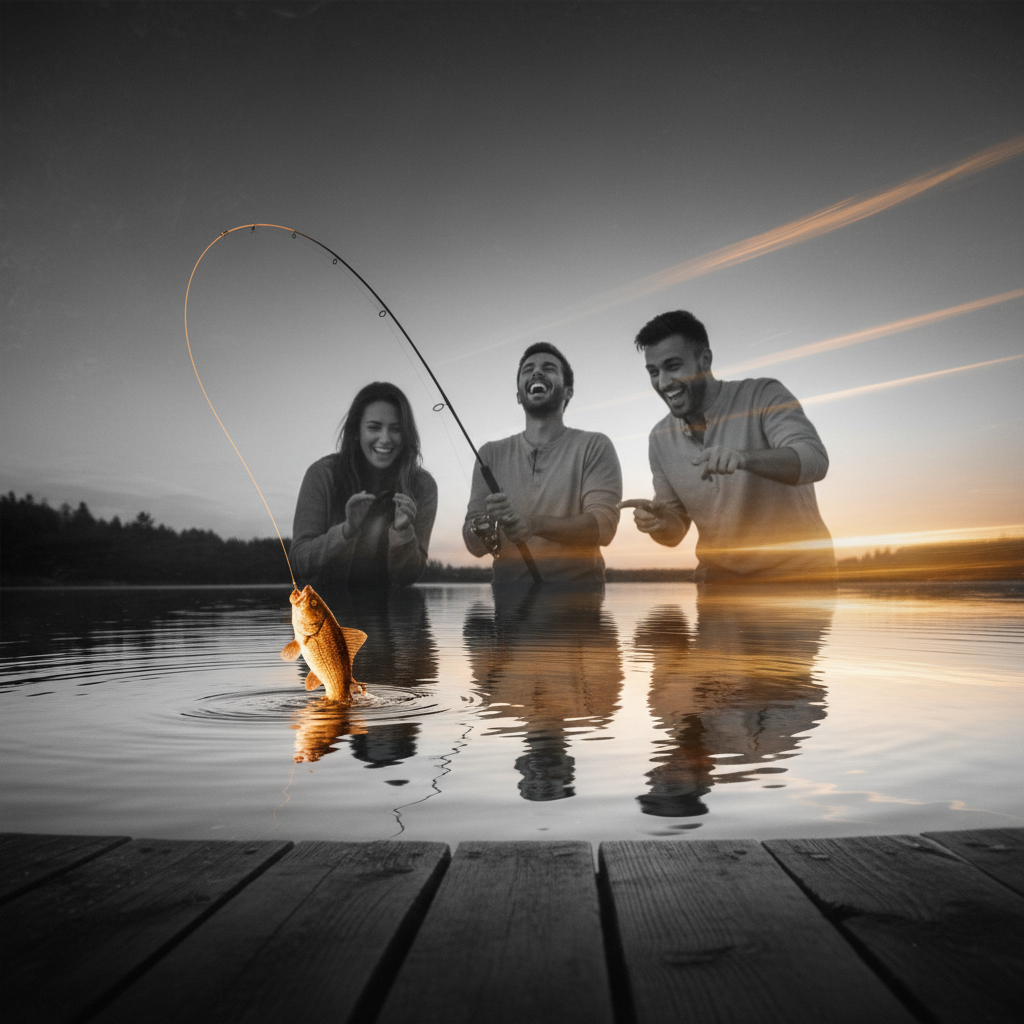
Fishing provides a unique opportunity to connect with others in a meaningful way. Whether it’s a father and son, a group of friends, or a fishing club, the shared experience of being in nature, pursuing a common goal, and overcoming challenges together can forge strong bonds. The act of fishing itself becomes a metaphor for life, teaching us about patience, perseverance, and the importance of teamwork.
Think about the stories shared around a campfire after a day of fishing. The tales of near misses, unexpected catches, and humorous mishaps. These stories become part of the collective memory, creating a shared history and a sense of belonging. They remind us that we are not alone in our struggles and triumphs, and that the human connection is as vital as the air we breathe.
Moreover, fishing can bridge divides between people from different backgrounds and cultures. The shared love of nature and the pursuit of a common goal can transcend differences in language, ethnicity, and socioeconomic status. It can create a space for understanding, empathy, and mutual respect. Isn’t it powerful to think that something as simple as fishing can foster such profound connections?
The Ripple Effect: Extending Connection Beyond the Water
The lessons we learn on the river, the connections we forge with nature and others, can have a ripple effect that extends far beyond the water’s edge. The patience, perseverance, and adaptability we develop while fishing can be applied to other areas of our lives, helping us to navigate challenges, build stronger relationships, and achieve our goals. The sense of connection we cultivate with nature can inspire us to become better stewards of the environment, protecting and preserving it for future generations.
Consider the angler who becomes an advocate for clean water. Inspired by their love of fishing and their concern for the health of the ecosystem, they dedicate their time and energy to protecting rivers and streams from pollution. They educate others about the importance of conservation and work to promote sustainable fishing practices. Their passion for fishing becomes a catalyst for positive change in the world.
Or think about the individual who finds solace and healing in nature after experiencing trauma. Fishing provides them with a sense of peace, connection, and purpose. It helps them to cope with their emotions, rebuild their resilience, and reconnect with their inner strength. The healing power of nature becomes a lifeline, guiding them through difficult times.

Cultivating Empathy and Understanding
The act of fishing, when practiced with respect and mindfulness, can cultivate empathy and understanding towards all living things. By observing the intricate relationships within the ecosystem, we gain a deeper appreciation for the interconnectedness of life. We learn to see the world from different perspectives, recognizing that every creature has a role to play and a right to exist.
Think about the angler who chooses to practice catch and release, not just as a conservation measure, but as an expression of respect for the fish. They acknowledge that the fish is a living being with its own inherent value. They treat it with care and consideration, minimizing stress and ensuring its safe return to the water. This act of empathy extends beyond the individual fish, fostering a broader sense of respect for all living things.
Furthermore, spending time in nature can help us to develop a greater understanding of ourselves. As we disconnect from the distractions of modern life and immerse ourselves in the natural world, we become more aware of our own thoughts, feelings, and motivations. We gain a clearer perspective on our place in the world and our relationship to the environment. This self-awareness can lead to greater compassion, both for ourselves and for others.
The Art of Present Moment Awareness
Ultimately, the key to unlocking deeper connection through fishing lies in the art of present moment awareness. It’s about letting go of our expectations, anxieties, and distractions and fully immersing ourselves in the present experience. It’s about noticing the sights, sounds, smells, and sensations of the natural world, and appreciating the beauty and wonder that surrounds us.
Consider the experience of watching a sunrise while fishing. The sky ablaze with color, the water shimmering with light, the air filled with the sounds of birdsong. If we are truly present, we can fully appreciate the beauty of this moment, allowing it to fill us with a sense of awe and gratitude. This moment becomes a sacred experience, a connection with something larger than ourselves.
Similarly, the simple act of casting a line can become a meditation. As we focus on the rhythm of our movements, the feel of the rod in our hand, and the anticipation of the strike, we enter a state of flow. Our minds become quiet, our bodies relaxed, and our spirits refreshed. This moment of present moment awareness can be incredibly restorative, helping us to release stress and reconnect with our inner peace.
Cultivating Mindfulness in Everyday Life
The practice of present moment awareness is not limited to fishing. It can be cultivated in all aspects of our lives, helping us to appreciate the beauty and wonder of everyday experiences. By paying attention to our senses, our thoughts, and our emotions, we can become more fully present in each moment, savoring the simple joys of life and navigating challenges with greater grace and resilience.
Think about the act of drinking a cup of coffee. Instead of mindlessly gulping it down, take a moment to appreciate the aroma, the taste, and the warmth of the cup in your hands. Notice the sensations in your body as the caffeine kicks in. Allow yourself to fully enjoy this simple pleasure, letting go of any distractions or anxieties. This moment of mindfulness can transform a routine task into a mindful experience.
Ultimately, the pursuit of deeper connection is a journey, not a destination. It requires a willingness to let go of our expectations, embrace the unknown, and cultivate present moment awareness. It’s about recognizing that the greatest treasures in life are often found not in the things we acquire, but in the connections we forge with ourselves, with others, and with the natural world. And sometimes, the best way to reel in a truly memorable experience is to cast aside the pressure to catch anything at all.