The Pull: An Unexpected Awakening
There’s a moment, isn’t there? A specific instance when something shifts, when an activity transcends the realm of mere pastime and becomes something deeper, something more meaningful. For me, that moment happened not with a triumphant catch, but with a profound sense of stillness while fishing. It wasn’t just about the fish; it was about something far grander. It was about the quiet, the solitude, and the unexpected lessons the river had to teach. It was the moment fishing became more than just a hobby; it became a lifeline.
Before that moment, fishing was sporadic. A summer vacation ritual, a forced bonding exercise with my father, a way to “unplug” that felt more like a chore than a respite. I went through the motions, baited the hook, cast the line, waited impatiently, and felt a surge of adrenaline only when I felt the tug. It was about the outcome, the conquest, the bragging rights. I saw it as an escape from the city, but I never truly immersed myself in it.
I remember the exact day. A Tuesday. I was reeling from a particularly brutal week at work, the kind where every email felt like a veiled threat and every meeting like a slow, agonizing descent into madness. I needed an escape, a real one. My father, sensing my frayed nerves, suggested a day on the river. Reluctantly, I agreed.
The air was crisp, the sky a pale blue canvas dotted with fluffy white clouds. The river, usually teeming with weekend anglers, was surprisingly deserted. As I waded into the cool water, the weight of my worries seemed to lessen, if only slightly. The rhythmic swish of the line, the gentle lapping of the water against my waders, the distant call of a bird – it was a symphony of serenity that slowly began to soothe my soul.
Beyond the Catch: Discovering the Deeper Current
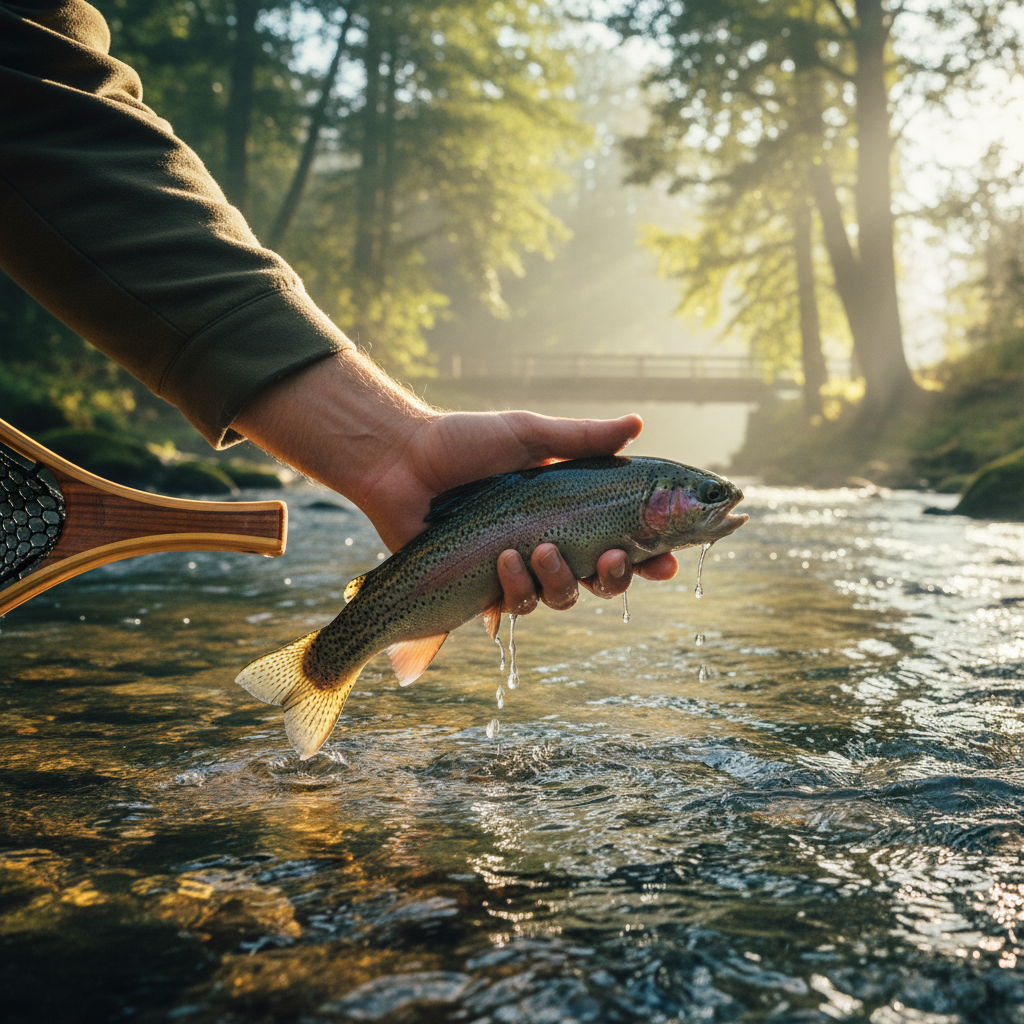
It wasn’t the fishing itself that triggered the transformation. I didn’t catch anything of significance that day. In fact, I think I only managed to snag a couple of small trout, which I promptly released. The magic lay in the stillness, in the quiet observation of the natural world around me. I watched dragonflies dance above the water, their iridescent wings shimmering in the sunlight. I saw a kingfisher perched on a branch, patiently waiting for its next meal. I noticed the intricate patterns on the rocks beneath the surface, the way the light filtered through the leaves of the trees lining the bank.
It was in that moment that I realized fishing wasn’t just about catching fish. It was about connecting with something larger than myself, about finding peace in the midst of chaos, about appreciating the simple beauty of the natural world. It was about slowing down, paying attention, and being present in the moment. It was a revelation.
The Metaphor of the Fly: Patience, Persistence, and Adaptation
The art of fly fishing, in particular, became a powerful metaphor for life itself. The careful selection of the fly, mimicking the insects that the fish are feeding on, taught me the importance of observation and attention to detail. The delicate cast, requiring precision and control, taught me the value of patience and practice. The constant adjustments, adapting to changing conditions and the unpredictable behavior of the fish, taught me the necessity of flexibility and resilience.
Think about it. You meticulously tie the perfect fly, mimicking the insect the fish are currently feeding on. You study the current, the light, the subtle movements of the water. You cast your line with precision, hoping to entice a strike. But sometimes, despite your best efforts, the fish simply aren’t biting. The conditions change, the insects hatch at a different time, the fish move to a different location. You have to adapt, to adjust your strategy, to try something new. It is a lesson in humility, a reminder that you are not always in control, and that sometimes, the best you can do is to be patient and persistent.
I started to see parallels in my own life. The challenges at work, the frustrations in my relationships, the anxieties about the future – they all seemed a little less daunting when viewed through the lens of fly fishing. Just as I had learned to adapt to the changing conditions on the river, I could learn to adapt to the challenges in my life. Just as I had learned to be patient and persistent in my pursuit of fish, I could learn to be patient and persistent in my pursuit of my goals. The river became my classroom, and the fish my teachers.
The Ripple Effect: Mindfulness and Mental Clarity
The practice of fly fishing also fostered a sense of mindfulness that had been sorely lacking in my life. As I stood in the river, focused on the task at hand, my mind quieted down. The endless stream of thoughts and worries that usually plagued me subsided, replaced by a sense of calm and clarity. I was fully present in the moment, attuned to the sights, sounds, and sensations around me.
This mindfulness extended beyond the riverbank. I found myself becoming more aware of my thoughts and emotions in my daily life. I was better able to manage stress, to focus on the present moment, and to appreciate the simple things. I started practicing meditation, drawing on the same sense of stillness and focus that I had cultivated while fishing.
The benefits were profound. My sleep improved, my anxiety decreased, and my overall sense of well-being increased. I became more productive at work, more patient with my family, and more appreciative of the world around me. Fishing had not only become a lifeline, but a pathway to a more fulfilling and meaningful life.
The Community of Anglers: Sharing the Passion, Preserving the Resource
Beyond the personal benefits, fishing also opened up a new world of community. I joined a local fly fishing club, where I met other anglers who shared my passion for the sport and my respect for the environment. We shared tips and techniques, swapped stories of our adventures, and worked together to protect and preserve our local rivers and streams.
This sense of community was incredibly valuable. It provided a sense of belonging, a network of support, and a shared purpose. I learned from the experience of others, and I was able to contribute my own knowledge and skills. We organized river cleanups, participated in conservation projects, and advocated for responsible fishing practices.
The realization that I was part of something larger than myself, that I was contributing to the preservation of a precious resource, added another layer of meaning to my fishing experience. It wasn’t just about catching fish anymore; it was about protecting the environment for future generations. It was about being a steward of the land, a guardian of the river, and a responsible member of the angling community.
The Ethics of Angling: Respect, Responsibility, and Conservation
This sense of responsibility also extended to the way I fished. I adopted a catch-and-release ethic, carefully handling the fish and returning them to the water unharmed. I used barbless hooks to minimize injury, and I avoided fishing in areas that were particularly sensitive or overfished.
I came to see fishing not as a conquest, but as a partnership. A partnership with the fish, with the river, and with the environment. It was about respecting the natural world, minimizing my impact, and ensuring that future generations would have the opportunity to experience the same joys that I had found on the river.
This ethical approach to fishing not only made me a more responsible angler, but it also deepened my appreciation for the natural world. I became more attuned to the delicate balance of the ecosystem, more aware of the impact of human activity, and more committed to protecting the environment.

The Unfolding Journey: A Lifelong Pursuit of Learning and Growth
Fishing, as it turns out, is a lifelong journey of learning and growth. There is always something new to discover, a new technique to master, a new river to explore. The more I learn, the more I realize how much I don’t know. And that is part of the beauty of it.
I’ve spent countless hours poring over books and articles, watching videos, and talking to other anglers, all in an effort to improve my skills and deepen my understanding of the sport. I’ve experimented with different techniques, tried new flies, and explored new waters. And I’ve made plenty of mistakes along the way.
But it is in those mistakes that I have learned the most. Every missed strike, every tangled line, every fish that got away has taught me something valuable. It’s taught me patience, persistence, and the importance of attention to detail. It’s taught me to be humble, to accept failure, and to learn from my mistakes.
Passing on the Passion: Inspiring the Next Generation
Now, I find myself sharing my passion for fishing with others. I take my nieces and nephews fishing, teaching them the basics of casting, knot tying, and fish identification. I volunteer with a local youth organization, introducing underprivileged kids to the joys of fishing and the importance of environmental stewardship.
Seeing the spark of excitement in their eyes, the wonder in their faces as they reel in their first fish, reminds me of my own journey, of the moment when fishing became more than just a hobby. It reinforces my commitment to sharing this passion with others, to inspiring the next generation of anglers, and to ensuring that the rivers and streams that I love will be protected for years to come.
It’s a responsibility I embrace, a way to give back to the sport that has given me so much. And it’s a reminder that the true reward of fishing is not just the catch, but the connection, the community, and the commitment to something larger than myself.
The Enduring Legacy: A Lifelong Companion on the Water
Looking back, I can see how that one day on the river, that seemingly insignificant moment of stillness and observation, transformed my life in profound ways. Fishing is no longer just a hobby for me; it’s a source of peace, a connection to nature, a metaphor for life, and a community of like-minded individuals. It’s a lifelong pursuit of learning and growth, and a responsibility to protect and preserve a precious resource for future generations.
It’s a journey that continues to unfold, with each cast of the line, each ripple in the water, each glimpse of a rising fish. And I am grateful for every moment of it.
So, has fishing become more than just a hobby for you? Have you found that connection, that deeper meaning, that transformative power that lies beneath the surface? If not, I encourage you to give it a try. You might just discover that the greatest catch of all is not a fish, but a deeper understanding of yourself and the world around you. And that realization, that connection, is something truly priceless.