The Relentless Current of “Busy”
For years, my life felt like a runaway train. Each day was a blur of meetings, deadlines, and obligations, leaving me perpetually chasing my own tail. I was “busy,” a badge of honor in our modern society, but was I truly fulfilled? Was I living, or simply existing in a state of perpetual motion? The answer, I realized with a jolt, was a resounding no. I was so caught up in the relentless current of “busy” that I was missing the beauty, the wonder, and the quiet joy that life had to offer.
This realization didn’t come in a sudden, dramatic epiphany, but rather as a slow, creeping awareness. It was in the way the sunlight seemed to mock me as I rushed past a park on my way to another pointless meeting. It was in the blank stares of my children when I asked them about their day, too preoccupied to truly listen to their answers. It was in the nagging feeling that something was profoundly missing from my life.
The turning point came during a particularly stressful week. A major project had gone sideways, my inbox was overflowing with angry emails, and I felt like I was on the verge of a complete meltdown. I stumbled home late one evening, exhausted and defeated, and found my grandfather sitting on the porch, quietly whittling a piece of wood. He looked up, smiled, and said, “You look like you could use some time by the water, son.”
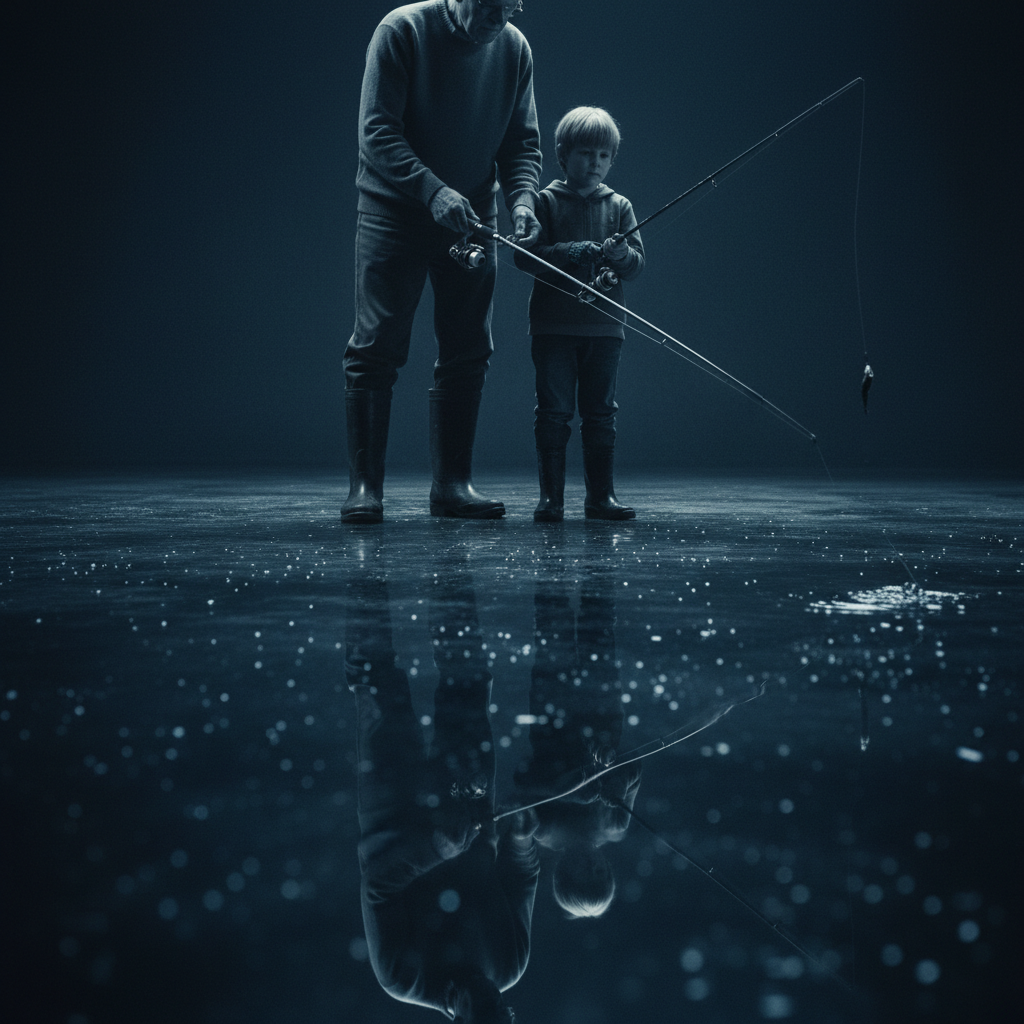
My grandfather, a man of few words but immense wisdom, had always been my anchor. He was a lifelong fisherman, and some of my fondest childhood memories were of spending lazy summer days with him on the lake, learning the art of patience, observation, and quiet contemplation. His invitation was a lifeline, a chance to escape the chaos and reconnect with something real.
A Simple Invitation, a Profound Shift
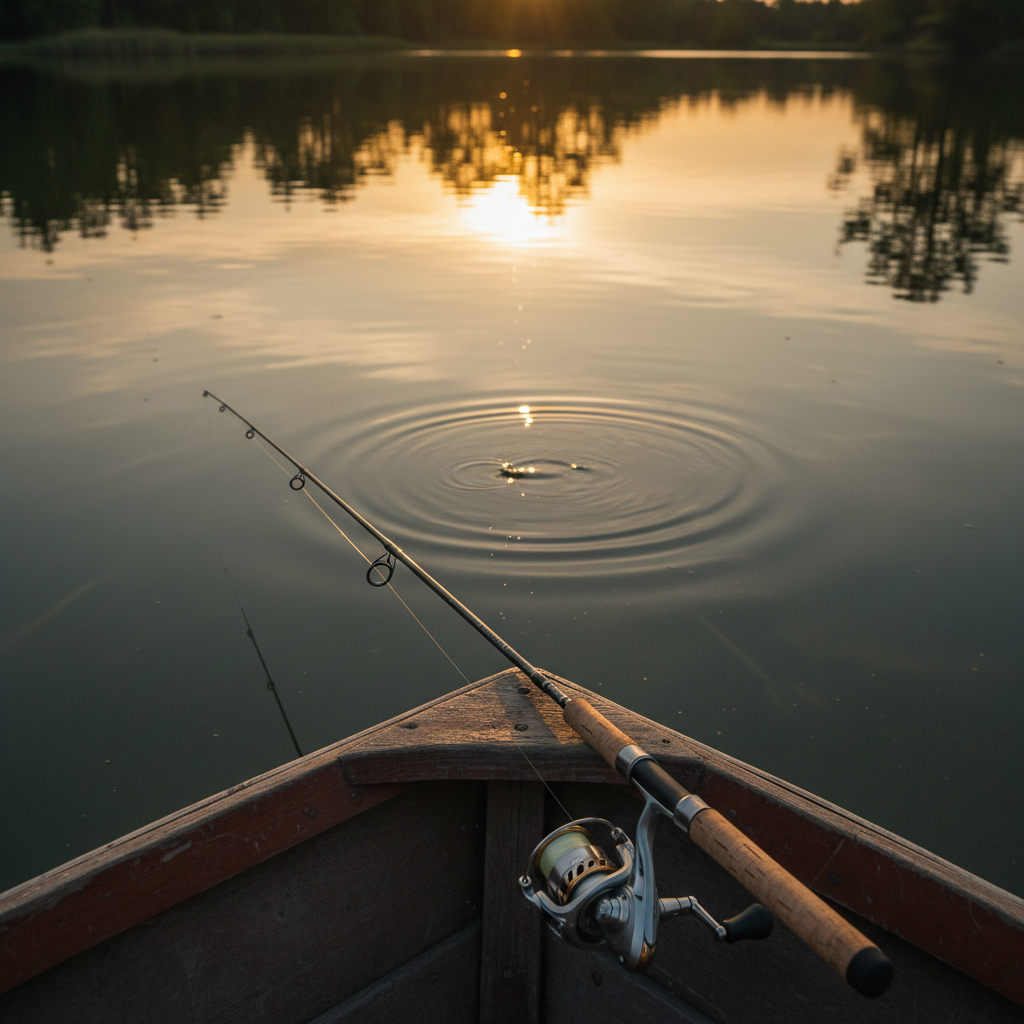
The next morning, I called in sick to work, packed my fishing gear, and drove to the lake. The air was crisp and clean, the water shimmered in the sunlight, and the world seemed to slow down the moment I stepped out of the car. As I baited my hook and cast my line, I felt a sense of peace wash over me that I hadn’t experienced in years. The worries and anxieties that had been consuming me seemed to fade into the background, replaced by the gentle rhythm of the waves and the anticipation of a tug on the line.
I didn’t catch anything that day, but it didn’t matter. The simple act of being present, of observing the natural world, of disconnecting from the constant barrage of information and demands, was transformative. I realized that I had been so focused on achieving goals and meeting expectations that I had forgotten how to simply be. I had forgotten how to appreciate the small moments, the quiet joys, the simple pleasures that make life worth living.
The Art of Paying Attention
Fishing, I rediscovered, is not just about catching fish. It’s about paying attention. It’s about observing the subtle cues of the environment – the way the wind ripples across the water, the flight of a bird overhead, the sudden splash of a fish breaking the surface. It’s about being present in the moment, fully engaged with the world around you. These are skills that translate far beyond the realm of fishing. They are skills that can enrich every aspect of our lives.
Think about it: how often do we truly pay attention to the people we love? How often are we so distracted by our phones, our work, our worries that we miss the subtle nuances of their emotions, the unspoken needs that lie beneath the surface? Learning to pay attention, to truly see and hear the world around us, is a gift that we can give ourselves and those we care about.
Embracing the Unknown
That day at the lake marked the beginning of a profound shift in my life. I realized that I needed to slow down, to prioritize experiences over achievements, to embrace the unknown instead of constantly striving for control. It wasn’t easy. There were still deadlines to meet, bills to pay, and responsibilities to fulfill. But I made a conscious effort to create space in my life for the things that truly mattered.
I started by saying “no” more often. I stopped attending meetings that didn’t serve a clear purpose. I delegated tasks that could be handled by others. I created boundaries between work and personal life. And most importantly, I made time for fishing. Even if it was just for an hour or two each week, I would escape to the lake, cast my line, and reconnect with myself and the natural world.
The Unexpected Rewards of Letting Go
What I discovered was that by letting go of the need to control everything, I actually gained more control over my life. By slowing down, I became more productive. By prioritizing experiences, I became more fulfilled. By embracing the unknown, I opened myself up to new possibilities and opportunities that I never would have imagined.
For example, one day while fishing, I met a local artist who was painting landscapes by the lake. We struck up a conversation, and he invited me to join his painting group. I had never painted before, but I decided to give it a try. To my surprise, I discovered a hidden talent and a new passion. Painting became another way for me to express myself, to connect with my creativity, and to find joy in the present moment.
This is just one small example of the unexpected rewards that can come from slowing down and embracing the unknown. When we are so focused on achieving specific goals, we often miss the opportunities that are right in front of us. But when we open ourselves up to new experiences, we create space for serendipity, for unexpected connections, and for new discoveries.
The Adventure Begins When You Stop Rushing
The title of this article is “The moment I stopped rushing — and the adventure began.” It’s not just a catchy phrase; it’s a reflection of my personal experience. I truly believe that the adventure of life begins when we stop rushing, when we take the time to appreciate the present moment, and when we embrace the unknown with curiosity and courage.
Think about the word “adventure.” What does it mean to you? For many people, it conjures up images of exotic locations, daring feats, and extraordinary experiences. But adventure doesn’t have to be something grand or dramatic. It can be found in the everyday moments, in the simple act of trying something new, in the willingness to step outside of our comfort zones.
Finding Adventure in the Ordinary
Adventure can be as simple as taking a different route to work, trying a new recipe, or striking up a conversation with a stranger. It can be found in the pages of a book, in the notes of a song, or in the brushstrokes of a painting. It’s all about opening our eyes to the possibilities that surround us and embracing the unexpected with enthusiasm.
For me, fishing has become a metaphor for this kind of adventure. It’s a reminder that the greatest rewards often come from the simplest activities, that the most profound experiences can be found in the quietest moments, and that the journey is often more important than the destination.
The Ripple Effect of Slowing Down
The benefits of slowing down and embracing adventure extend far beyond our individual lives. When we are more present, more mindful, and more connected to ourselves and the world around us, we become better partners, parents, friends, and community members.
We are more patient, more compassionate, and more understanding. We are more likely to listen to others, to empathize with their struggles, and to offer support when they need it. We are more likely to contribute to our communities, to volunteer our time, and to make a positive impact on the world.
Creating a More Mindful World
Imagine a world where everyone took the time to slow down, to appreciate the beauty that surrounds us, and to connect with each other on a deeper level. What kind of world would that be? It would be a world of greater peace, greater understanding, and greater compassion. It would be a world where everyone felt valued, respected, and loved.
This is not just a utopian fantasy. It is a possibility that we can create, one small step at a time. By making a conscious effort to slow down, to be more present, and to connect with others, we can create a ripple effect that extends far beyond our own lives. We can inspire others to do the same, and together, we can create a more mindful, more compassionate, and more fulfilling world.
Practical Steps to Embrace a Slower Pace
So, how can you start to slow down and embrace adventure in your own life? Here are a few practical steps that you can take:
- Practice mindfulness: Take a few minutes each day to simply focus on your breath, to observe your thoughts and feelings without judgment, and to be present in the moment.
- Disconnect from technology: Set aside specific times each day when you will disconnect from your phone, your computer, and other electronic devices. Use this time to connect with yourself, with your loved ones, or with nature.
- Spend time in nature: Go for a walk in the park, hike in the mountains, or simply sit by the lake and observe the natural world. Nature has a way of calming our minds and reminding us of the beauty and wonder of life.
- Engage in activities that bring you joy: Make time for hobbies, interests, and activities that you enjoy. These activities can help you to relax, to de-stress, and to connect with your creativity.
- Say “no” more often: Don’t be afraid to say “no” to commitments that don’t align with your priorities. Protect your time and energy so that you can focus on the things that truly matter.
- Embrace the unknown: Step outside of your comfort zone and try something new. Take a class, learn a new skill, or travel to a new place. You never know what adventures await you.
A Case Study: From Burnout to Bliss
I remember a friend, Sarah, who was a high-powered executive at a major corporation. She was incredibly successful, but she was also completely burned out. She was working long hours, neglecting her health, and feeling disconnected from her family and friends. One day, she collapsed from exhaustion and was forced to take a leave of absence from work.
During her leave, Sarah decided to try something completely different. She signed up for a pottery class, something she had always wanted to do but never had the time for. To her surprise, she loved it. She found the act of working with clay to be incredibly therapeutic and calming. She started spending hours in the pottery studio, creating beautiful and unique pieces.
When Sarah returned to work, she was a changed person. She had learned to prioritize her well-being, to set boundaries, and to make time for the things that brought her joy. She was still successful in her career, but she was no longer defined by it. She was a more balanced, more fulfilled, and more present human being.
Sarah’s story is a powerful reminder that it’s never too late to slow down, to embrace adventure, and to create a life that is truly meaningful. It’s a reminder that the greatest success is not measured by our achievements, but by our happiness, our well-being, and our connection to ourselves and the world around us.
The Legacy of a Life Well-Lived
In the end, what will matter most? Will it be the number of hours we worked, the amount of money we earned, or the accolades we received? Or will it be the memories we made, the relationships we nurtured, and the impact we had on the lives of others?
I believe that it is the latter. I believe that the true measure of a life well-lived is not what we accumulate, but what we give. It is not what we achieve, but what we become. It is not how fast we run, but how deeply we live.
So, take a deep breath, slow down, and embrace the adventure that awaits you. Cast your line into the waters of life, and see what wonders you can discover. You might be surprised at what you find.
The journey of slowing down and embracing adventure is not always easy. There will be challenges, setbacks, and moments of doubt. But the rewards are immeasurable. By choosing to live a more mindful, more intentional, and more connected life, we can create a legacy that will inspire others for generations to come. And that, my friends, is the greatest adventure of all.