Understanding the Fickle Nature of Fish: A Beginner’s Guide to Gentle Persuasion
Fishing, at its heart, is not a battle of wills, but a subtle dance between angler and aquatic life. It’s a lesson in patience, observation, and understanding that force, in most cases, is the antithesis of success. While the image of a burly fisherman aggressively yanking a struggling fish from the water might be the prevailing stereotype, the reality is that finesse, calmness, and a gentle approach are far more effective in coaxing fish to take your bait. Think of it like this: would you be more likely to engage with someone who shouts demands at you, or someone who offers a calm, considered invitation?
This concept, “the fish responds more to calm than force,” extends beyond the simple act of casting a line. It permeates every aspect of fishing, from selecting the right gear and choosing the opportune location to presenting the bait and ultimately landing your catch. It’s a philosophy that encourages a deeper connection with the natural world, fostering respect for the delicate ecosystem and the creatures that inhabit it. For the beginner angler, embracing this principle is not just about catching more fish; it’s about developing a more rewarding and sustainable fishing practice.
Why Calmness Matters: Understanding Fish Behavior
To truly appreciate the power of calmness in fishing, it’s essential to understand how fish perceive their environment. Unlike humans, fish don’t rely primarily on sight. Instead, they navigate and hunt using a complex array of senses, including vibration, scent, and subtle changes in water pressure. This means that any sudden movements, loud noises, or jarring disturbances can easily spook them, sending them scurrying for cover.
Imagine yourself as a small fish in a vast underwater world. You’re constantly vigilant, scanning your surroundings for potential predators. A sudden splash or the shadow of a rapidly moving object overhead instantly triggers your survival instincts. Now, consider the typical beginner angler: clomping along the riverbank, carelessly throwing gear around, and making loud conversation. To the fish, this is a clear sign of danger, a signal to retreat and hunker down.
Conversely, a calm and deliberate approach minimizes these disturbances. By moving slowly and quietly, you reduce the chances of alerting the fish to your presence. By selecting gear that blends in with the natural surroundings and using subtle casting techniques, you present your bait in a non-threatening manner. In essence, you’re creating an environment where the fish feel safe and secure, making them more likely to investigate your offering.
Furthermore, fish are highly sensitive to changes in water pressure. A heavy lure crashing into the water can create a shockwave that travels through the surrounding area, alerting fish from a considerable distance. Similarly, dragging your feet through the water or banging your tackle box against a rock can generate vibrations that send fish scattering. By being mindful of your movements and avoiding unnecessary noise, you can significantly increase your chances of success.
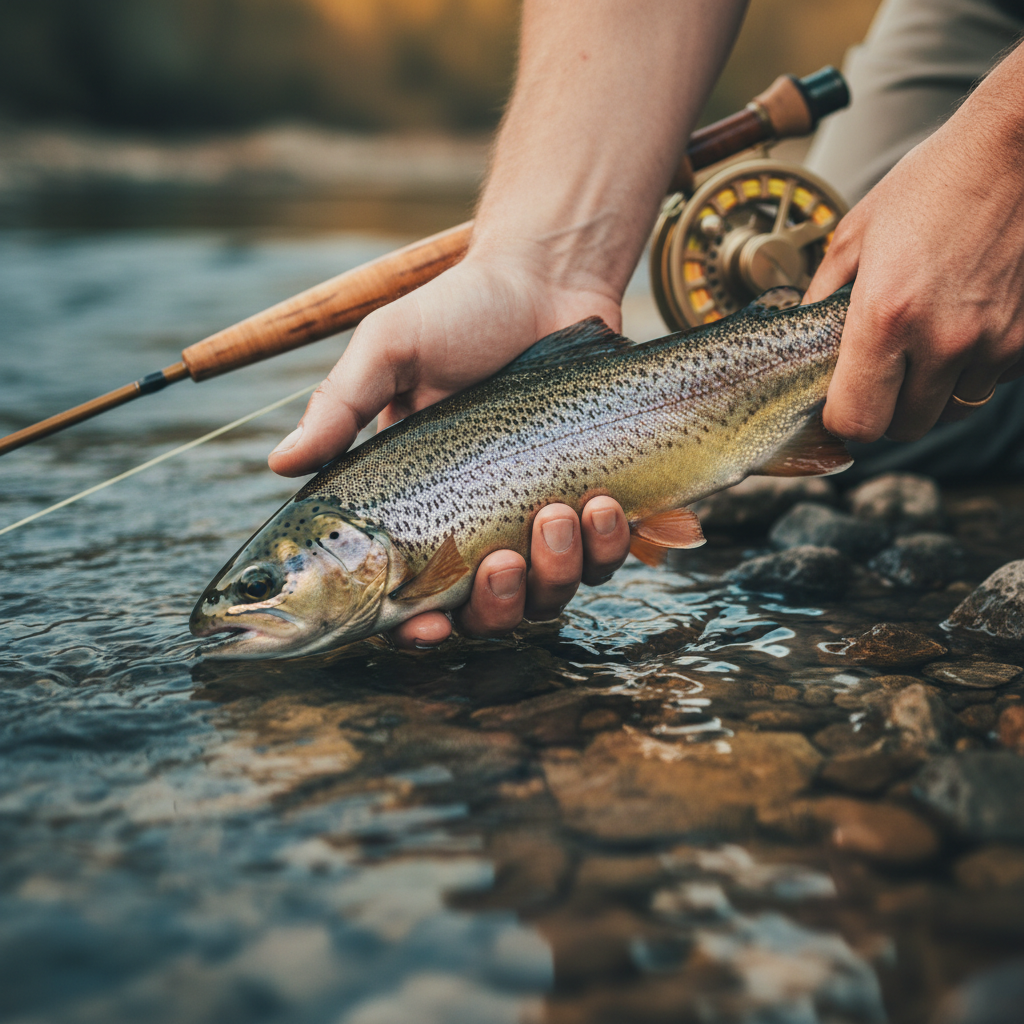
Consider the example of fly fishing. The art of fly fishing is built around the principle of delicate presentation. Anglers use lightweight rods and lines to cast artificial flies that imitate insects floating on the water’s surface. The goal is to present the fly in a natural and unobtrusive manner, mimicking the behavior of real insects as closely as possible. This requires a high degree of skill and precision, as well as a deep understanding of fish behavior. A clumsy cast or a poorly presented fly is likely to spook the fish, while a well-executed presentation can often result in a strike.
Gear and Techniques: Mastering the Art of Subtlety
The equipment you choose and the techniques you employ play a crucial role in maintaining a calm and non-threatening presence. From selecting the right rod and reel to mastering the art of the subtle cast, every detail contributes to your overall success.
Choosing the Right Gear: A Matter of Finesse
When selecting your fishing gear, prioritize quality and sensitivity over brute strength. A lightweight rod and reel will allow you to feel even the slightest nibble, giving you a crucial advantage in detecting bites. Opt for lines and leaders that are appropriate for the species you’re targeting and the conditions you’re fishing in. Thinner lines are less visible to fish and offer less resistance in the water, making them ideal for finesse fishing techniques.
The type of lure or bait you choose can also influence your success. Natural baits, such as worms, insects, and minnows, often elicit a more natural response from fish than artificial lures. However, artificial lures can be equally effective if presented in a realistic and enticing manner. Pay attention to the color, size, and action of your lure, and experiment with different retrieves to find what works best in your particular situation.
Camouflage is another important consideration. Avoid wearing bright colors that might stand out against the natural surroundings. Instead, opt for clothing that blends in with the environment, such as greens, browns, and grays. Similarly, choose gear that is muted in color and doesn’t reflect sunlight. The less conspicuous you are, the less likely you are to spook the fish.
Mastering the Subtle Cast: Precision and Control
Casting is a fundamental skill in fishing, and mastering the art of the subtle cast is essential for minimizing disturbances. Avoid making loud splashes or jerky movements when casting. Instead, focus on smooth, fluid motions that deliver your bait accurately and gently. Practice your casting technique in an open area before hitting the water, and experiment with different casting styles to find what works best for you.
When fishing in shallow water or near sensitive areas, consider using a roll cast or a side cast to minimize the risk of spooking the fish. These casting techniques allow you to deliver your bait without lifting your rod too high, reducing the chances of creating a shadow or disturbing the water’s surface. Similarly, avoid casting directly over the fish. Instead, try casting to the side or slightly upstream, allowing your bait to drift naturally into the strike zone.
Retrieving your bait is just as important as casting it. Avoid using jerky or erratic retrieves that might startle the fish. Instead, opt for slow, steady retrieves that mimic the natural movement of prey. Experiment with different retrieves to find what works best for the species you’re targeting and the conditions you’re fishing in. Sometimes, a simple dead drift is all it takes to entice a fish to strike.

Reading the Water: Understanding the Environment
Calmness isn’t just about your physical actions; it’s also about cultivating a calm and observant mindset. The best anglers are keen observers of their surroundings, constantly analyzing the water conditions, weather patterns, and fish behavior to gain a competitive edge.
Understanding Water Conditions: Clarity, Temperature, and Flow
The clarity of the water can significantly impact fish behavior. In clear water, fish are more easily spooked and may be more selective in their feeding habits. In murky water, fish rely more on their sense of smell and vibration, making them less sensitive to visual cues. Adjust your tactics accordingly, using lighter lines and more subtle presentations in clear water, and heavier lines and more aggressive retrieves in murky water.
Water temperature also plays a crucial role in fish behavior. Fish are cold-blooded creatures, meaning their body temperature is directly influenced by the temperature of the surrounding water. In warmer water, fish are more active and require more food to sustain their energy levels. In colder water, fish become sluggish and their metabolism slows down. Adjust your tactics accordingly, using faster retrieves and more active lures in warmer water, and slower retrieves and more natural baits in colder water.
The flow of the water can also influence fish behavior. Fish often congregate in areas where there is a consistent flow of food, such as near riffles, runs, and eddies. These areas provide a steady supply of insects, crustaceans, and other food sources, making them prime locations for anglers to target. Pay attention to the current and adjust your casting and retrieving techniques accordingly. Often, allowing your bait to drift naturally with the current is the most effective approach.
Observing Fish Behavior: Identifying Patterns and Preferences
One of the most important aspects of becoming a successful angler is learning to observe fish behavior. Pay attention to the way fish are moving, feeding, and reacting to your bait. Are they actively feeding on the surface, or are they holding deep in the water column? Are they spooked by your presence, or are they curious and inquisitive? The more you observe and analyze fish behavior, the better equipped you’ll be to adapt your tactics and increase your chances of success.
Look for signs of fish activity, such as rises, splashes, and swirls on the water’s surface. These signs can indicate that fish are feeding or actively moving around. Pay attention to the types of insects or other food sources that are present in the water, and try to match your bait or lure accordingly. If you see fish actively feeding on mayflies, try using a mayfly imitation. If you see them chasing minnows, try using a minnow-shaped lure.
Experiment with different techniques and presentations until you find what works best. Don’t be afraid to try new things and think outside the box. Sometimes, the most unconventional approaches can yield the best results. The key is to remain calm, observant, and adaptable, and to never stop learning.
Consider the example of fishing for trout in a mountain stream. Trout are notoriously skittish and easily spooked by sudden movements or loud noises. To successfully target trout, anglers must approach the water with extreme caution, moving slowly and quietly to avoid alerting the fish to their presence. They must also be adept at reading the water, identifying areas where trout are likely to be holding, such as behind rocks, under logs, and in deep pools. By combining a calm and deliberate approach with a keen understanding of trout behavior, anglers can significantly increase their chances of landing these elusive fish.
Patience and Persistence: The Virtues of a Calm Angler
Ultimately, the most crucial element in mastering the art of calm fishing is patience. Fishing is not a race; it’s a process. There will be days when the fish are biting readily, and there will be days when they seem completely uninterested. The key is to remain patient, persistent, and adaptable, and to never give up hope.
Don’t get discouraged if you don’t catch fish right away. Remember that fishing is a learning experience, and every outing provides an opportunity to hone your skills and improve your understanding of fish behavior. Even on days when you don’t catch any fish, you can still learn valuable lessons about the environment, the water conditions, and the behavior of the fish you’re targeting.
The ability to remain calm and focused, even when faced with adversity, is a hallmark of the successful angler. When the fish aren’t biting, resist the urge to become frustrated or impatient. Instead, take a deep breath, relax, and focus on the present moment. Observe the surroundings, analyze the water conditions, and experiment with different techniques until you find what works. Remember that fishing is as much about the journey as it is about the destination.

Think of fishing as a form of meditation. It’s an opportunity to escape the stresses of everyday life and connect with the natural world. By focusing on the present moment and cultivating a sense of inner peace, you can enhance your fishing experience and increase your chances of success. The more relaxed and focused you are, the more attuned you’ll be to the subtle cues that indicate the presence of fish.
Furthermore, persistence is key to success in any endeavor, and fishing is no exception. Even the most experienced anglers have days when they struggle to catch fish. The difference between a successful angler and an unsuccessful one is often simply a matter of persistence. Don’t give up after a few unsuccessful casts. Keep trying different techniques, experimenting with different baits, and exploring different locations until you find what works.
Beyond the Catch: Appreciating the Experience
The true reward of calm fishing extends far beyond the number of fish you catch. It’s about the connection you forge with nature, the lessons you learn about patience and perseverance, and the sense of inner peace you cultivate along the way. Embrace the quiet moments, appreciate the beauty of the natural world, and savor the simple pleasures of being outdoors.
Fishing can be a powerful tool for stress relief. The act of casting a line, feeling the tug of a fish, and reeling it in can be incredibly therapeutic. The rhythmic motion of casting can be meditative, helping to calm your mind and ease your anxieties. The connection with nature can also be incredibly restorative, helping you to feel grounded and centered.
Fishing can also be a great way to bond with family and friends. Sharing the experience of fishing with loved ones can create lasting memories and strengthen relationships. Whether you’re teaching a child how to cast a line or sharing stories around a campfire, fishing provides an opportunity to connect with others on a deeper level. The shared experience of patiently waiting for a bite, the excitement of landing a fish, and the joy of being outdoors together can create bonds that last a lifetime.
Consider the example of an angler who consistently fishes the same stretch of river. Over time, this angler develops a deep understanding of the river’s ecosystem, its inhabitants, and its rhythms. They learn where the fish are likely to be holding at different times of the year, what they’re likely to be feeding on, and how they’re likely to react to different fishing techniques. This intimate knowledge allows them to fish with a greater degree of confidence and success. They also develop a deep appreciation for the delicate balance of the ecosystem and the importance of protecting it for future generations.
Sustainable Fishing Practices: Protecting the Future of the Sport
As anglers, we have a responsibility to protect the resources we enjoy. Practicing sustainable fishing techniques is essential for ensuring that future generations will have the opportunity to experience the joy of fishing. This includes following catch-and-release guidelines, minimizing our impact on the environment, and supporting conservation efforts.
Catch-and-release fishing is a valuable tool for managing fish populations. By carefully releasing fish back into the water, we can help to ensure that they have the opportunity to reproduce and contribute to the overall health of the ecosystem. When practicing catch-and-release, it’s important to handle fish with care, avoiding any unnecessary stress or injury. Use barbless hooks, wet your hands before handling the fish, and minimize the amount of time the fish is out of the water. If possible, remove the hook while the fish is still submerged.
Minimizing our impact on the environment is another important aspect of sustainable fishing. Avoid littering, stay on established trails, and be mindful of the surrounding vegetation. When wading in rivers or streams, avoid disturbing the streambed or trampling fragile vegetation. Use biodegradable fishing line and tackle whenever possible. Be aware of local regulations and restrictions, and always fish within the limits of the law.
Supporting conservation efforts is also essential for protecting the future of fishing. Consider joining a local fishing club or conservation organization, and participate in volunteer activities such as stream cleanups and habitat restoration projects. Donate to organizations that are working to protect fish populations and their habitats. Advocate for policies that promote sustainable fishing practices and protect the environment.
The fish responds more to calm than force, and that principle extends to our responsibility as stewards of the environment. By embracing calm, observant, and sustainable fishing practices, we can ensure that future generations will have the opportunity to experience the joy of fishing and connect with the natural world in a meaningful way. Fishing is more than just a sport; it’s a connection to the past, a celebration of the present, and a responsibility to the future. It’s a lesson in patience, observation, and respect that can enrich our lives in countless ways. So, the next time you’re on the water, remember to breathe deeply, move slowly, and appreciate the beauty of the moment. The fish, and the environment, will thank you for it.